Context:
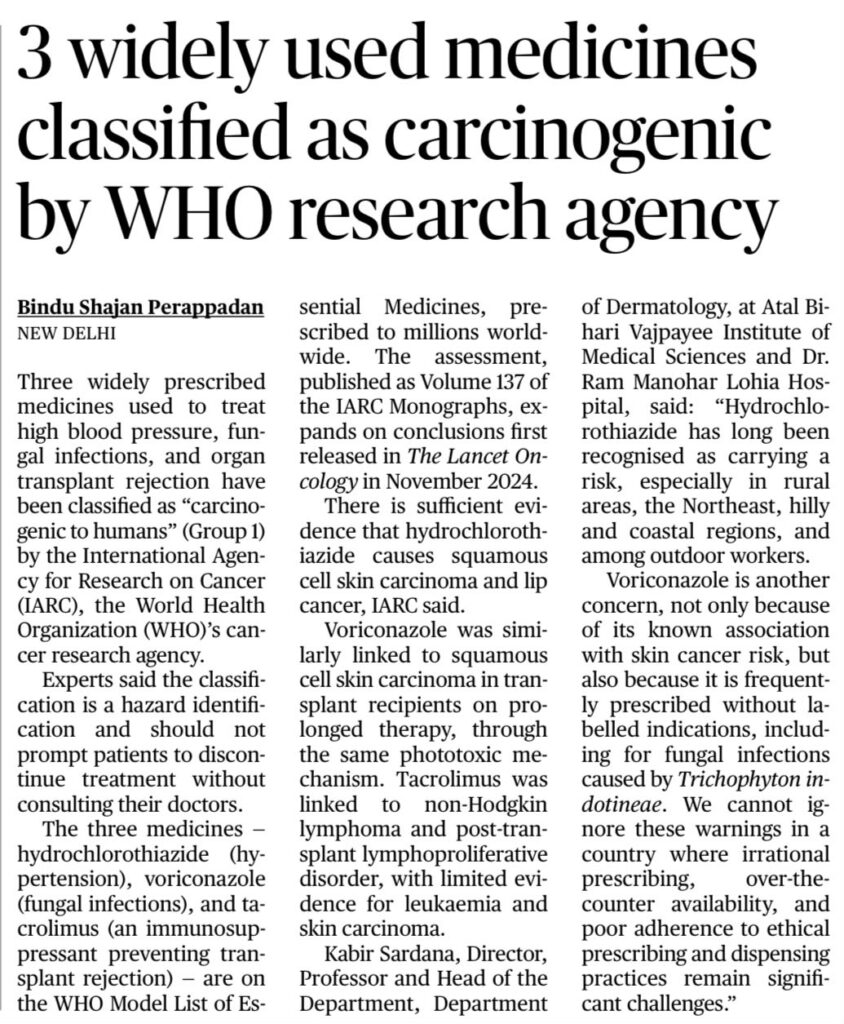
The WHO’s International Agency for Research on Cancer has classified three widely used medicines as Group 1 carcinogens, meaning carcinogenic to humans.
The classification identifies a potential cancer hazard. It does not mean patients should stop treatment without medical advice.
International Agency for Research on Cancer
The International Agency for Research on Cancer, or IARC, is the specialised cancer agency of the World Health Organization.
It evaluates substances and exposures based on cancer risk.
Group 1 Carcinogen
Group 1 means that the agent is classified as carcinogenic to humans.
However, this classification identifies hazard.
It does not automatically mean that every exposure will cause cancer.
Risk depends on dosage, duration, medical need and exposure conditions.
Medicines Classified as Carcinogenic
Hydrochlorothiazide
Hydrochlorothiazide is used to treat hypertension, or high blood pressure.
Voriconazole
Voriconazole is used to treat serious fungal infections.
Tacrolimus
Tacrolimus is an immunosuppressant.
It is used to prevent organ transplant rejection.
Important Caution
Patients should not stop these medicines on their own.
The classification does not mean treatment should be discontinued without consulting doctors.
For many patients, the medical benefit may still outweigh the risk.
Doctors must assess risk based on patient condition, dosage, duration and available alternatives.
Public Health Significance
The classification is important because these medicines are widely used.
It can lead to:
- Updated medical guidance
- Stronger monitoring
- Better patient counselling
- Risk-benefit assessment
- Safer prescribing practices
Key Takeaway
The IARC classification is a warning for medical caution, not a call for panic. Patients should not stop prescribed medicines without medical advice.