Context: Multipolar World and Forever Wars
The global order is moving from a unipolar system to a multipolar one.
This transition is leading to renewed geopolitical competition, prolonged interstate conflicts and changing patterns of warfare.
Changing Global Security Landscape
Interstate conflicts are increasing after the relatively stable post-Cold War period.
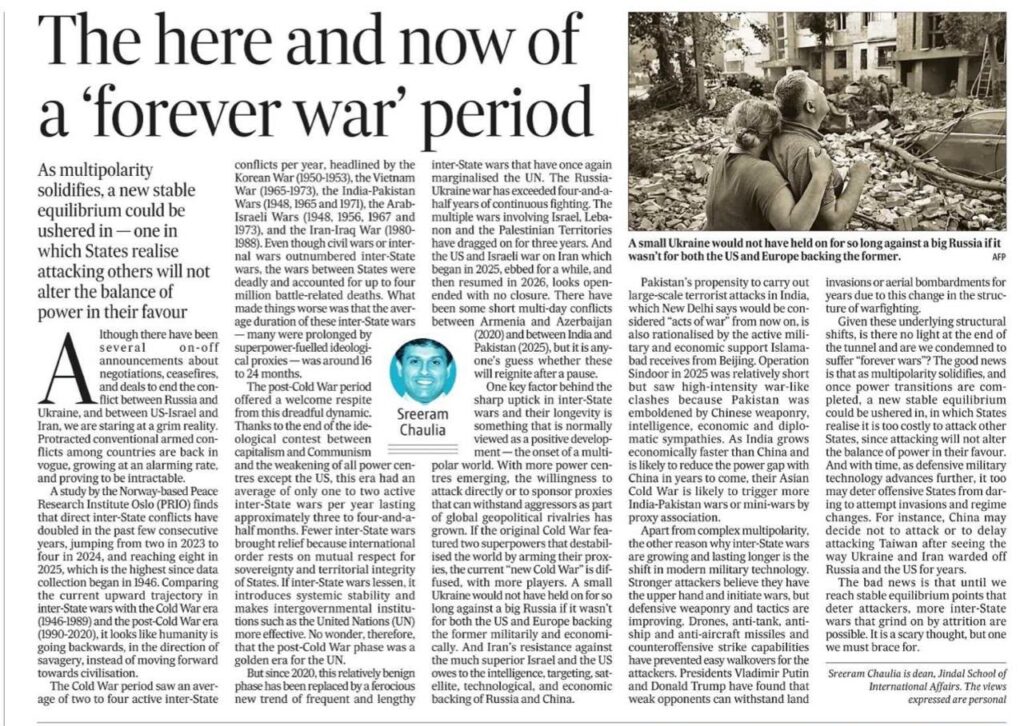
According to the Peace Research Institute Oslo, interstate conflicts rose from:
- 2 in 2023
- 4 in 2024
- 8 in 2025
This is the highest level since 1946.
Unlike the post-Cold War period, prolonged conventional wars are again becoming a major feature of international politics.
From Unipolarity to Multipolarity
The post-Cold War order was marked by U.S. dominance.
That period saw fewer interstate wars and stronger respect for sovereignty and territorial integrity.
But the rise of multiple power centres has increased:
- Strategic competition
- Proxy conflicts
- Geopolitical rivalries
Major powers increasingly support allies through military, economic and technological assistance instead of direct intervention.
New Nature of Warfare
Contemporary wars are becoming longer, costlier and attrition-based.
They are often sustained by external military and economic support.
Examples include:
- Russia–Ukraine war
- Conflicts involving Israel, Lebanon and Palestine
- U.S.–Israel–Iran confrontation
Modern technologies have made quick victories difficult.
These include:
- Drones
- Precision missiles
- Anti-tank systems
- Air-defence systems
Such technologies strengthen defenders and prolong wars.
Implications for India
China’s growing military capability and continued support to Pakistan can intensify India’s security challenges.
Proxy conflicts and prolonged regional confrontations may increase as strategic competition deepens in Asia.
India must strengthen:
- Military preparedness
- Technological capability
- Strategic partnerships
- Deterrence capacity
Future Outlook
Multipolarity may eventually create a new balance of power.
Once power transitions stabilise, incentives for direct aggression may reduce.
But until that happens, the world may witness more prolonged interstate conflicts.
This requires stronger deterrence, resilient institutions and sustained diplomacy.
Key Takeaway
The world is entering a period where wars may become longer, more technology-driven and harder to end. India must prepare for a security environment shaped by multipolar rivalry and prolonged conflicts.