Context: Forest Rights Act Agasthyamalai
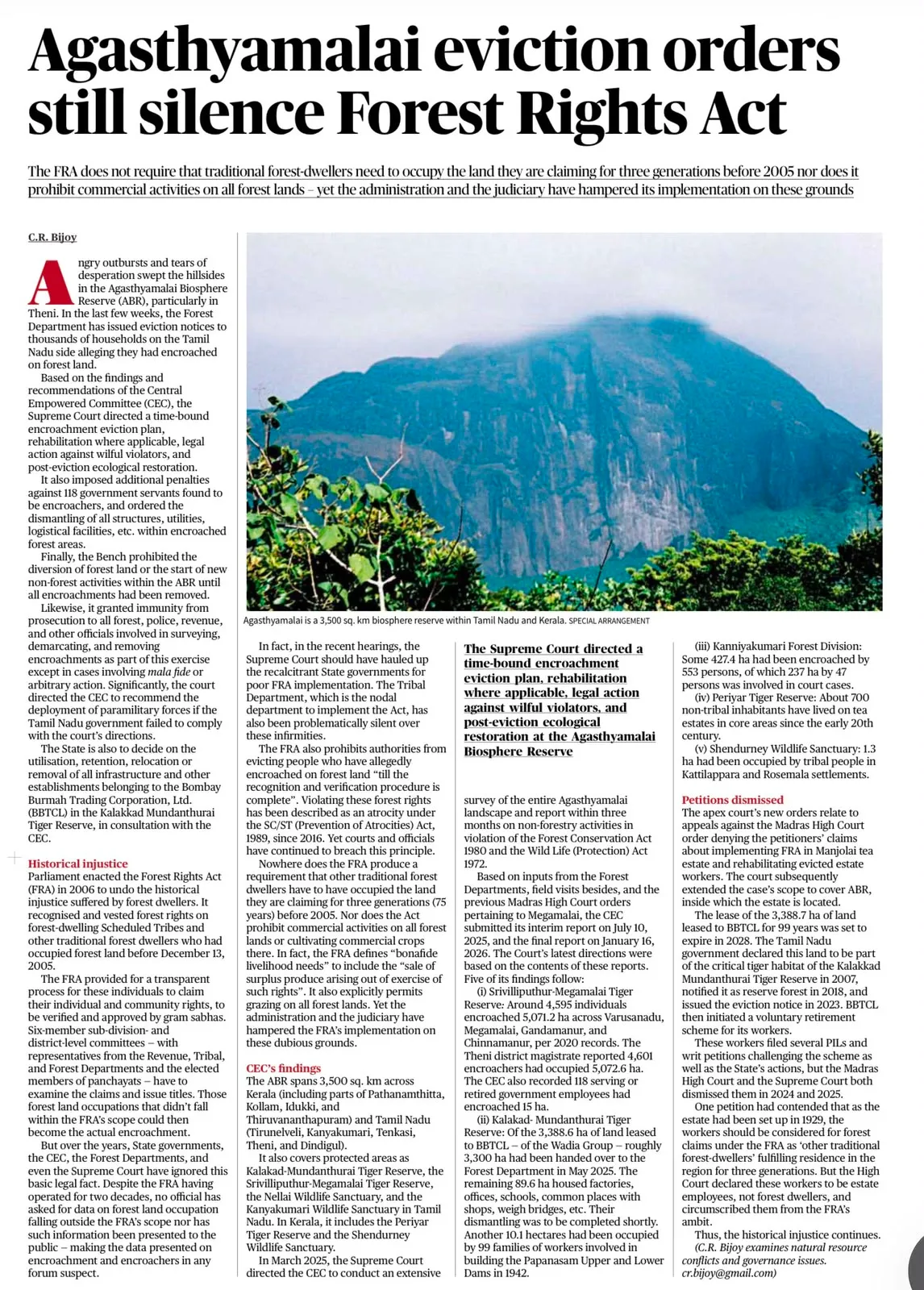
Eviction notices in the Agasthyamalai Biosphere Reserve have brought attention to the conflict between forest conservation and the legally recognised rights of forest-dwelling communities.
The core question is whether affected households are eligible rights-holders under the Forest Rights Act, 2006, or illegal encroachers.
Forest Rights Act, 2006
The Forest Rights Act recognises the rights of forest-dwelling Scheduled Tribes and Other Traditional Forest Dwellers.
It recognises both:
- Individual Forest Rights
- Community Forest Rights
Other Traditional Forest Dwellers
Other Traditional Forest Dwellers must have primarily and genuinely resided in and depended on forest land for livelihood for at least three generations, meaning 75 years, before 13 December 2005.
This cut-off is important because rights recognised under the Act must be distinguished from post-cut-off illegal encroachments.
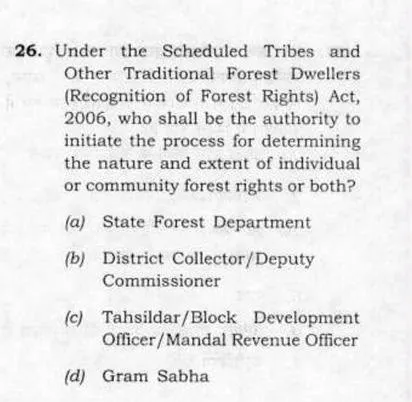
Role of Gram Sabha
The Gram Sabha initiates and verifies forest-rights claims.
This makes local community participation central to the implementation of the Forest Rights Act.
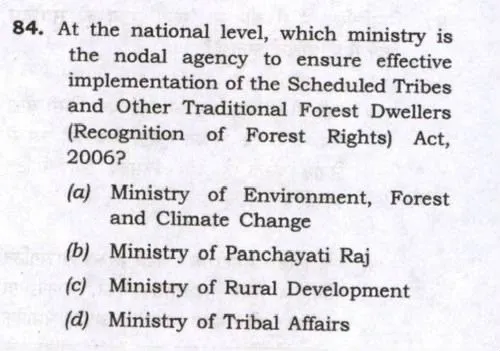
Nodal Ministry
The Ministry of Tribal Affairs is the nodal ministry for implementation of the Forest Rights Act.
Agasthyamalai Biosphere Reserve
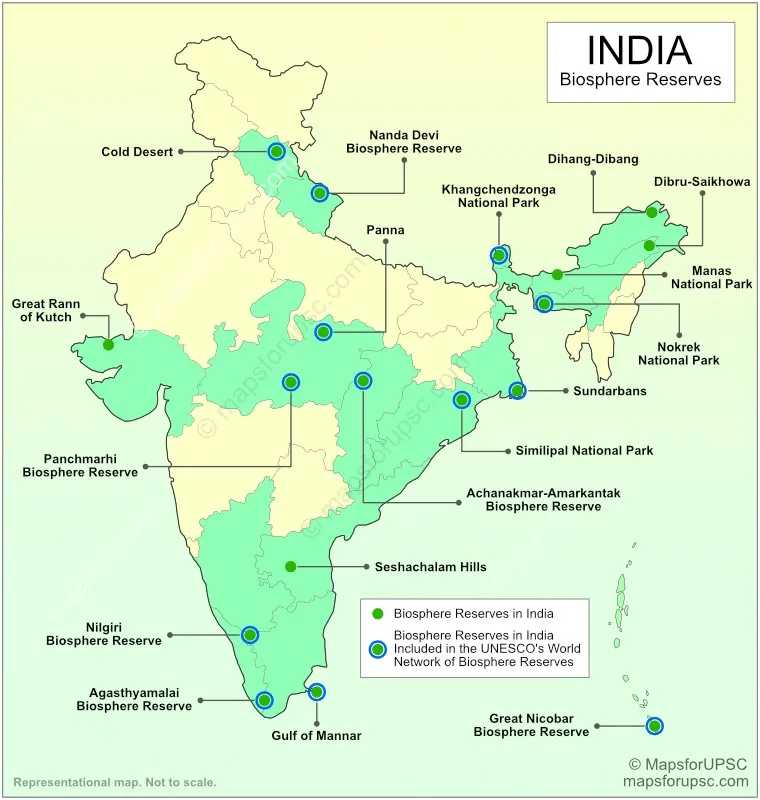
Agasthyamalai Biosphere Reserve is located in the southern Western Ghats across Kerala and Tamil Nadu.
It covers around 3,500 sq km.
It is part of UNESCO’s Man and the Biosphere Programme since 2016.
Important Protected Areas
Major protected areas include:
- Neyyar Wildlife Sanctuary
- Peppara Wildlife Sanctuary
- Shendurney Wildlife Sanctuary
- Kalakad–Mundanthurai Tiger Reserve
The region is important for Western Ghats biodiversity, high endemism and tribal communities, including the Kani.
Conservation-Rights Balance
Forest conservation requires prevention of illegal encroachment and protection of biodiversity and wildlife habitats.
But legitimate forest-rights claims must be recognised before eviction.
The Supreme Court’s directions on time-bound eviction of illegal encroachments, rehabilitation where applicable and ecological restoration make proper identification of genuine rights-holders especially important.
Key Issue
The concern is not whether illegal encroachment should be allowed.
The real issue is whether the Forest Rights Act process is being properly followed before eviction.
If genuine rights-holders are removed without recognition of their claims, it weakens both tribal justice and legal governance.
Key Takeaway
Agasthyamalai highlights the need to balance conservation with forest rights. Illegal encroachments must be removed, but genuine FRA claims must be verified and recognised before eviction.