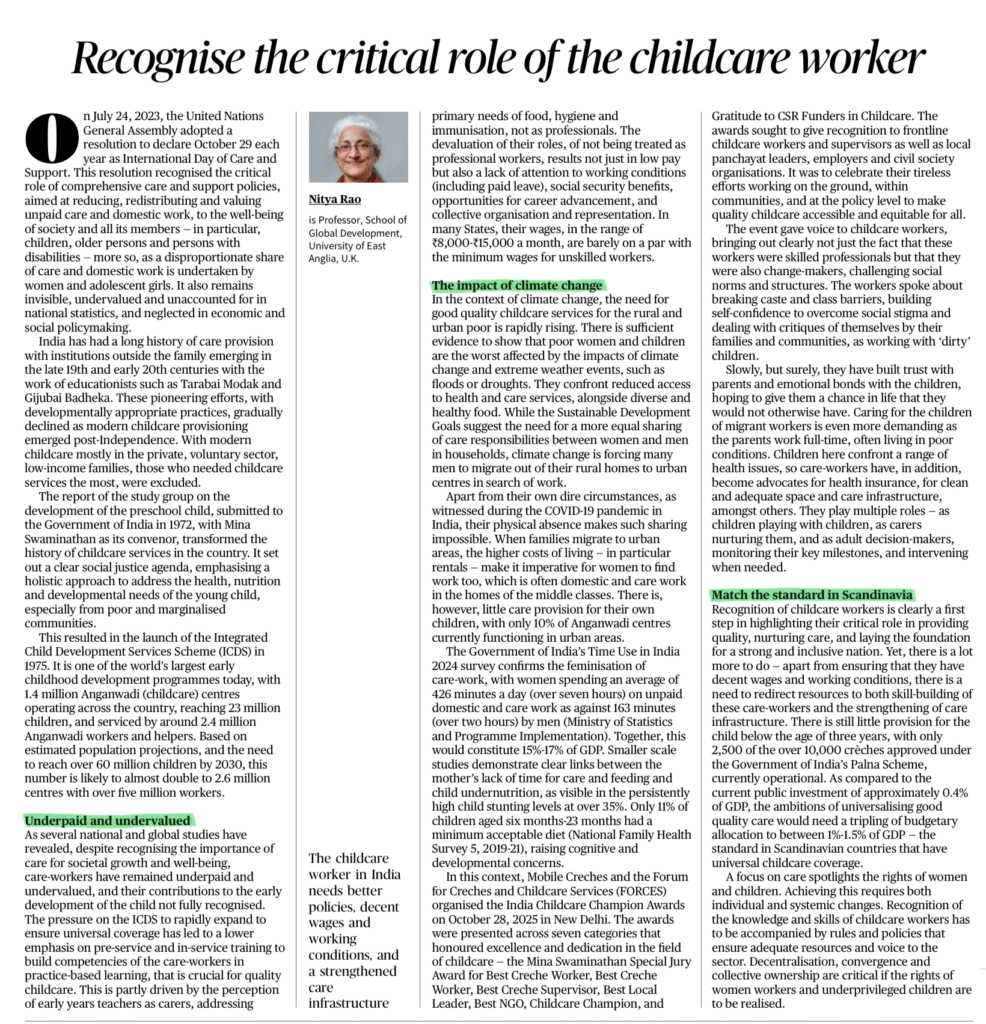
- Why Childcare Workers Matter
• Essential for early childhood care, nutrition, health, and school readiness.
• Enable women’s economic participation by reducing unpaid care burden.
• Critical in urban poor and migrant communities where formal care is limited.
• Increasingly important in climate-affected areas due to disruptions in family livelihoods. - Current Problems
• Underpaid & undervalued despite heavy workload.
• Treated as volunteers, not professionals → low wages (₹8,000–₹15,000).
• Poor working conditions: inadequate facilities, unsafe environments, heavy documentation workload.
• Lack of representation & weak collective voice.
• Persistent feminisation of care labour → gendered undervaluation.
• Migration & urbanisation worsen care gaps; only 10% Anganwadis function in urban areas. - Climate Change Link
• Climate shocks (heat, floods, drought) increase burden on women & children.
• Raises demand for quality childcare services in rural and urban poor areas.
• Women forced to migrate for work → need safe, affordable childcare systems. - Evidence from India (Data)
• 2024 Time Use Survey: women spend 4.5 hours/day on unpaid care vs. 1 hour for men.
• Anganwadis cover 23 million children; 2.4 million workers/helpers involved. - Needed Reforms (Recommendations)
• Professionalise childcare workers: formal recognition, training, status.
• Increase wages to reflect skilled care work.
• Ensure safe working conditions & adequate infrastructure.
• Expand urban childcare services, especially for migrants.
• Align India with Scandinavian standards: well-paid, respected, professional care workforce.
TDF
“Despite being central to early childhood development and women’s economic participation, childcare workers in India remain underpaid and undervalued. Analyse the structural reasons behind this neglect.”(150 words)