Context: Air India Mishap
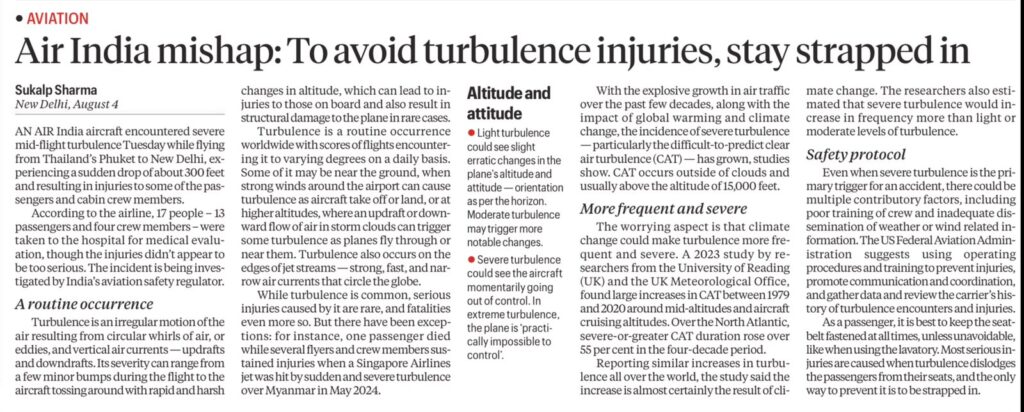
An Air India flight from Phuket to New Delhi encountered severe mid-flight turbulence, injuring 17 passengers and crew members.
The incident highlights the importance of aviation safety, turbulence preparedness, passenger protection and the need to keep seat belts fastened during flights.
Turbulence
Turbulence is caused by irregular movement of air.
It may occur due to:
- Jet streams
- Thunderstorms
- Mountain waves
- Clear Air Turbulence
Clear Air Turbulence
Clear Air Turbulence, or CAT, occurs without visible clouds.
This makes it difficult to detect using conventional weather radar.
It is especially risky because passengers and crew may not get enough warning before the aircraft suddenly shakes or drops.
Climate Change Link
Climate change is increasing the frequency and intensity of Clear Air Turbulence, especially at cruising altitudes.
This means turbulence-related injuries may become a bigger aviation safety concern in the future.
Most Effective Safety Measure
The most effective way to reduce turbulence injuries is to keep the seat belt fastened throughout the flight.
Many turbulence injuries happen when passengers are not strapped in.
Black Box
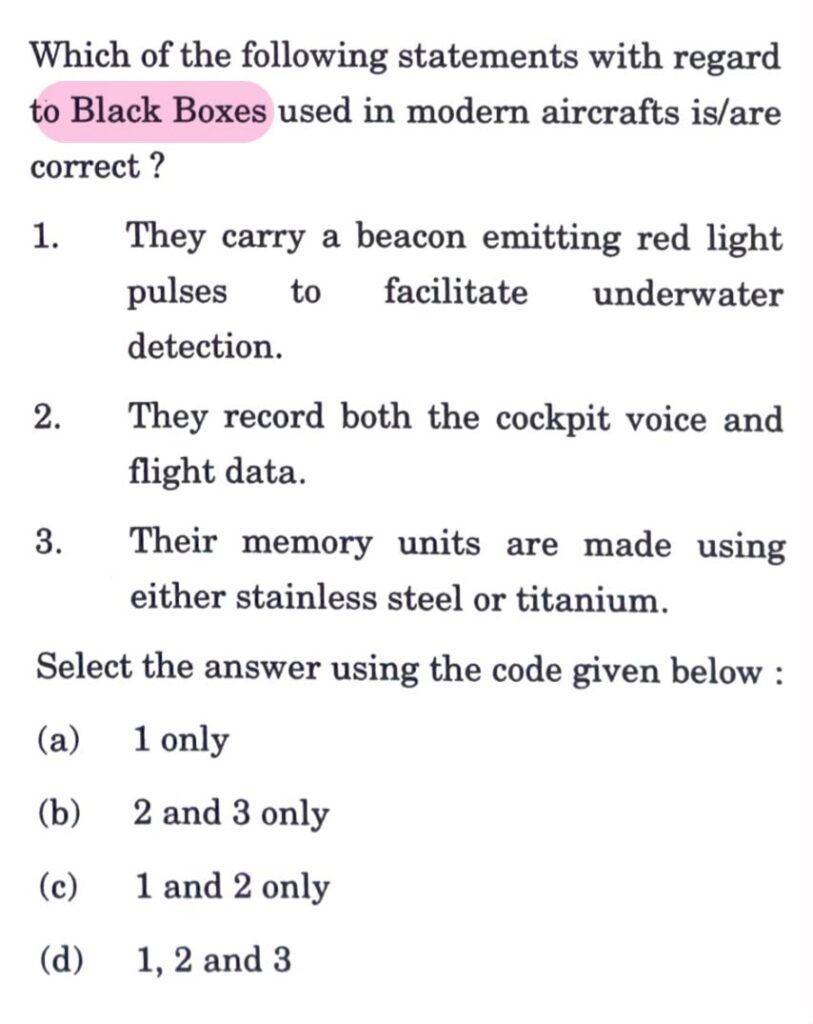
A black box consists of two major components:
- Cockpit Voice Recorder
- Flight Data Recorder
The Cockpit Voice Recorder records cockpit conversations and sounds.
The Flight Data Recorder records technical flight parameters.
Safety Features of Black Box
Black boxes are protected by titanium or stainless-steel crash-resistant casing.
They are equipped with an underwater locator beacon, also called an acoustic pinger, which helps locate them after crashes.
In India, black box data is used by the Aircraft Accident Investigation Bureau to investigate aircraft accidents.
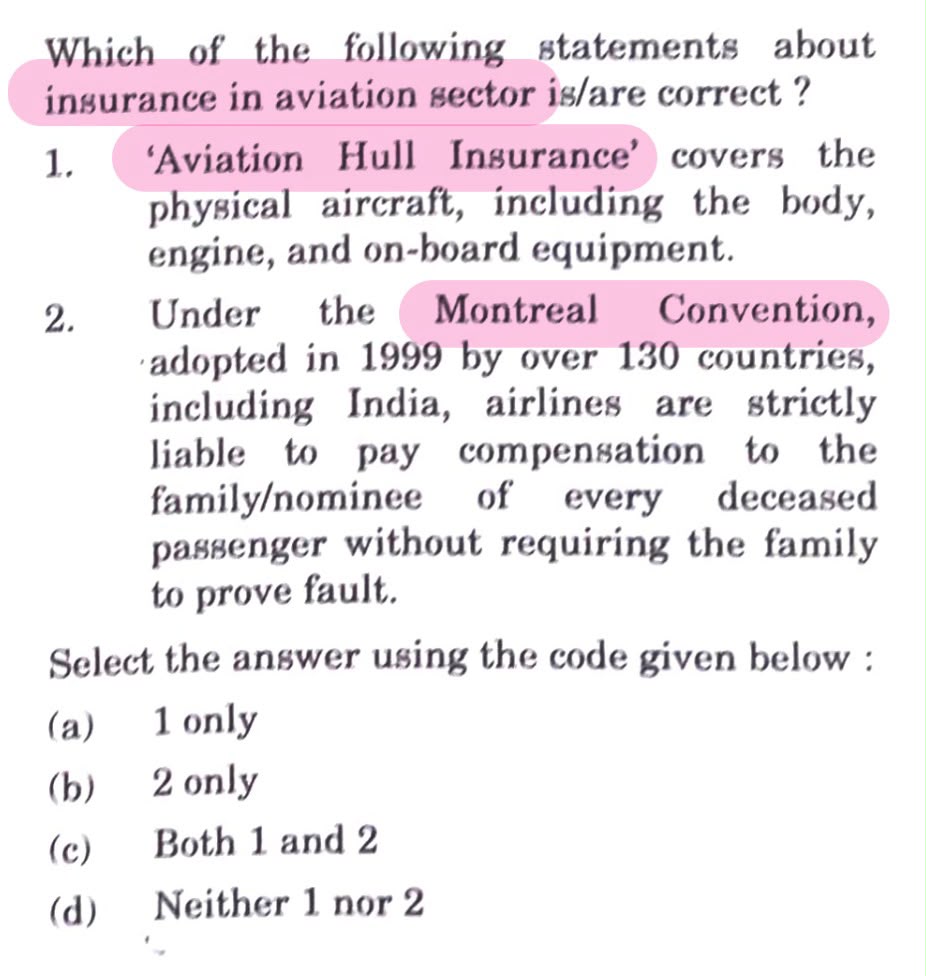
Aviation Insurance
Aviation Hull Insurance covers damage to the aircraft, including:
- Fuselage
- Engines
- On-board equipment
Passenger liability in international aviation is governed by the Montreal Convention, 1999, which provides no-fault compensation up to prescribed limits.
Relevant Laws and Conventions
Aircraft Act, 1934
This Act governs civil aviation in India.
Aircraft Rules, 1937
These rules regulate aircraft operations and safety standards.
Chicago Convention, 1944
This convention established the International Civil Aviation Organization and global civil aviation standards.
Montreal Convention, 1999
This convention governs airline liability for passenger death, injury, baggage and cargo during international carriage.
Key Takeaway
Turbulence may not always be predictable, but injuries can be reduced through better safety protocols, passenger awareness and keeping seat belts fastened throughout the flight.