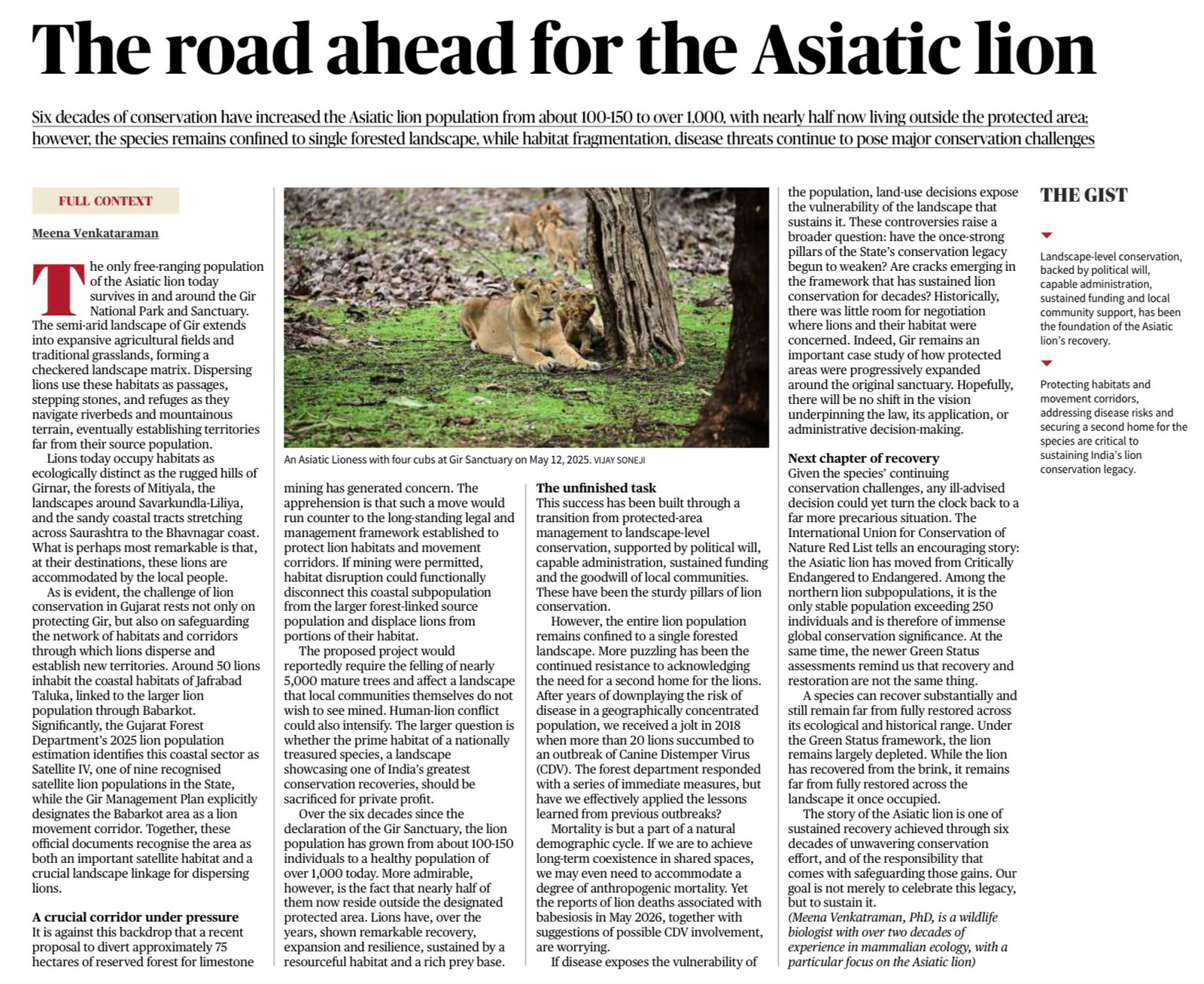
Context: Asiatic Lion Conservation in India
The Asiatic lion has recovered significantly over the past six decades.
However, its continued confinement to a single landscape has renewed the focus on long-term conservation strategies.
Asiatic Lion: Prelims Focus
Scientific Name: Panthera leo persica
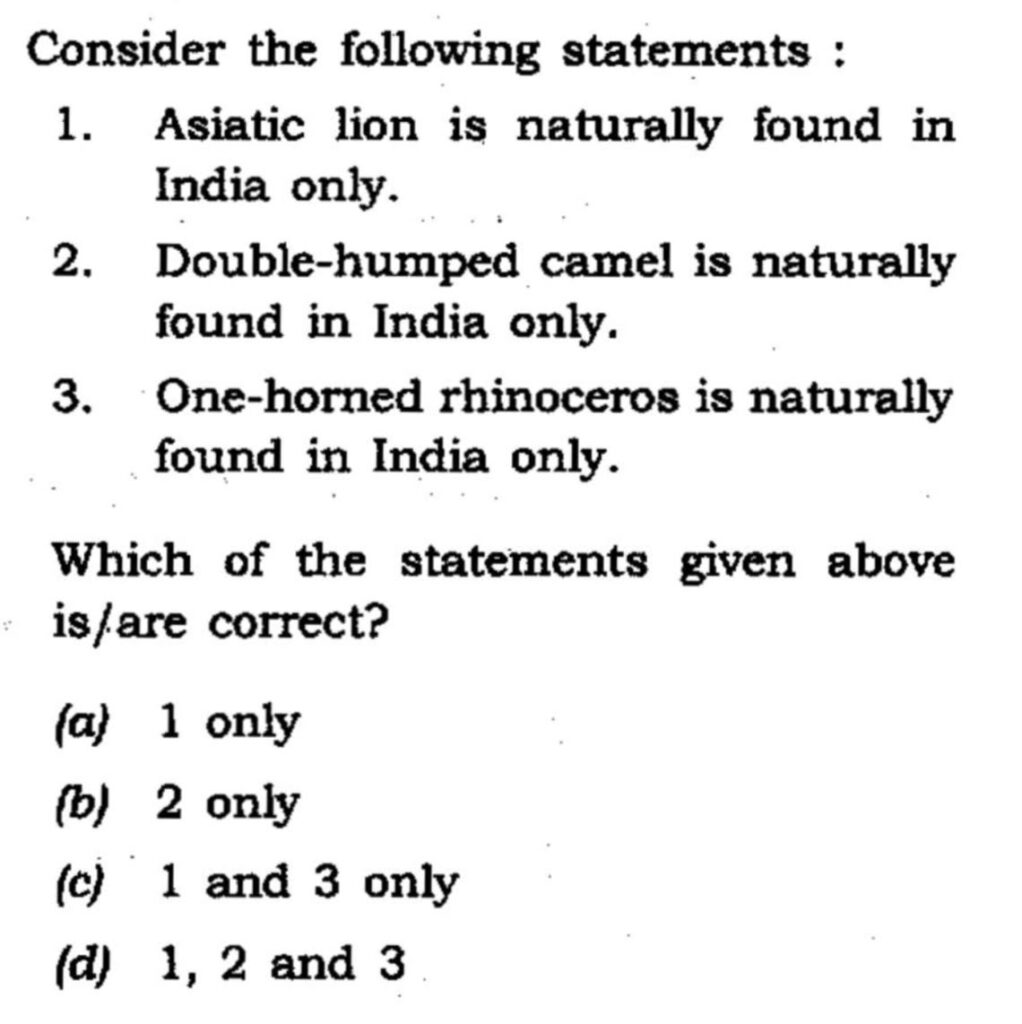
Distribution: Endemic to the Gir Landscape, Gujarat.
It is the world’s only free-ranging Asiatic lion population.
Habitat: Dry deciduous forests, scrublands, grasslands and savannah ecosystems.
IUCN Red List: Endangered
CITES: Appendix I
Wild Life Protection Act, 1972: Schedule I
Conservation Success
The declaration of Gir Wildlife Sanctuary in 1965 marked the beginning of organised lion conservation.
This was supported by:
- Habitat protection
- Prey-base improvement
- Political commitment
- Community participation
The population has increased from about 100–150 lions in the 1960s to over 1,000 today.
Nearly half the population now lives outside protected areas, showing successful natural dispersal.
Conservation Beyond Gir
Project Lion, 2020 promotes:
- Habitat connectivity
- Scientific monitoring
- Disease management
- Community participation
- Establishment of additional free-ranging populations across suitable landscapes
The Asiatic Lion Conservation Project, 2018–19 strengthened:
- Habitat improvement
- Veterinary infrastructure
- Disease surveillance
- Conflict mitigation
- Technology-based wildlife monitoring
Emerging Challenges
Despite population recovery, the entire wild population remains concentrated in one geographical landscape.
This creates vulnerability to:
- Disease outbreaks
- Natural disasters
- Habitat fragmentation
Developmental activities, mining and infrastructure projects can disrupt wildlife corridors and reduce genetic connectivity.
Disease outbreaks such as Canine Distemper Virus and recent concerns regarding babesiosis underline the need for continuous wildlife health surveillance.
Way Forward
India should establish a second free-ranging wild population to reduce extinction risk.
Ecological corridors and satellite habitats should be protected through landscape-level planning.
Disease surveillance, scientific monitoring and veterinary preparedness must be strengthened.
Community-based conservation should continue while balancing development with ecological sustainability.
Key Takeaway
The Asiatic lion is a conservation success story, but its future depends on moving beyond single-landscape protection towards disease preparedness, corridor protection and a second wild population.