What Is the Best Strategy to Crack UPSC in First Attempt?
Your first UPSC attempt can be your strongest attempt, but only if you stop treating it like a trial run. A lot of students prepare for the first attempt with half-serious energy. They keep telling themselves they are “just understanding the exam,” and before they realise it, months are gone. That is exactly what you cannot afford if you are following the best strategy to crack UPSC in first attempt.
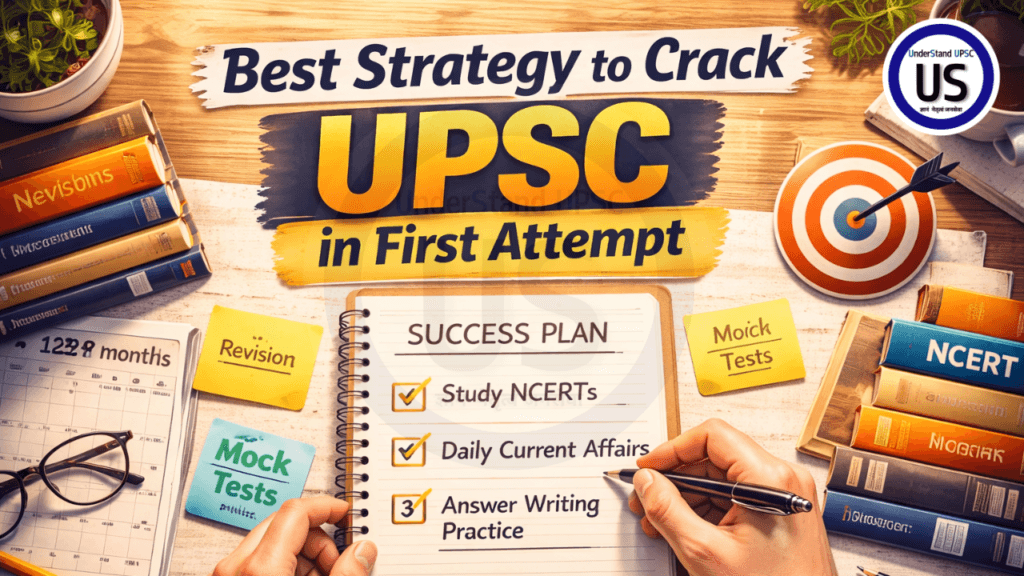
That is not how serious aspirants should look at it. Your first attempt should ideally be the first time you are genuinely ready to compete, not the first time you feel curious enough to sit in the exam hall. That distinction matters a lot.
Because in UPSC, attempts are limited, but more importantly, serious mental energy is also limited. A casual first attempt often sounds harmless. Students say they are giving it “just for experience.” But in reality, that approach can damage confidence, distort preparation, and waste one full exam cycle. The better mindset is to build toward a first attempt that has weight behind it—this is the foundation of the best strategy to crack UPSC in first attempt.
That is why many strong aspirants think in terms of a one-year to one-and-a-half-year serious preparation window before expecting their first attempt to become a real one. Not because UPSC requires drama, but because the exam demands maturity across too many layers at once.
You are not just covering subjects. You are building conceptual understanding, current affairs depth, answer-writing ability, elimination skill for Prelims, optional subject command, and the stamina to revise under pressure. All of this takes time to settle, which is why timing plays a key role in the best strategy to crack UPSC in first attempt.
So the best first-attempt strategy is not simply “study hard.” It is to make sure your preparation reaches a certain level before you emotionally treat an attempt as serious.
A mature first-attempt strategy usually looks like this:
- In the early months, you stabilize your foundation, sources, and optional.
- Then comes the long middle phase where General Studies and optional move together.
- Answer writing begins, current affairs starts linking with the syllabus, and your preparation becomes less theoretical and more exam-shaped.
- After that comes the real differentiator: repeated revision, PYQs, test practice, and learning how to perform on demand.
This is the phase that turns preparation into competitiveness and defines the best strategy to crack UPSC in first attempt.
This is also why first-attempt success is rarely about brilliance. It is usually about entering the attempt at the right time. If you sit too early, you may gain experience but lose momentum. If you sit after building enough depth, your first attempt can become your strongest one.
This video by Satyam Sir explains the first-attempt strategy in a structured way for aspirants targeting 2027, especially those who want to think seriously about preparation, runway, readiness, and planning from the beginning.
So the real question is not just, “Can I crack UPSC in my first attempt?” The better question is:
👉 “Am I building my first attempt in a way that gives it a real chance?”
That is how mature aspirants think. And that is usually what separates a form-filled attempt from a competitive attempt—and ultimately reflects the best strategy to crack UPSC in first attempt.
Frequently Asked Questions
Q1. Can I crack UPSC in first attempt?
Yes, with the right preparation strategy, consistency, and proper timing, many aspirants crack UPSC in their first attempt.
Q2. How many months are required for UPSC first attempt preparation?
Ideally, 12–18 months of serious preparation is considered effective.
Q3. What is the biggest mistake in first attempt?
Treating it as a trial attempt and not preparing seriously.
Q4. Is coaching necessary for first attempt success?
No, self-study with the right strategy can also lead to success.