Context: Ceuta Spain migration crisis
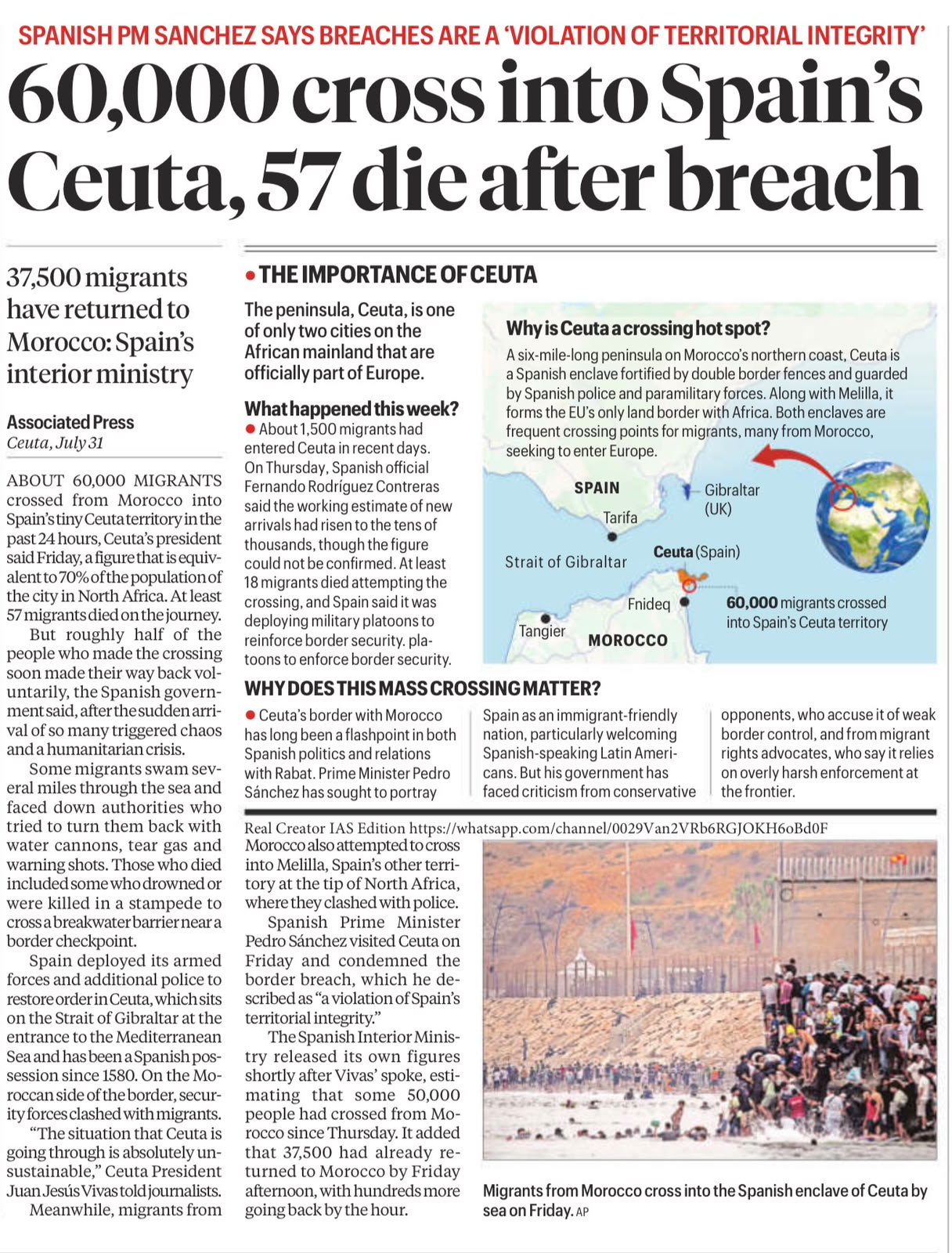
Around 60,000 migrants crossed from Morocco into Spain’s autonomous city of Ceuta, triggering a major humanitarian and border-security crisis.
Spain described the incident as a violation of its territorial integrity. Reports also mentioned that 57 people died after the breach, making the issue important from the perspective of migration, border management and Spain–Morocco relations.
Ceuta, Spain
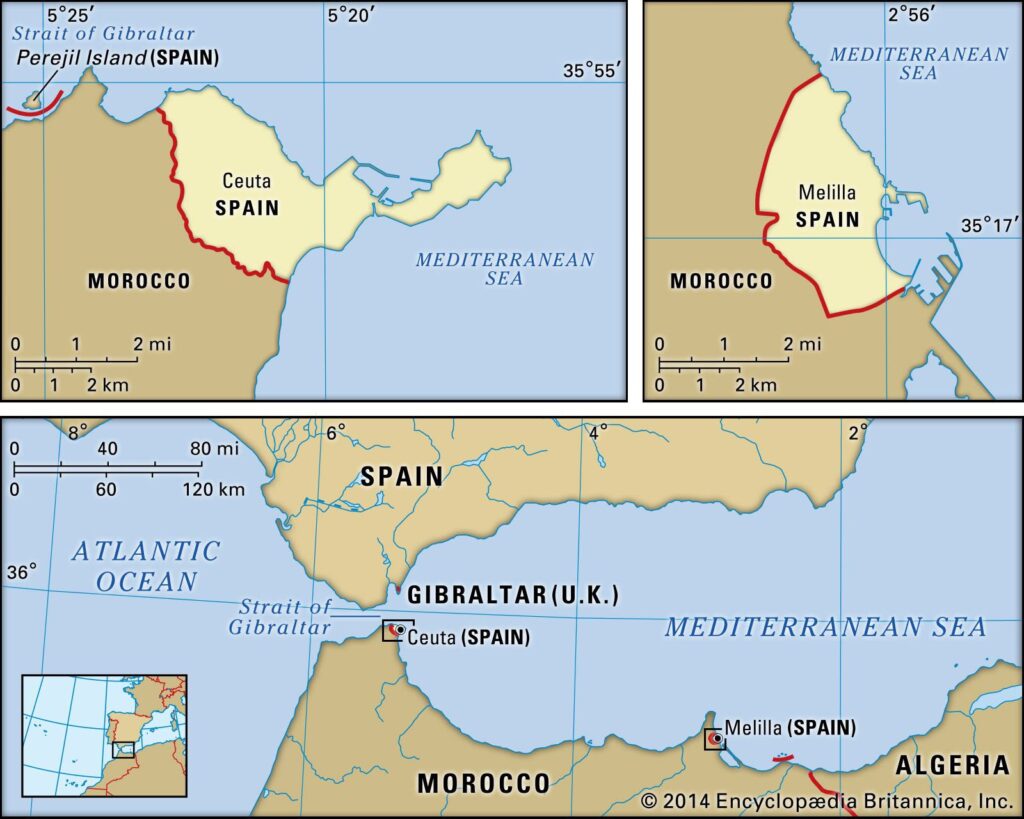
Ceuta is an autonomous city of Spain located on the northern coast of Africa.
It shares a land border with Morocco and faces the Mediterranean Sea.
It lies near the Strait of Gibraltar, which connects the Atlantic Ocean with the Mediterranean Sea.
Along with Melilla, Ceuta forms the European Union’s only land border with Africa.
Why Ceuta Matters
Ceuta is a major gateway for irregular migration from Africa to Europe.
Migrants from different African countries often attempt to enter Ceuta to reach Spanish and European territory.
This makes Ceuta important for:
- Border security
- Migration management
- Humanitarian protection
- Spain–Morocco relations
- EU migration policy
Spain–Morocco Dispute
Spain exercises sovereignty over Ceuta.
However, Morocco claims the territory.
This makes Ceuta a sensitive flashpoint between the two countries.
Any large-scale migrant crossing can therefore become both a humanitarian crisis and a diplomatic issue.
Geographical Importance
Ceuta’s location near the Strait of Gibraltar gives it major strategic value.
The Strait of Gibraltar is one of the world’s important maritime passages, linking the Atlantic Ocean and the Mediterranean Sea.
Ceuta is also close to Europe, Africa and key Mediterranean routes.
Key Takeaway
Ceuta is not only a migration issue. It is a strategic border point where humanitarian concerns, European migration policy, Spain–Morocco relations and territorial sovereignty overlap.