Context: Funding India’s climate future, a trillion-dollar question
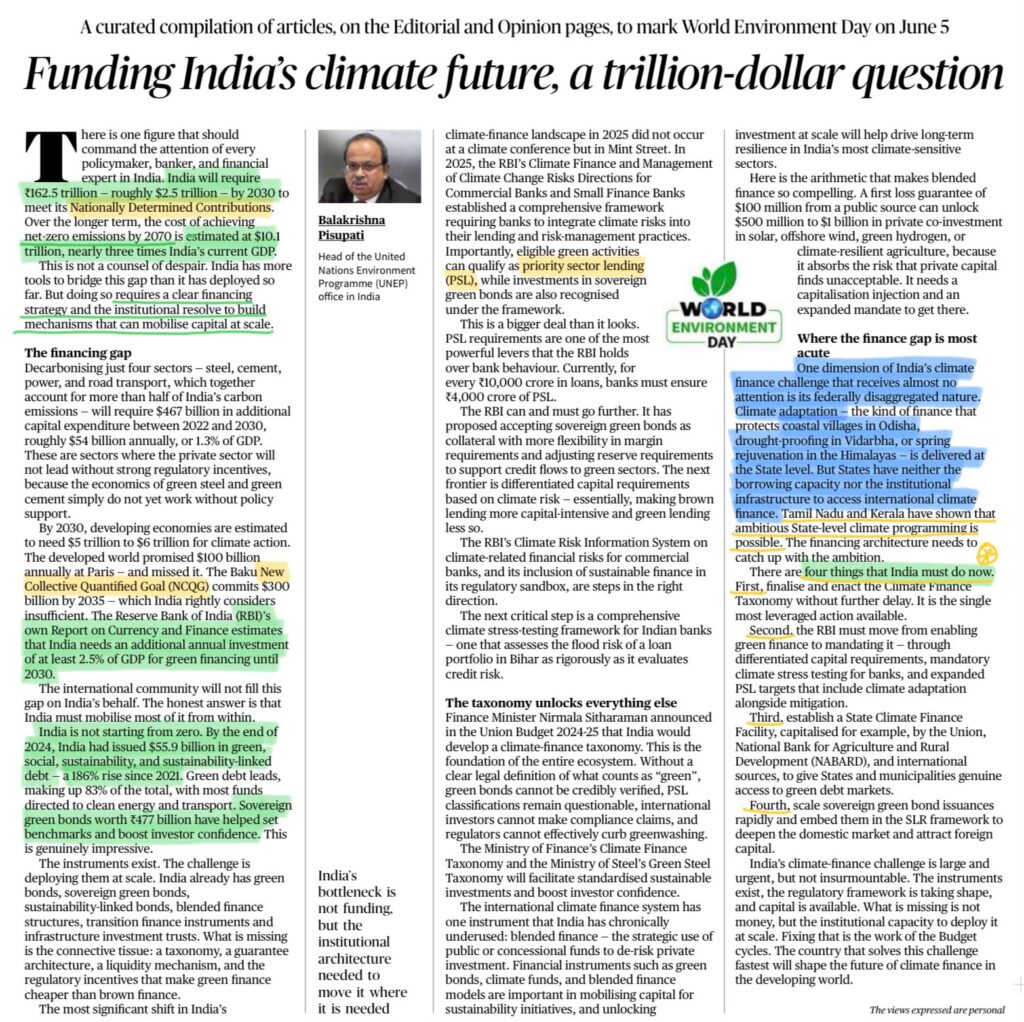
India’s climate challenge is not a shortage of capital but the absence of a strong climate-finance architecture. The article advocates climate taxonomy, green-finance reforms, State-level financing mechanisms and deeper capital markets to mobilise climate investments at scale.
Important Data for Mains
What India Needs
- ₹162.5 lakh crore, around $2.5 trillion, by 2030 for climate targets.
- $10.1 trillion for Net Zero by 2070.
- Additional investment of 2.5% of GDP annually till 2030.
- $467 billion needed for steel, cement, power and transport decarbonisation.
What India Has Done
- $55.9 billion Green, Social, Sustainability and Sustainability-Linked debt issued till 2024.
- 83% of sustainable debt issuance is green debt.
- ₹477 billion Sovereign Green Bonds issued.
- RBI Climate Finance and Climate Risk Management Framework introduced.
New Collective Quantified Goal
- Adopted at COP29, Baku, 2024.
- Replaces $100 billion per year goal from COP15, Copenhagen, 2009.
- Developed countries to mobilise $300 billion annually by 2035.
Priority Sector Lending
- RBI-mandated lending to priority sectors.
Suggestion
- Expand PSL coverage for climate adaptation, renewable energy and other green investments.
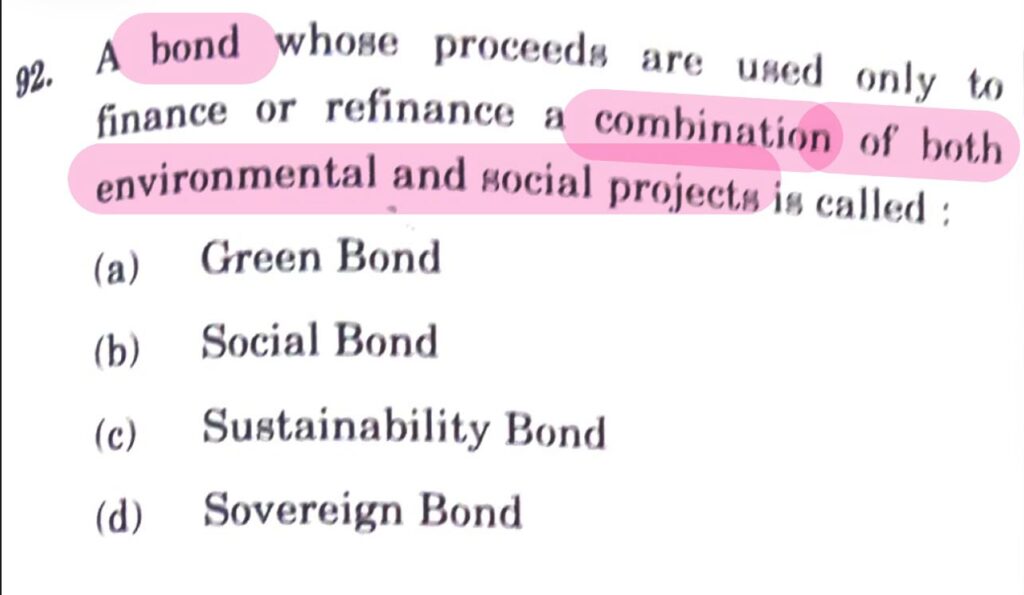
Green, Social and Sustainability Bonds
Green Bond
- Used for environmental projects.
Social Bond
- Used for social projects.
Sustainability Bond
- Used for environmental and social projects.
Sustainability-Linked Bond
- Linked to sustainability targets.
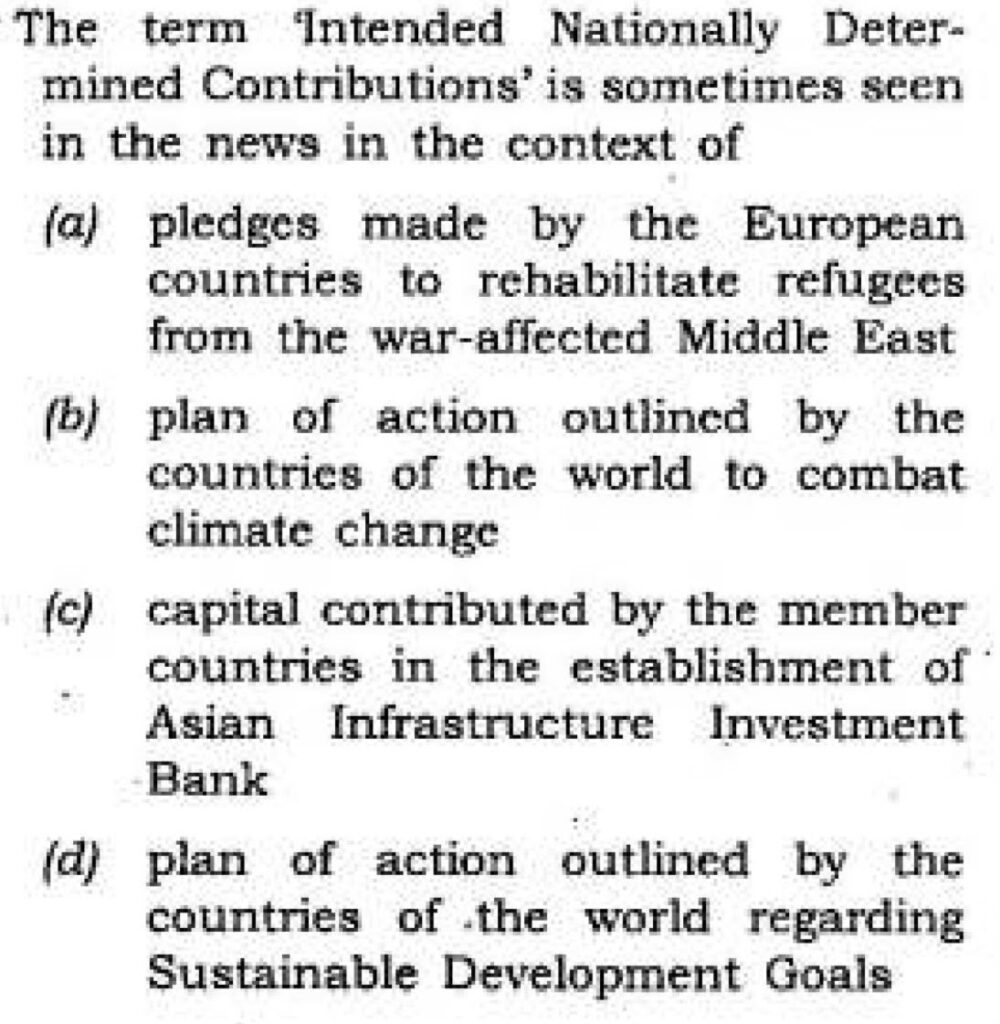
Nationally Determined Contributions
Meaning
- National climate commitments under the Paris Agreement.
India’s Updated NDC: 2031–35
Emissions Intensity
- Reduce GDP emissions intensity by 47% from 2005 levels by 2035.
Non-Fossil Capacity
- Achieve 60% of installed electric power capacity from non-fossil fuel sources by 2035.
Carbon Sink
- Create an additional 3.5–4 billion tonnes of CO₂ equivalent carbon sink through forests and tree cover by 2035.