Context: Dropshipping Model
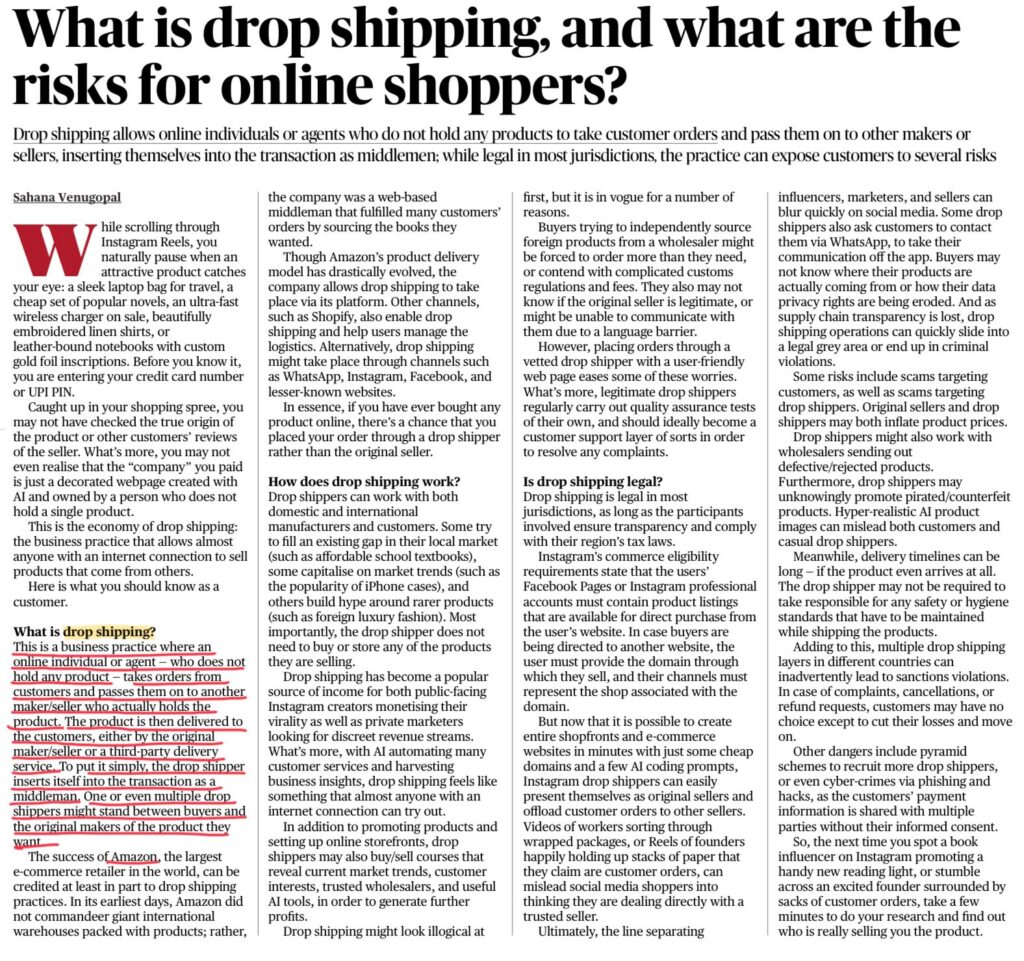
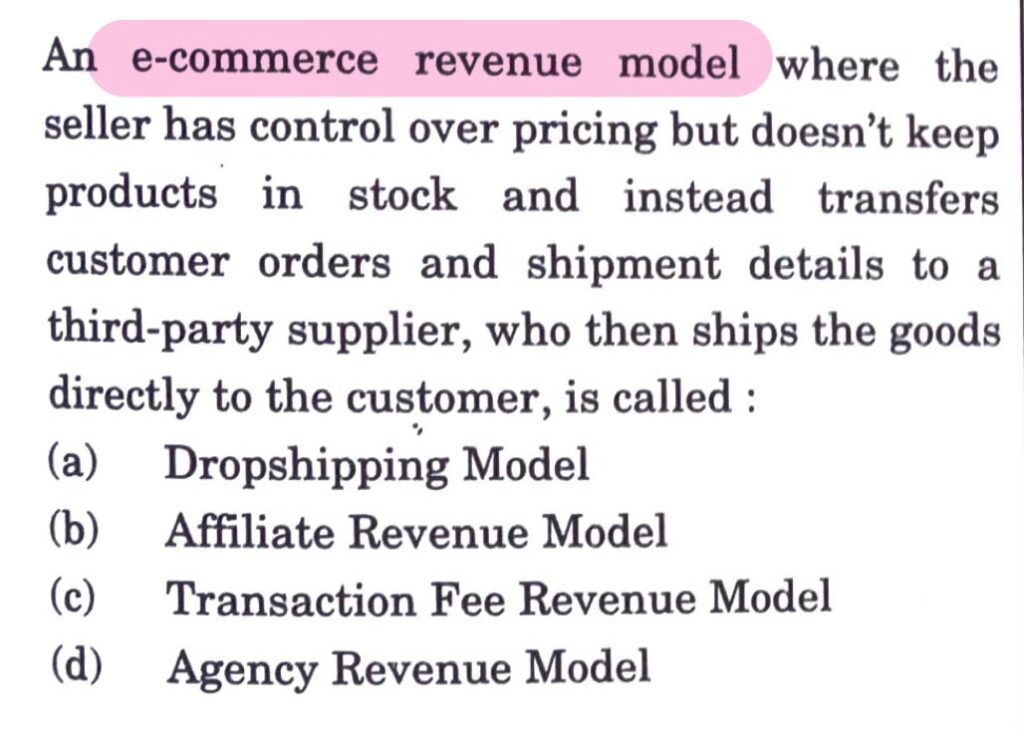
Dropshipping has emerged as a popular e-commerce model where sellers operate online stores without keeping inventory. The seller takes the order and forwards it to a supplier or manufacturer, who directly ships the product to the customer.
Dropshipping Model
Meaning:
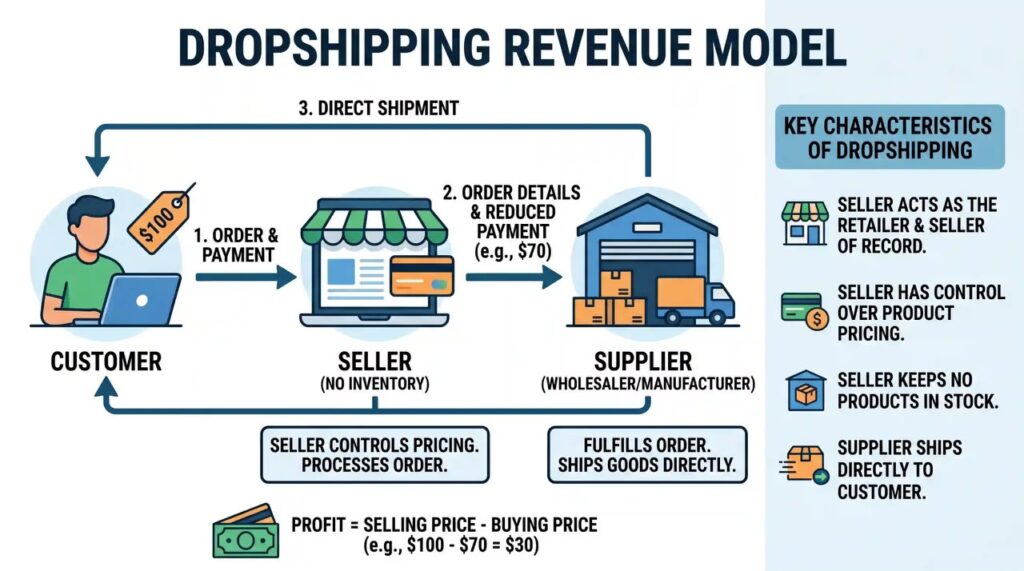
The seller does not keep inventory. After receiving an order, the seller forwards it to a supplier or manufacturer, who ships the product directly to the customer.
Flow
Customer → Seller → Supplier → Customer
Example
A Shopify-based online store selling phone covers sourced from manufacturers in China. The store owner markets the product and collects payment, while the supplier ships it.
Key Features
- Seller acts as retailer and seller of record.
- Seller controls product pricing.
- Seller keeps no products in stock.
- Supplier ships directly to the customer.
- Profit is the difference between selling price and buying price.
Other E-Commerce Revenue Models
Affiliate Revenue Model
- Earn commission by referring customers.
- No ownership of products.
- Example: Amazon Associates Program.
Transaction Fee Revenue Model
- Platform charges a fee on every transaction.
- Example: Paytm, Razorpay.
Agency Revenue Model
- A company earns money by providing specialised professional services to businesses or individuals.
- Instead of selling physical products, the agency sells expertise, time and creative labour.
- Example: Uber, Ola, Airbnb.