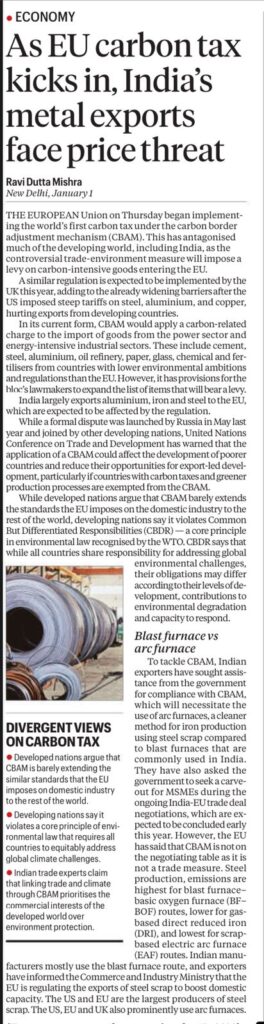
EU Carbon Border Adjustment Mechanism (CBAM)
Context
- From January 1, 2026, CBAM enters the payment phase
- EU importers must pay for embedded carbon emissions in select imports
What is CBAM?
- EU’s carbon border tax on carbon-intensive imports
- Objective
- Prevent carbon leakage
- Ensure level playing field with EU producers under EU ETS
How it works
- Importers buy CBAM certificates
- One certificate equals one tonne of CO₂
Covered Sectors
- Iron & steel
- Aluminium
- Cement
- Fertilisers
- Electricity
- Hydrogen
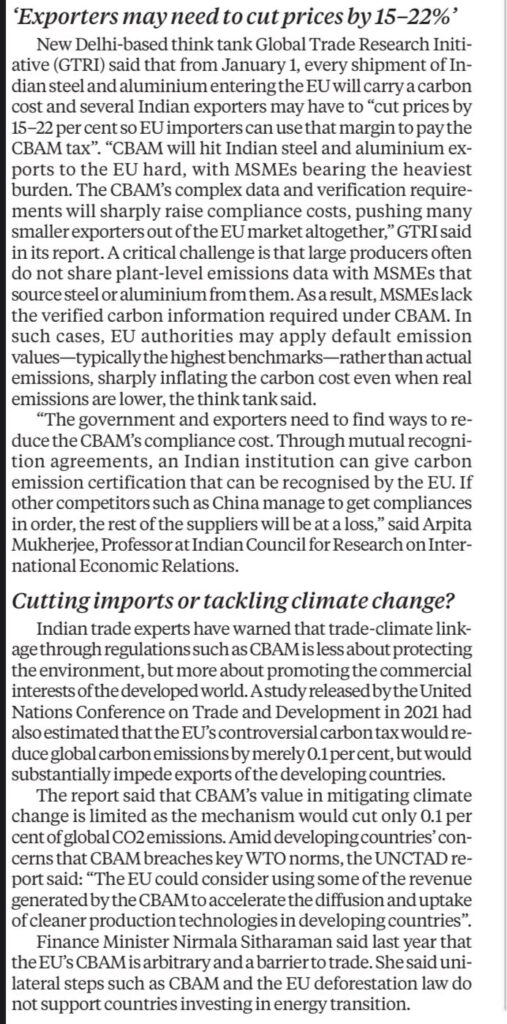
India’s Concerns
- Violates CBDR principle
- Acts as non-tariff barrier / green protectionism
- Indian steel and aluminium may face 20–35% price disadvantage in EU market
India’s Response
- Carbon Credit Trading Scheme (CCTS): domestic carbon pricing
- Carbon price paid in India can be deducted from CBAM liability
- Prevents double taxation