Context: India butterfly and moth diversity
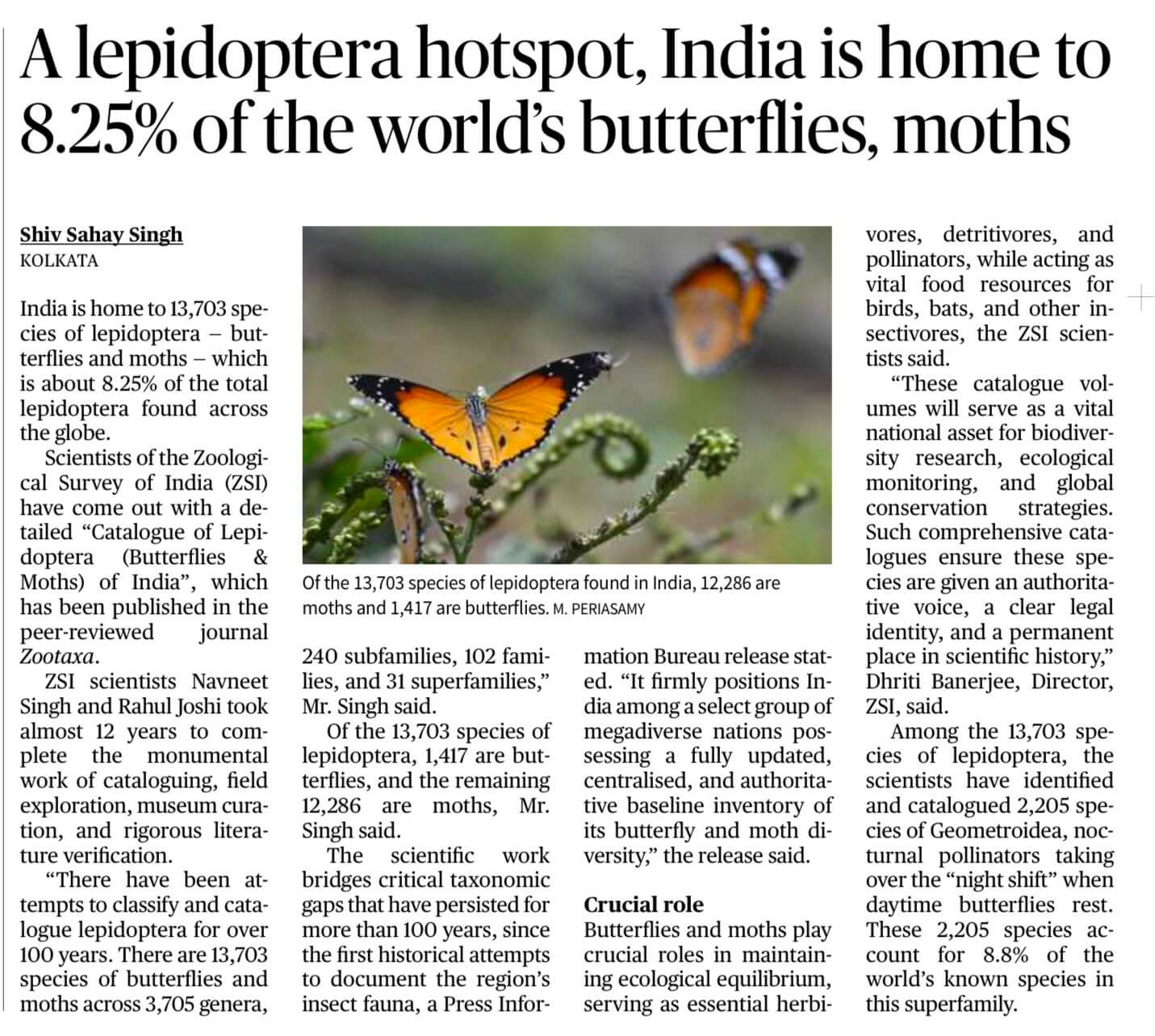
India has been identified as a major Lepidoptera hotspot, with 13,703 species of butterflies and moths.
This accounts for 8.25% of the world’s Lepidoptera diversity. The finding is based on the first comprehensive national catalogue prepared by the Zoological Survey of India.
Lepidoptera
Lepidoptera is an order of insects that includes butterflies and moths.
They are characterised by scale-covered wings.
They are ecologically important because they act as pollinators and bio-indicators.
India’s Lepidoptera Diversity
India has 13,703 Lepidoptera species.
This includes:
- 1,417 butterflies
- 12,286 moths
Together, they represent 8.25% of global Lepidoptera diversity.
National Catalogue
The national catalogue has been published by the Zoological Survey of India in Zootaxa.
It was prepared after 12 years of field surveys, museum studies and taxonomic verification.
The catalogue provides an authoritative national database for biodiversity research and conservation planning.
Taxonomic Coverage
The catalogue covers:
- 3,705 genera
- 240 subfamilies
- 102 families
- 31 superfamilies
Zoological Survey of India
The Zoological Survey of India was established in 1916.
Its headquarters is in Kolkata.
It functions under the Ministry of Environment, Forest and Climate Change.
It is the nodal agency for faunal survey, taxonomy and biodiversity documentation.
Geometroidea
Geometroidea is a superfamily of moths.
They are also called inchworm moths.
India has recorded 2,205 species of Geometroidea.
Blue Mormon
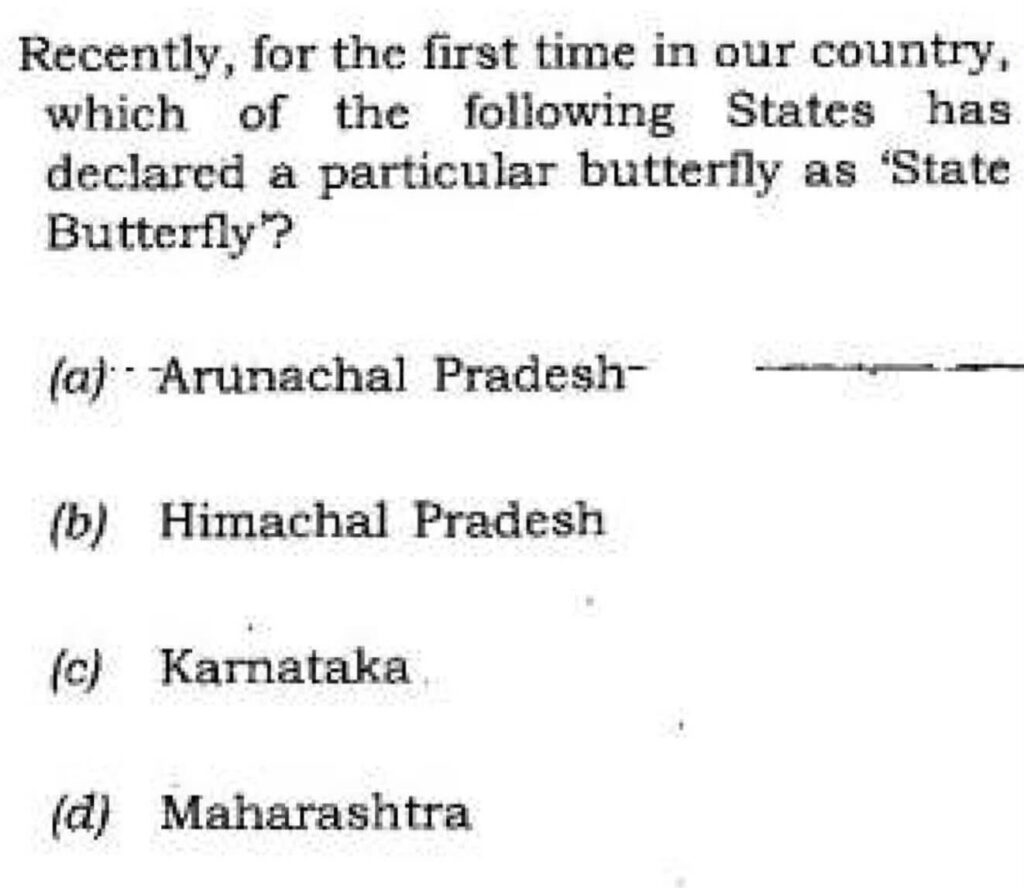
Blue Mormon is the State Butterfly of Maharashtra.
It is India’s second-largest butterfly.
It is protected under the Wild Life Protection Act, 1972.
Ecological Importance
Butterflies and moths support ecosystems by contributing to:
- Pollination
- Food chains
- Biodiversity monitoring
- Ecosystem health assessment
- Conservation planning
Because they are sensitive to environmental changes, they are useful indicators of habitat quality.
Key Takeaway
India’s Lepidoptera diversity shows the richness of its biodiversity. The ZSI catalogue strengthens scientific documentation and supports conservation planning for butterflies, moths and their habitats.