
Context: India-EU FTA
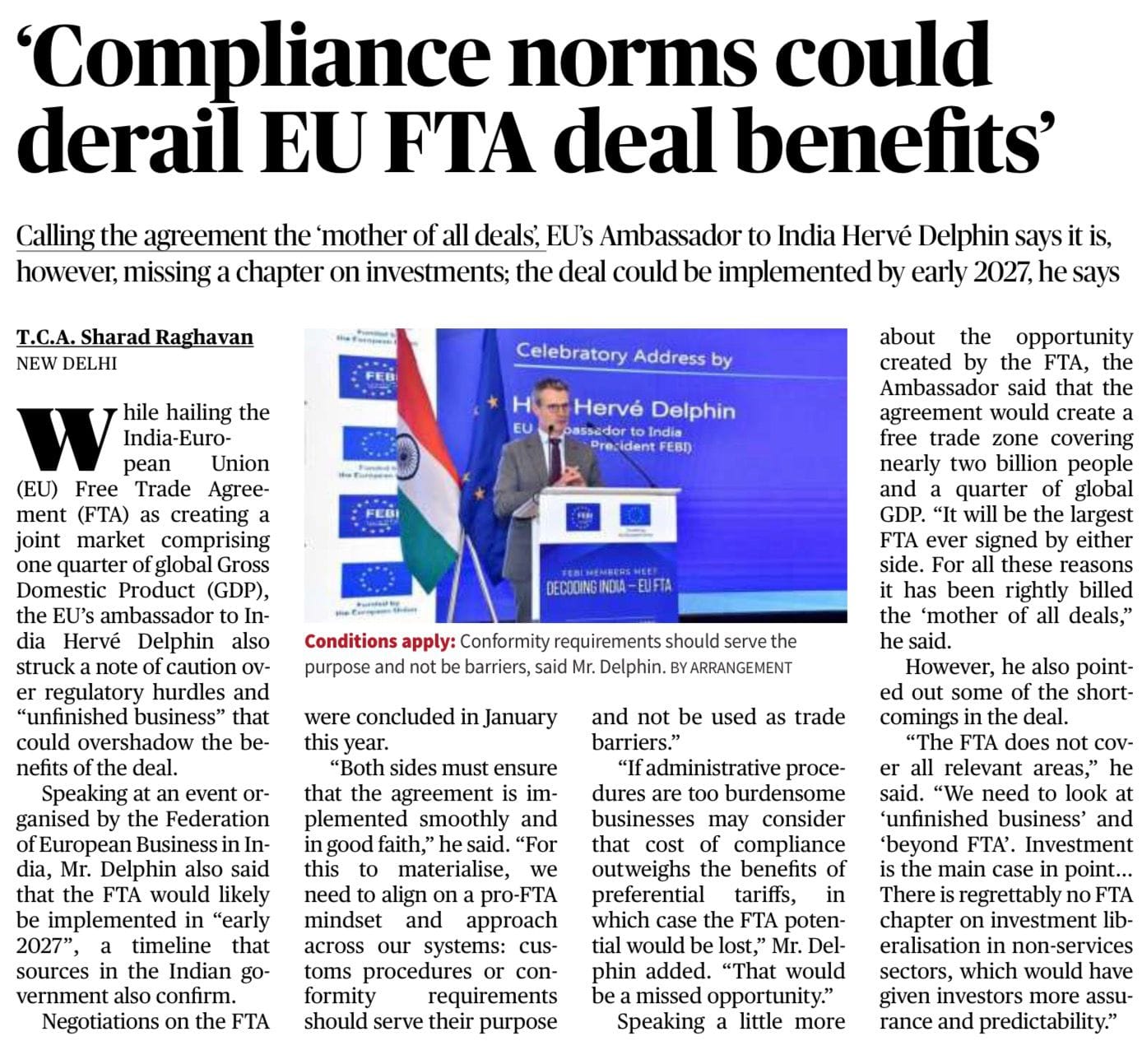
EU Ambassador to India Hervé Delphin called the proposed India–EU FTA the “mother of all trade deals”, but warned that strict EU compliance norms could reduce its actual benefits. Negotiations concluded in principle in January 2026; implementation is expected by early 2027.
India–EU FTA: Basics
- Negotiations resumed in 2022 after an 8-year pause.
- Covers:
Goods | Services | Investment | Digital Trade | GIs - Potentially one of the world’s largest FTAs:
~2 billion people | ~25% global GDP
Why Important for India?
Better access to EU markets for:
Pharma | Textiles | Engineering goods | IT services
- Investment & technology inflow
- Supply-chain diversification
- Strategic economic partnership with Europe
Core Concern
Even if tariffs are reduced, Indian exporters may still face strict EU:
- Technical standards
- Product certification
- Environmental & sustainability rules
- Customs/documentation requirements
These act as Non-Tariff Barriers (NTBs).
India’s Main Problem
- Compliance costs may become too high, especially for MSMEs.
- Businesses may feel FTA benefits are smaller than compliance burden.
- EU’s strict green and regulatory framework may limit actual market access.







