Source: The Hindu (Editorial) | Page 8 | Tags: 9 June 2026, Economy, GS2, GS3, International Relations
Context: India Oman CEPA
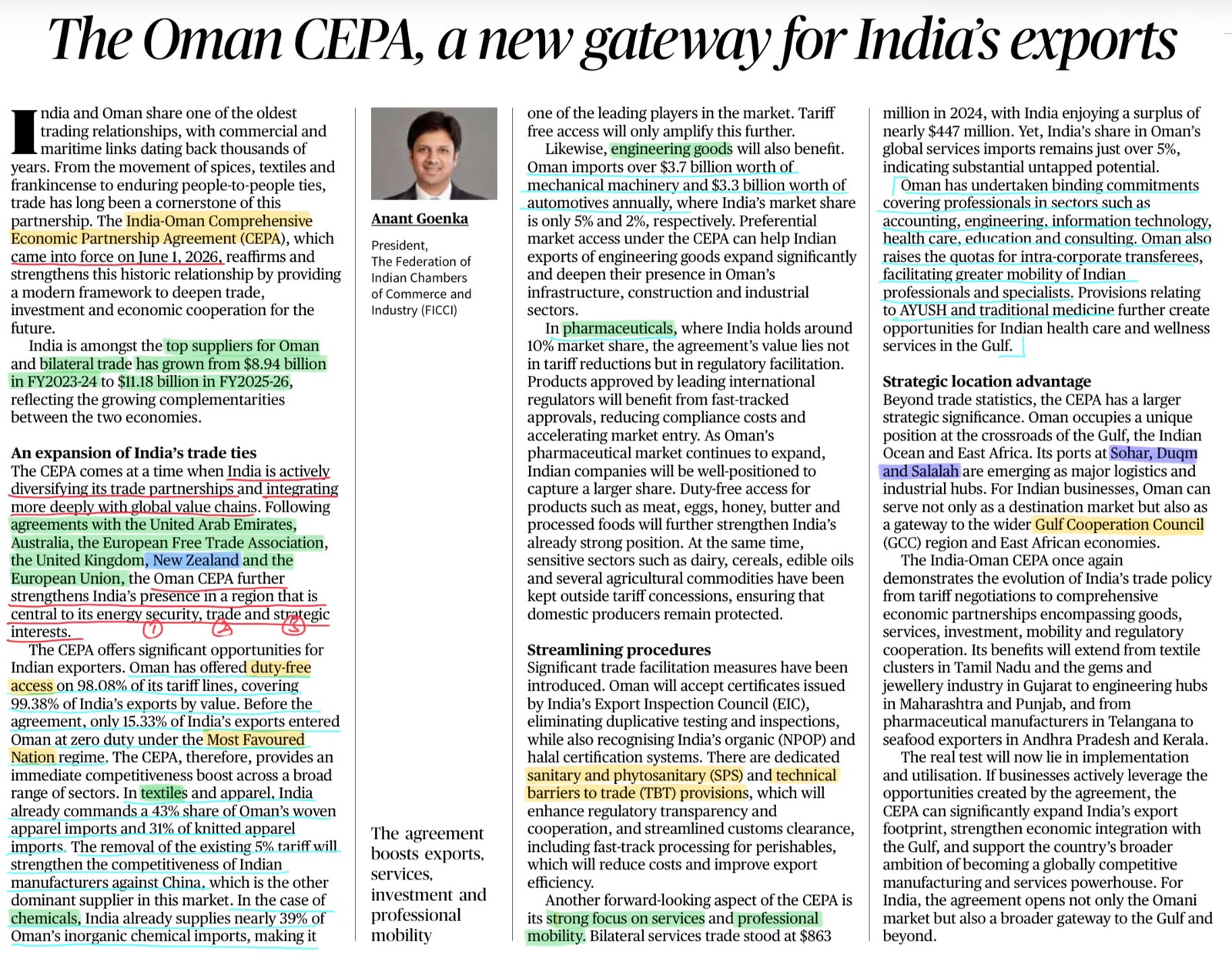
The India-Oman Comprehensive Economic Partnership Agreement came into force on 1 June 2026.
India–Oman CEPA: Basics
- Oman became the 2nd Gulf country after the United Arab Emirates to sign a CEPA with India.
- It is India’s 15th Free Trade Agreement.
- Bilateral trade increased from $8.94 billion in FY 2023–24 to $11.18 billion in FY 2025–26.
- Strengthens cooperation in trade, investment, services, professional mobility and energy security.
Key Provisions
- Duty-free access on 98.08% tariff lines covering 99.38% of India’s exports by value.
- Recognition of National Programme for Organic Production and halal certification.
- Faster customs clearance.
- Easier movement of professionals in:
- Information Technology
- Engineering
- Healthcare
- Education
- Consultancy
- AYUSH
Major Beneficiary Sectors
Goods
- Textiles
- Apparel
- Chemicals
- Engineering goods
- Automobiles
- Pharmaceuticals
- Processed food
Services
- IT
- Accounting
- Engineering
- Healthcare
- Education
- Consultancy
- AYUSH
Significance of Oman for India
Trade and Connectivity
- Gateway to Gulf Cooperation Council and East Africa.
- Helps integration into Global Value Chains.
Strategic Importance
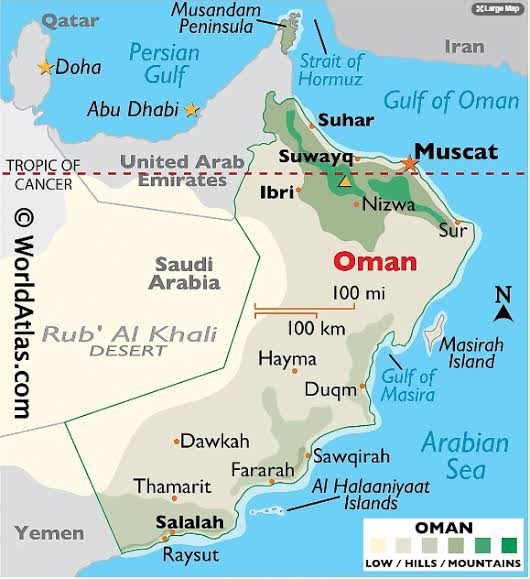
- Located near Strait of Hormuz.
- Key partner in the Indian Ocean Region.
Energy Security
- Important source of crude oil and LNG.
Important Ports
- Duqm
- Salalah
- Sohar
Geoeconomic Importance
- Supports India–Middle East–Europe Economic Corridor.
- Provides access to Gulf logistics and industrial hubs.
GCC, MFN, SPS and TBT Basics
Gulf Cooperation Council
- Established: 1981
- Headquarters: Riyadh, Saudi Arabia
Members
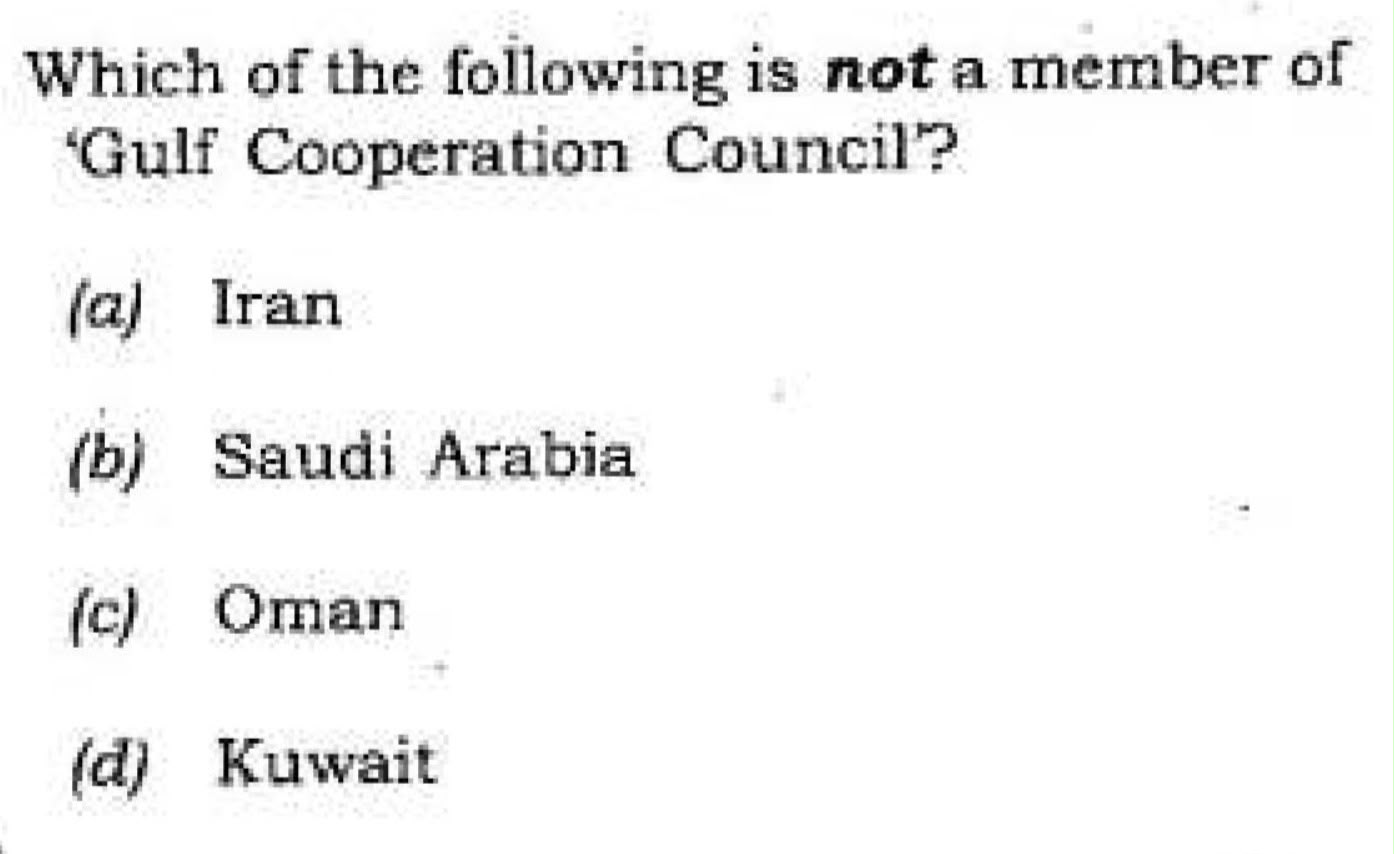
- Saudi Arabia
- UAE
- Oman
- Kuwait
- Bahrain
- Qatar
PYQ Point
- Iran is not a GCC member.
Most Favoured Nation Status
- WTO principle of non-discrimination.
- Trade benefit given to one WTO member must be extended to all WTO members, except under Free Trade Agreements or Customs Unions.
SPS — Sanitary and Phytosanitary Measures
- WTO rules relating to food safety, animal health and plant health.
- Example: Pest-free certification and disease-control standards.
TBT — Technical Barriers to Trade
- WTO rules on product standards, testing, certification and labelling.
- Aim: Prevent standards from becoming hidden trade barriers.