Context:
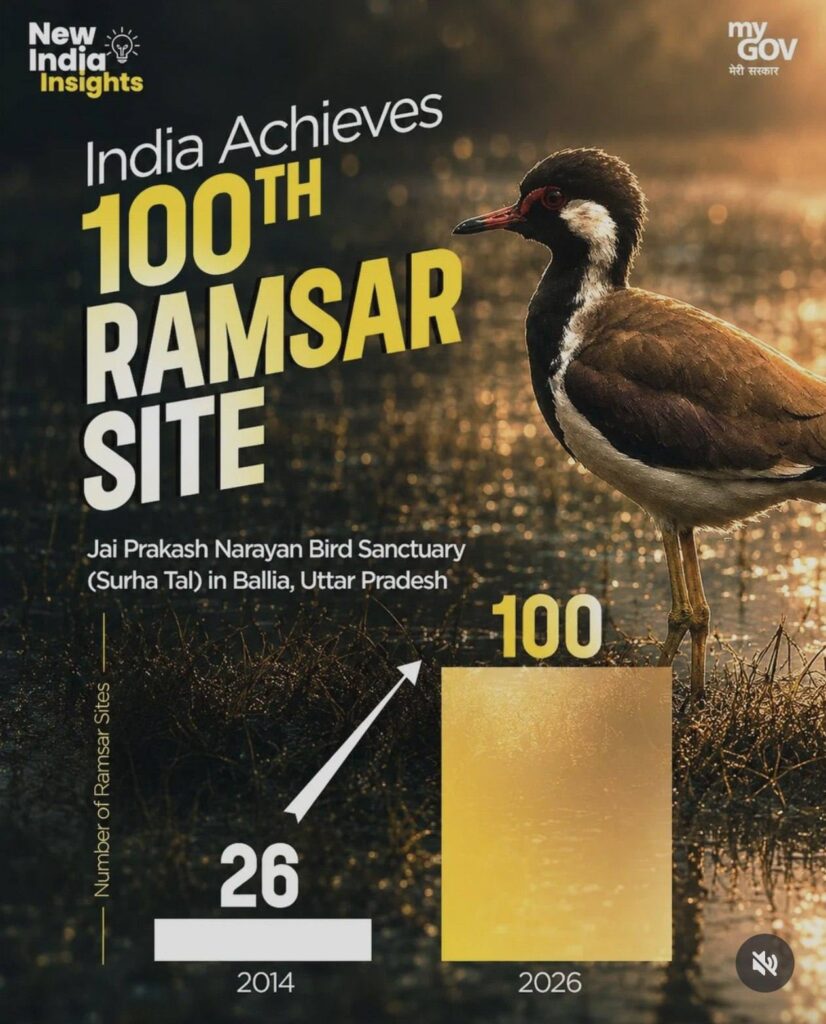
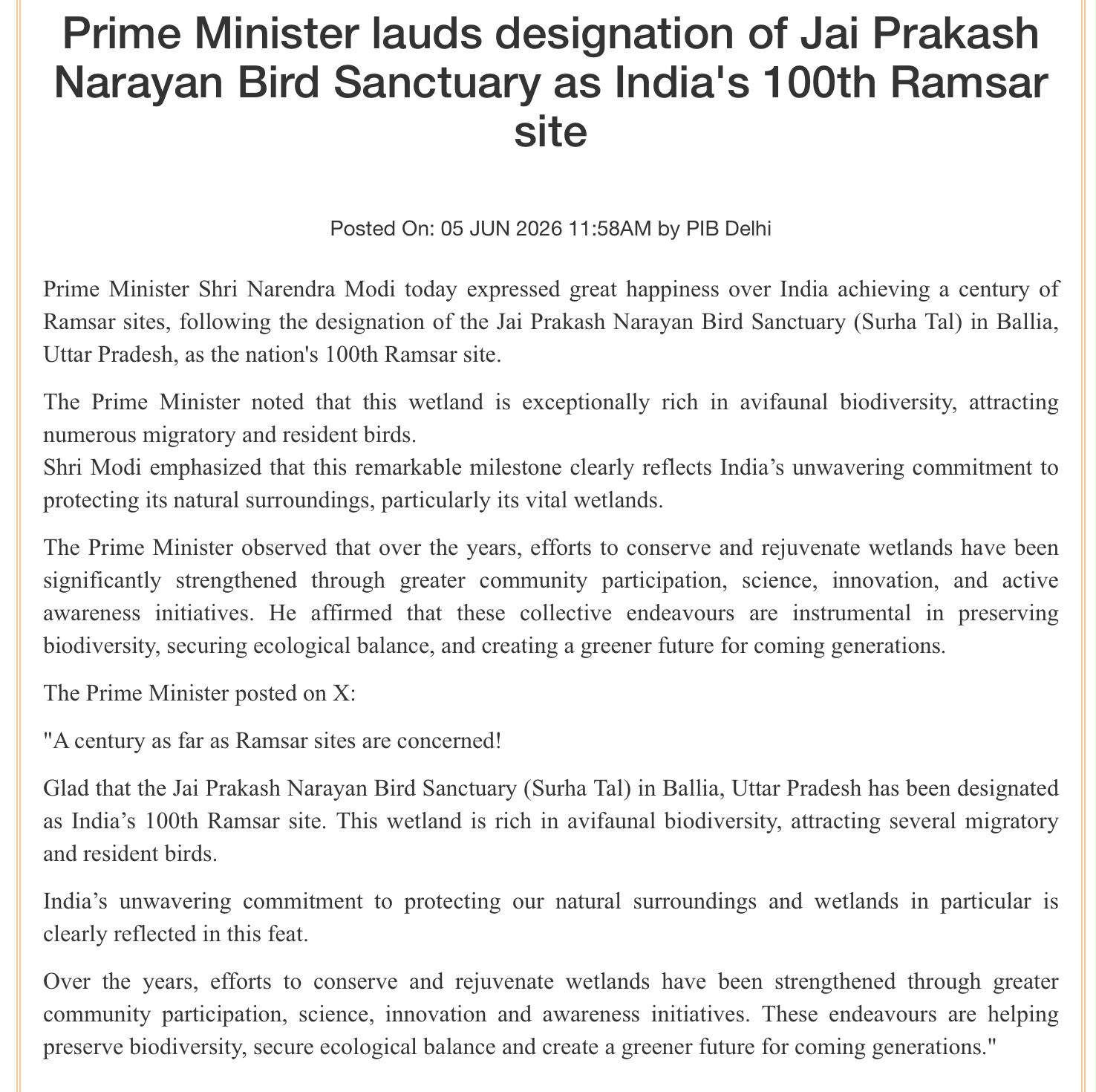
Jai Prakash Narayan Bird Sanctuary, also known as Surha Tal, in Ballia, Uttar Pradesh became India’s 100th Ramsar Site on 5 June 2026.
Latest Ramsar Sites
100. Jai Prakash Narayan Bird Sanctuary (Surha Tal)
Ballia, Uttar Pradesh
99. Shekha Jheel Bird Sanctuary
Aligarh, Uttar Pradesh
98. Chhari-Dhand Wetland
Kutch, Gujarat
97. Patna Bird Sanctuary
Etah, Uttar Pradesh
96. Siliserh Lake
Alwar, Rajasthan
Recent:
Udaypur Lake — West Champaran, Bihar
Highest Ramsar Sites
- Tamil Nadu: 20
- Uttar Pradesh: 12
Ramsar Convention and Ramsar Site
- Ramsar Convention: 1971, Ramsar, Iran
- In force: 1975
- India joined: 1982
- World Wetlands Day: 2 February
Ramsar Site:
A wetland of international importance recognised for its ecological, biodiversity, hydrological or species-support value.
Benefits
- Wise Use Principle
- Maintenance of ecological character
- Better conservation and restoration
- International recognition and cooperation
Ramsar Criteria and Waterfowl Habitat
A wetland becomes a Ramsar Site if it satisfies at least one of the 9 Ramsar Criteria.
Criterion 1:
Unique / Rare Wetland
Criteria 2–4:
Biodiversity, threatened species, ecological importance
Criteria 5–6:
Waterbirds / Waterfowl Habitat
Criteria 7–8:
Fish diversity, breeding and migration grounds
Criterion 9:
Other wetland-dependent fauna
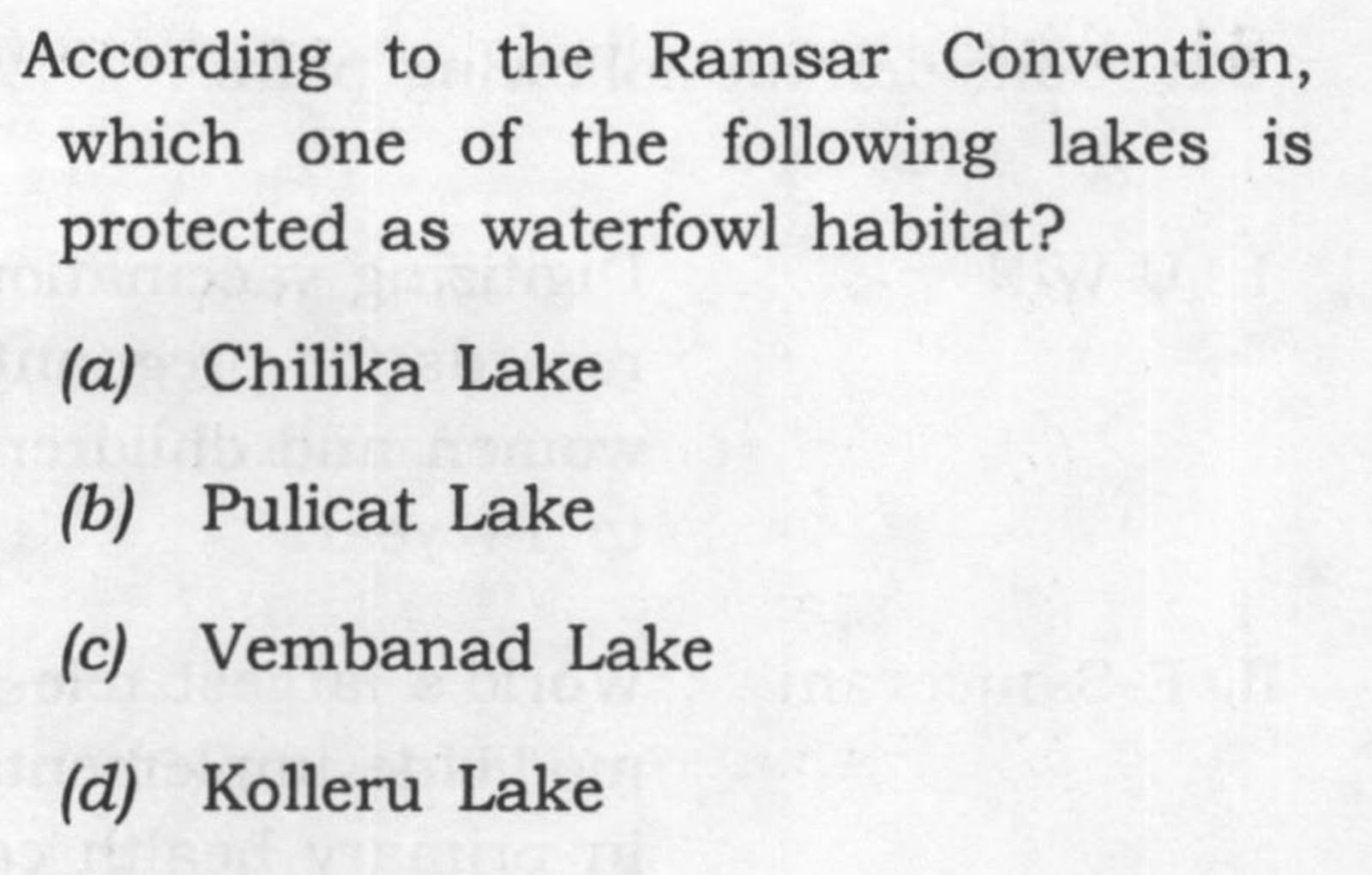
Waterfowl Habitat Criterion
A Ramsar Site is recognised as a Waterfowl Habitat when it satisfies:
- Criterion 5: Supports 20,000+ waterbirds, or
- Criterion 6: Supports 1% of the global population of a waterbird species / subspecies.
Examples
- Chilika Lake, Odisha
- Keoladeo National Park, Rajasthan
- Harike Wetland, Punjab