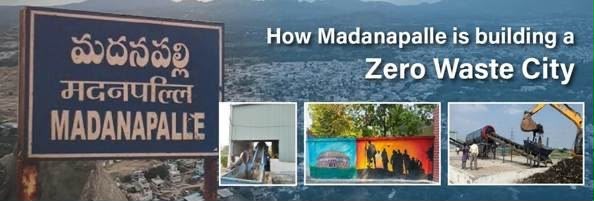
Context: Madanapalle Zero Waste City Model
Madanapalle Municipality in Andhra Pradesh, under Swachh Bharat Mission–Urban 2.0, has adopted a Zero Waste City model.
The model is based on scientific waste management, resource recovery and circular economy practices.
Zero Waste City
A Zero Waste City is one that minimises waste generation and ensures maximum reuse, recycling, composting or recovery of waste.
The aim is to send minimum waste to landfills.
It follows the principles of:
- Reduce
- Reuse
- Recycle
- Recover
- Refuse
It is also linked with the circular economy approach.
Madanapalle Model
Madanapalle has adopted an integrated approach to urban sanitation and solid waste management.
Key Features
1. Door-to-Door Collection
The municipality has achieved 100% door-to-door collection of waste.
2. Source Segregation
Waste is segregated at source, which makes further processing easier.
3. Wet Waste Management
Wet waste is processed through composting and biogas generation.
This reduces landfill load and creates useful outputs.
4. Dry Waste Management
Dry waste is sent to Material Recovery Facilities for recycling and recovery.
5. Special Waste Streams
The model also includes scientific management of:
- Plastic waste
- Sanitary waste
- Domestic hazardous waste
- Construction and demolition waste
6. Minimal Landfill Disposal
The goal is to reduce landfill dependence and improve resource recovery.
Circular Economy Link
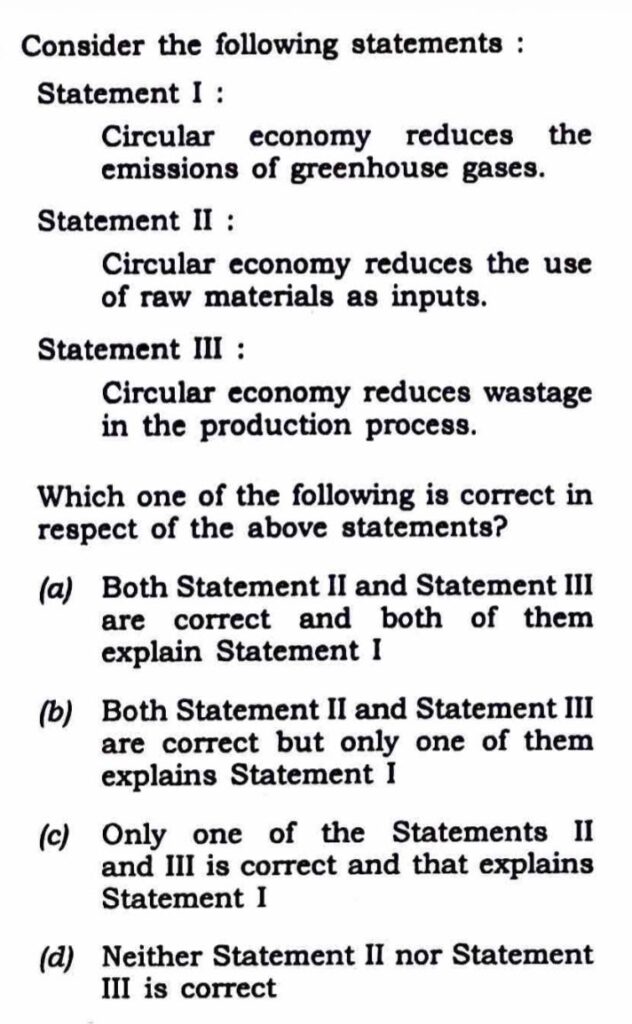
A circular economy reduces the use of raw materials, lowers waste generation and decreases greenhouse gas emissions.
Waste is treated as a resource rather than something to be discarded.
Significance
The Madanapalle model helps:
- Reduce landfill use
- Reduce methane emissions
- Reduce pollution
- Improve sanitation
- Improve public health
- Create green jobs
- Support circular economy
- Advance SBM-U 2.0
- Contribute to SDG 11 and SDG 12
Key Takeaway
Madanapalle shows how small and medium urban centres can move towards zero waste through source segregation, resource recovery and circular economy-based waste management.