Context
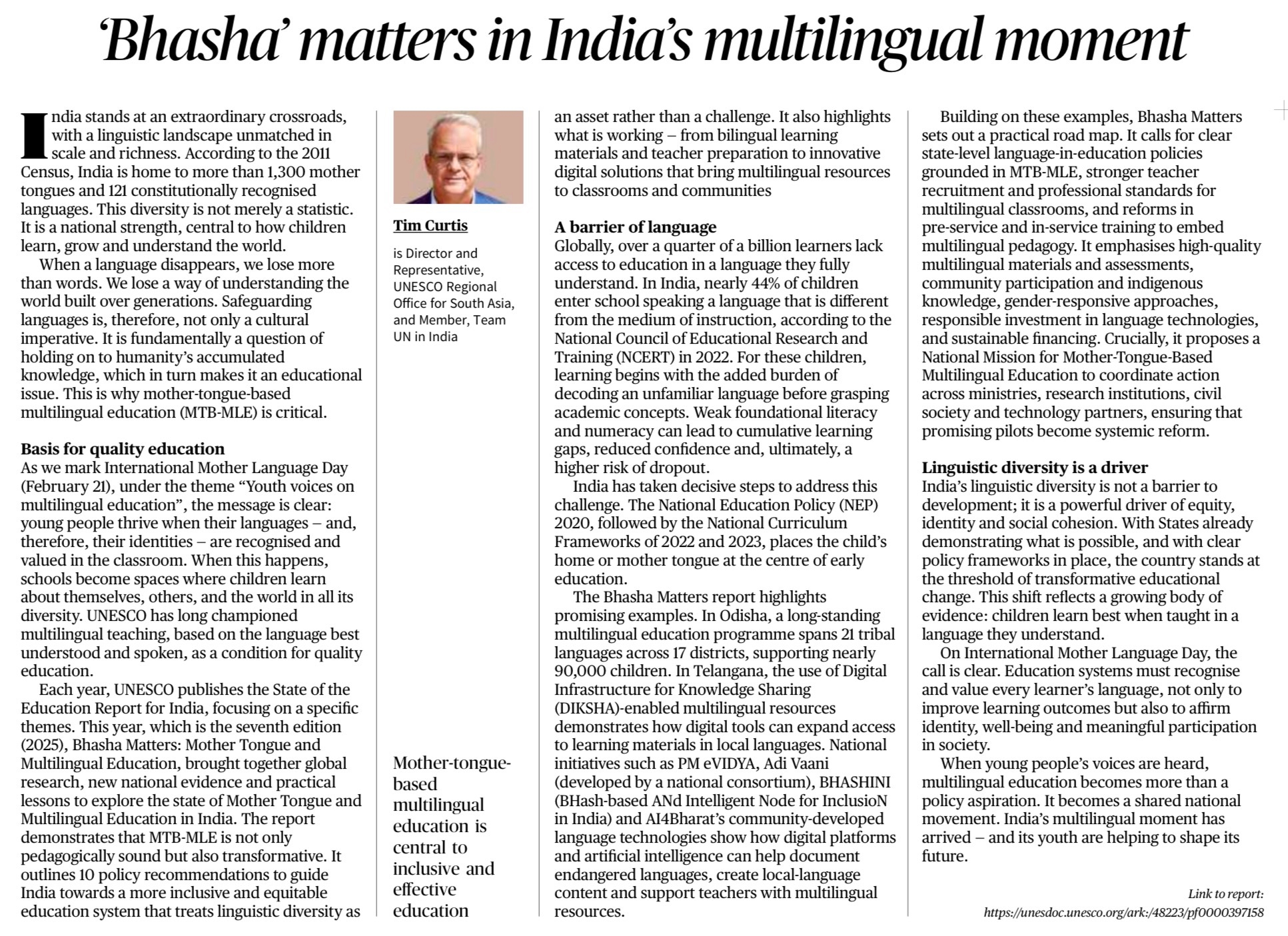
India’s linguistic diversity is huge — over 1,300 mother tongues. This diversity is not just cultural but essential for quality education and equal learning opportunities.
Key Points
1. Why Mother Tongue Matters
• Children learn faster and understand concepts better when taught in a language they speak at home.
• Using an unfamiliar language early on leads to weak literacy, reduced confidence, and higher dropout risk.
2. Global & Indian Challenge
• Globally, millions of children face barriers because schooling is in a language they do not understand.
• In India, nearly 44% of children face this barrier.
3. India’s Response
• National Education Policy (NEP) 2020 and updated National Curriculum Frameworks (2022, 2023) place the child’s mother tongue or home language at the center of early learning.
• Several states show successful examples:
• Odisha: Teaching in 21 tribal languages across 17 districts.
• Telangana: Use of digital tools for multilingual learning.
• National initiatives like digital platforms also help preserve and teach local languages.
4. What “Bhasha Matters” Calls For
Strengthening multilingual education through:
• Quality multilingual materials
• Better teacher training
• Community and indigenous knowledge involvement
• Use of digital tools
• Proposal for a National Mission for Mother-Tongue-Based Multilingual Education to coordinate action across ministries and institutions.