Context: National Food Security Act revision
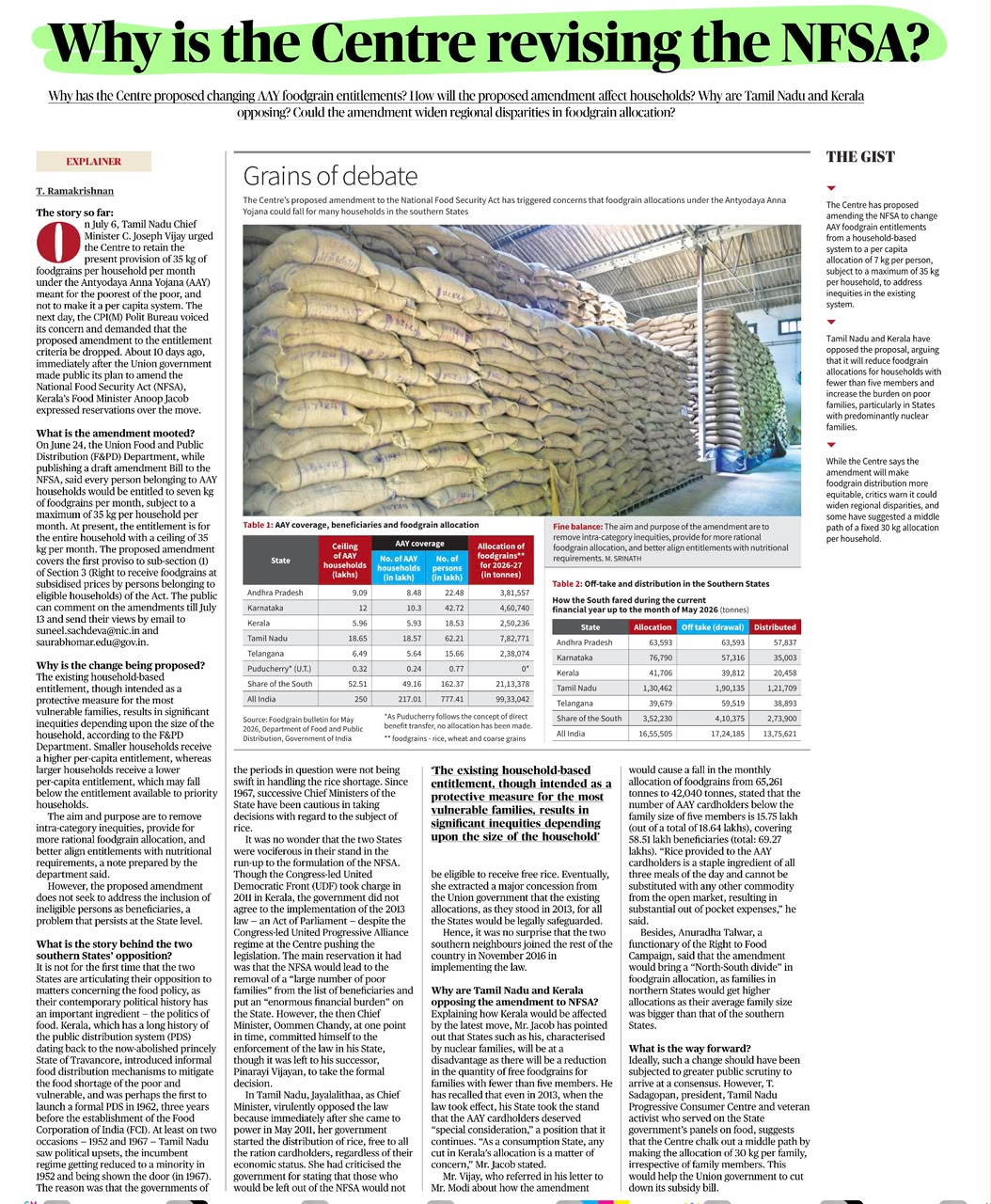
The Union Government has proposed amendments to the National Food Security Act (NFSA), 2013, especially regarding foodgrain entitlement under the Antyodaya Anna Yojana (AAY).
The proposal aims to shift from a household-based allocation system to a per-person entitlement model.
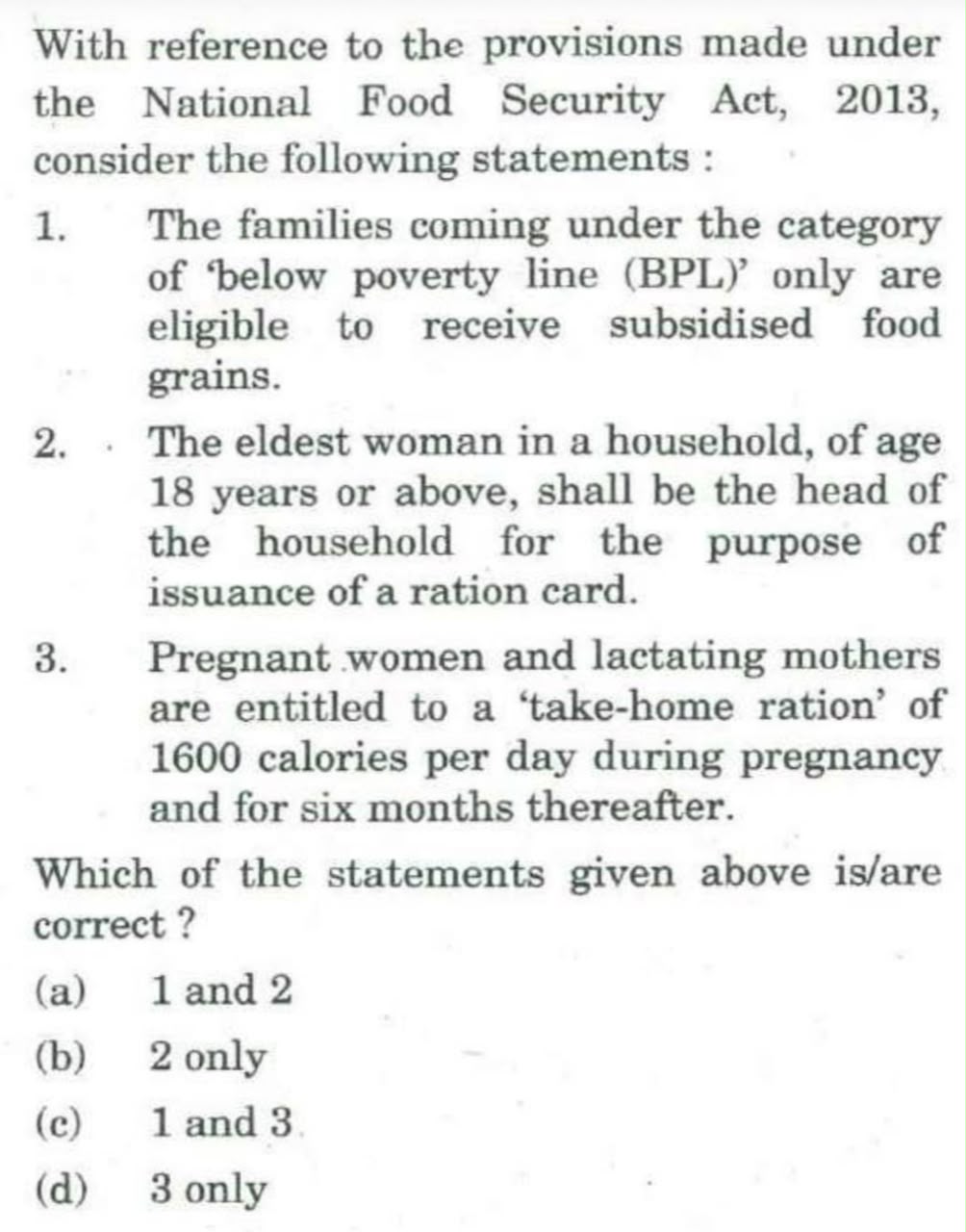
National Food Security Act (NFSA), 2013
Objective
To provide legal entitlement to subsidised foodgrains and strengthen food and nutritional security through the Targeted Public Distribution System (TPDS).
Coverage
Rural Areas
- Up to 75% population
Urban Areas
- Up to 50% population
Beneficiary Categories
1. Priority Households (PHH)
Eligible members receive:
- 5 kg foodgrains/person/month at subsidised prices.
2. Antyodaya Anna Yojana (AAY)
Covers:
- Poorest and most vulnerable households.
Current entitlement:
- 35 kg foodgrains per household per month.
The proposed amendment concerns only AAY households.
Proposed Amendment
Present System
- Every AAY household receives 35 kg/month.
- Allocation depends on household, not number of members.
Proposed System
- 7 kg/person/month.
- Maximum entitlement remains 35 kg per household.
- Allocation will depend on the number of eligible members.
Why Does the Centre Want This Change?
1. Reduce Inequity
Under the existing system:
- Small households and large households receive the same quantity.
2. Person-Centric Allocation
The proposed system links entitlement with actual beneficiaries.
3. Better Nutritional Targeting
Helps align food support with household size.
4. Rationalisation of Food Subsidy
Improves efficiency in foodgrain allocation.
Why Are Tamil Nadu and Kerala Opposing It?
1. Smaller Household Size
Southern States have a higher proportion of nuclear families.
2. Reduced Entitlement
Many AAY households with fewer than five members may receive less than 35 kg.
3. State-Level Food Security Concerns
States argue that it may reduce foodgrain allocation.
4. Universal PDS Model
Tamil Nadu highlights its long-standing Universal Public Distribution System.
Centre’s Position
- No beneficiary will lose eligibility under NFSA.
- Only the method of calculating entitlement is changing.
- The reform aims to make allocation more equitable and person-centric.
Significance
- Balances equity with food security.
- Impacts food subsidy management.
- Has implications for Centre-State relations.
- Highlights challenges in designing uniform welfare policies while considering demographic differences.