Context:
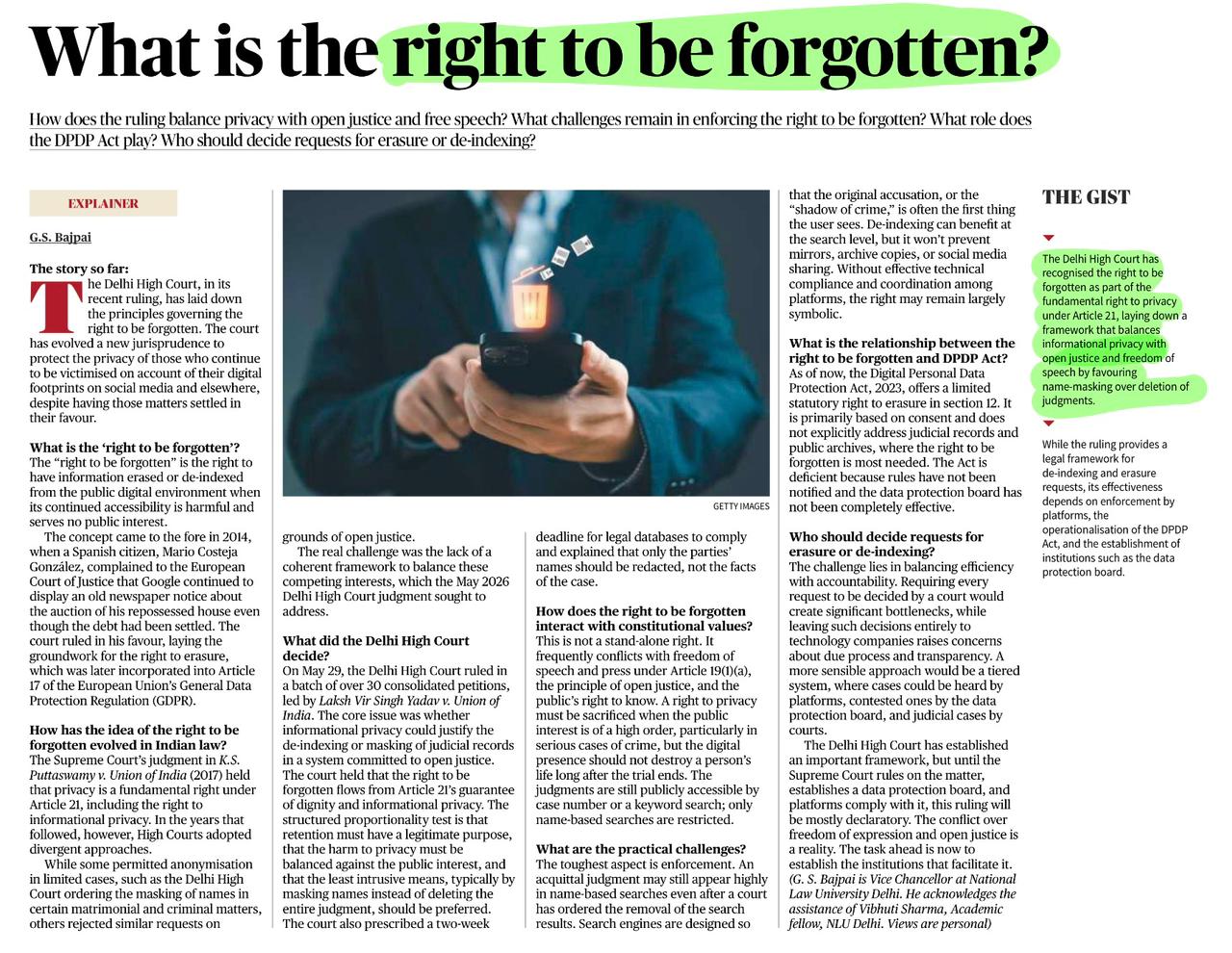
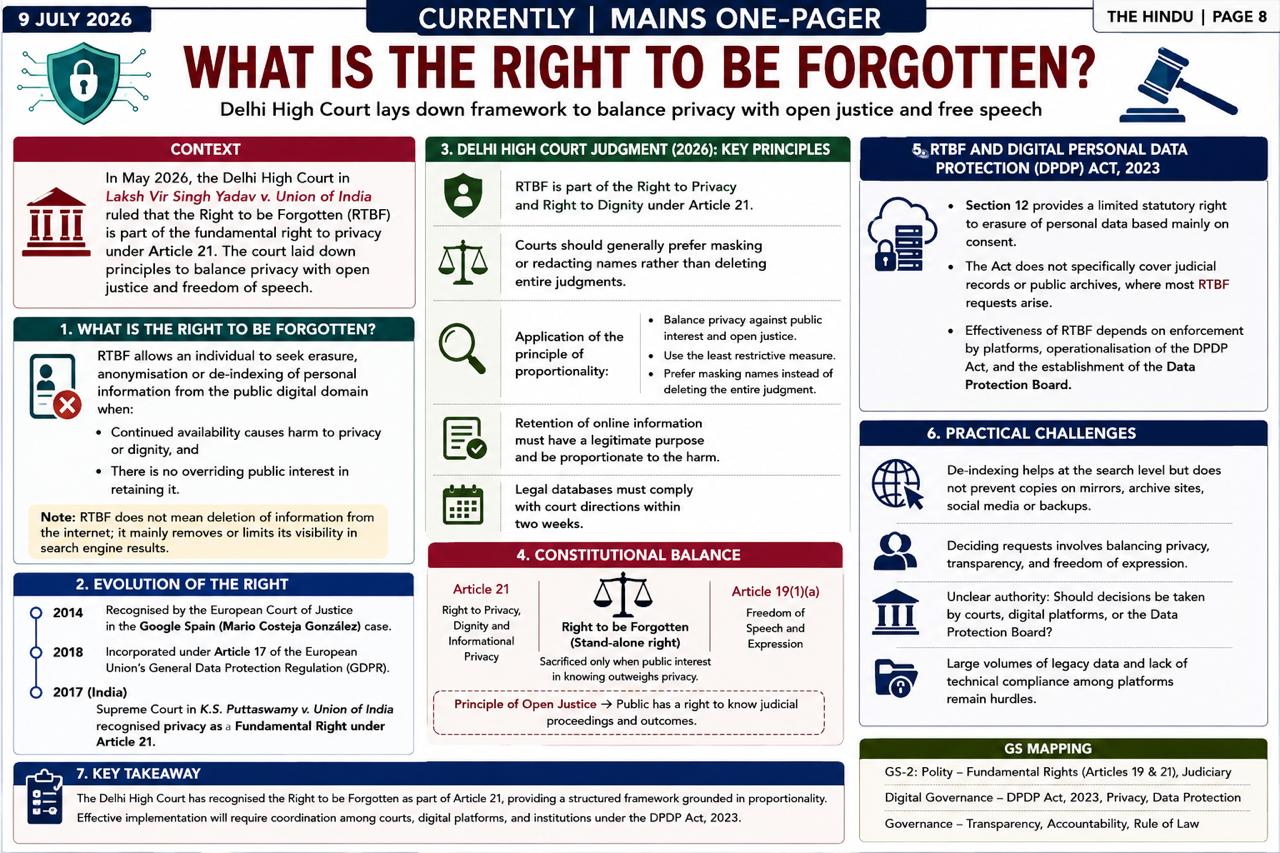
The Delhi High Court, in Kalki v. Singh Yadav v. Union of India, held that the Right to be Forgotten must be balanced with open justice and freedom of speech.
Right to be Forgotten
The Right to be Forgotten allows an individual to seek removal, deletion or de-indexing of personal information from public digital access when continued availability causes harm and no longer serves a legitimate public interest.
Meaning
It does not mean automatic deletion of all information.
It usually means reducing easy public access to outdated, irrelevant or harmful personal data.
Constitutional Basis
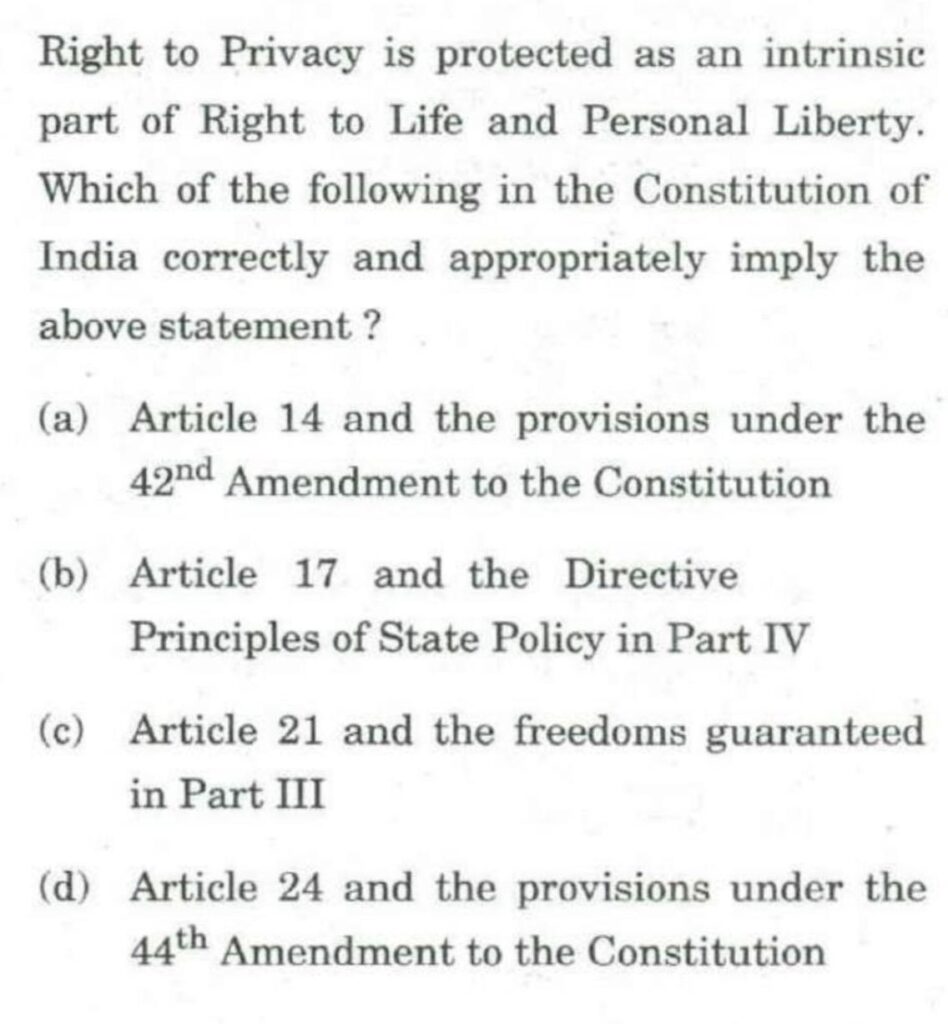
The Right to be Forgotten is part of the broader Right to Privacy.
Right to Privacy
Recognised by the Supreme Court in:
K.S. Puttaswamy v. Union of India, 2017
Privacy is protected under:
- Article 21
- Part III freedoms
Constitutional Balance
The Right to be Forgotten must be balanced against:
Article 19(1)(a)
- Freedom of speech and expression
- Public right to know
- Press freedom
Open Justice Principle
Court proceedings and judgments are generally public to ensure transparency and accountability.
Article 21
- Privacy
- Dignity
- Reputation
Practical Examples
A person may seek de-indexing of:
- Old acquittal records
- Personal details in judgments
- Sensitive personal information
- Irrelevant search results
- Outdated content causing disproportionate harm
Delhi High Court Position
The Court laid down that requests should generally be made before masking or redacting names rather than deleting entire judgments.
Key Principles
1. Balancing Test
Courts must balance privacy with public interest.
2. Proportionality
The restriction should be proportionate and not excessive.
3. Legitimate Purpose
Retention of online information must serve a legitimate public purpose.
4. Open Justice
Judicial transparency should not be undermined.
DPDP Act, 2023 Link
The Digital Personal Data Protection Act, 2023 provides a limited statutory basis for erasure of personal data.
However, it does not specifically use the phrase “Right to be Forgotten”.
Challenges
- Search engines may remove links but copies may remain elsewhere.
- Balancing privacy with press freedom is difficult.
- Court records serve public accountability.
- Large volumes of legacy data make compliance hard.
- Lack of clear procedural framework.
Key Takeaway
The Right to be Forgotten protects privacy and dignity, but it cannot override open justice, public interest and freedom of expression in every case.