Source: The Hindu | Page 10 | Tags: 20 June 2026, Article 21, Fundamental Rights, GS2, Judicial Activism, Polity & Constitution
Context: Right to Walk Safely on Footpaths
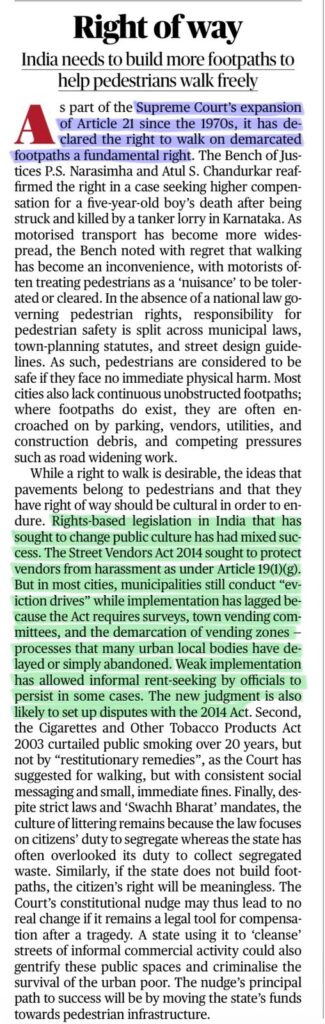
A Supreme Court Bench headed by Justice P.S. Narasimha held that the right to walk safely on designated footpaths is part of Article 21, meaning it is connected to the right to life and personal liberty.
Article 21
Article 21 guarantees:
- Right to life
- Right to personal liberty
It has been expanded by judicial interpretation to include dignified and safe living.
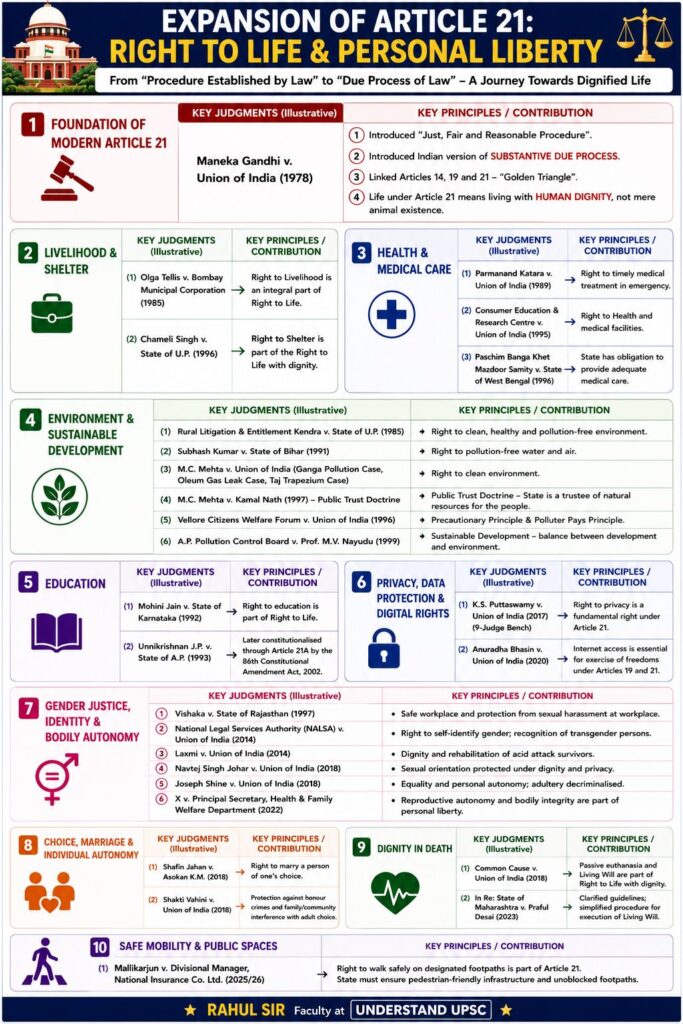
Expansion of Article 21
Article 21 now includes:
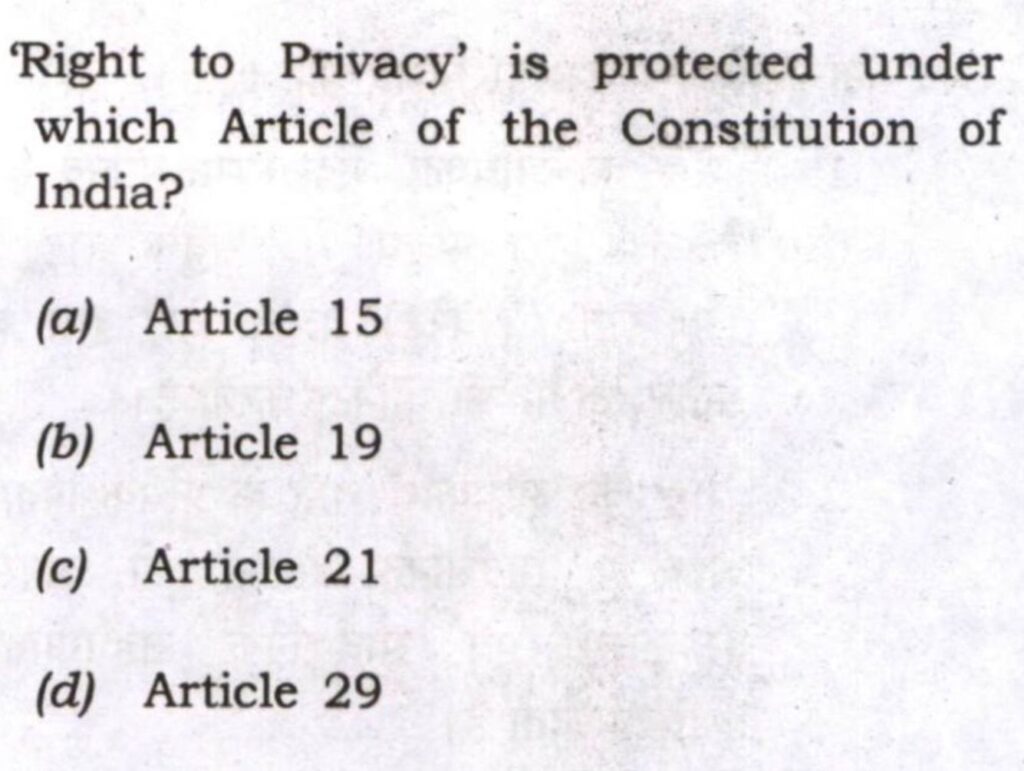
- Right to privacy
- Right to health
- Right to clean environment
- Right to livelihood
- Right to education
- Right to shelter
- Right to dignity
- Right to die with dignity
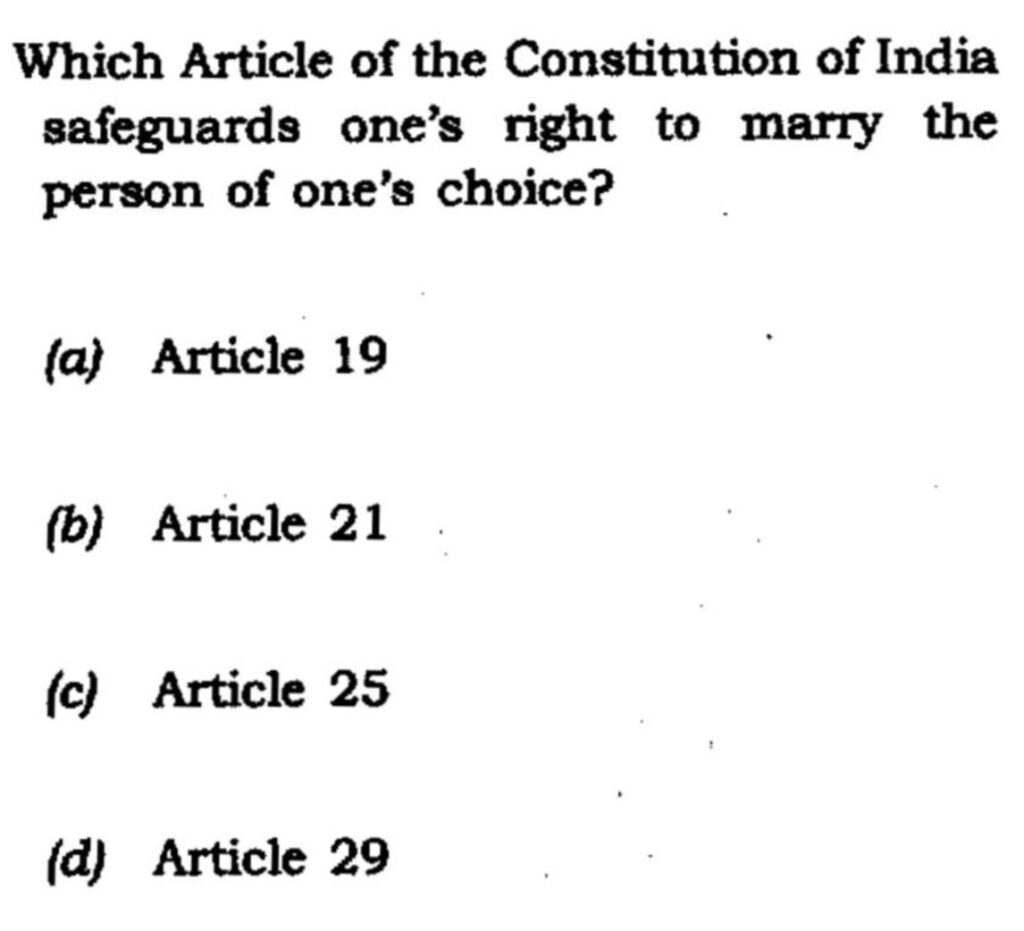
- Right to marry a person of one’s choice
- Right to safe mobility and pedestrian safety
Key Idea
The Court held that pedestrians cannot be forced to walk on unsafe roads because footpaths are encroached, poorly maintained or unavailable.
Why It Matters
- Recognises pedestrian safety as a constitutional concern.
- Links urban planning with fundamental rights.
- Places responsibility on State authorities and local bodies.
- Strengthens the idea of safe public spaces.
- Expands Article 21 beyond survival to dignified urban life.
Governance Angle
Municipal bodies must ensure:
- Clear footpaths
- Removal of encroachments
- Road safety
- Pedestrian-friendly infrastructure
- Inclusive urban planning
- Accountability for unsafe civic design
PYQ Link
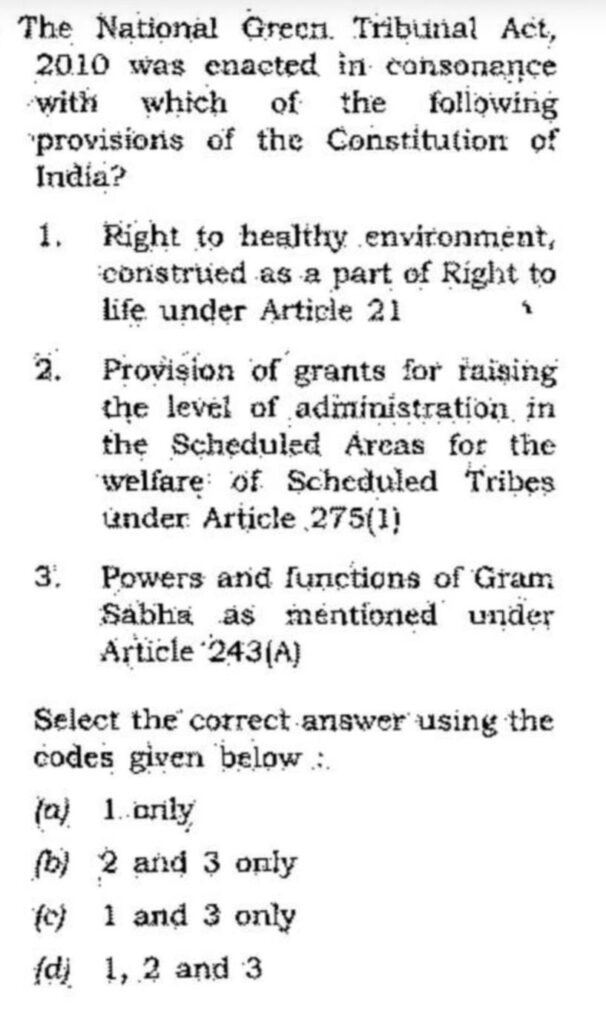
Right to Privacy is protected under Article 21.
Right to marry a person of one’s choice is also protected under Article 21.