SHANTI Framework Bay of Bengal: Maritime Strategy Explained

Context: SHANTI Framework Bay of Bengal
India has proposed SHANTI, or Securing Holistic Advancement through Norms, Trust and Integrity, as a maritime governance framework for the Bay of Bengal.

The framework aims to strengthen regional cooperation through shared rules, trust and institutional partnerships rather than strategic rivalry.

Bay of Bengal’s Strategic Importance

The Bay of Bengal is one of the most important maritime spaces in the Indo-Pacific.

It connects South Asia with Southeast Asia and provides access to important sea routes.

It is also linked with India’s Act East Policy, maritime security strategy and regional connectivity.

The Bay of Bengal is important for:

  • Trade
  • Energy movement
  • Fisheries
  • Disaster response
  • Blue economy
  • Maritime connectivity
  • Security cooperation

SHANTI Framework

SHANTI stands for Securing Holistic Advancement through Norms, Trust and Integrity.

It aims to institutionalise maritime cooperation based on:

  • Rules
  • Trust
  • Shared responsibility
  • Regional coordination
  • Common maritime interests

It complements India’s earlier maritime visions such as SAGAR and MAHASAGAR.

Objectives of SHANTI

The framework seeks to promote a rules-based maritime order.

It also aims to strengthen cooperation in:

  • Maritime security
  • Disaster management
  • Humanitarian assistance
  • Blue economy
  • Fisheries management
  • Environmental protection
  • Maritime law enforcement

The focus is on solving shared regional challenges through institutions and cooperation.

Why the Bay of Bengal Is Suitable

The Bay of Bengal has many common transboundary challenges.

These include cyclones, illegal fishing, climate risks, maritime pollution, trafficking, disaster vulnerability and weak regional coordination.

Because many countries share this maritime space, India can use it as a starting point for cooperative maritime leadership.

Link with BIMSTEC

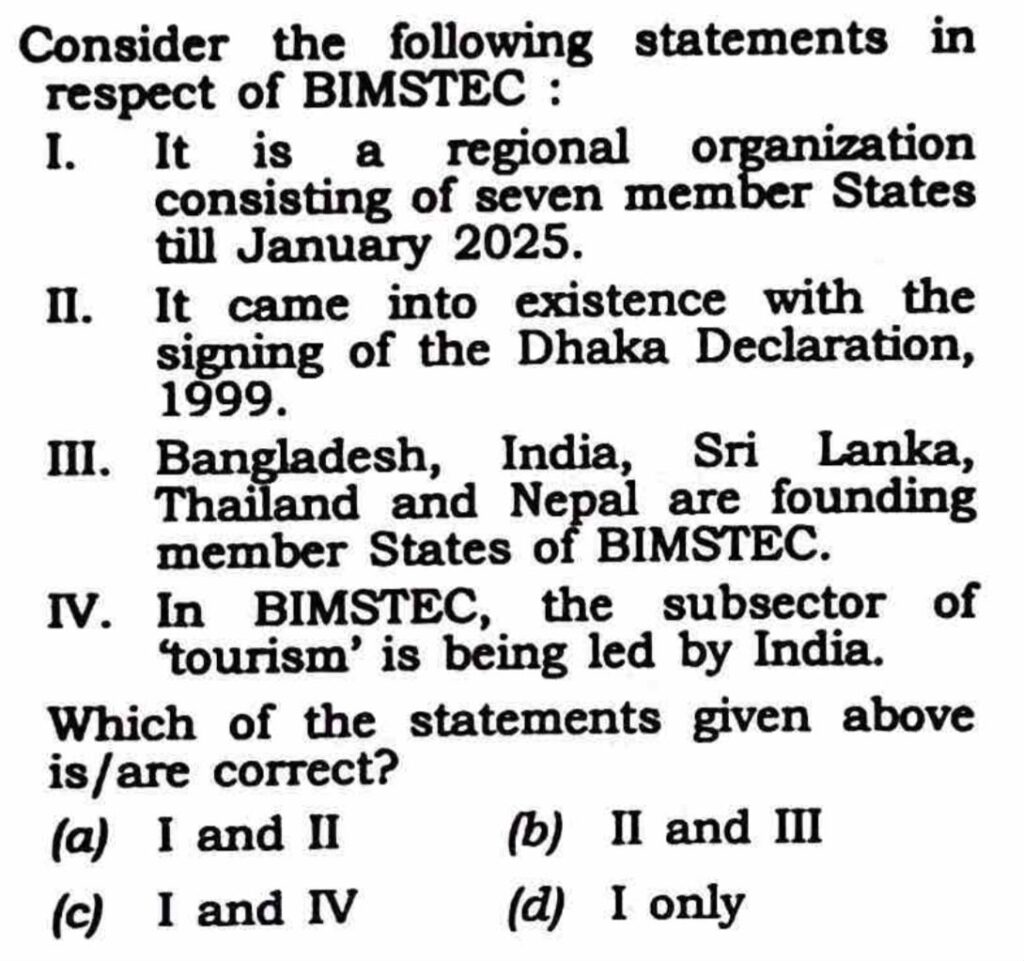
BIMSTEC is an important platform for Bay of Bengal cooperation.

It includes countries from South Asia and Southeast Asia.

A stronger Bay of Bengal framework can deepen cooperation between India, Bangladesh, Sri Lanka, Myanmar, Thailand, Nepal and Bhutan.

This also supports India’s Act East and Indo-Pacific vision.

Significance for India

The framework reinforces India’s role as a preferred security partner in the Indian Ocean Region.

It allows India to lead through consensus-building rather than dominance.

It also helps India counter instability and strategic competition by promoting cooperation, trust and rules.

Key Takeaway

SHANTI can make the Bay of Bengal the starting point of India’s cooperative maritime strategy. It links maritime security with regional trust, institutions and shared development.

SHANTI Framework Bay of Bengal
Subscribe
Notify of
guest
0 Comments
Oldest
Newest Most Voted

SHANTI Framework Bay of Bengal: Maritime Strategy Explained

Got a question? We're here to help!

Our dedicated Student Support team is ready to assist you and guide you every step of the way.
Reach out to us, and let’s tackle your queries together!

About the UPSC Civil Services Examination (UPSC CSE)

The UPSC Civil Services Examination (CSE) is one of the most competitive and esteemed examinations in India, conducted by the Union Public Service Commission to recruit officers for services such as the Indian Administrative Service (IAS), Indian Police Service (IPS), Indian Foreign Service (IFS), and others. The exam comprises three stages — Prelims, Mains, and the Personality Test (Interview) — designed to test a candidate’s knowledge, aptitude, decision-making, and leadership skills.

How to Prepare Effectively for UPSC CSE

Cracking the UPSC CSE requires a deep understanding of the syllabus, consistent revision, structured answer writing, and smart test-taking strategies. The Prelims test analytical and conceptual clarity, the Mains focuses on critical thinking, articulation, and subject mastery, while the Interview assesses presence of mind, ethical judgment, and personality traits relevant to public service.

At UnderStand UPSC, we empower aspirants with a personalized and focused approach to each stage of the exam.

Why Choose UnderStand UPSC?

UnderStand UPSC is a mentorship-driven platform offering a clear, clutter-free strategy to tackle the Civil Services Examination. Our programs like Transform (for beginners and intermediate learners) and Conquer (for advanced mains preparation) provide structured study plans, syllabus-wise video content, interactive live sessions, and answer writing support.

We emphasize:

  • Concept clarity through topic-wise lectures

  • Test series designed around real UPSC standards

  • Personalized mentorship in small groups

  • Regular performance tracking and peer benchmarking

  • Doubt-clearing sessions, current affairs analysis, and monthly magazines

Join the UnderStand UPSC Learning Community

Our mission is to make UPSC preparation less overwhelming and more strategic. We combine mentorship, discipline, and academic rigor to help you clear CSE with confidence. Whether you’re preparing from Delhi, Mumbai, Bangalore, or a remote village — our online-first model ensures quality guidance reaches every corner of India.

Join the thousands of aspirants who trust UnderStand UPSC to guide their journey toward becoming civil servants.

Stay connected with us through our Telegram, YouTube, and Instagram channels for daily tips, strategies, and updates.

Copyright © 2026 USARAMBHA EDUCATION (UnderStand UPSC). All Rights Reserved.

0
Would love your thoughts, please comment.x
()
x