Context: Special courts for drug crimes
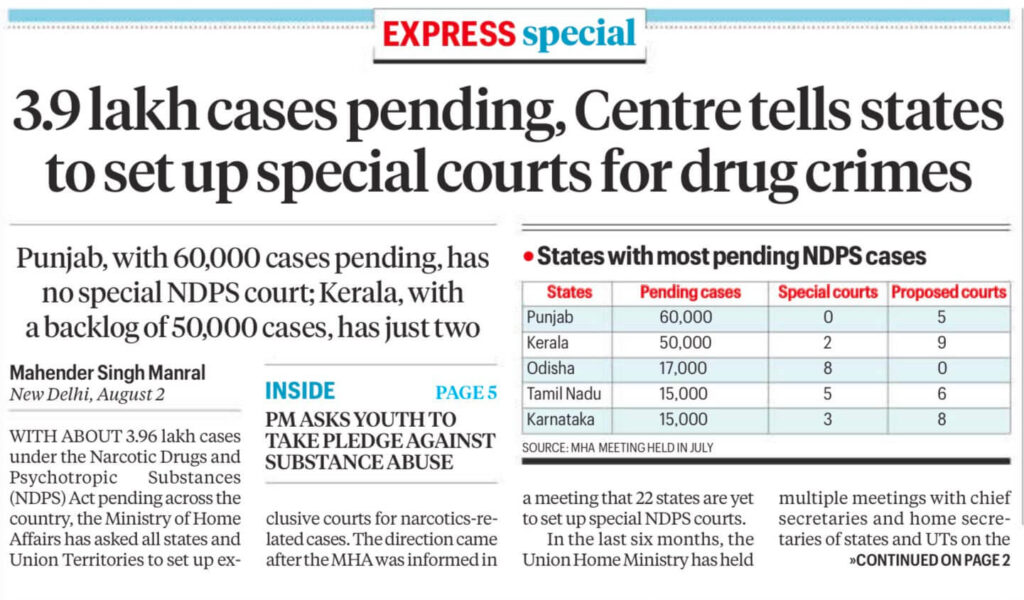
With around 3.9 lakh cases pending under the Narcotic Drugs and Psychotropic Substances Act, the Centre has asked States and Union Territories to set up special courts for drug-related crimes.
The issue highlights the burden of drug cases on the justice system and the need for faster disposal.
Core Issue
Drug-related cases under the NDPS Act have created a large backlog in courts.
Pendency delays justice and weakens deterrence.
It also affects accused persons, victims, enforcement agencies and public trust in the criminal justice system.
NDPS Act
The Narcotic Drugs and Psychotropic Substances Act, 1985 is India’s main law for controlling narcotic drugs and psychotropic substances.
It regulates and prohibits the production, possession, sale, transport and consumption of narcotic drugs and psychotropic substances except for medical or scientific purposes.
It provides strict penalties for drug trafficking and illegal possession.
Pending Cases
Around 3.9 lakh NDPS cases are pending across the country.
The Centre has asked States and Union Territories to establish special courts for faster trial and disposal.
Why Special Courts Are Needed
Special courts can help ensure focused and speedy trial of drug-related offences.
They can reduce pressure on regular courts.
They can also improve consistency in handling NDPS cases.
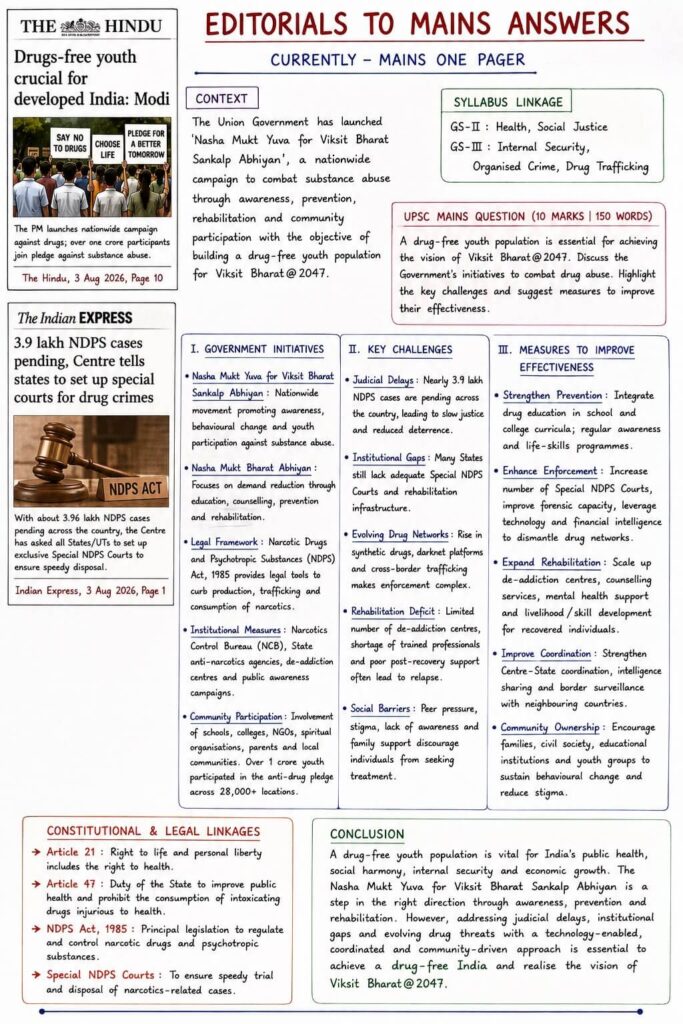
Challenges
Major challenges include:
- High pendency
- Shortage of special courts
- Delays in investigation
- Forensic delays
- Weak coordination between agencies
- Cross-border trafficking
- Drug networks using new methods
- Rehabilitation gaps
Governance Link
Drug crimes involve both enforcement and public health.
A justice system response alone is not enough.
India also needs prevention, treatment, rehabilitation and community-based awareness.
Measures to Improve Enforcement
Special NDPS courts should be set up where pendency is high.
Investigation quality must be improved.
Forensic capacity should be strengthened.
Coordination between police, NCB, States and border agencies must improve.
Technology and financial intelligence can help track drug networks.
Measures for Rehabilitation
De-addiction centres should be expanded.
Mental health support must be integrated.
Youth counselling and community awareness should be strengthened.
Former drug users should be supported through rehabilitation and livelihood programmes.
Key Takeaway
The NDPS case backlog shows that India’s anti-drug strategy needs faster courts, better investigation, stronger enforcement and a public-health approach to rehabilitation.