Context:
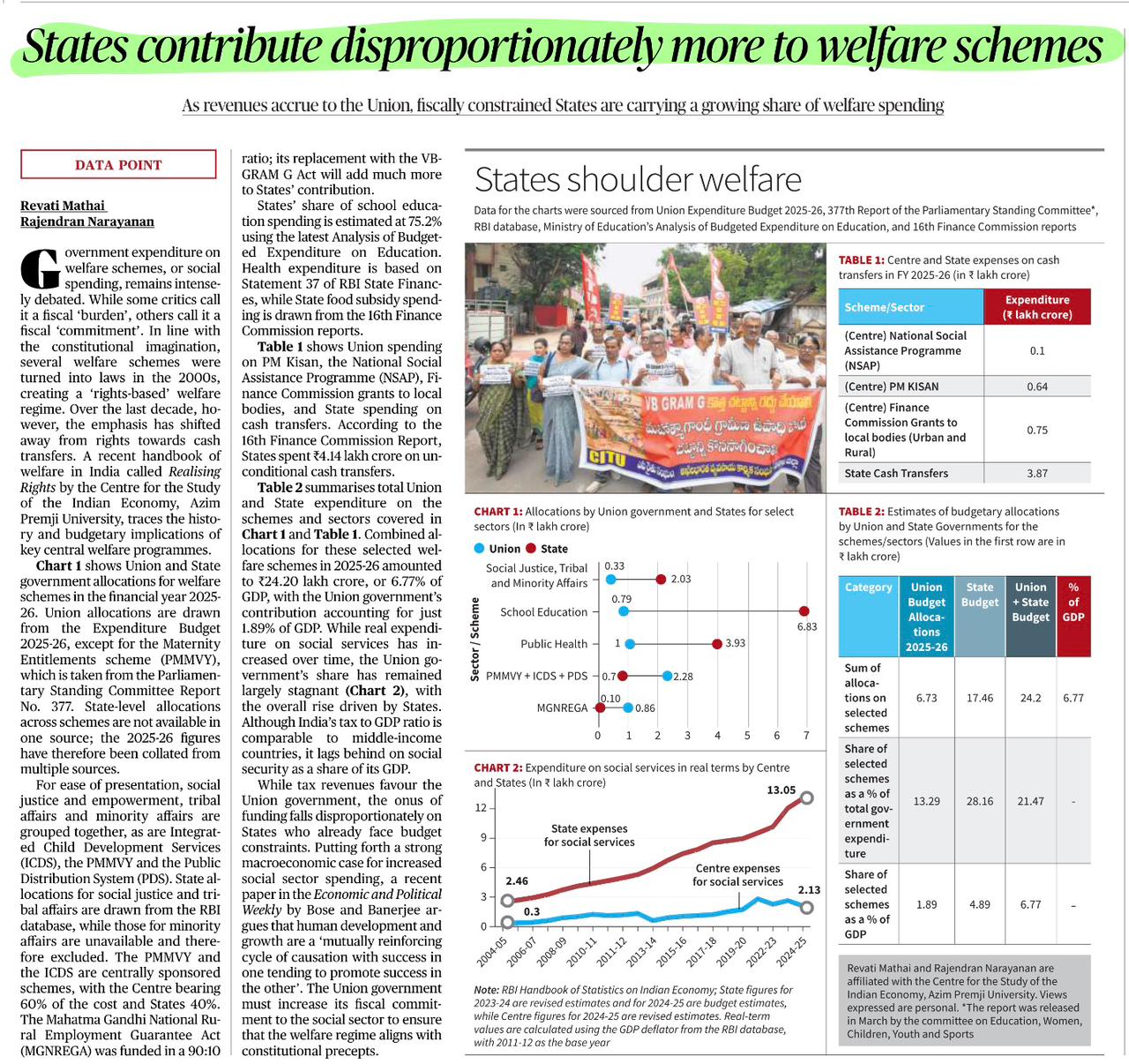
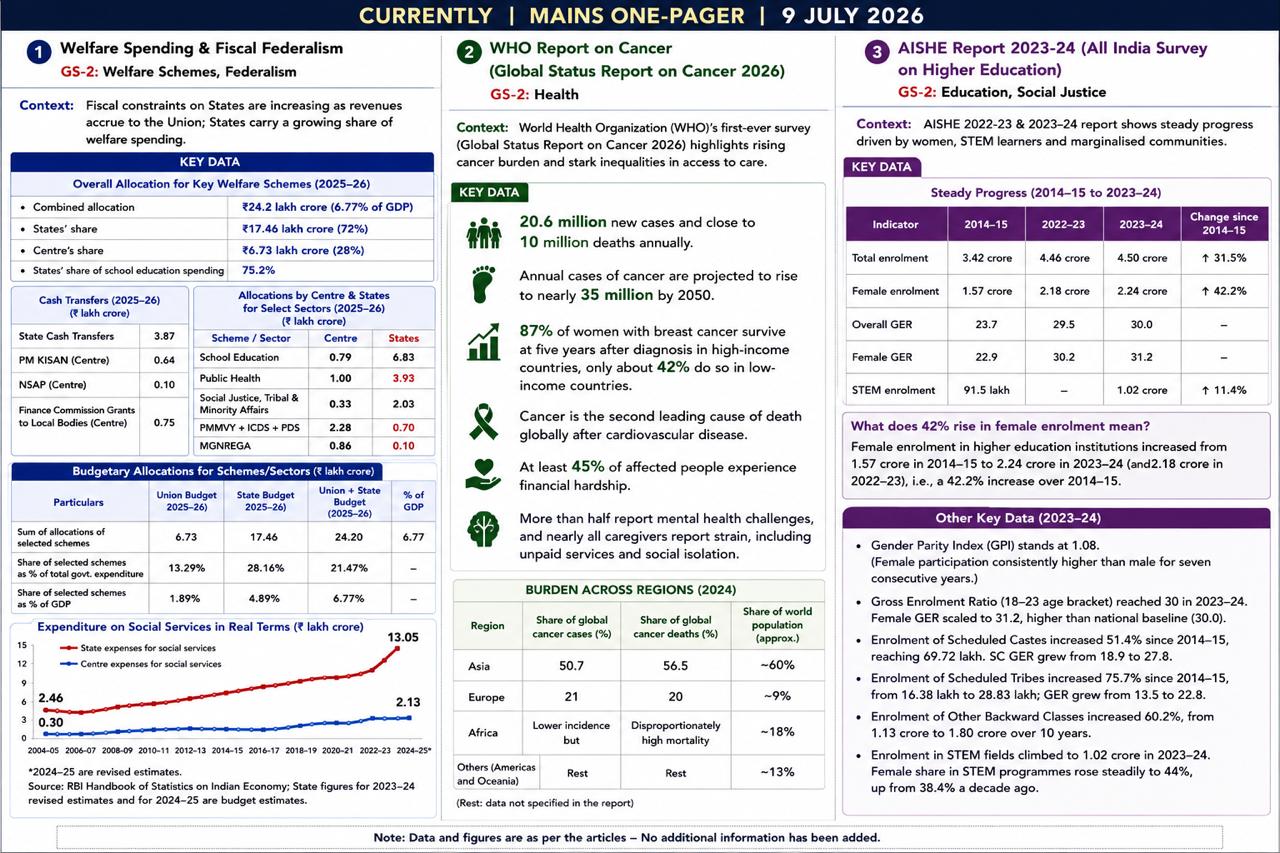
The article highlights that while many welfare schemes are centrally designed, States are bearing a disproportionately high share of welfare expenditure.
This raises concerns around fiscal federalism, State autonomy and the growing fiscal pressure on State governments.
Core Issue
States carry major responsibilities in sectors such as:
- Health
- Education
- Nutrition
- Rural development
- Social welfare
- Agriculture
- Public distribution
- Local infrastructure
However, their fiscal space is limited because a large part of revenue collection and policy design remains with the Union.
Fiscal Federalism Angle
Fiscal federalism refers to the distribution of:
- Revenue powers
- Expenditure responsibilities
- Grants
- Tax devolution
- Borrowing powers
between the Union and the States.
Why States Face Pressure
1. Welfare Burden
States are responsible for implementing and financing many welfare schemes.
Even when schemes are centrally sponsored, States often bear:
- Matching contributions
- Administrative costs
- Last-mile delivery costs
- Additional top-ups
2. Limited Revenue Flexibility
States have fewer broad-based taxation powers after GST.
Their major revenue sources include:
- State GST share
- Excise duty
- Stamp duty
- Motor vehicle tax
- Property-related revenues
- Central tax devolution
- Grants-in-aid
3. Rising Committed Expenditure
State budgets are increasingly burdened by:
- Salaries
- Pensions
- Interest payments
- Subsidies
- Welfare commitments
4. Dependence on Union Transfers
States depend on:
- Finance Commission transfers
- Centrally Sponsored Schemes
- Grants
- GST compensation-type arrangements
Key Concern
If States have high welfare responsibilities but limited fiscal autonomy, it weakens:
- Cooperative federalism
- State-level policy innovation
- Quality of public service delivery
- Development spending
- Capital expenditure
Constitutional Linkages
Article 268–281
- Distribution of taxes and revenues between Union and States.
- Grants-in-aid from Union to States.
- Finance Commission.
- Borrowing by States.
Way Forward
- Ensure predictable and timely tax devolution.
- Increase untied transfers to States.
- Give States more flexibility in scheme design.
- Reduce excessive conditionalities in Centrally Sponsored Schemes.
- Strengthen State finances through better GST compensation-like mechanisms.
- Improve expenditure quality.
- Strengthen local governments for last-mile delivery.
Key Takeaway
India’s welfare architecture depends heavily on States. Fiscal federalism must ensure that States have enough financial autonomy and predictable resources to deliver welfare effectively.