Context: Strait of Hormuz
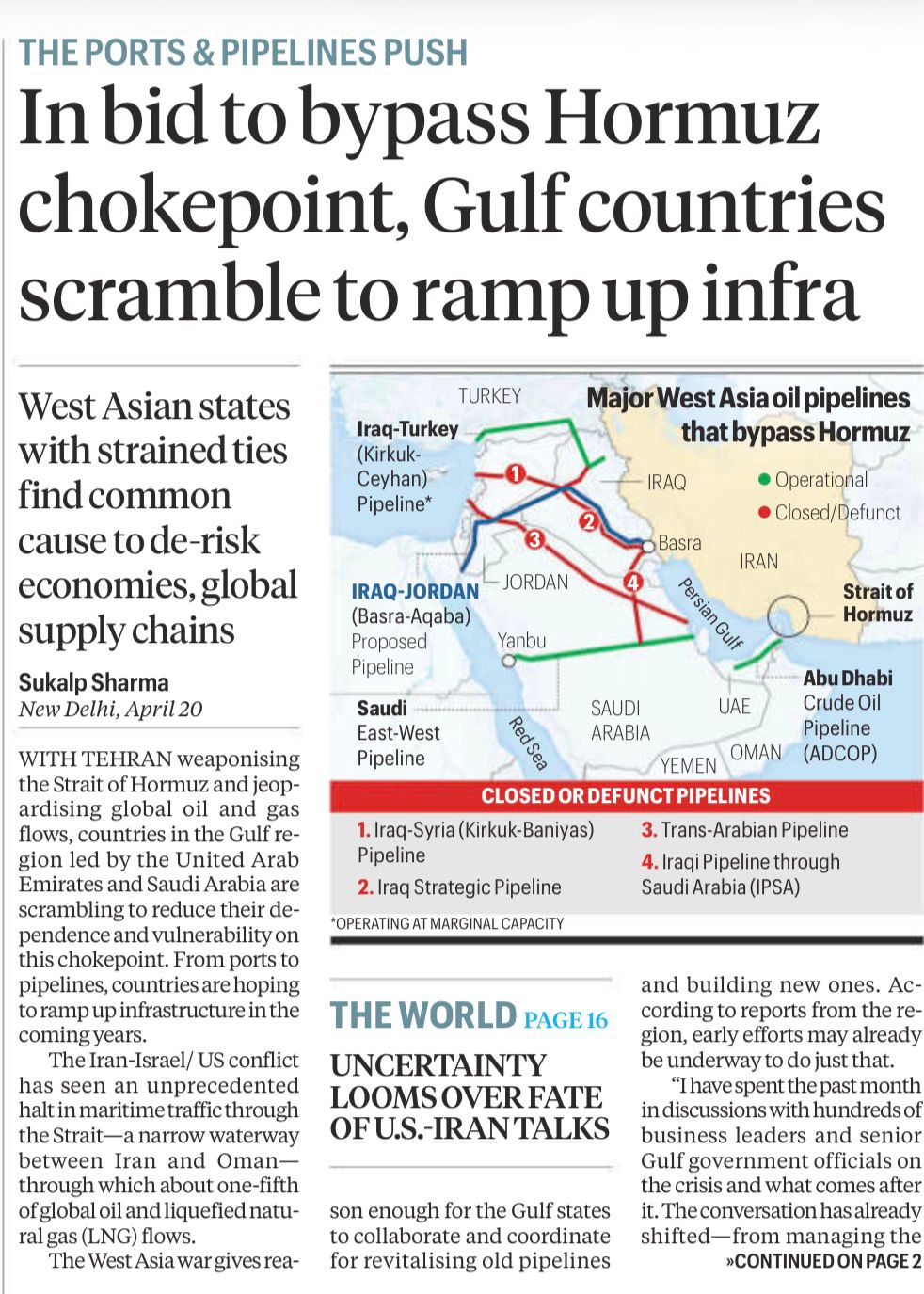
Amid rising West Asia tensions and the risk of disruption at the Strait of Hormuz, Gulf countries are accelerating efforts to reduce dependence on this critical energy route.
Core Idea
The Strait of Hormuz carries ~20% of global oil and LNG, making it a major chokepoint; any conflict involving Iran can disrupt global energy supply and spike prices.
What is happening
- Countries like Saudi Arabia and United Arab Emirates are expanding ports and building alternative pipelines
- Focus on bypassing Hormuz via routes to the Red Sea and other outlets
- Efforts include reviving defunct pipelines + constructing new infrastructure
Key Insight
Even politically divided Gulf states are cooperating economically to de-risk energy flows, showing that geopolitics is driving infrastructure strategy.
Implications
- Reduces single-point vulnerability in global oil supply chains
- Improves energy security for Gulf economies and import-dependent countries like India
- May reshape global energy routes and trade patterns