Context: Strait of Hormuz
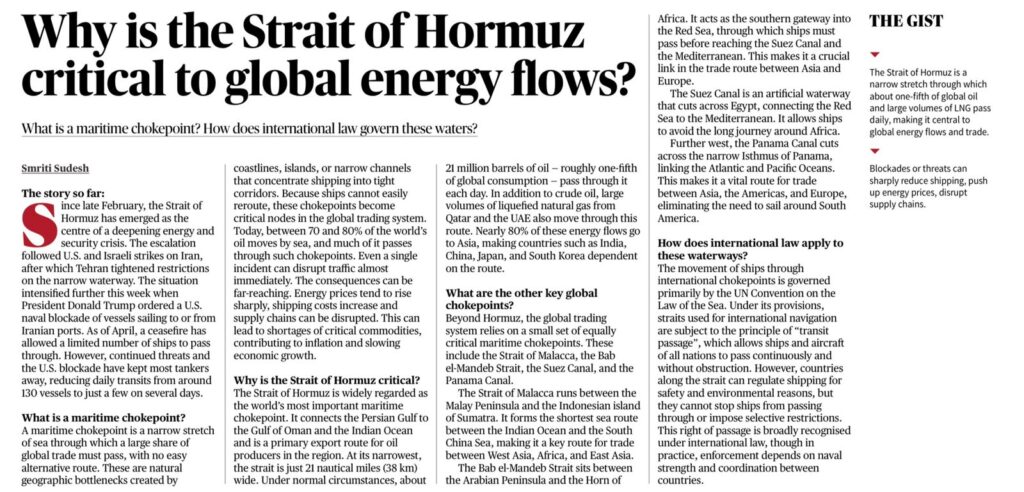
Escalation involving Iran, the US and Israel led to restrictions and threats of blockade in the Strait of Hormuz, sharply reducing ship traffic and triggering global energy concerns.
Why Hormuz matters
• Carries ~21 million barrels/day ≈ 20% of global oil consumption
• Major route for LNG exports from Qatar and UAE
• ~80% of these flows go to Asia (India China Japan South Korea)
• Connects Persian Gulf → Gulf of Oman → Indian Ocean
• Very narrow ~21 nautical miles → high vulnerability
Impact of disruption
• Immediate oil price spike
• Shipping disruption and higher freight cost
• Risk of inflation and supply chain shocks
• Limited rerouting options
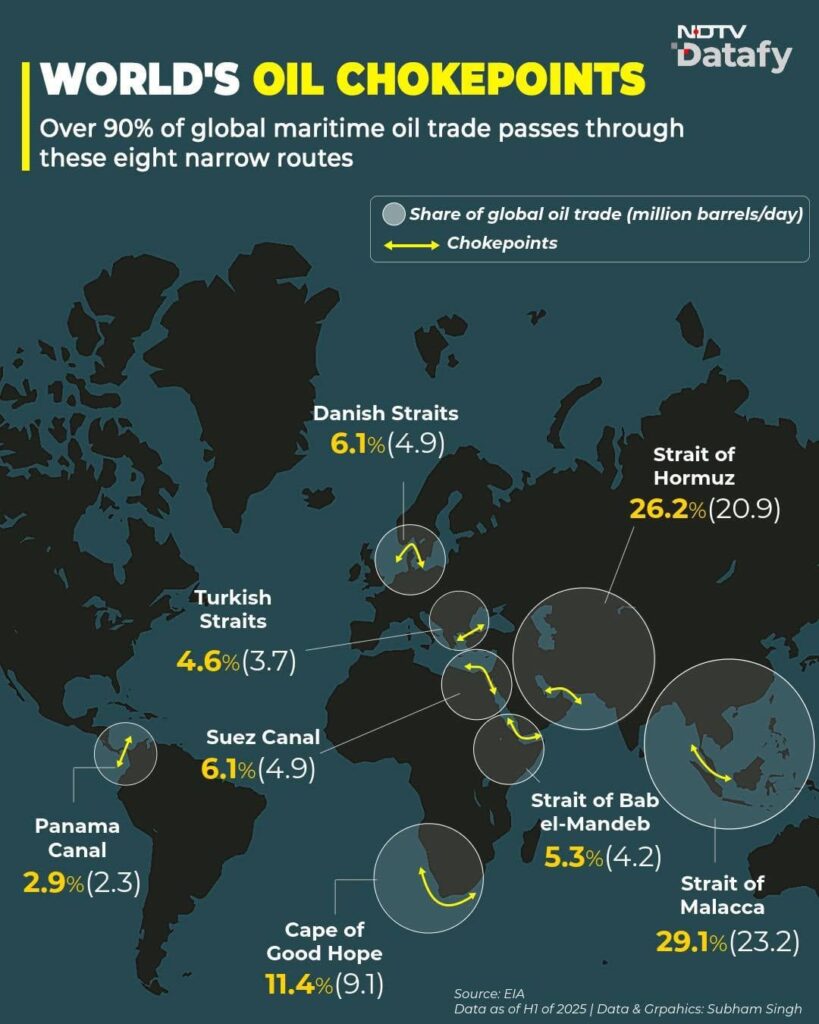
Maritime chokepoint
• Narrow sea route with concentrated global trade flow
• No easy alternatives → strategic bottleneck
Other key chokepoints
• Strait of Malacca
• Bab el Mandeb
• Suez Canal
• Panama Canal
Legal framework
• Governed by UNCLOS
• Transit passage allows continuous movement
• States cannot block but can regulate