Context: Supreme Court Anti-Defection Law Case
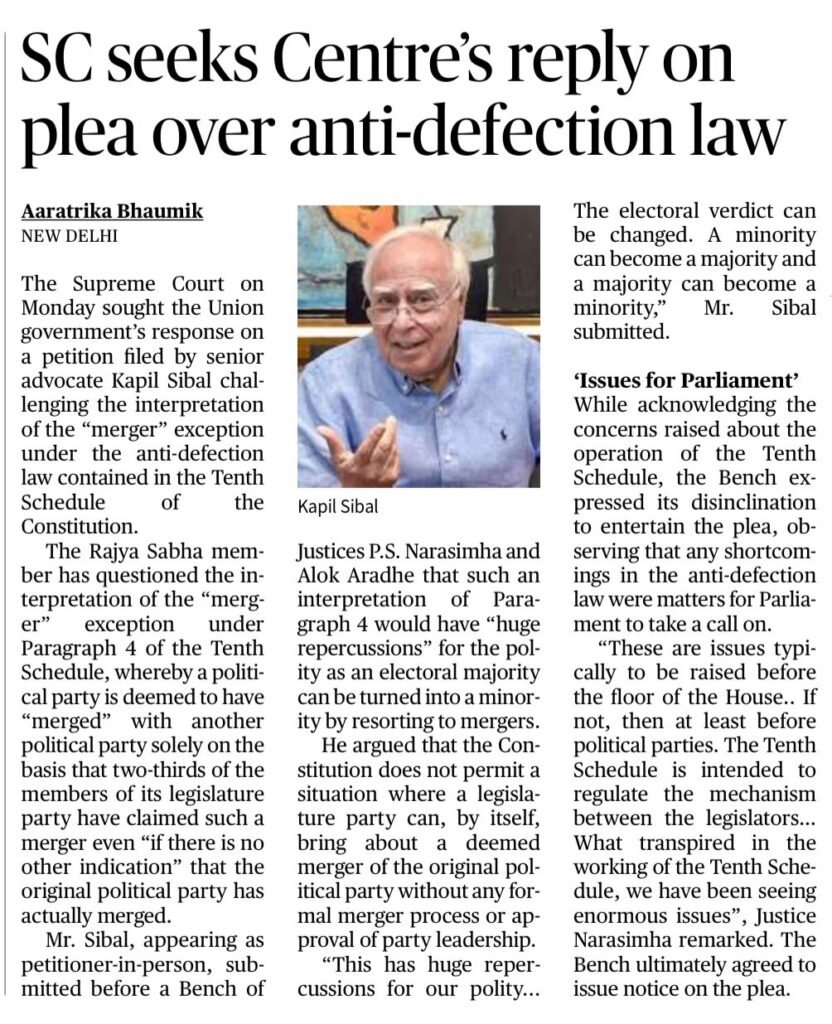
The Supreme Court has sought the Centre’s response on a petition challenging the interpretation of the merger exception under Paragraph 4 of the Tenth Schedule.
The plea argues that a two-thirds majority of legislators alone should not be enough to claim a merger unless the original political party has also formally merged.
Anti-Defection Law
The anti-defection law was added to the Constitution through the 52nd Constitutional Amendment Act, 1985.
It is contained in the Tenth Schedule of the Constitution.
The law was introduced to prevent elected representatives from switching parties for political or personal gain.
91st Constitutional Amendment Act, 2003
The 91st Constitutional Amendment Act, 2003 removed the earlier one-third split exception.
This means that a simple split by one-third members no longer protects defectors from disqualification.
Grounds for Disqualification
A legislator can be disqualified under the anti-defection law if they:
- Voluntarily give up membership of their political party
- Vote or abstain from voting against the party whip without permission
- Are elected as an independent member and later join a political party
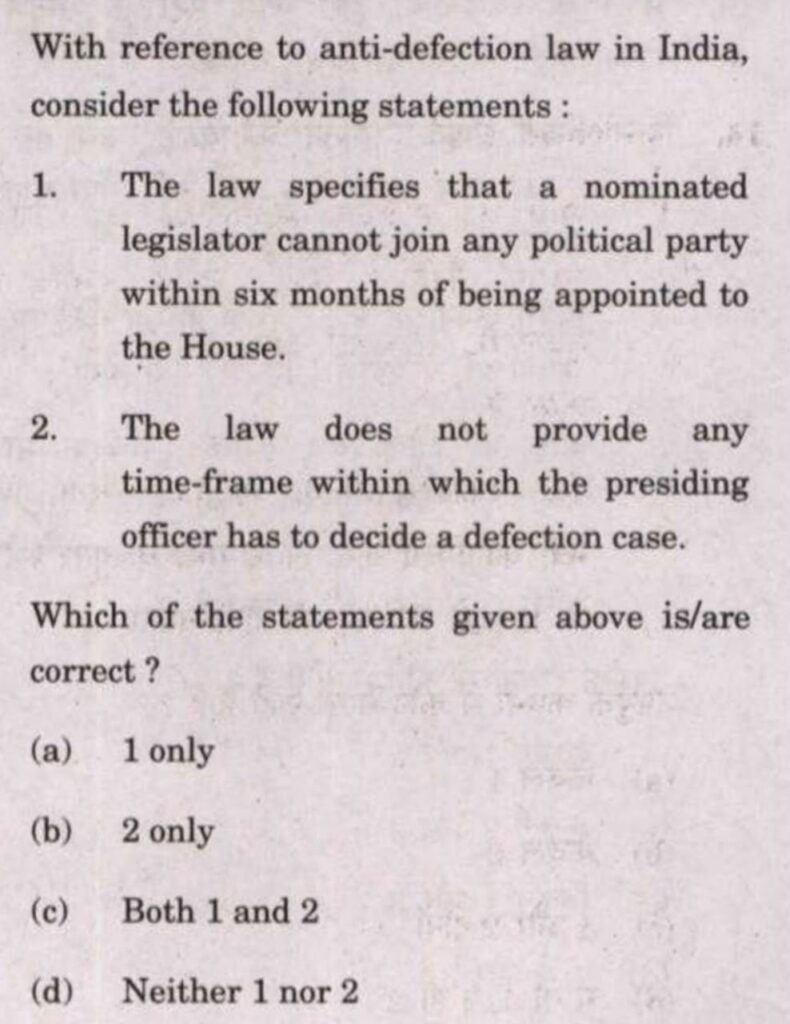
- Are nominated members and join a political party after six months
Merger Exception
Under Paragraph 4 of the Tenth Schedule, disqualification does not apply if at least two-thirds of the members of a legislature party merge with another party.
However, the present case questions whether a legislature party can claim such a merger even when the original political party has not actually merged.
Why the Case Matters
The petition argues that the current interpretation may allow mass defections to be legitimised.
It raises concerns that elected governments may be changed without fresh elections by using numerical shifts in the legislature.
This affects:
- Electoral mandate
- Political stability
- Party discipline
- Representative democracy
- Effectiveness of anti-defection law
Supreme Court’s Observation
The Court issued notice to the Centre.
At the same time, it observed that larger structural reform of the Tenth Schedule is ultimately a matter for Parliament.
Key Takeaway
The case questions whether the anti-defection law is protecting democracy or allowing large-scale political shifts through the merger route. The issue is central to electoral mandate, party stability and constitutional morality.