Context: Supreme Court Ramsar Wetlands Judgment
In T.N. Godavarman Thirumulpad v. Union of India, the Supreme Court clarified that its 10-km mining restriction around the Asan Wetland Conservation Reserve should, on the principle of parity, extend to Wetland Conservation Reserves across India.
This is important because Ramsar wetlands do not have a statutory 10-km buffer under the Wetlands Rules, 2017.
Supreme Court Judgment
Key Highlights
Mining within 10 km of the Asan Wetland Conservation Reserve requires prior approval of the Standing Committee of the National Board for Wildlife and/or the Ministry of Environment, Forest and Climate Change.
The Court said that the same judicial safeguard should apply to Wetland Conservation Reserves across India.
Where wetland boundaries extend across States, boundary verification will be needed.
Unlike Eco-Sensitive Zones around National Parks and Wildlife Sanctuaries, Ramsar wetlands do not automatically have a statutory 10-km buffer under the Wetlands Rules, 2017.
Therefore, the judgment creates an additional judicial safeguard based on the Precautionary Principle.
Asan Wetland Conservation Reserve
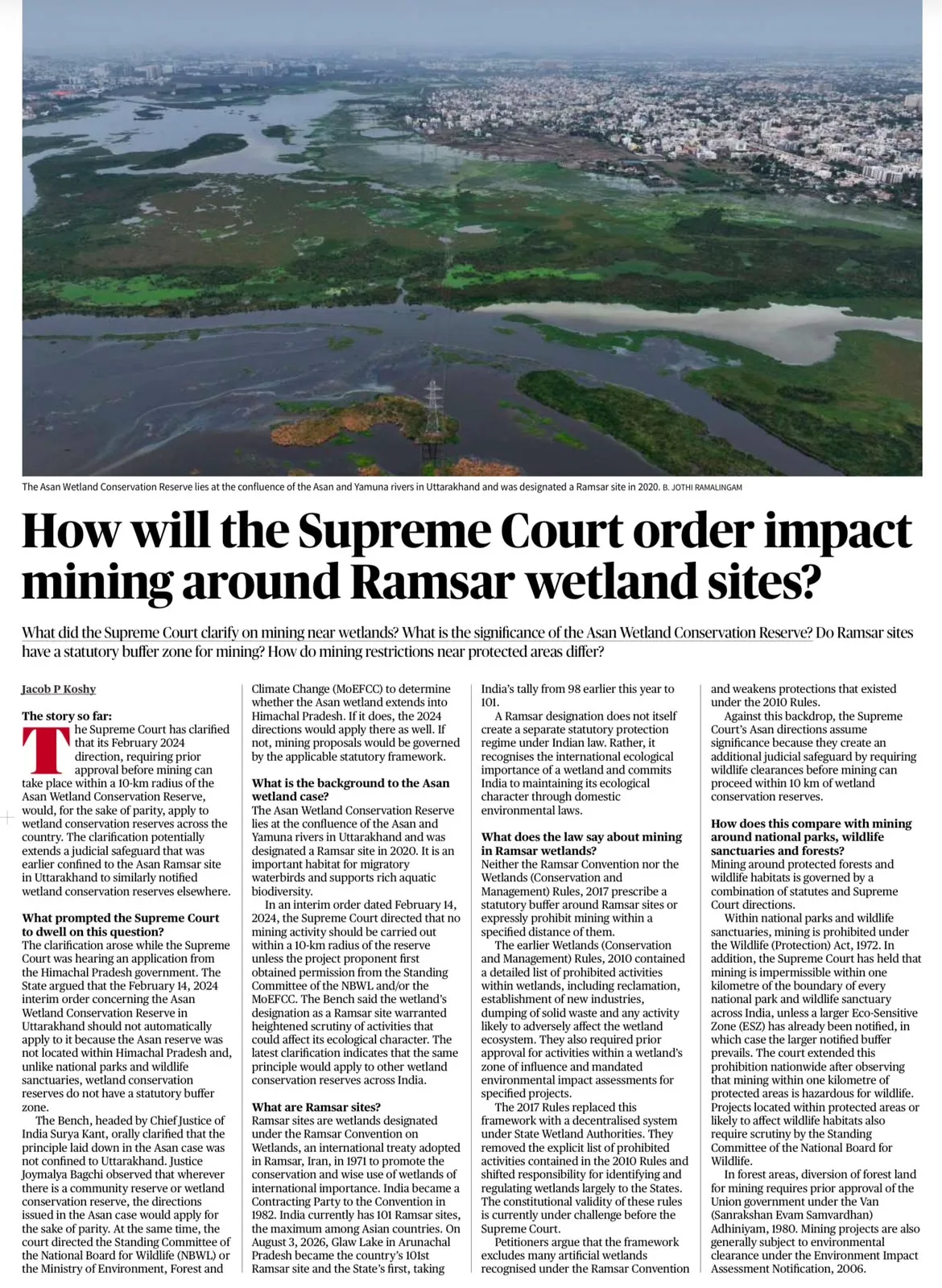
Location: Confluence of the Asan and Yamuna rivers, Uttarakhand.
Status: Conservation Reserve under the Wildlife Protection Act, 1972 and Ramsar Site since 2020.
Importance: It is a critical habitat for migratory birds along the Central Asian Flyway.
Why in News: It is the first Ramsar Site in India to receive a 10-km judicial safeguard against mining.
Ramsar Sites
Ramsar Sites are wetlands of international importance recognised under the Ramsar Convention.
The Convention was adopted in 1971 in Ramsar, Iran.
It promotes the conservation and wise use of wetlands.
India has 101 Ramsar Sites.
Why Wetlands Matter
Wetlands provide several ecological services:
- Water purification
- Flood control
- Groundwater recharge
- Carbon storage
- Habitat for migratory birds
- Biodiversity conservation
- Livelihood support
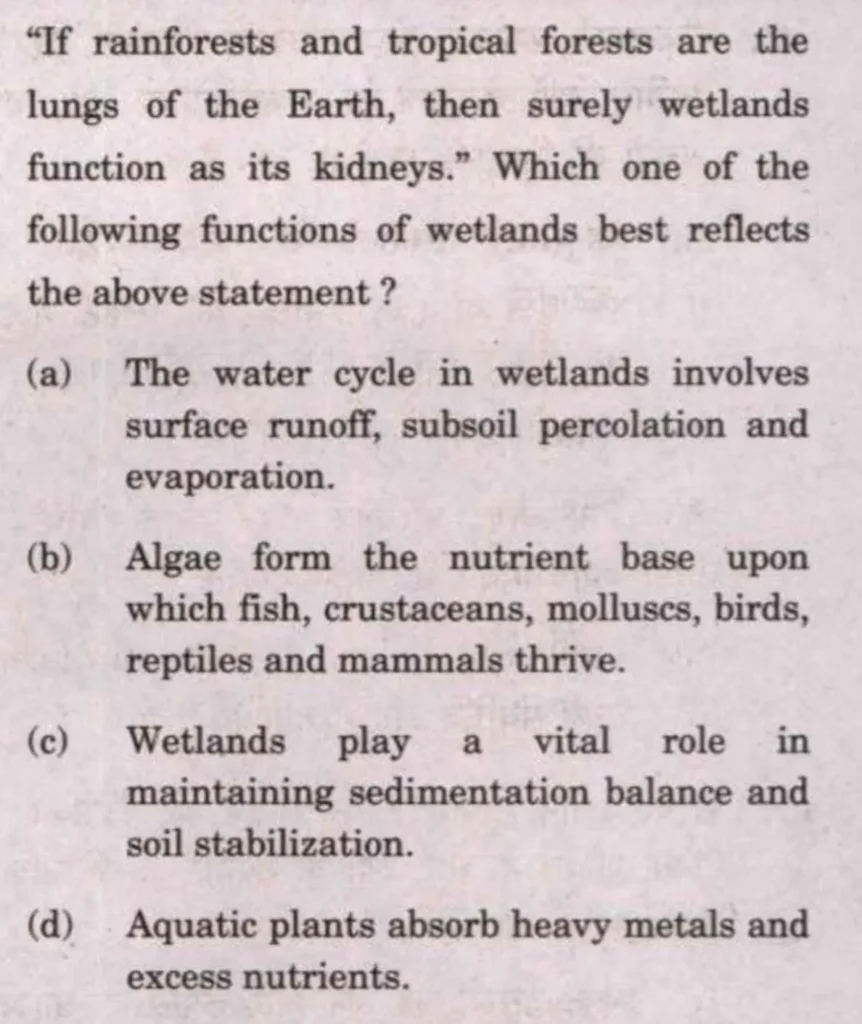
They are often called the “kidneys” of the Earth because they absorb pollutants, excess nutrients and heavy metals.
Significance of the Judgment
The order strengthens wetland protection even in the absence of a statutory buffer zone.
It can prevent damaging mining activities near ecologically sensitive wetland areas.
It also gives stronger importance to the Precautionary Principle in environmental governance.
Key Takeaway
The Supreme Court’s order gives Ramsar-linked Wetland Conservation Reserves stronger protection against mining. It fills a legal gap by creating a precaution-based judicial safeguard.