
Preparing for UPSC Prelims 2027? You should ideally attempt 40–50 GS mock tests and at least 10–15 CSAT tests between November 2026 and May 2027. But simply attempting more tests won’t guarantee success. What matters is how effectively you analyse your mistakes, revise weak areas, and improve your performance.
At UnderStand UPSC, we often remind aspirants that a mock test is not just a measure of your preparation; it is a tool to improve it.
Let’s understand how to use mock tests strategically without turning them into another source of pressure.
How Many UPSC Mock Test Prelims 2027 Are Enough?
Imagine two UPSC aspirants.
One attempts 80 mock tests, checks the scores and immediately moves to the next test.
The other attempts 45 tests, carefully analyses incorrect answers, revises weak concepts and tracks recurring mistakes.
Who is likely to perform better?
The second aspirant has a stronger preparation strategy.
For UPSC Prelims 2027, 40–50 GS tests can be a reasonable target, provided they include sectional, advanced, current affairs and full-length tests.
However, there is no magical number. Someone with strong fundamentals might need fewer tests, while a beginner may benefit from additional practice.
What matters is whether your accuracy, conceptual understanding and decision-making improve with each attempt.
Remember: Your mock test score is feedback, not a prediction of your UPSC result.
When Should You Start UPSC Mock Tests for Prelims 2027?
One of the biggest mistakes aspirants make is waiting to finish the entire syllabus before attempting mock tests.
But when exactly is the UPSC syllabus ever completely finished?
There will always be another topic to revise, another current affairs issue to cover or another concept requiring attention.
Start attempting subject-wise mock tests from the first month of your preparation.
For example, once you’ve covered fundamental topics such as Parliament, Fundamental Rights and Constitutional Bodies, attempt a Polity sectional test.
Even if you score poorly, you’ll discover what you understood and what needs another round of revision.
As your preparation progresses, gradually introduce mixed-subject tests and full-length simulations.
By the final months, mock tests should become an essential part of your revision strategy.
A Phase-Wise UPSC Prelims 2027 Mock Test Plan
Instead of randomly attempting tests, divide your preparation into manageable phases.
| Preparation Phase | Timeline | Recommended Tests |
| Foundation Building | Nov–Dec 2026 | 10–12 subject-wise tests |
| Conceptual Strengthening | Jan–Feb 2027 | 10–12 advanced and mixed tests |
| Current Affairs Integration | March 2027 | 8–10 integrated tests |
| Final Exam Simulation | Apr–May 2027 | 12–16 full-length tests |
This schedule is flexible. Adjust it according to your preparation level and the officially notified examination date.
Alongside GS, schedule 10–15 CSAT mock tests, with additional practice if Mathematics, Reasoning or Comprehension is challenging for you.
Don’t treat CSAT as an afterthought. It is qualifying, but failing to secure the required 33% can end your Prelims journey regardless of your GS performance.
How to Analyse a UPSC Mock Test Effectively
Here’s a question worth asking yourself:
Do you spend more time attempting mock tests or understanding your mistakes?
A two-hour test deserves serious analysis afterwards.
At UnderStand UPSC, we recommend categorising every incorrect answer rather than merely reading the answer key.
| Mistake Type | Example | Corrective Action |
| Conceptual gap | Confusing constitutional and statutory bodies | Revise the underlying concept |
| Misreading | Missing words such as ‘incorrect’ or ‘not’ | Practise careful question reading |
| Poor guessing | Attempting without adequate elimination | Improve risk assessment |
| Silly mistake | Marking the wrong option despite knowing the answer | Practise under exam conditions |
Create a personal mistake notebook.
For every significant error, record the topic, reason for the mistake, and corrective action.
Before your next mock test, spend 15–20 minutes reviewing your previous mistakes.
Over time, you’ll notice patterns. Perhaps you repeatedly struggle with Environment questions or lose marks through unnecessary guessing.
Identifying these patterns is where genuine improvement begins.
How Many Questions Should You Attempt in UPSC Prelims?
Many aspirants ask whether attempting 70, 80, or 90 questions is the safest strategy.
The answer depends on your accuracy.
In GS Paper I, a correct answer carries 2 marks, while an incorrect answer results in a deduction of approximately 0.67 marks.
Consider this example:
- Questions attempted: 85
- Correct answers: 60
- Incorrect answers: 25
- Marks obtained: 120 − 16.67 = 103.33
Now imagine increasing your attempts without improving accuracy. Your score could actually decrease.
Use mock tests to discover your ideal attempt range.
The goal isn’t maximum attempts. It’s maximum marks through informed decisions.
Free vs Paid UPSC Mock Tests: What Should You Choose?
If you’re just beginning, you don’t necessarily need an expensive test series.
Start with UPSC Previous Year Question Papers. PYQs are invaluable for understanding how UPSC frames questions and tests conceptual clarity.
Free UPSC mock tests can also help you develop consistency.
However, as the examination approaches, a structured test series becomes useful for practising unfamiliar questions, comparing performance and tracking progress.
The right test series should help you understand why you’re making mistakes, not merely show where you rank.
How UnderStand UPSC’s MAD-X Supports Your Preparation
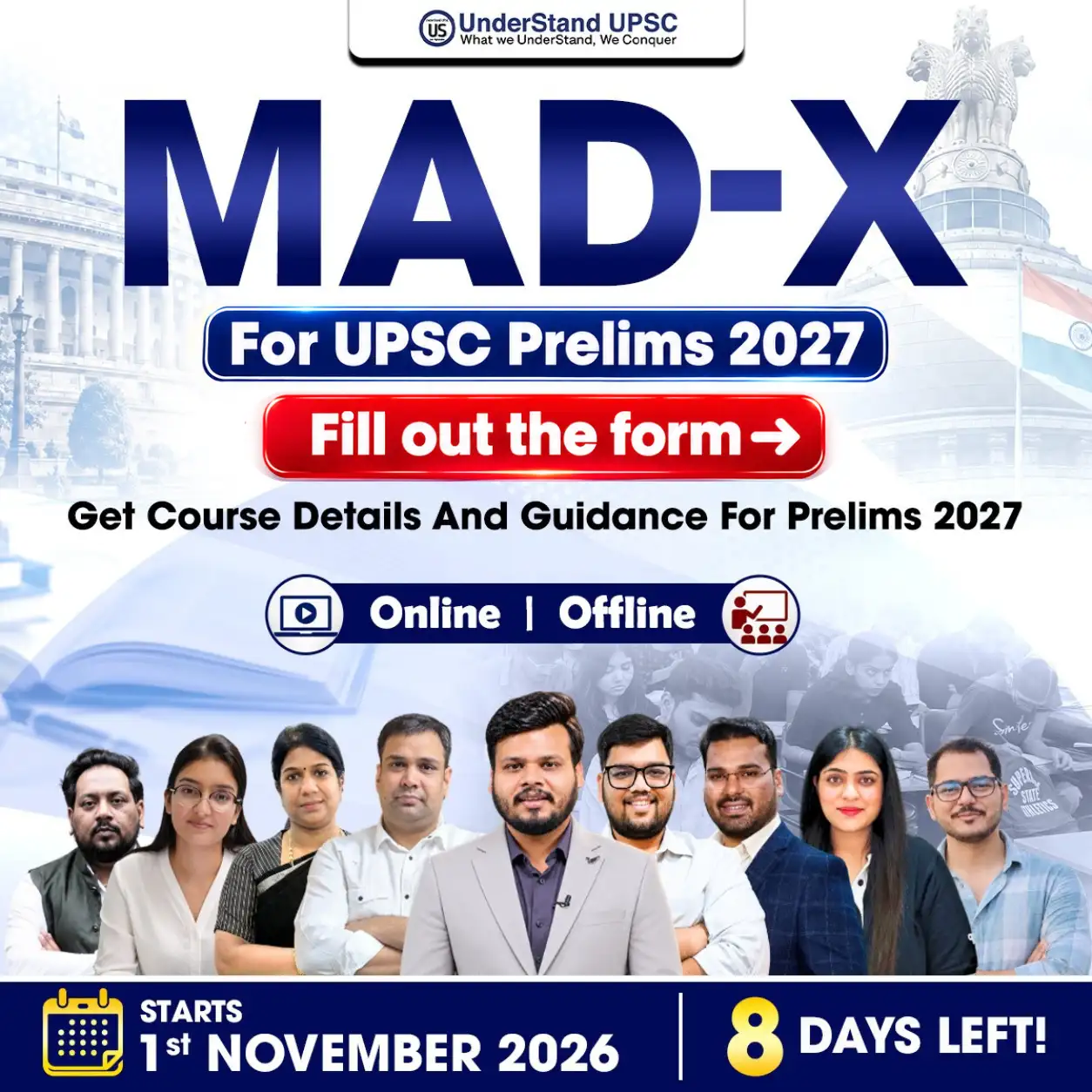
UnderStand UPSC’s MAD-X UPSC Prelims Test Series 2027 follows a structured approach to testing and improvement.
The programme includes 48 tests, divided into:
- 14 subject-wise tests
- 7 advanced tests
- 7 current affairs tests
- 10 GS simulators
- 10 CSAT simulators
Its MAD Tech mistake-book feature is designed to help aspirants identify weak areas and systematically work on them.
Rather than encouraging endless testing, the focus is on consistent practice, meaningful analysis and measurable improvement.
Frequently Asked Questions:
1. How many mock tests should I give for UPSC Prelims 2027?
Around 40–50 GS tests and 10–15 CSAT tests are a practical target, provided you analyse and revise after every test.
2. When should I start giving UPSC Prelims mock tests?
Begin subject-wise tests during your first month of preparation. Introduce full-length tests approximately 3–4 months before Prelims.
3. Are free UPSC mock tests enough?
Free mock tests and PYQs are excellent starting resources. A structured test series can provide additional practice, performance comparisons and systematic analysis.
4. What is a good score in UPSC Prelims mock tests?
There is no universal benchmark because mock difficulty varies. Focus on consistently improving accuracy and maintaining a reasonable margin above recent official cut-offs.
5. How long should mock test analysis take?
Approximately two hours for a full-length GS test is a useful starting point, although difficult tests may require longer.
Final Advice: Don’t Just Take Tests. Learn From Them.
Your first few UPSC mock test prelims scores might disappoint you. That’s normal.
A low score doesn’t mean you cannot clear UPSC. It means you’ve identified areas that need attention while there’s still time to improve. Don’t compare your beginning with someone else’s final stage of preparation. Instead, ask yourself one simple question after every test:
“What will I do differently in my next attempt?”
At UnderStand UPSC, that’s the mindset we want every aspirant to develop. Because ultimately, you don’t improve by attempting more mock tests. You improve by making fewer mistakes in the next one.