Context: West Asia security architecture
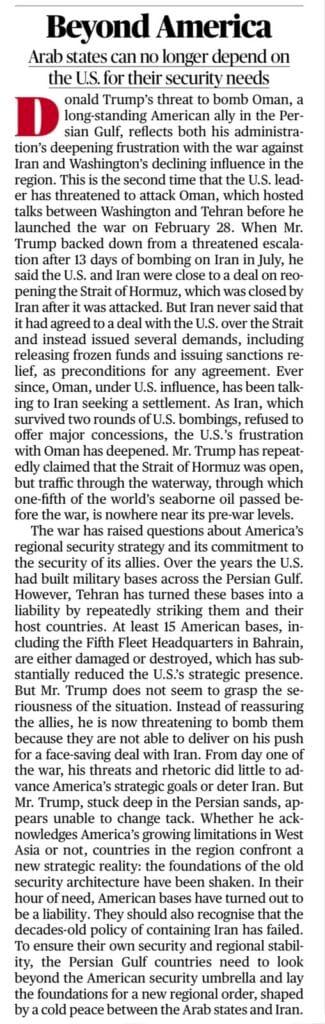
The Iran–U.S. conflict has exposed the strain in the traditional U.S.-centred security architecture of West Asia. Gulf States are now being forced to reconsider whether they can continue depending mainly on the United States as their external security guarantor.
Changing Security Architecture of West Asia
Strain in the U.S.-centred model:
The old model of U.S. military presence, bilateral security guarantees and forward bases has come under pressure.
Regional conflict has shown that external protection has limits.
Limits of Iran containment:
Decades of attempts to contain Iran have not created a durable regional security order.
Regional ownership:
The editorial argues that Persian Gulf States need to take greater responsibility for their own security instead of relying primarily on an external guarantor.
Diversification of partnerships:
Gulf States are widening their security partnerships.
The Makkah Joint Defence Agreement between Saudi Arabia, Türkiye and Pakistan, signed on August 7, 2026, reflects this trend towards diversified and regionally connected security arrangements.
Arab–Iran “cold peace”:
The proposed organising principle is not complete reconciliation or alliance.
It is a pragmatic cold peace based on coexistence, dialogue and management of differences.
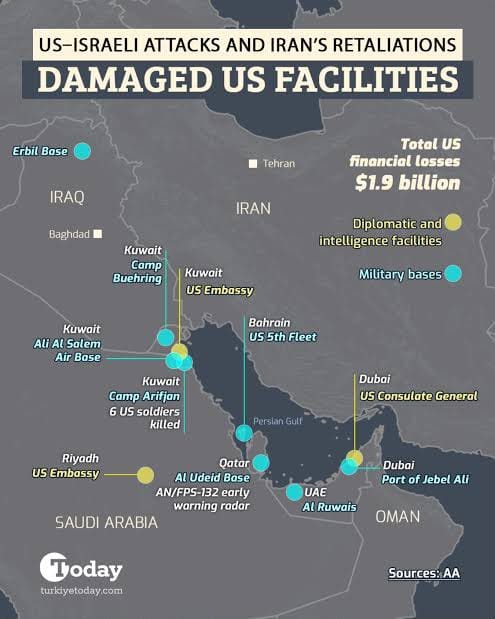
Key U.S. Military Facilities Targeted
Al Udeid Air Base — Qatar
Forward headquarters of U.S. Central Command and a major regional air-operations hub.
Naval Support Activity Bahrain / U.S. Fifth Fleet Headquarters — Bahrain
Principal U.S. naval command presence in the Gulf.
Al Dhafra Air Base — UAE
Important U.S. air and surveillance facility.
Ali Al Salem Air Base — Kuwait
Major U.S. air-support and logistics facility.
Significance
The attacks show that the forward-deployed U.S. security network can itself become vulnerable during regional conflict.
This raises questions about the sustainability of the existing West Asian security model.
Key Takeaway
West Asia is moving towards a new security reality where Gulf States may increasingly diversify partnerships and seek regional arrangements rather than depending only on U.S. protection.