Uniform Civil Code: Supreme Court Calls It a Constitutional Ambition for Equality
Context: Uniform Civil Code
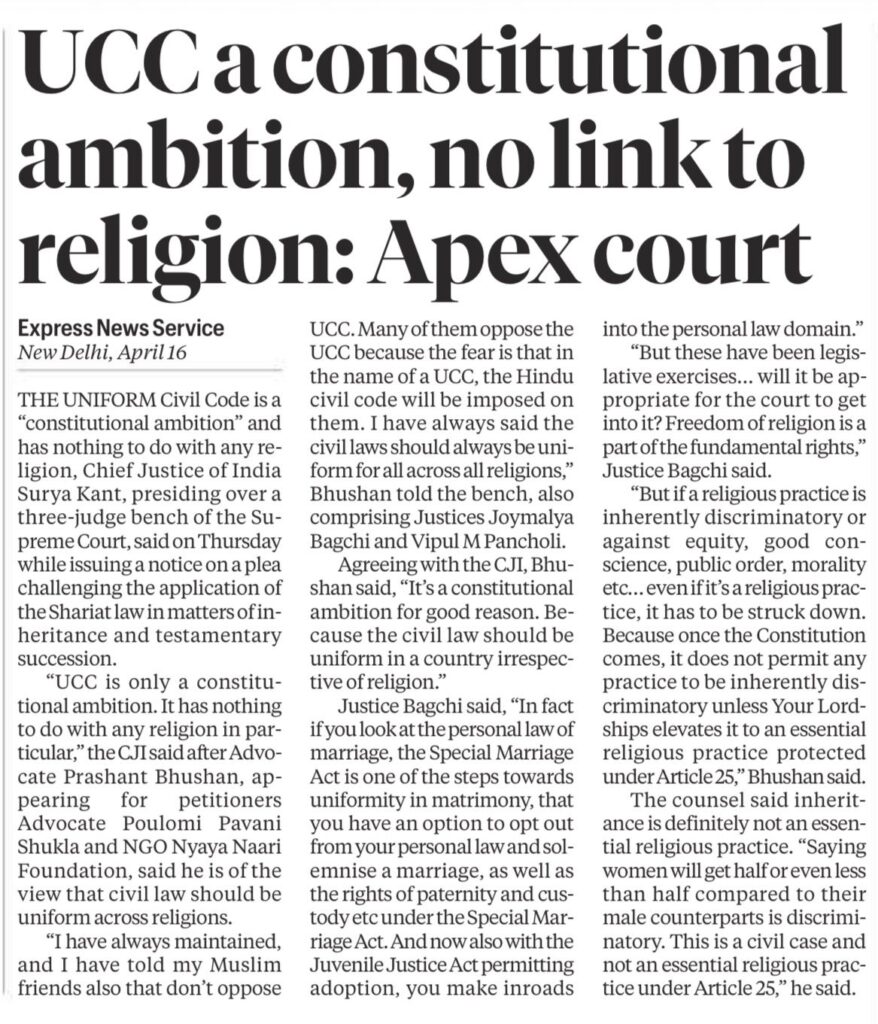
The Supreme Court, while dealing with issues in personal laws, stated that the Uniform Civil Code (UCC) is a “constitutional ambition” and not linked to religion, aiming to ensure uniform civil laws for all citizens.
What is Uniform Civil Code (UCC)
• A common set of civil laws governing:
• Marriage, divorce, inheritance, adoption, succession
• Applicable to all citizens irrespective of religion
• Objective → legal uniformity + gender justice + equality
Relevant Constitutional provisions
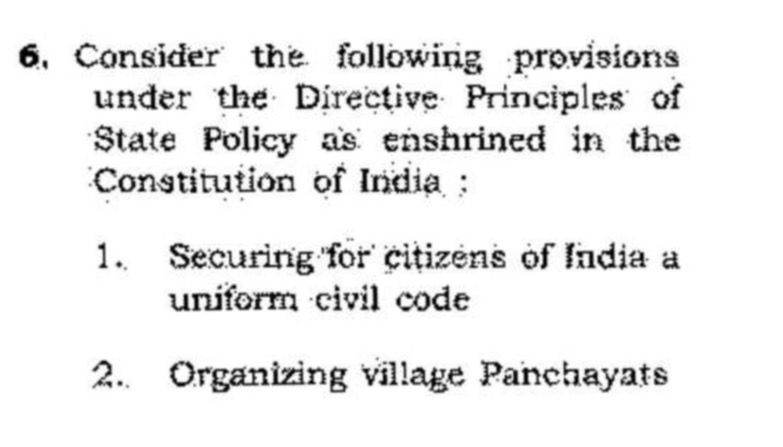
• Article 44 (DPSP) → State shall endeavour to secure UCC
• Article 14 → Equality before law
• Article 15 → Non-discrimination
• Article 21 → Right to dignity
• Article 25 → Freedom of religion (subject to reform)
Supreme Court’s key observations
- UCC relates to civil rights, not religion
- Equality prevails over discriminatory personal laws
- Only essential religious practices (Article 25) are protected
- Legislature (Parliament) is the appropriate body to implement UCC
Recent state-level developments
Uttarakhand
• UCC implemented
• Covers marriage, divorce, inheritance, live-in relations
Gujarat
• Committee formed / exploring UCC
• Not implemented yet
Present status
UCC is not yet enacted at the national level, but is progressing through constitutional mandate, judicial support, and gradual state-level initiatives.