Keeladi Excavation: ASI Permits Excavation at Keeladi and Other Sites for UPSC GS-1
1. Context
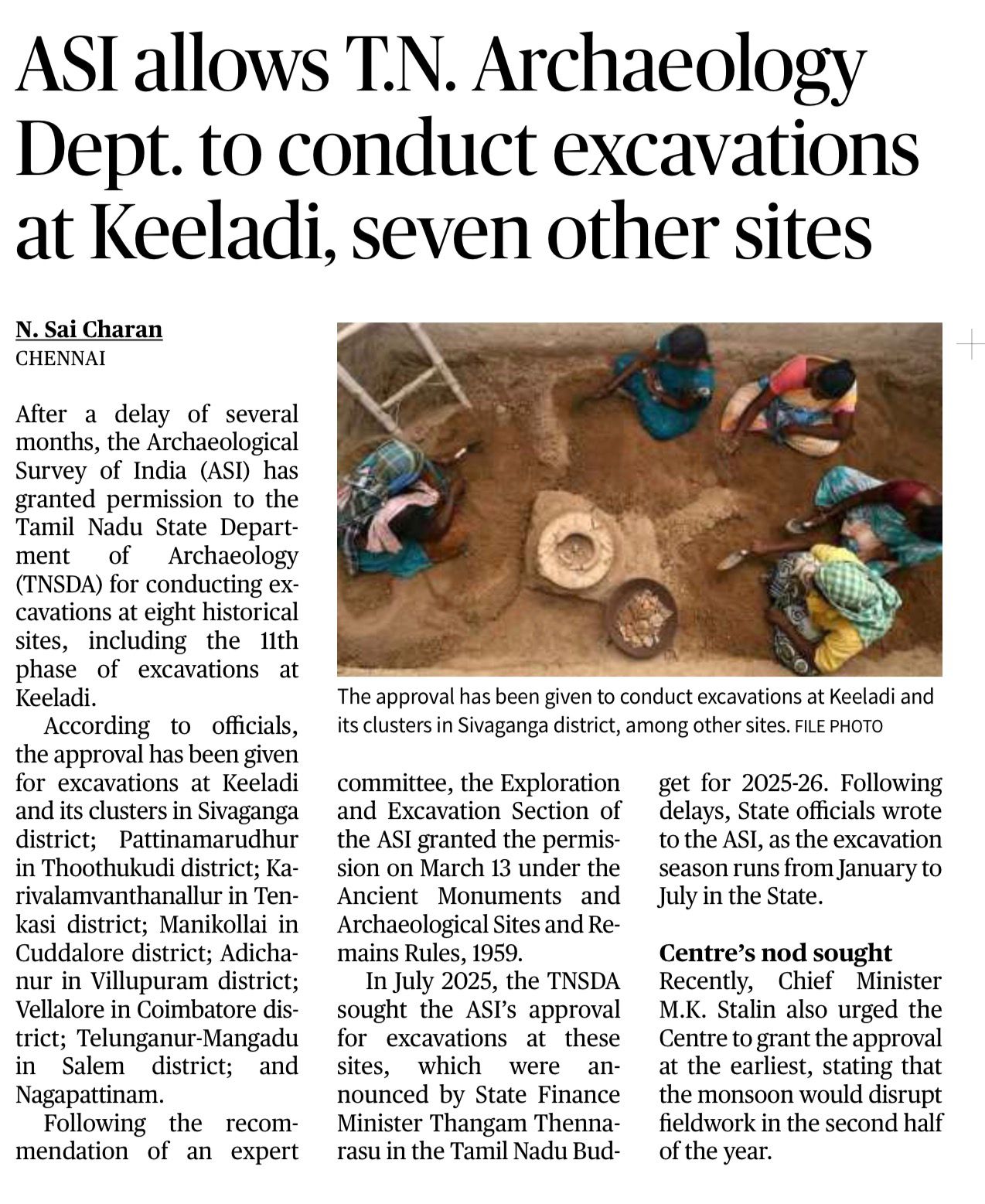
The Archaeological Survey of India has allowed the Tamil Nadu State Department of Archaeology to resume excavations at Keeladi and other notified sites under the Ancient Monuments and Archaeological Sites and Remains framework.
2. Keeladi
- Location: Keeladi in the Vaigai basin.
- Period: Around 6th century BCE; linked to early historic/Sangam period.
- Nature of Site: Urban settlement showing organised habitation.
Key Findings
- Brick structures and drainage → planned settlement.
- Tamil-Brahmi inscriptions → early literacy.
- Pottery, beads, iron tools → crafts and trade activity.
Importance
- Shows early urbanisation in South India beyond Gangetic plains.
- Strengthens understanding of Sangam-age society.
3. Archaeological Survey of India (ASI)
- Archaeological Survey of India (est. 1861) works under the Ministry of Culture.
- Legal basis: Ancient Monuments and Archaeological Sites and Remains Act, 1958 and Rules, 1959.
Functions:
• Protection and conservation of monuments.
• Regulation and permission for excavations.
• Archaeological research and heritage management.