18 April 2026 | Daily Current Affairs

Article 368 Explained: Why Constitutional Amendment Bill 2026 Failed in Parliament

Context

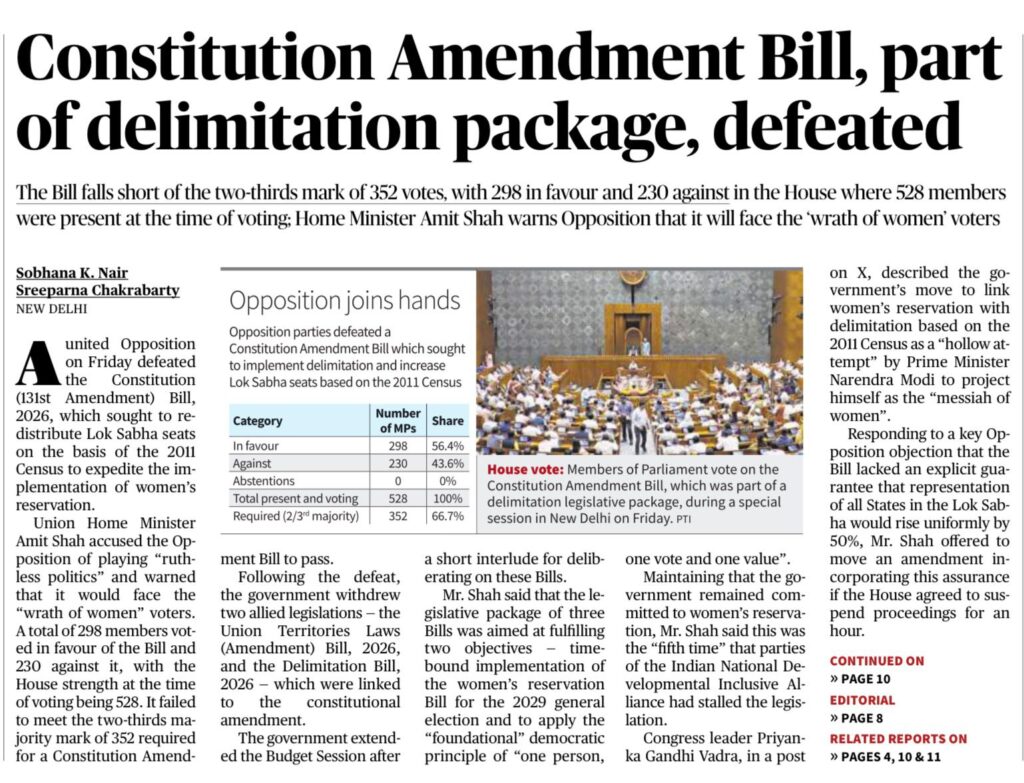
In the April 2026 special session, the government introduced a legislative package to overhaul India’s electoral map.

• Two instruments:

  1. Constitution (131st Amendment) Bill, 2026 → to change constitutional rules
  2. Delimitation Bill, 2026 → to execute delimitation

• Outcome: 131st Amendment Bill failed (no special majority) → Delimitation Bill withdrawn
• Core issue: Immediate delimitation + advancing women’s reservation vs delay/federal concerns

Constitution (131st Amendment) Bill, 2026 — Key Proposals

A. Article 81 (Lok Sabha strength)
• Increase maximum strength: 550 → 850 seats
• 815 (States) + 35 (UTs)

B. Article 82 (Delimitation trigger)
• Remove constitutional freeze (till post-2026 Census)
• Shift power: Parliament can decide which Census data to use
→ Enables use of 2011 Census

C. Article 170 (State Assemblies)
• Similar changes for State Legislative Assemblies
• Allows resizing based on updated population data

D. Article 334A (Women’s Reservation)
• De-linked reservation from future Census
• Proposal: implement immediately after 2026 delimitation

Delimitation Bill, 2026 — Operational Framework

A. Delimitation Commission
• Head: Sitting/retired Supreme Court Judge
• Members: Chief Election Commissioner + State Election Commissioners

B. Associate Members
• 10 per state (5 MPs + 5 MLAs)
• Advisory role → no voting power

C. Operational Rule
• Use 2011 Census for:
• Redrawing constituencies
• Allocating 850 seats among states

Friction Points (Govt vs Opposition)

A. Timing of Women’s Reservation
• Govt: Immediate via delimitation (de-link from Census)
• Opposition: Earlier law (2023) made it conditional → confusion + policy inconsistency

B. Census basis (2011 vs fresh Census)
• Govt: Use 2011 data for speed
• Opposition: Outdated → distorts representation

C. Federal imbalance
• Southern states fear seat loss due to population-based redistribution
• Debate: population vs performance (population control)

D. Expansion of Lok Sabha (850 seats)
• Govt: Needed for better representation
• Opposition: May alter political balance significantly

Article 368 — Why the Amendment Bill failed

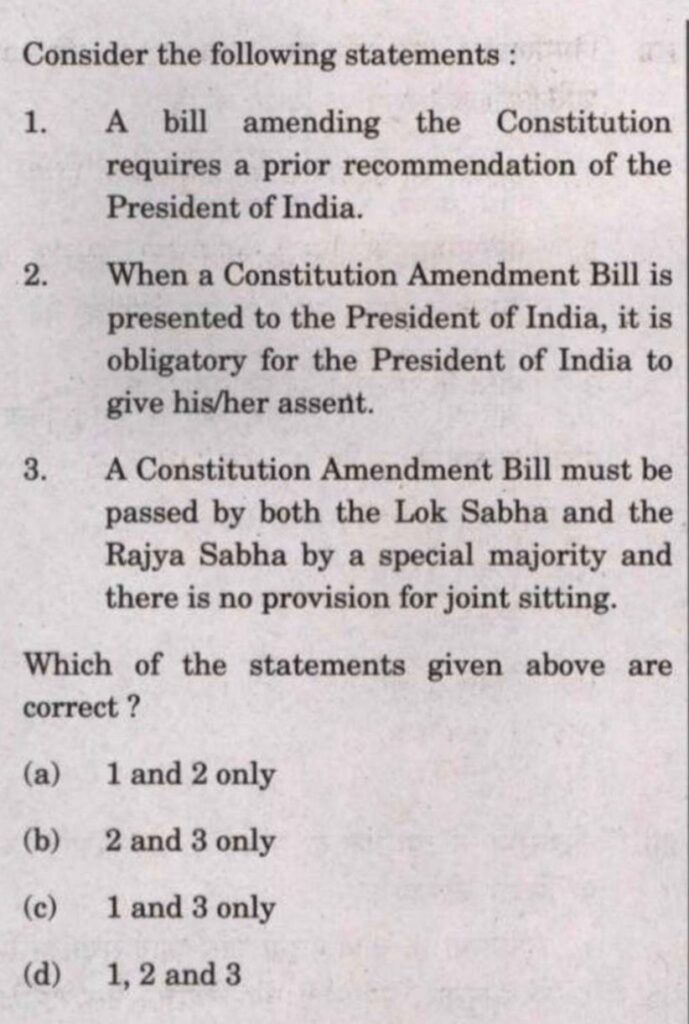
Textual requirement (Special Majority):
A Constitution Amendment Bill must be passed by:

  1. Majority of total membership of the House, and
  2. Not less than two-thirds of members present and voting

Application here:
• Required (2/3rd): 352
• Votes in favour: 298 → insufficient
→ 131st Amendment Bill failed

Result:
• Constitutional changes could not be made
• Hence, Delimitation Bill lost legal basis → withdrawn
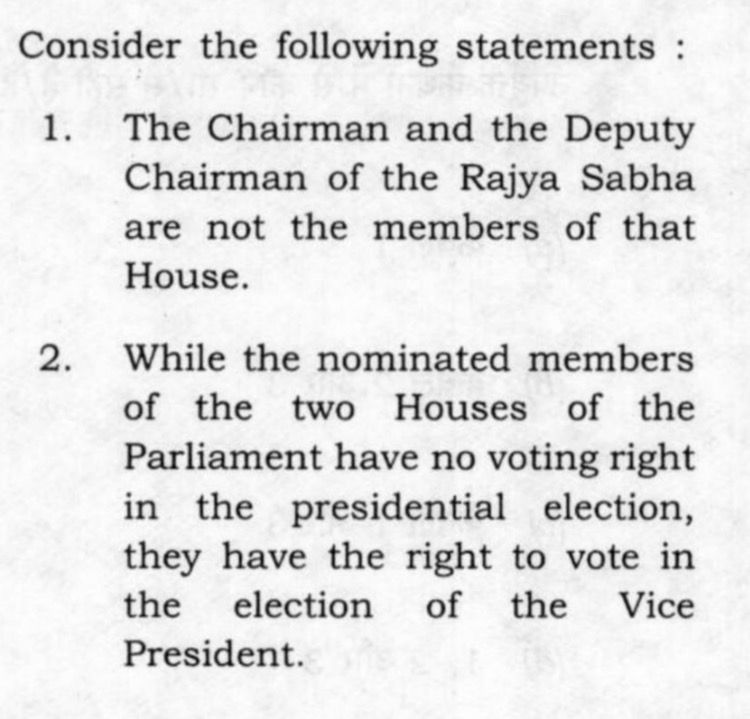
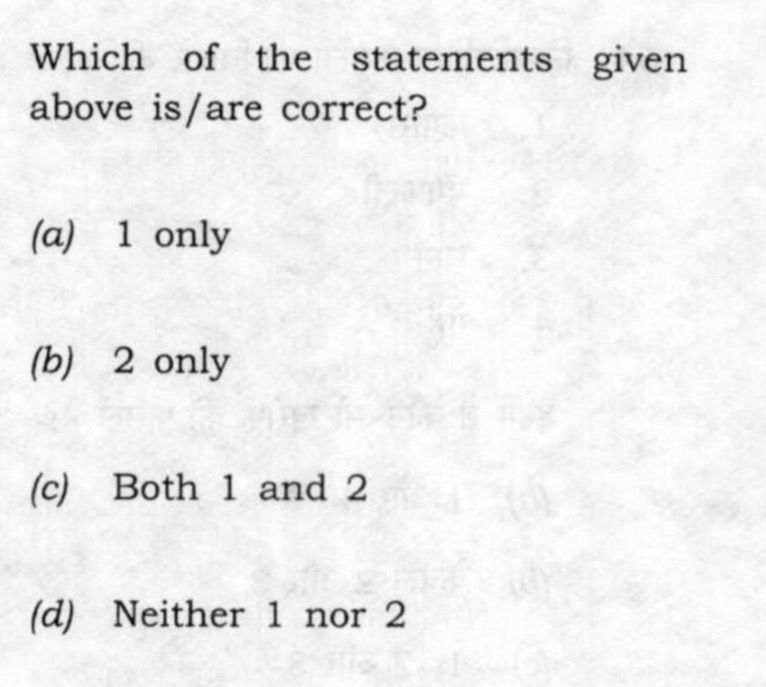
PYQ – 2022, Ans – B

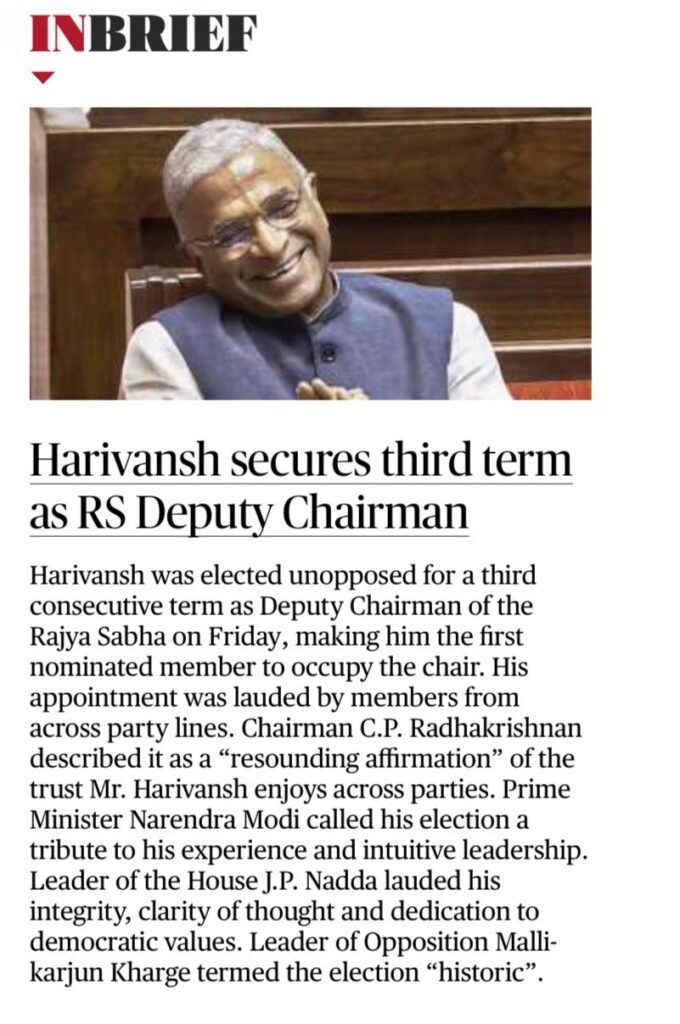
Deputy Chairman of Rajya Sabha: Harivansh Re-elected for Third Term

Context

Harivansh Narayan Singh has been elected unopposed for a third consecutive term as Deputy Chairman of the Rajya Sabha, becoming the first nominated member to hold the post—reflecting cross-party consensus.

Deputy Chairman of Rajya Sabha

  1. Constitutional basis
    • Article 89(2): Rajya Sabha “shall choose” one of its members as Deputy Chairman.
  2. Election (Appointment mechanism)
    • Electorate: Members of Rajya Sabha only
    • Eligibility: Any RS member (elected/nominated)
    • Majority required: Simple Majority
    • Meaning: Majority of members present and voting
    • If single candidate → can be elected unopposed
  3. Role
    • Presides over RS in absence of Chairman (Vice-President)
    • Ensures conduct of business, maintains order

Removal
• By resolution of Rajya Sabha
• Majority required: Effective Majority
• Meaning: Majority of total membership − vacancies
• 14 days’ prior notice mandatory

PYQ – 2013, Ans – B

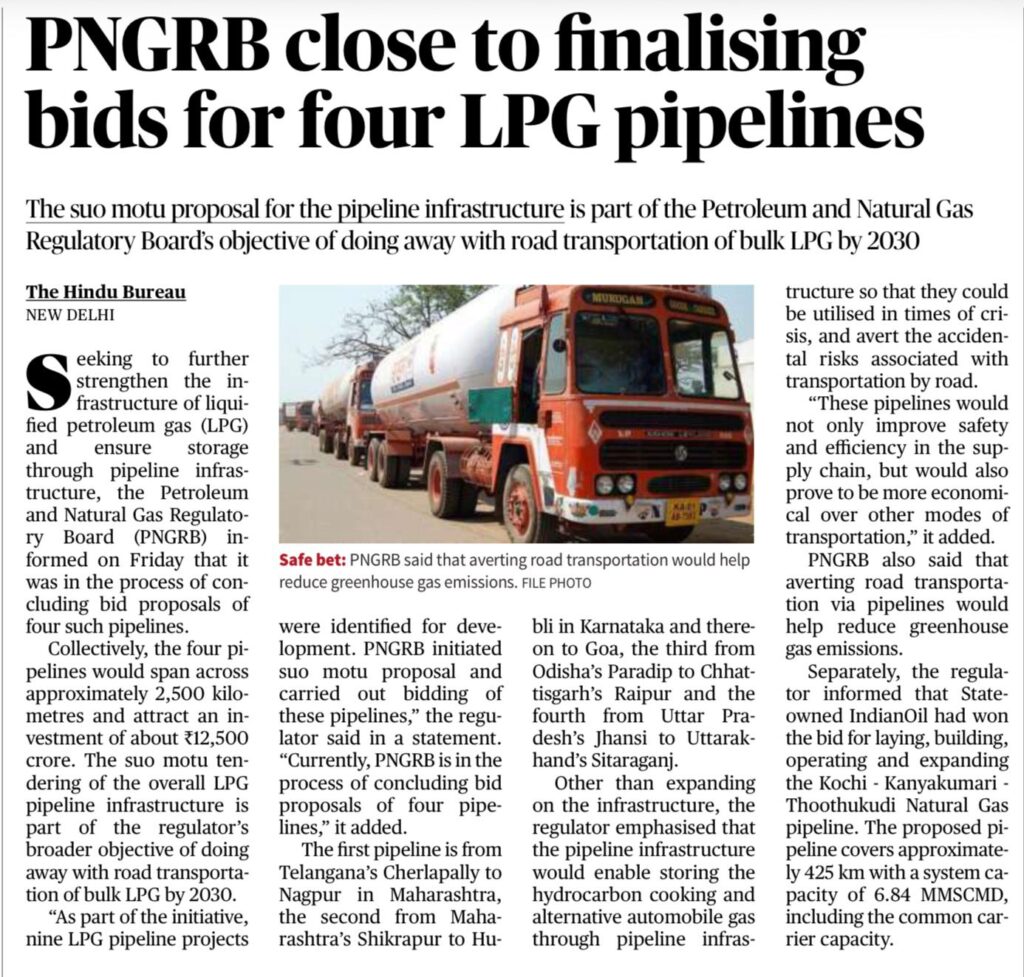
PNGRB Finalising LPG Pipeline Projects to Boost Energy Infrastructure

Context

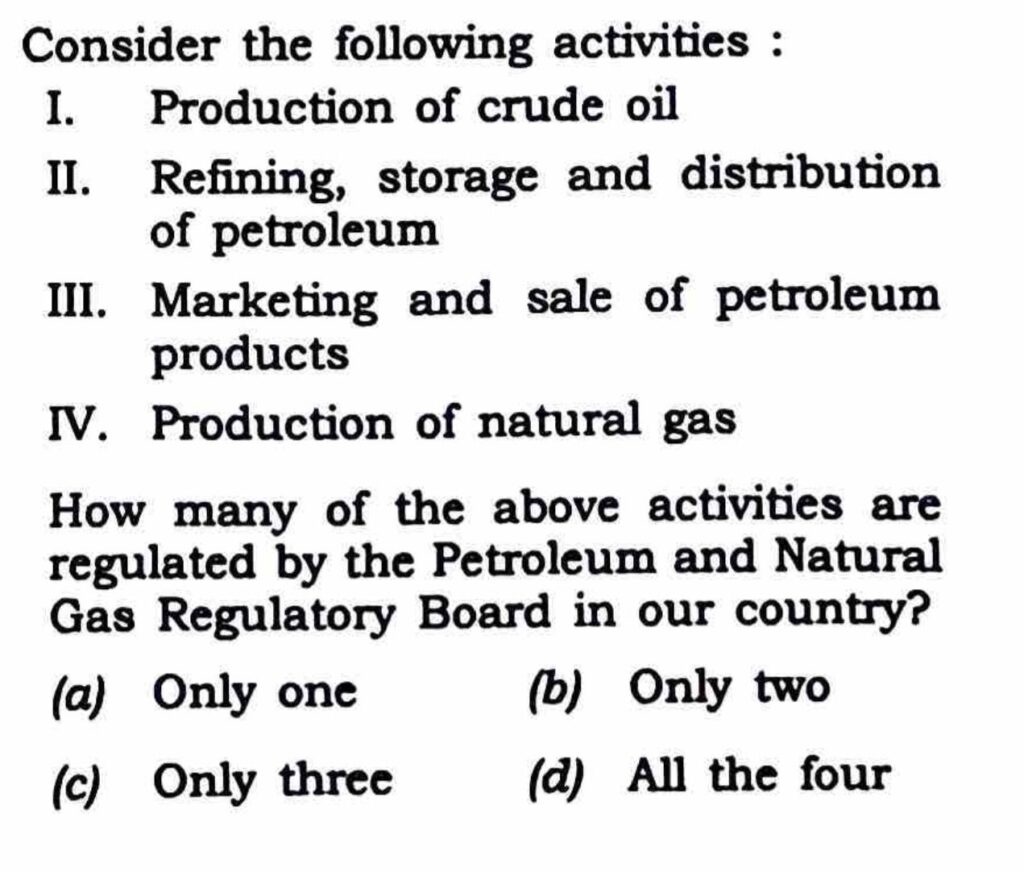
The Petroleum and Natural Gas Regulatory Board (PNGRB) is finalising bids for four LPG pipeline projects as part of its strategy to replace road transport of bulk LPG with pipelines by 2030, improving safety, efficiency and lowering emissions.

PNGRB

  1. Nature & Law
    • Statutory body (established under PNGRB Act, 2006)
  2. Ministry
    • Works under Ministry of Petroleum and Natural Gas
  3. Core mandate
    • Regulates downstream oil & gas sector (post-exploration stage)

Downstream activities (important)
• Refining → Processing → Storage → Transportation → Distribution → Marketing of petroleum, petroleum products and natural gas
• Includes:
• Pipelines (LPG, natural gas)
• City Gas Distribution (CGD) networks
• Ensuring fair competition, consumer protection, tariff regulation

PYQ – 2025, Ans – B

India Economy Ranking Falls to 6th: IMF Data and Key Reasons Explained

Context: India economy ranking

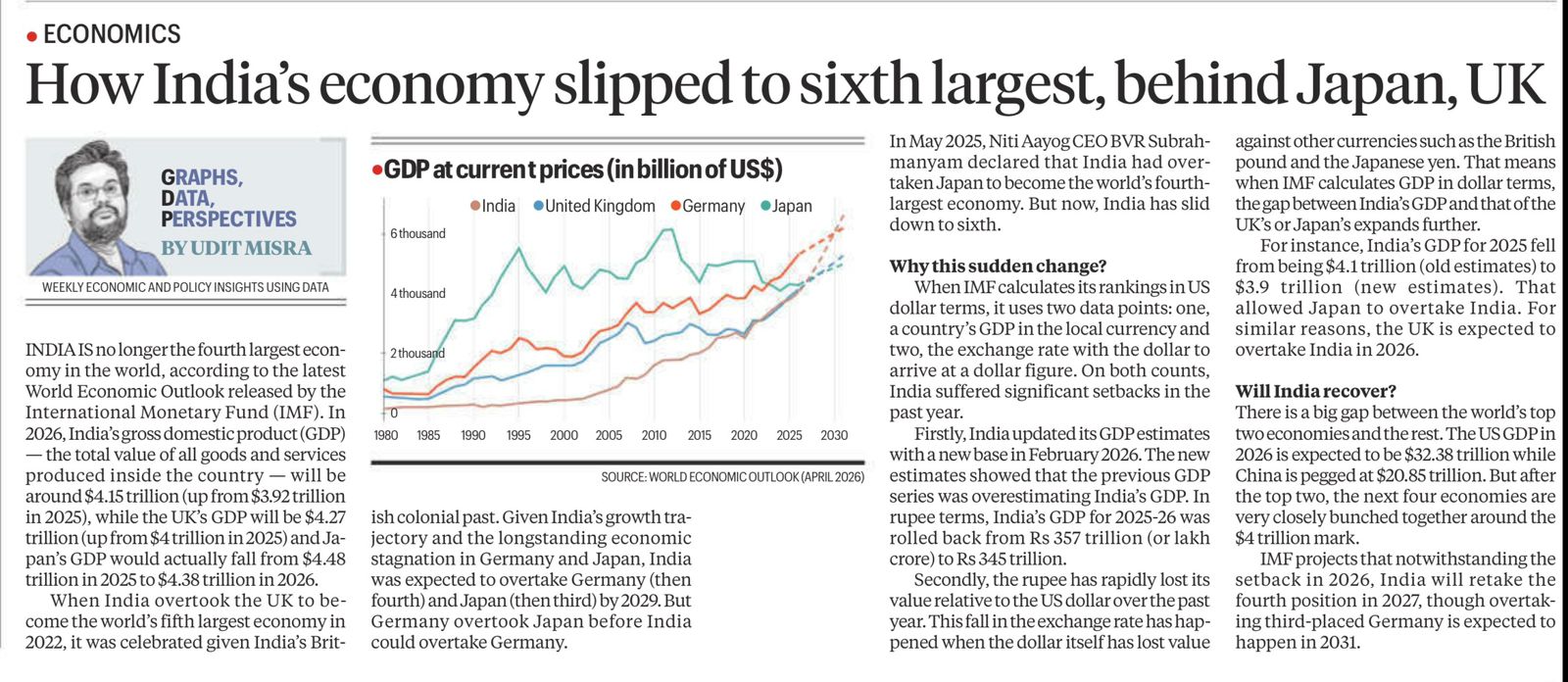
India, earlier projected to be the 4th largest economy, has slipped to 6th place (behind Japan & UK) in IMF estimates. The shift is largely due to technical revisions and currency effects, not a collapse in real economic growth.

Reasons

  1. GDP base revision (Feb 2026) — Core trigger
    • New base year: 2022–23 (replacing 2011–12)
    • Purpose: reflect current economic structure (GST, formalisation, services expansion)
    • Result: Earlier GDP was overestimated → revised downward
    • ₹357 lakh crore → ₹345 lakh crore
    → Statistical correction made India’s GDP appear smaller globally
  2. Rupee depreciation → lower dollar GDP
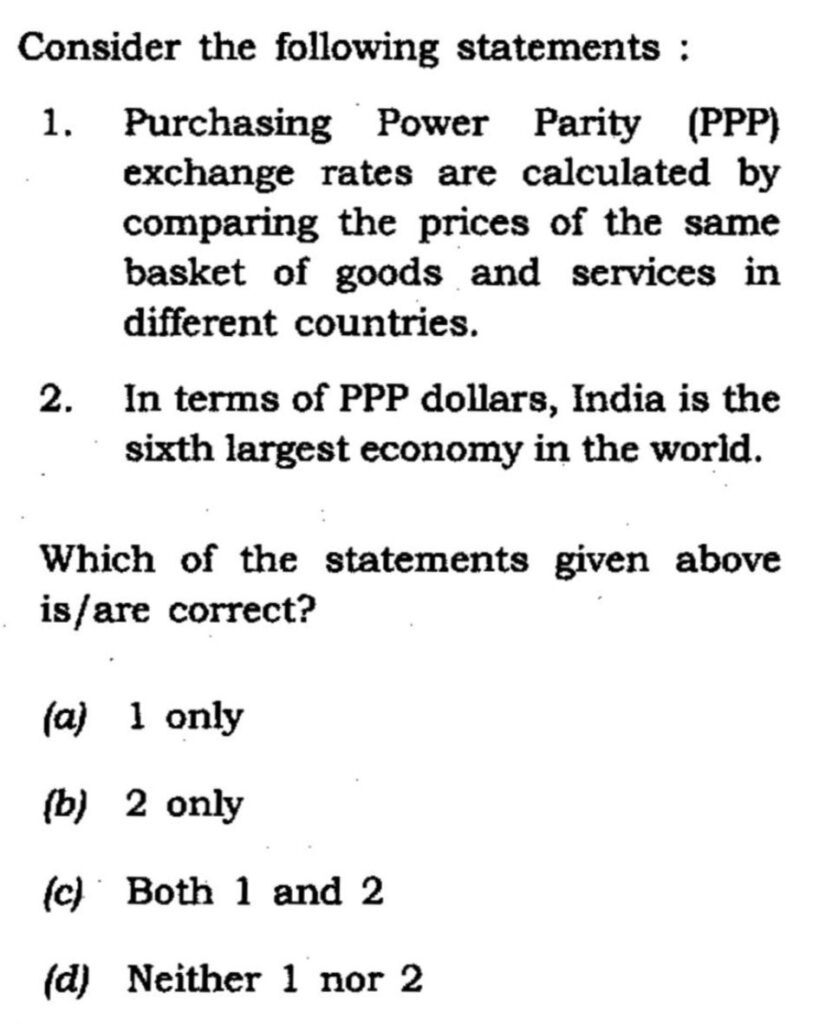
    • IMF ranks in US dollar terms
    • Weaker rupee → same GDP converts into lower $ value
    → Direct fall in ranking
PYQ – 2019, Ans- A

Strait of Hormuz Reopened by Iran Amid Ongoing US Blockade

Context: Strait of Hormuz

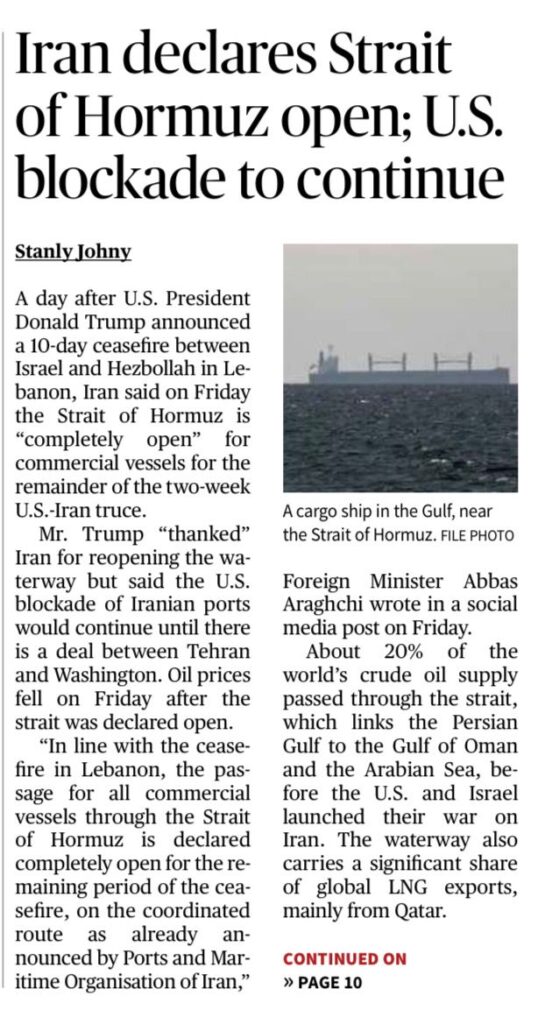
Amid a temporary ceasefire between Israel and Hezbollah (Lebanon) announced by the U.S., Iran declared the Strait of Hormuz open for commercial shipping, while the United States stated that its blockade of Iranian ports will continue until a broader agreement is reached.

Key Points

  1. Strait opened during truce
    • Iran allowed free passage of commercial vessels
    • Valid for the remaining period of the U.S.–Iran truce
  2. U.S. stance unchanged
    • Despite reopening, U.S. will continue blockade of Iranian ports
    • Condition: blockade ends only after formal deal with Iran
  3. Impact on oil markets
    • Oil prices declined after reopening announcement
    → Indicates reduced immediate supply disruption fears
  4. Strategic importance of Strait
    • Carries ~20% of global crude oil supply
    • Connects Persian GulfGulf of OmanArabian Sea
    • Also handles significant LNG exports (especially from Qatar)

Conflict backdrop
• Developments linked to wider West Asia tensions (U.S.–Israel vs Iran)
• Strait had been under threat due to ongoing military escalation

About the UPSC Civil Services Examination (UPSC CSE)

The UPSC Civil Services Examination (CSE) is one of the most competitive and esteemed examinations in India, conducted by the Union Public Service Commission to recruit officers for services such as the Indian Administrative Service (IAS), Indian Police Service (IPS), Indian Foreign Service (IFS), and others. The exam comprises three stages — Prelims, Mains, and the Personality Test (Interview) — designed to test a candidate’s knowledge, aptitude, decision-making, and leadership skills.


How to Prepare Effectively for UPSC CSE

Cracking the UPSC CSE requires a deep understanding of the syllabus, consistent revision, structured answer writing, and smart test-taking strategies. The Prelims test analytical and conceptual clarity, the Mains focuses on critical thinking, articulation, and subject mastery, while the Interview assesses presence of mind, ethical judgment, and personality traits relevant to public service.

At UnderStand UPSC, we empower aspirants with a personalized and focused approach to each stage of the exam.


Why Choose UnderStand UPSC?

UnderStand UPSC is a mentorship-driven platform offering a clear, clutter-free strategy to tackle the Civil Services Examination. Our programs like Transform (for beginners and intermediate learners) and Conquer (for advanced mains preparation) provide structured study plans, syllabus-wise video content, interactive live sessions, and answer writing support.

We emphasize:

  • Concept clarity through topic-wise lectures

  • Test series designed around real UPSC standards

  • Personalized mentorship in small groups

  • Regular performance tracking and peer benchmarking

  • Doubt-clearing sessions, current affairs analysis, and monthly magazines


Join the UnderStand UPSC Learning Community

Our mission is to make UPSC preparation less overwhelming and more strategic. We combine mentorship, discipline, and academic rigor to help you clear CSE with confidence. Whether you’re preparing from Delhi, Mumbai, Bangalore, or a remote village — our online-first model ensures quality guidance reaches every corner of India.

Join the thousands of aspirants who trust UnderStand UPSC to guide their journey toward becoming civil servants.

Stay connected with us through our Telegram, YouTube, and Instagram channels for daily tips, strategies, and updates.

Copyright © 2026 USARAMBHA EDUCATION (UnderStand UPSC). All Rights Reserved.

Join the Success Journey!