Bab el-Mandeb Strait for India: Strategic Importance
Context: Bab el-Mandeb Strait for India
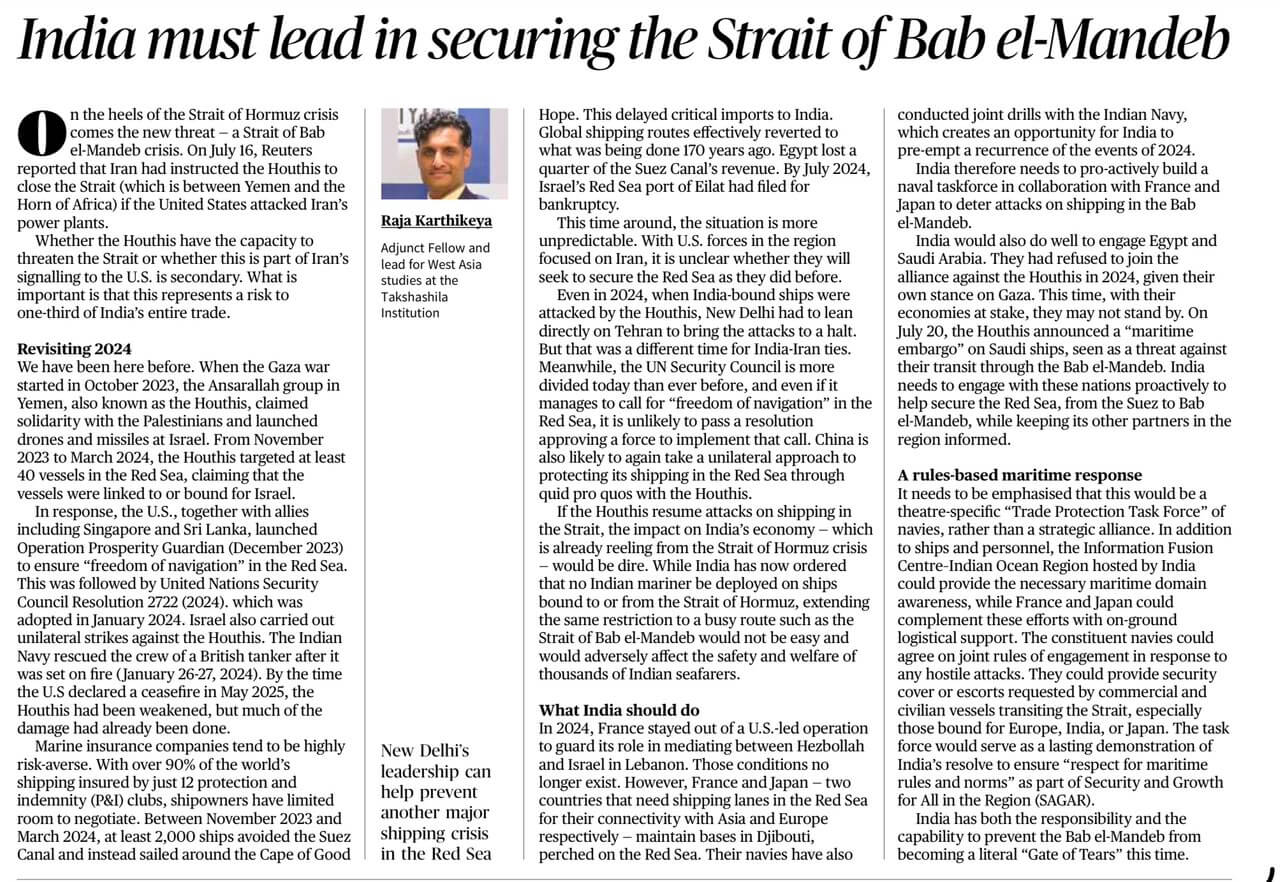
Growing security concerns in the Bab el-Mandeb Strait due to Houthi attacks on commercial shipping have highlighted the vulnerability of global maritime trade.
The editorial argues that India should play a proactive role in securing this critical sea route through international cooperation.
Bab el-Mandeb Strait: Basics
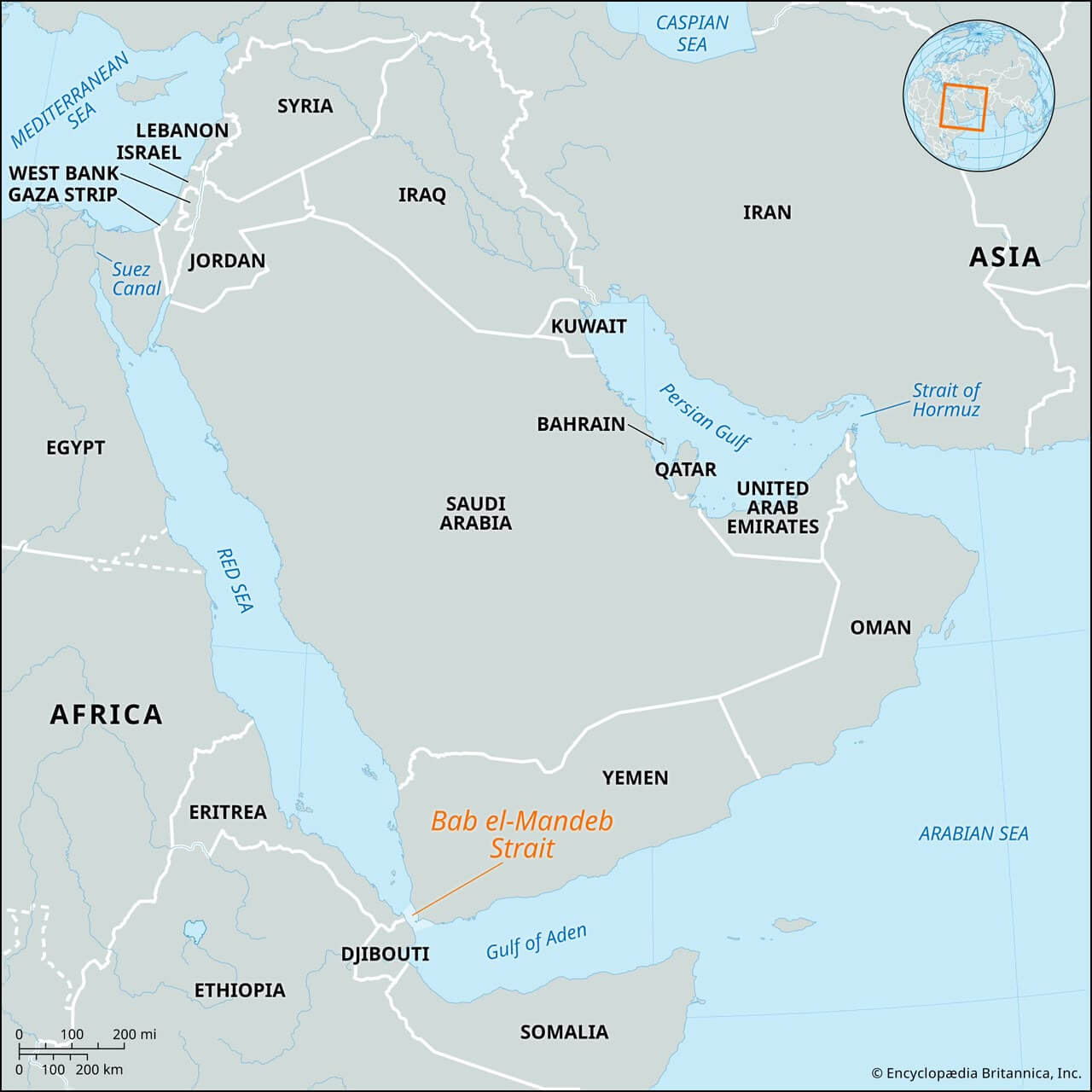
Bab el-Mandeb means “Gate of Tears” in Arabic.
It is located between:
- Yemen
- Djibouti
- Eritrea
It connects the Red Sea with the Gulf of Aden and the Indian Ocean.
It also forms the southern gateway to the Suez Canal.
Strategic Importance
Bab el-Mandeb is one of the world’s most important maritime chokepoints.
It is a vital trade and energy corridor connecting:
- Europe
- Asia
- Africa
Any disruption forces ships to avoid the Suez Canal route and sail via the Cape of Good Hope, increasing:
- Travel time
- Freight costs
- Insurance premiums
Why It Matters for India
A significant share of India’s trade with Europe passes through this route.
It is also important for India’s:
- Energy security
- Export supply chains
- Merchant shipping safety
- Protection of Indian seafarers
- Indian Ocean maritime strategy
The issue also connects with India’s MAHASAGAR vision, which stands for Mutual and Holistic Advancement for Security and Growth Across Regions.
India’s Possible Role
India can work with like-minded partners to secure this route through:
- Maritime domain awareness
- Naval cooperation
- Escort support for commercial shipping
- Rules-based maritime response
- Cooperation with regional powers
- Protection of freedom of navigation
The article also argues that India should not wait for another major crisis in the Red Sea before acting.
Key Takeaway
Bab el-Mandeb is not a distant maritime issue for India. It directly affects India’s trade, energy security, seafarer safety and role as a net security provider in the Indian Ocean Region.