Context:
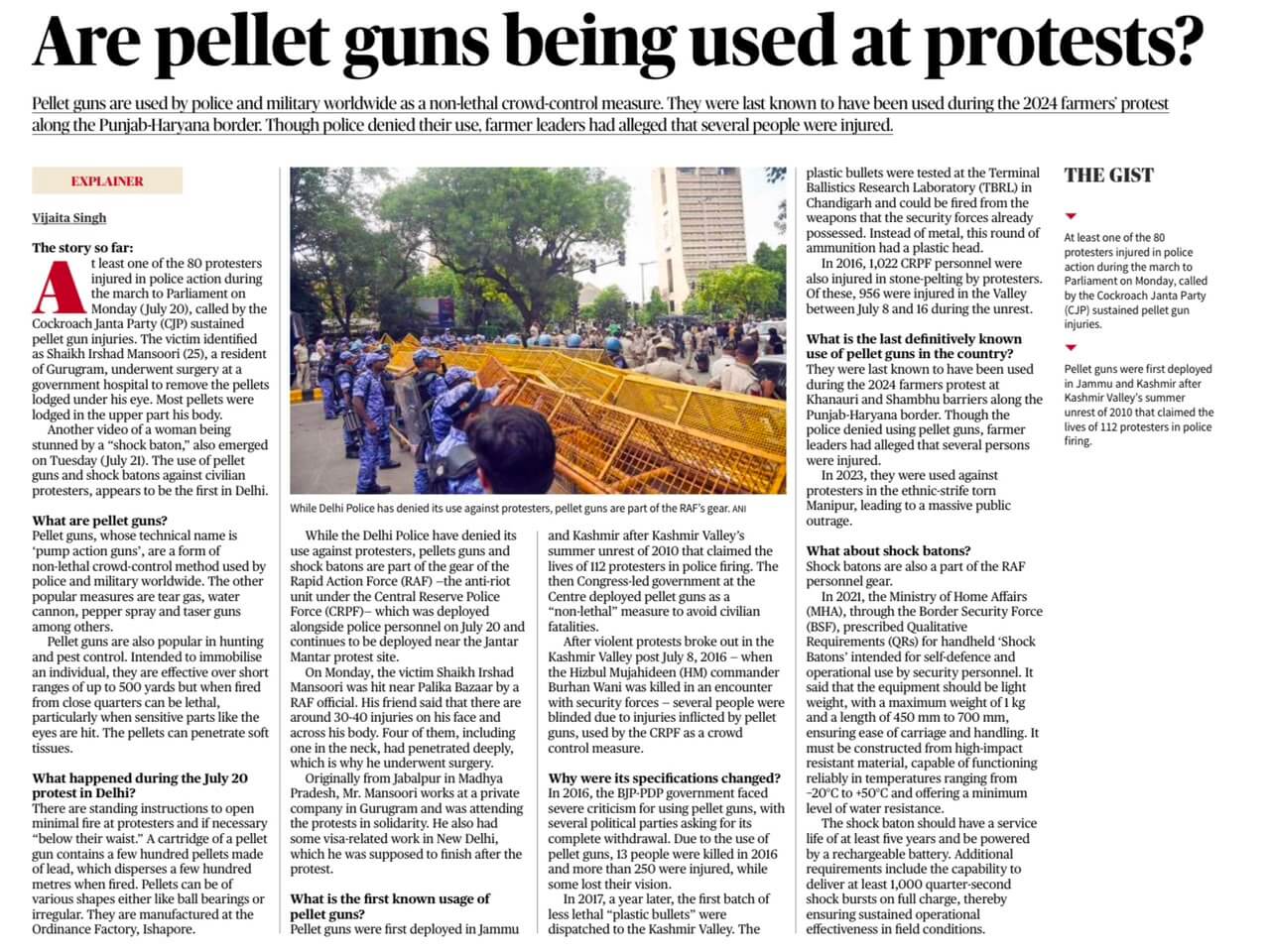
The issue gained attention after allegations that pellet guns were used during the July 2026 protest march to Parliament in Delhi, resulting in injuries to protesters.
The incident has revived the debate on the use of non-lethal weapons for crowd control.
What Are Pellet Guns?
Pellet guns are non-lethal crowd-control weapons used by police and security forces.
They fire multiple small metal pellets in one shot.
These pellets disperse over a short distance and are intended to disperse crowds.
However, they can cause serious injuries, especially to the:
- Eyes
- Face
- Upper body
Pellet guns are also used for hunting and pest control in some countries.
Pellet Guns in India
Pellet guns were first widely deployed in Jammu & Kashmir in 2010 during protests.
They were extensively used after the 2016 Kashmir unrest, leading to severe eye injuries and criticism.
They were also used during the 2023 Manipur violence.
Allegations of their use were made during the 2024 farmers’ protest, though police denied them.
Key Issues
Though called non-lethal, pellet guns can cause permanent disability.
The biggest concern is the risk of blindness and severe eye injuries.
Their use raises questions about:
- Proportional use of force
- Human rights protection
- Police accountability
- Crowd-control standards
- Safer alternatives
- Standard Operating Procedures
Governance Concern
The debate is not only about one weapon.
It is about how the State balances:
- Public order
- Right to protest
- Police safety
- Human rights
- Minimum use of force
Crowd-control methods must be effective but also proportionate and accountable.
Key Takeaway
Pellet guns expose the tension between crowd control and civil liberties. Even if classified as non-lethal, their serious injury risk demands strict SOPs, accountability and safer alternatives.