24 March 2026 | Daily Current Affairs

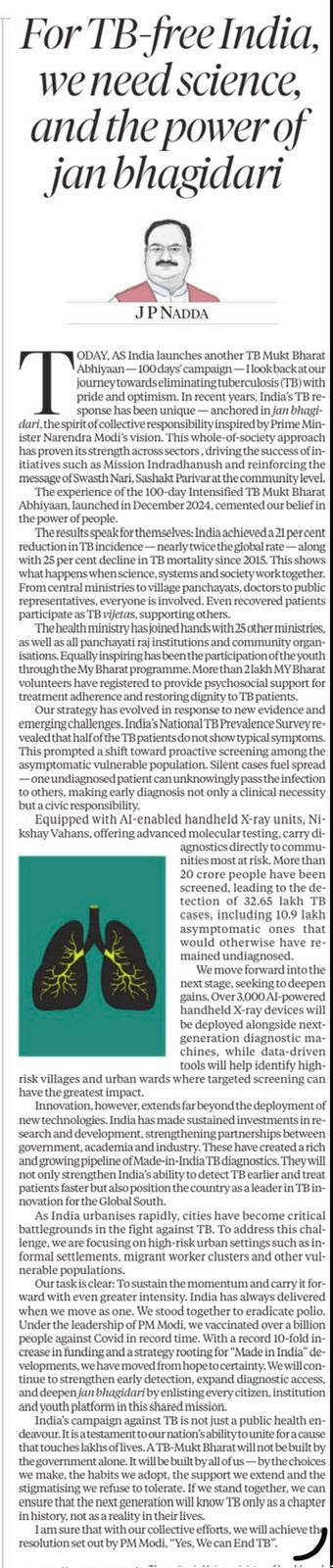
TB Mukt Bharat Abhiyaan: Science and Jan Bhagidari Drive Elimination

Context: TB Mukt Bharat Abhiyaan

India has launched a 100-day Intensified TB Mukt Bharat Abhiyaan, focusing on science + jan bhagidari to accelerate TB elimination.

1) Tuberculosis Basics

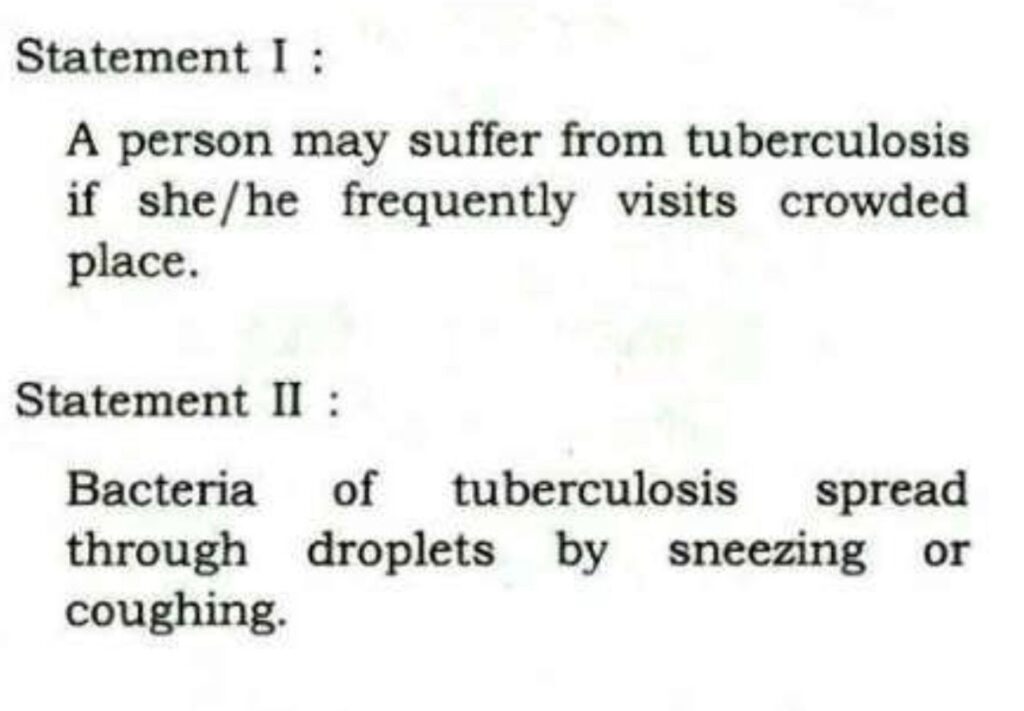
  1. Bacterial disease caused by Mycobacterium tuberculosis
  2. Spread through air (cough/sneeze)
  3. Mainly affects lungs
  4. Many cases are asymptomatic (silent spread)
  5. Requires early detection + long-term treatment

2) Key Data from Article

  1. 21% decline in TB incidence since 2015
  2. 25% decline in TB deaths since 2015
  3. 50% patients do not show typical symptoms
  4. 20+ crore people screened
  5. 32.65 lakh TB cases detected
  6. 10.9 lakh asymptomatic cases identified
  7. 2 lakh+ MY Bharat volunteers registered
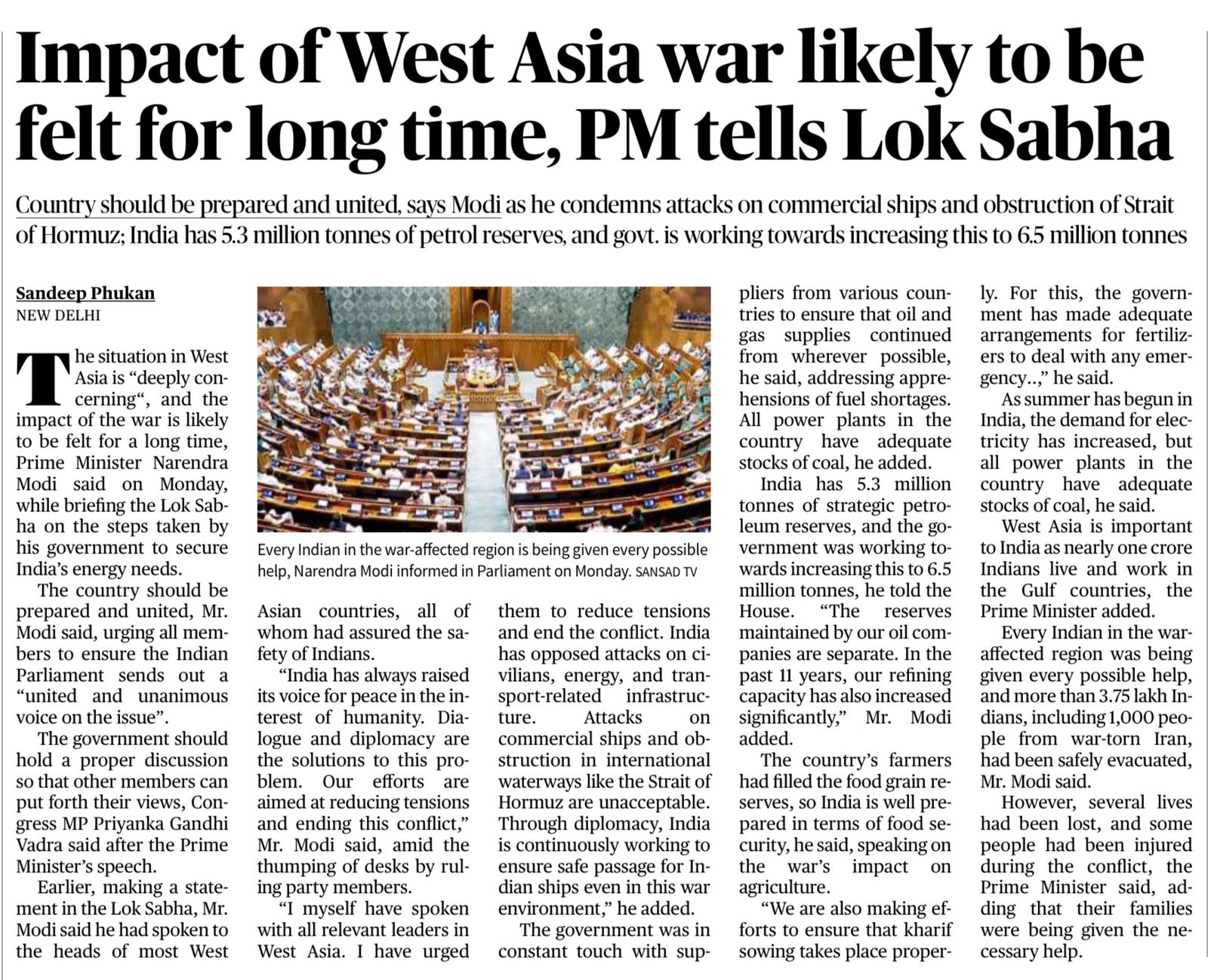
  8. 3.75 lakh Indians helped, including 1,000 evacuated from Iran

3) Core Strategy

3.1 Jan Bhagidari

• Community participation, panchayats, TB vijetas
• Focus on awareness + stigma reduction

3.2 Proactive Screening Shift

• From passive → targeted screening of high-risk groups
• Focus on urban slums, migrants

3.3 Technology Use

• AI-enabled handheld X-ray devices
• Nikshay Vahans for mobile testing
• Molecular diagnostics at community level

4) Institutional Approach

  1. Coordination with 25 ministries
  2. Integration of community + health system
  3. Focus on treatment adherence and dignity
TB Mukt Bharat Abhiyaan
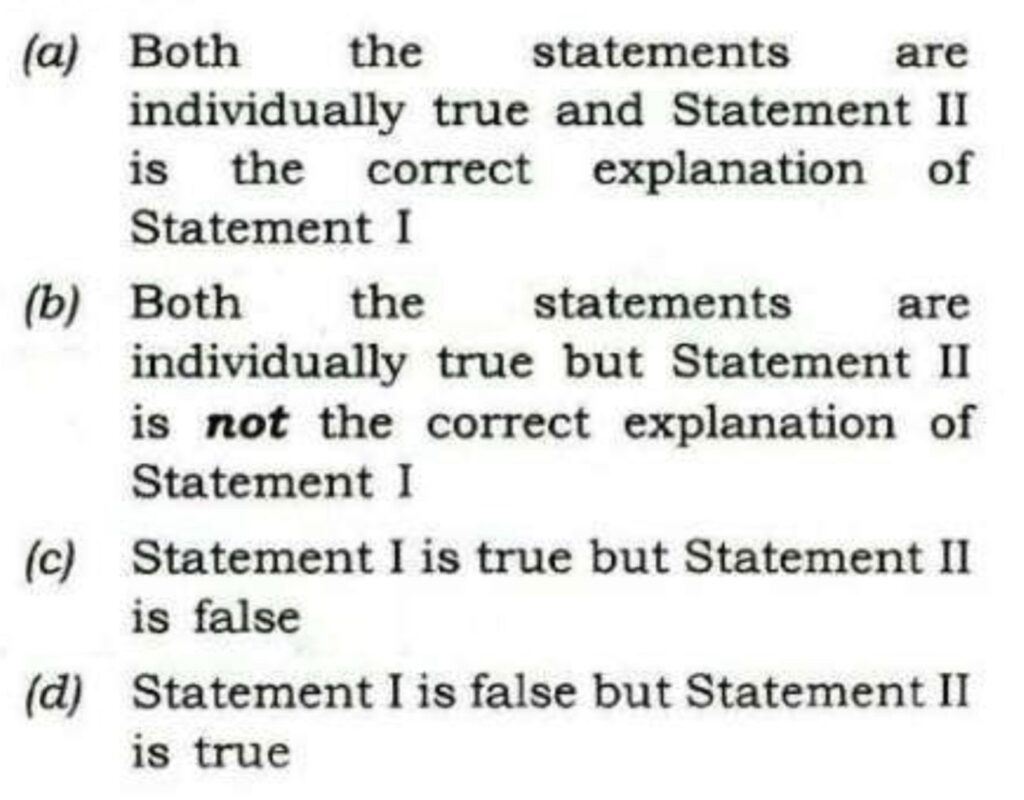
PYQ – 2018, Ans – D

India Nepal Relations: Political Shift Opens Strategic Opportunity

Context: India Nepal Relations

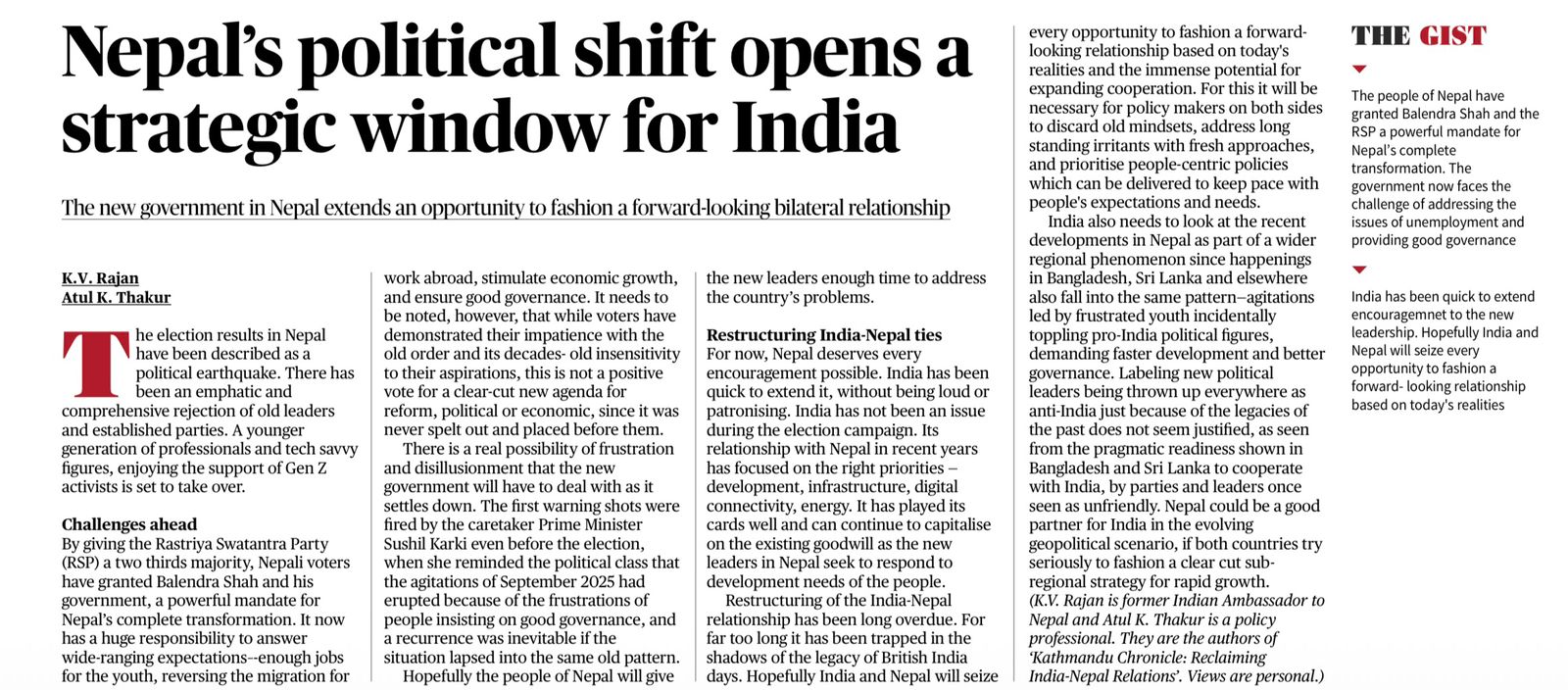
A new political mandate in Nepal has brought a leadership focused on governance and development, creating space for India to reset ties and move beyond legacy irritants.

1) Political Shift in Nepal

  1. Rejection of old parties → rise of new, younger leadership
  2. Strong mandate → focus on jobs, governance, stability
  3. Warning signal → public frustration can re-emerge if delivery fails

2) Core Issues in India–Nepal Relations

2.1 Trust Deficit

• Perception of Indian interference in internal politics
• Anti-India narratives used in Nepal’s domestic politics

2.2 Boundary Dispute

• Kalapani–Lipulekh–Limpiyadhura dispute
• Triggered by new maps on both sides → affects diplomatic trust

2.3 Treaty Issue

• 1950 Treaty of Peace and Friendship

Why revision demand?

  1. Asymmetry perception → Nepal sees it as favouring India
  2. Security provisions → Nepal informally expected to consult India on defence matters
  3. Open border & economic privileges → seen as unequal in changing context
  4. Desire for sovereign equality and modernisation of terms

2.4 Economic & Transit Issues

• Nepal is landlocked → heavy dependence on India for trade routes
• 2015 blockade perception → major trust erosion
• Need for diversification vs dependence

2.5 China Factor

• Increasing Chinese role in infrastructure and connectivity
• Nepal balancing between India and China
• Strategic concern for India

India Nepal Relations

West Asia Conflict Impact: PM Highlights Long-Term Risks in Lok Sabha

Context: West Asia Conflict Impact

PM informed Lok Sabha that the West Asia conflict will have long-term impact, while outlining India’s preparedness, diplomatic stand, and energy-security measures.

1) India’s Stand on Conflict

  1. Pro-peace position → dialogue and diplomacy as solution
  2. Opposes attacks on civilians and critical infrastructure
  3. Condemns disruption of international shipping routes like Strait of Hormuz
  4. Advocates de-escalation and stability in region

2) Diplomatic Approach

  1. Continuous engagement with West Asian leaders
  2. Coordination with multiple countries to reduce tensions
  3. Focus on ensuring safe passage of Indian vessels
  4. Assistance and evacuation of Indians in conflict zones

3) Energy Security Measures

  1. Strategic Petroleum Reserves → 5.3 million tonnes
  2. Target → increase to 6.5 million tonnes
  3. Diversification of oil and gas supply sources
  4. Increased refining capacity over years

4) Economic & Domestic Preparedness

  1. Adequate coal stock in power plants
  2. Preparedness for fertilizer supply disruptions
  3. Focus on ensuring kharif sowing and food security
  4. Government ready for any supply shock

5) India-Specific Concerns

  1. Strait of Hormuz risk → affects energy imports
  2. Large Indian diaspora in Gulf → safety priority
  3. Global oil price volatility → domestic impact
West Asia Conflict Impact

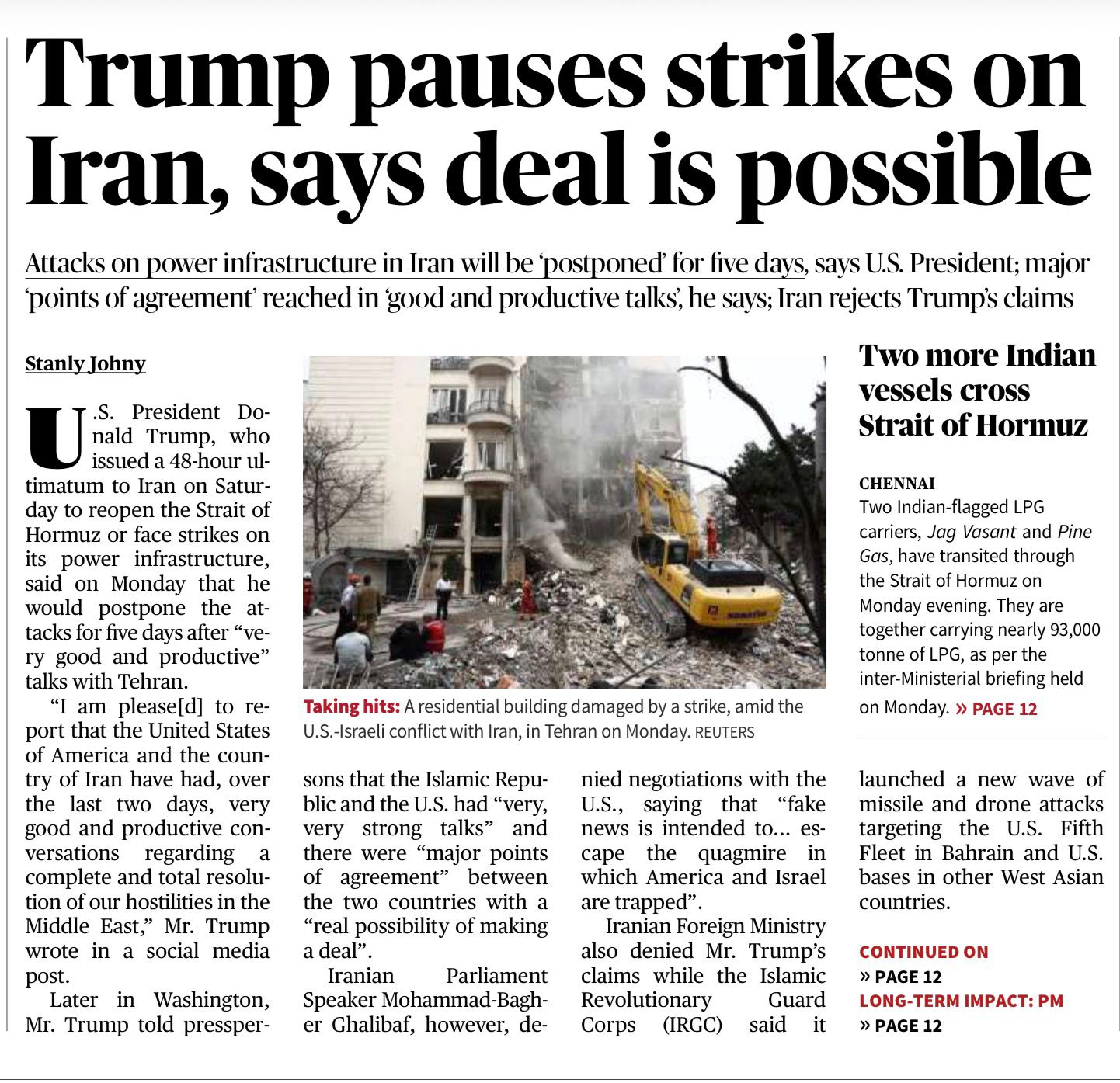
US Iran Conflict: Trump Pauses Strikes, Signals Possible Deal

Context: US Iran Conflict

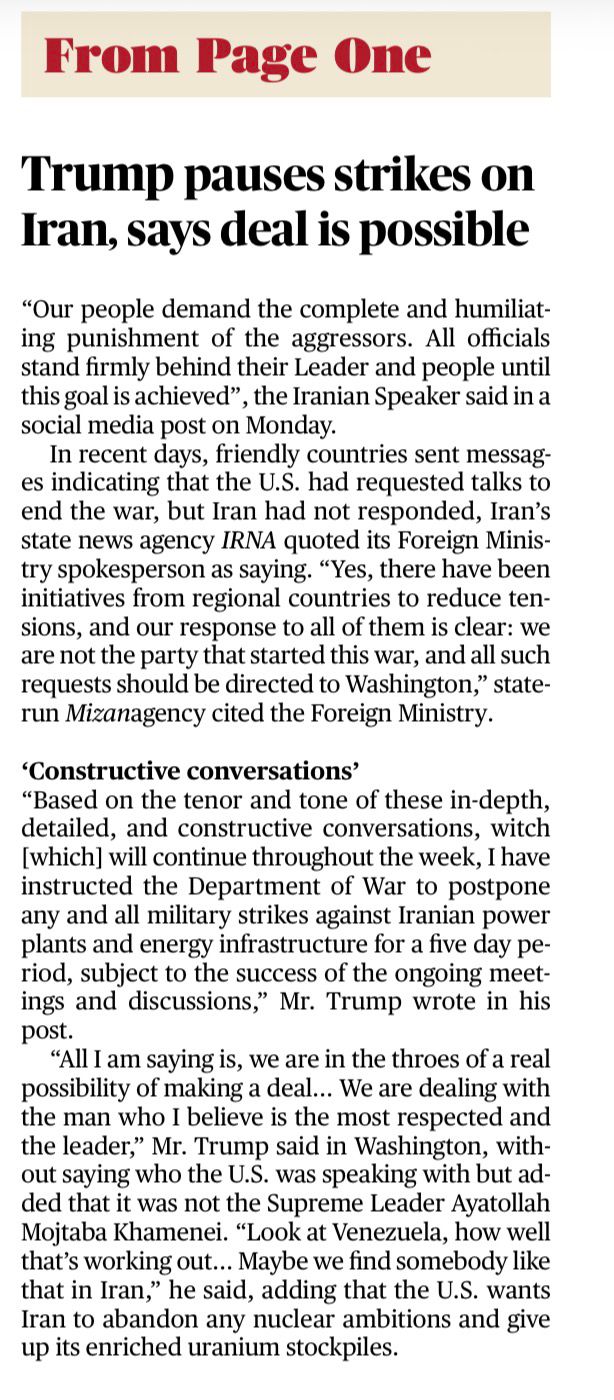
U.S. has paused planned strikes on Iran’s energy infrastructure for 5 days after talks, signalling a possible deal, though tensions continue.

1) What Happened

  1. U.S. ultimatum → reopen Strait of Hormuz or face strikes
  2. Planned strikes on power and energy infrastructure
  3. Now temporarily paused due to ongoing negotiations

2) Talks Status

• U.S. → “productive talks”, agreement points emerging
• Iran → rejects U.S. claims, denies progress

3) Core Dispute

• U.S. demand →

  1. End nuclear programme
  2. Surrender enriched uranium

• Iran stance →
• Denies aggression
• Asserts sovereign position

4) Ground Situation

  1. Iran launched missile and drone attacks
  2. Targets → U.S. bases, Fifth Fleet (Bahrain)
  3. Conflict risk still high despite pause

5) Strategic Importance

• Strait of Hormuz → key global oil route
• Disruption affects global energy + India’s imports

US Iran Conflict
US Iran Conflict
US Iran Conflict
US Iran Conflict

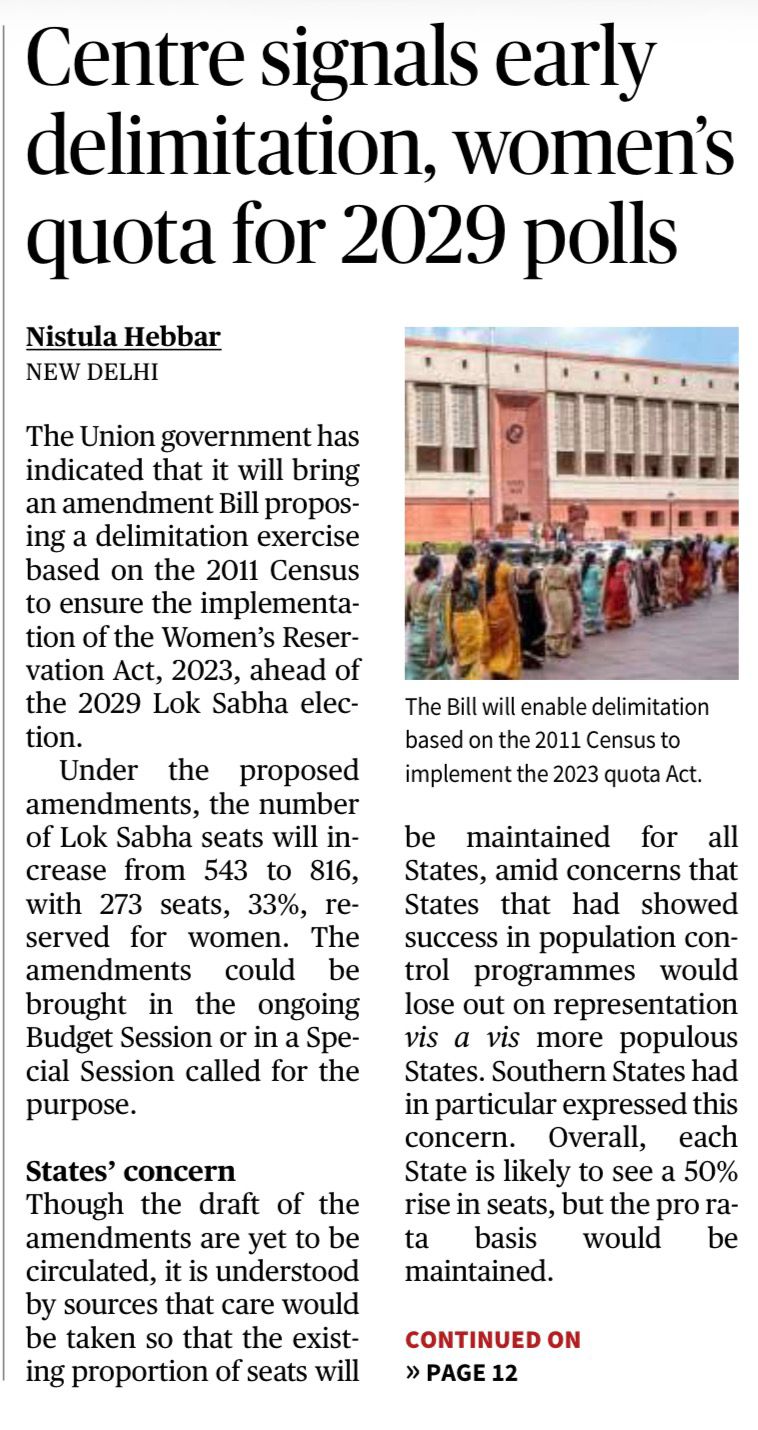
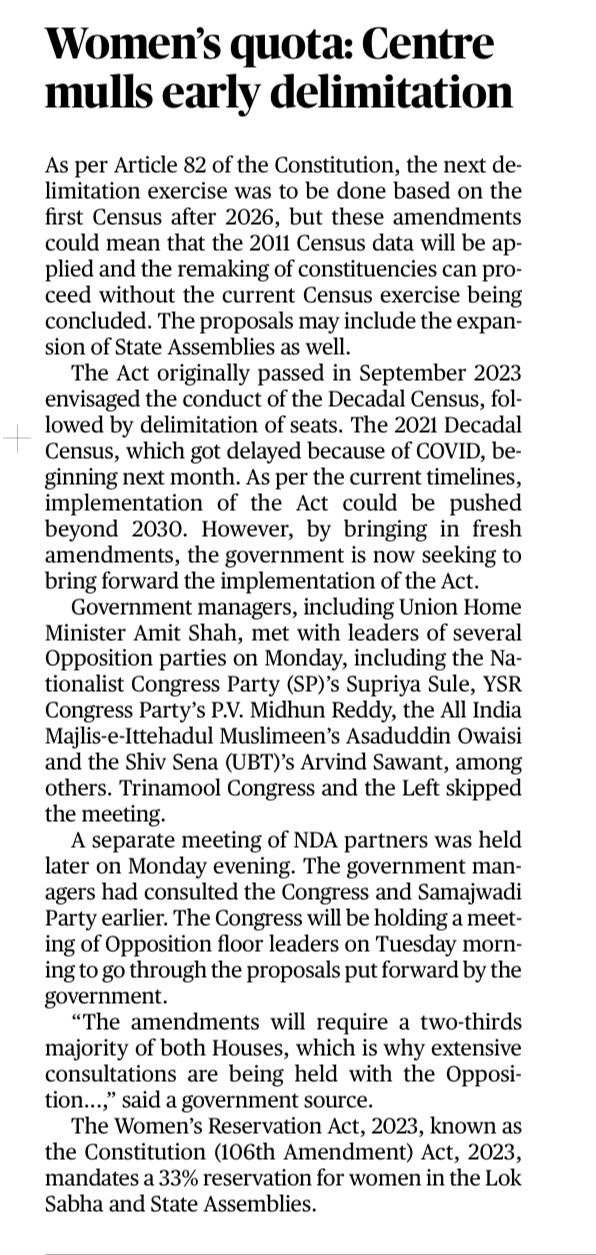
Delimitation and Women Reservation: Early Exercise Likely Before 2029 Elections

Context: Delimitation and Women Reservation

The Union government is considering early delimitation based on 2011 Census to implement the Women’s Reservation Act, 2023 before the 2029 Lok Sabha elections instead of waiting for the post-2026 Census cycle.

1) Constitutional Design

  1. Article 82 → Parliament enacts a Delimitation Act after every Census
  2. Article 170 → Readjustment of seats in State Assemblies
  3. Article 327 → Parliament’s power to regulate elections including delimitation

2) Delimitation Commission

• Composition: Retired Supreme Court Judge (Chairperson) | Chief Election Commissioner or nominee | State Election Commissioners
• Nature: Independent | Quasi-judicial | Not subject to executive control
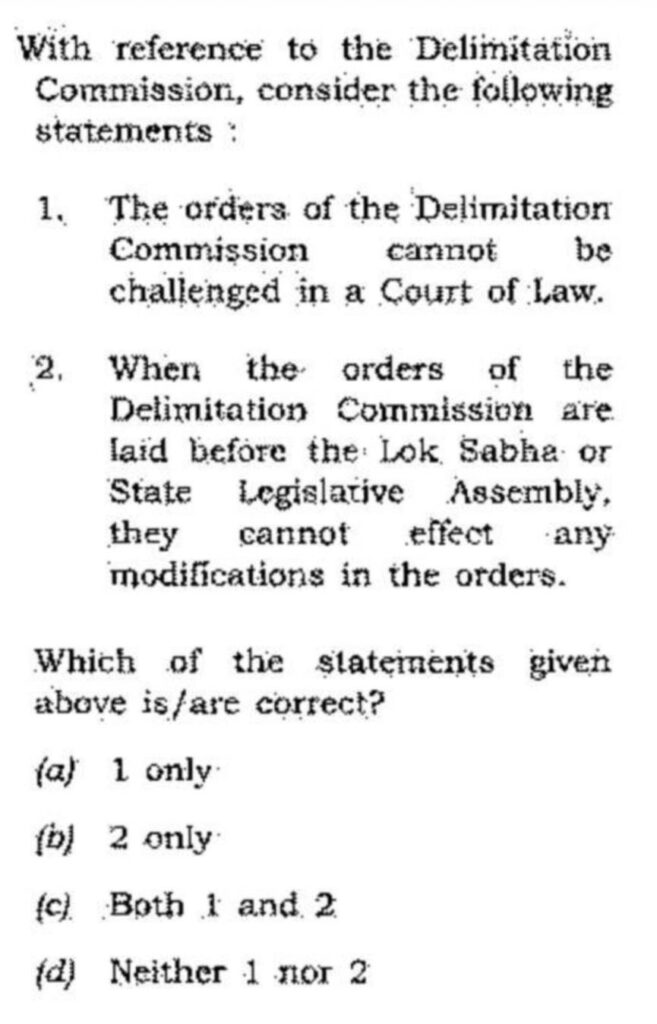
• Powers: Final orders | Force of law | Not challengeable in any court
• Functions: Redraw constituencies | Allocate seats | Identify reserved seats for SCs/STs | Ensure population parity

• Process: Draft proposal → Public sittings → Objections considered → Final order notified

• Significance: Ensures electoral equality | Prevents gerrymandering | Maintains federal balance

3) How Delimitation Happens

  1. Parliament passes Delimitation Act
  2. Delimitation Commission is constituted
  3. Commission redraws constituencies and allocates seats using Census data
  4. Final orders have force of law and cannot be challenged in court

4) Delimitation History + Freeze on Seats

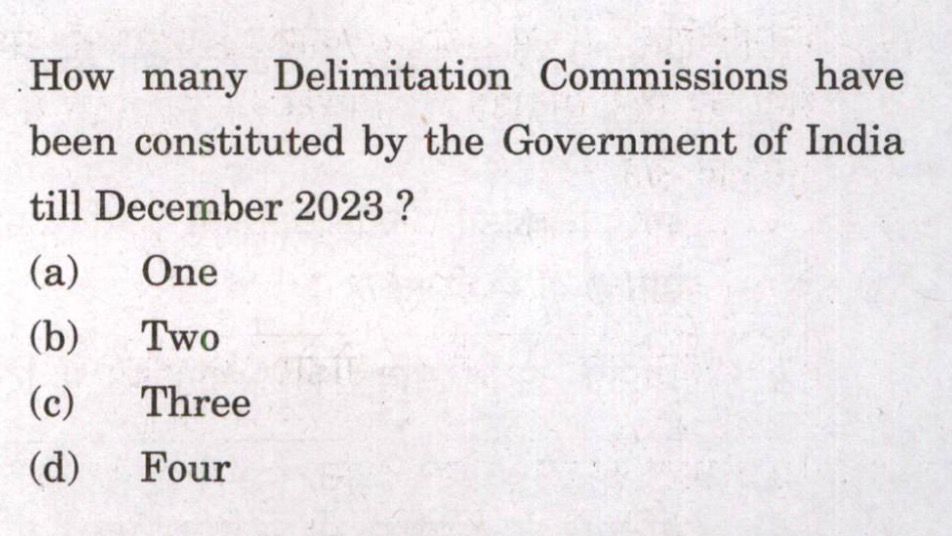
• Commissions:
1952 → 1951 Census | 1963 → 1961 Census | 1973 → 1971 Census | 2002 → 2001 Census with only boundary changes

• Constitutional Freeze:
42nd Amendment 1976 → Freeze till 2001
84th Amendment 2001 → Extended till 2026
87th Amendment 2003 → Boundary change allowed but no increase in seats

Result
• Lok Sabha seats fixed at 543 despite population growth
• Triggered North–South representation debate

5) Present Legal Position

• Next delimitation to occur after first Census post-2026
• Women’s Reservation Act implementation originally linked to this future exercise

6) Current Government Plan

• Use 2011 Census instead of waiting
• Conduct early delimitation
• Target implementation by 2029 Lok Sabha elections

7) Two Core Changes

7.1 Increase in Seats

• Lok Sabha seats likely to increase from 543 to around 816
• Reflects population growth
• Likely retention of existing inter-state proportional share

7.2 Women’s Reservation

• Constitution 106th Amendment Act, 2023 provides 33 percent reservation
• Applies to Lok Sabha and State Assemblies
• Earlier delayed due to Census requirement
• Now expected by 2029 after early delimitation
• Around 273 seats likely reserved

8) Federal Concerns

  1. Southern States → fear reduced share due to population control success
  2. Northern States → likely gain due to higher population
  3. Policy response → increase total seats while maintaining proportional balance
Delimitation and Women Reservation
PYQ – 2024, Ans – D
PYQ – 2012, Ans – C
About the UPSC Civil Services Examination (UPSC CSE)

The UPSC Civil Services Examination (CSE) is one of the most competitive and esteemed examinations in India, conducted by the Union Public Service Commission to recruit officers for services such as the Indian Administrative Service (IAS), Indian Police Service (IPS), Indian Foreign Service (IFS), and others. The exam comprises three stages — Prelims, Mains, and the Personality Test (Interview) — designed to test a candidate’s knowledge, aptitude, decision-making, and leadership skills.


How to Prepare Effectively for UPSC CSE

Cracking the UPSC CSE requires a deep understanding of the syllabus, consistent revision, structured answer writing, and smart test-taking strategies. The Prelims test analytical and conceptual clarity, the Mains focuses on critical thinking, articulation, and subject mastery, while the Interview assesses presence of mind, ethical judgment, and personality traits relevant to public service.

At UnderStand UPSC, we empower aspirants with a personalized and focused approach to each stage of the exam.


Why Choose UnderStand UPSC?

UnderStand UPSC is a mentorship-driven platform offering a clear, clutter-free strategy to tackle the Civil Services Examination. Our programs like Transform (for beginners and intermediate learners) and Conquer (for advanced mains preparation) provide structured study plans, syllabus-wise video content, interactive live sessions, and answer writing support.

We emphasize:

  • Concept clarity through topic-wise lectures

  • Test series designed around real UPSC standards

  • Personalized mentorship in small groups

  • Regular performance tracking and peer benchmarking

  • Doubt-clearing sessions, current affairs analysis, and monthly magazines


Join the UnderStand UPSC Learning Community

Our mission is to make UPSC preparation less overwhelming and more strategic. We combine mentorship, discipline, and academic rigor to help you clear CSE with confidence. Whether you’re preparing from Delhi, Mumbai, Bangalore, or a remote village — our online-first model ensures quality guidance reaches every corner of India.

Join the thousands of aspirants who trust UnderStand UPSC to guide their journey toward becoming civil servants.

Stay connected with us through our Telegram, YouTube, and Instagram channels for daily tips, strategies, and updates.

Copyright © 2026 USARAMBHA EDUCATION (UnderStand UPSC). All Rights Reserved.

Join the Success Journey!