3 Feb 2026 | Daily Current Affairs

Buddhist Circuits Development in Union Budget – UPSC Current Affairs

Context
The Union Budget introduces major initiatives to boost tourism, especially cultural, ecological, and Buddhist tourism.

Key steps include
Upskilling guides
Establishing a National Institute of Hospitality
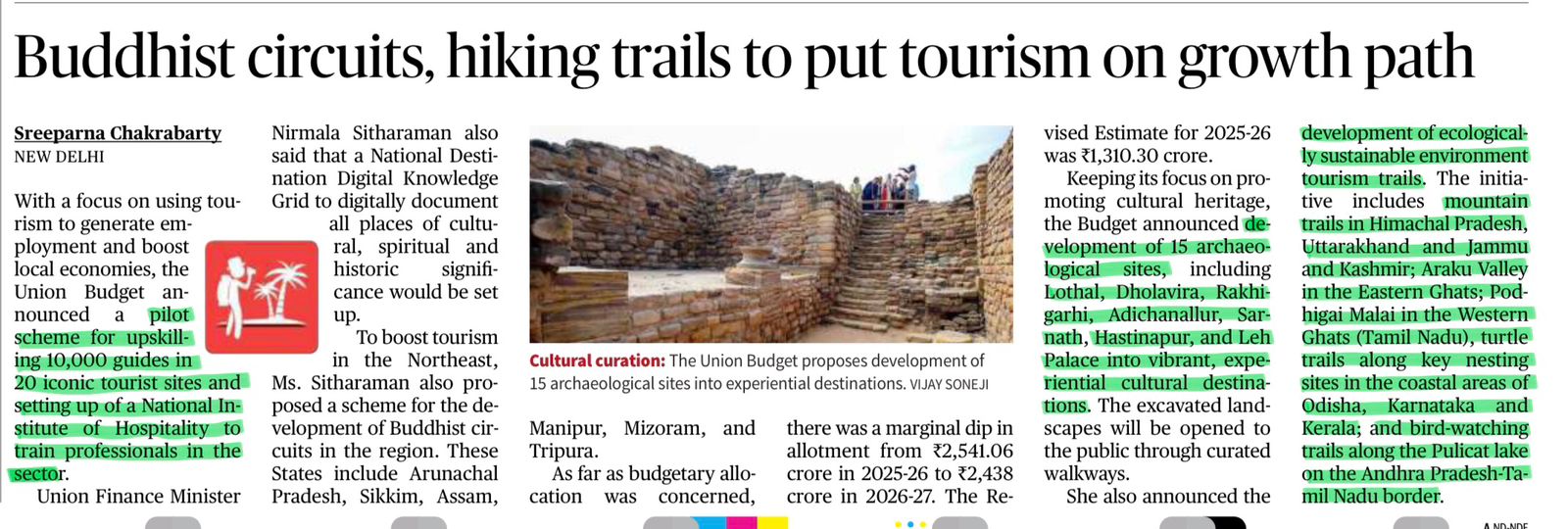
Developing 15 archaeological sites
Creating environment-friendly tourism trails across multiple states

Important Locations & Their States

Buddhist Circuits (Northeast)
Arunachal Pradesh
Sikkim
Assam
Manipur
Mizoram
Tripura

15 Archaeological Sites → Experiential Destinations
Lothal – Gujarat
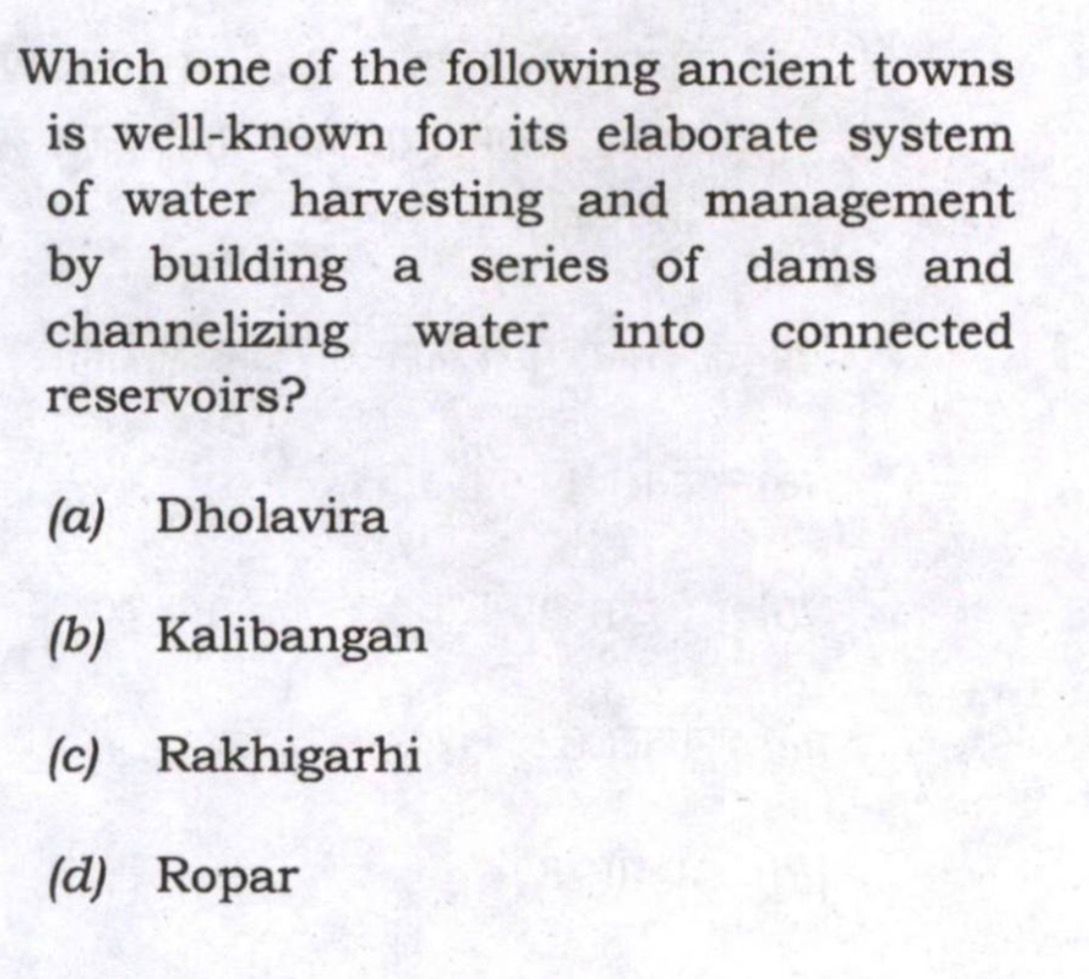
Dholavira – Gujarat
Rakhigarhi – Haryana
Adichanallur – Tamil Nadu
Sarnath – Uttar Pradesh
Hastinapur – Uttar Pradesh
Leh Palace – Ladakh

Ecologically Sustainable Tourism Trails

Mountain Trails
Himachal Pradesh
Uttarakhand
Jammu & Kashmir
Araku Valley – Andhra Pradesh
Eastern Ghats – Andhra Pradesh / Odisha / Tamil Nadu regions
Podhigai Malai – Tamil Nadu (Western Ghats)

Turtle Nesting Sites
Odisha
Karnataka
Kerala
Pulicat Lake – Andhra Pradesh–Tamil Nadu Border
PYQ – 2021, Ans – A

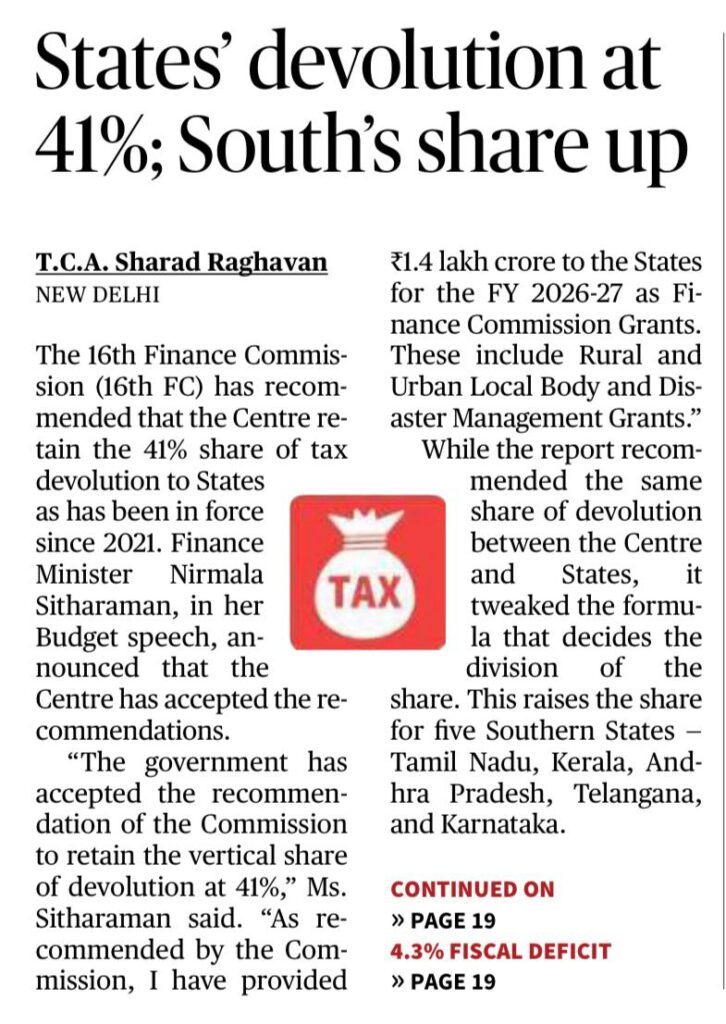
Sixteenth Finance Commission and Horizontal Devolution Changes – UPSC

Chairman
Arvind Panagariya

Period
2026–31

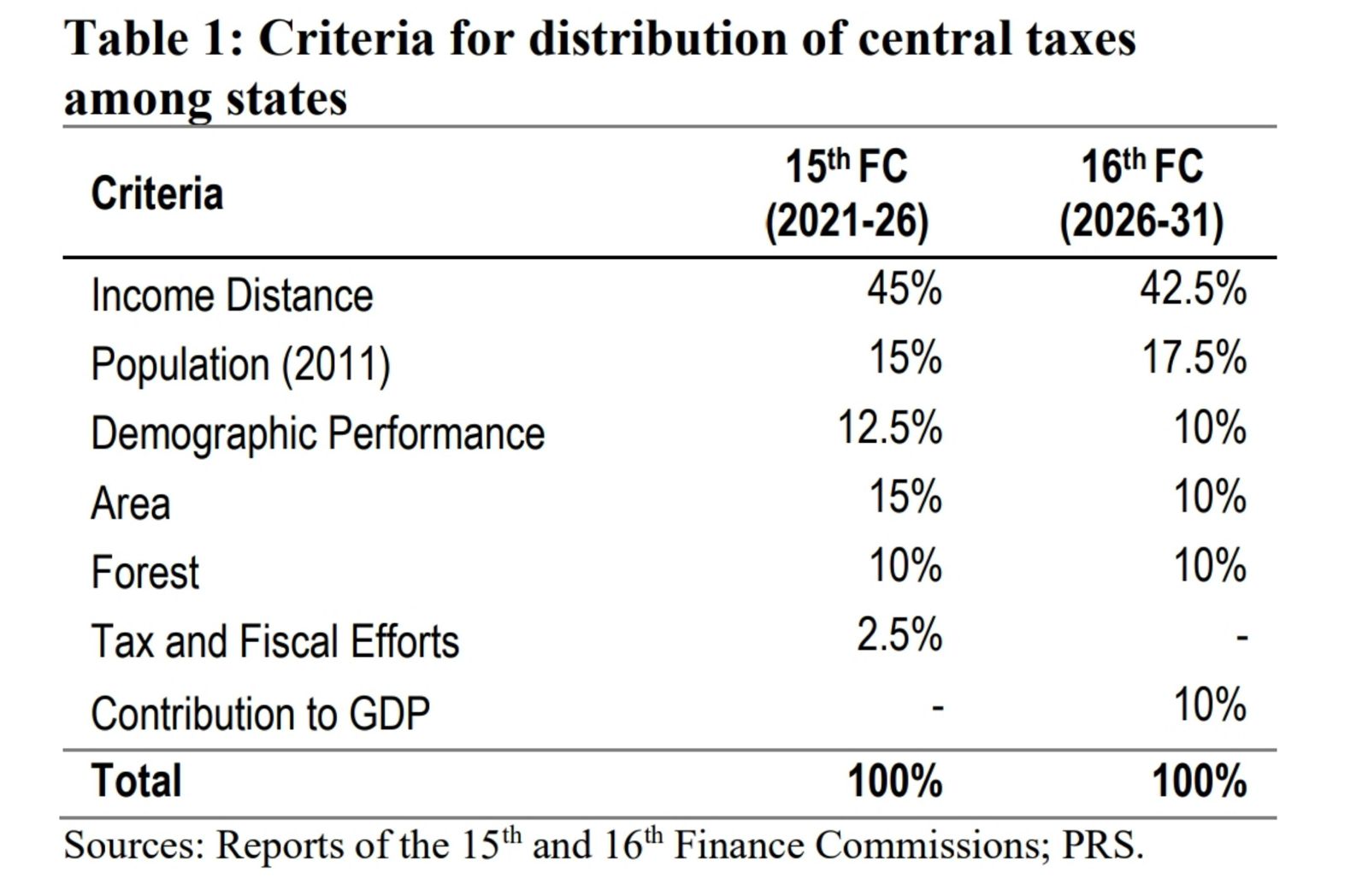
Key Changes vs 15th FC (Horizontal Devolution Criteria)

Income Distance: 45% → 42.5%
Population (2011): 15% → 17.5%
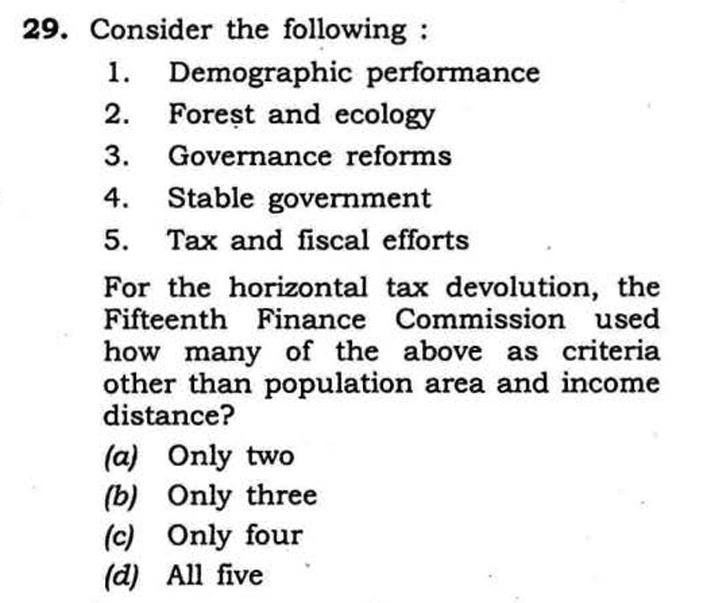
Demographic Performance: 12.5% → 10%
Area: 15% → 10%
Forest: unchanged at 10%
Tax & Fiscal Effort: 2.5% removed
Contribution to GDP: New, 10% introduced

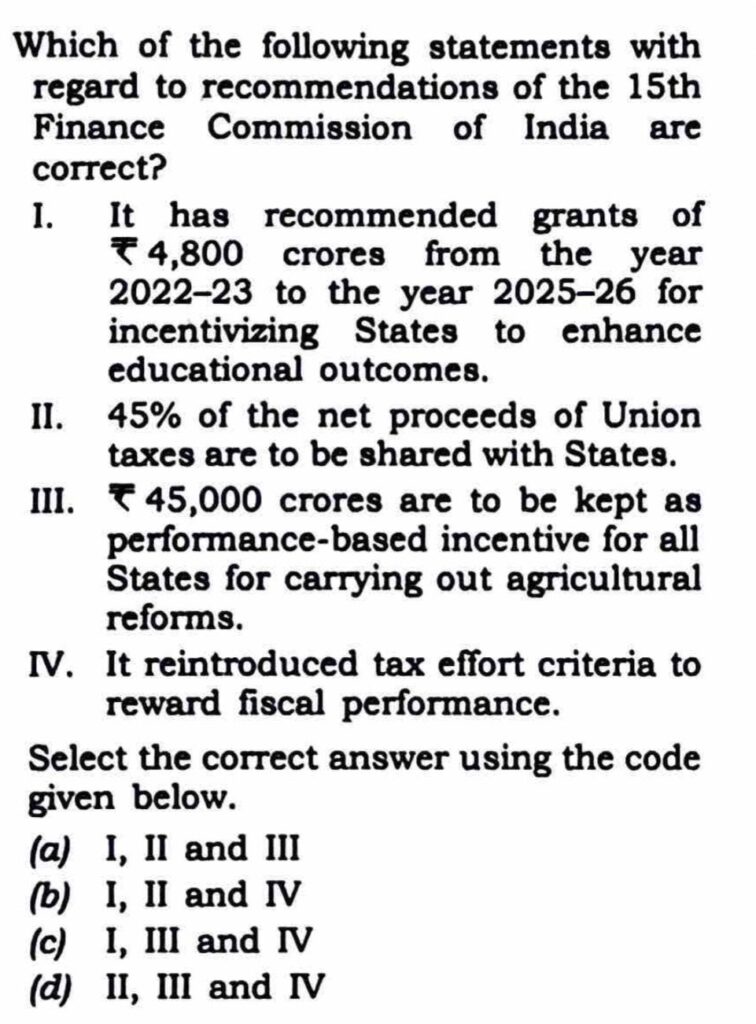
PYQ – 2023, Ans – B
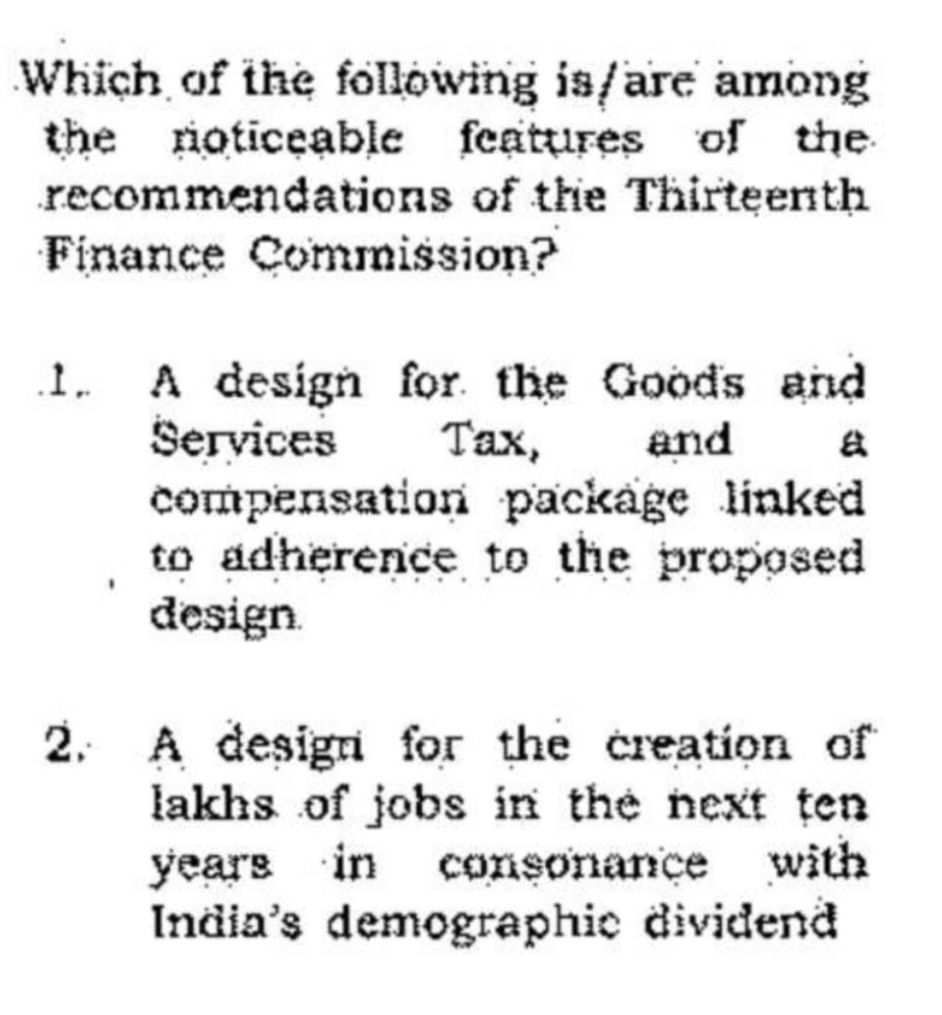
PYQ – 2012, Ans – C
PYQ – 2025, Ans – C

Rare Earth Corridors in India to Reduce China Dependence – UPSC

Context
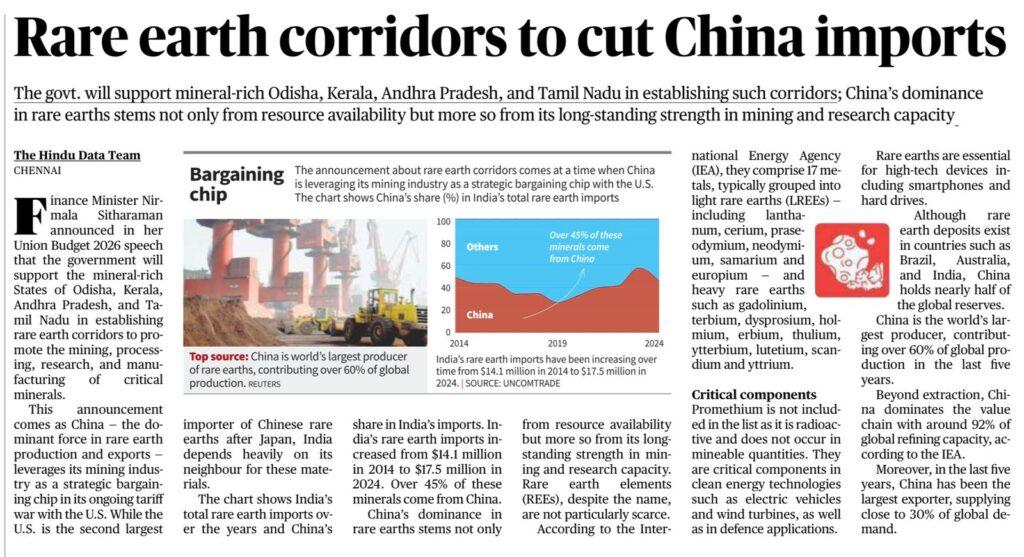
India plans to reduce its heavy dependence on China for rare earth minerals by creating rare earth corridors in mineral-rich States. These corridors will support mining, processing, research, and manufacturing of critical minerals needed for high-tech industries.

Corridors
Odisha
Kerala
Andhra Pradesh
Tamil Nadu

Why?
India imports over 45% of its rare earths from China
China controls 60%+ of global rare earth production and 92% of global refining
Rare earths are crucial for smartphones, EVs, wind turbines, defence systems

What the corridors aim to do
Promote mining, processing, and manufacturing of rare earth elements (REEs)
Build domestic capability so India doesn’t depend on China
Strengthen India’s position in global supply chains
Support industries that need critical minerals for high-tech components

Data in article
India’s rare earth imports rose from $14.1 million (2014) to $17.5 million (2024)
Over 45% of these imports come from China

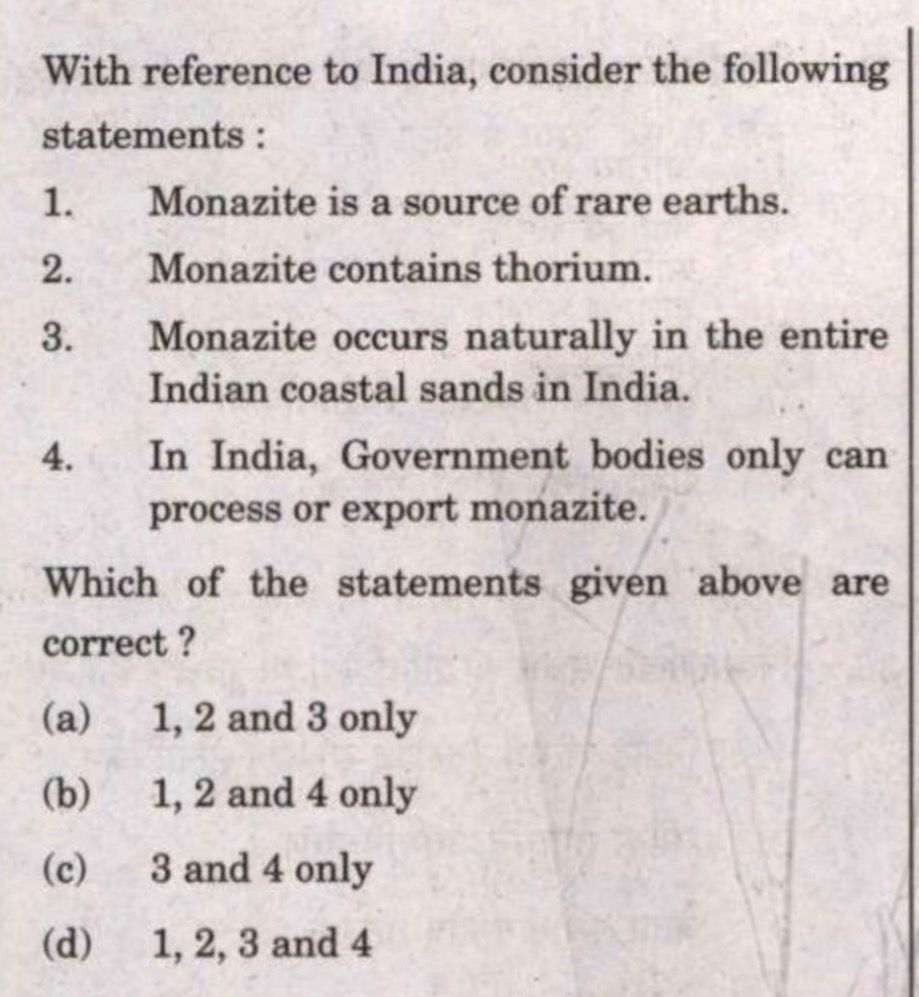
PYQ – 2022, Ans – B

India–US Tariff Trade Deal and Strategic Implications – UPSC

Context
India and the US reached a major trade agreement after months of uncertainty.

Key Points
US tariffs on India cut from 50% to 18%
India expected to buy $500+ billion of US goods
India to reduce imports of Russian oil
Move improves India’s access to US markets and eases bilateral tensions
Seen as strengthening India’s position vs China in global trade

India’s Role as US Ally, China Counter

Context
The tariff cut reshapes India’s strategic and trade position.

Key Points
18% tariff places India in a competitive position against other exporters
US sees India as a counterweight to China

Global Capital Confidence, China+1 Strategy

Context
Chief Economic Adviser comments on implications of the India–US deal.

Key Points
Deal reduces uncertainty for global investors
Strengthens India’s place in China+1 supply-chain strategy
Expected to boost domestic manufacturing and localised production
Positive signal for long-term investment and geopolitical stability.

Copyright © 2026 USARAMBHA EDUCATION (UnderStand UPSC). All Rights Reserved.

Success GS Foundation 2028 pop-up

Get complete SUCCESS 2028/29 programme details