30 April 2026 | Daily Current Affairs

Mekong River pollution from rare earth mining – Impact on ecology and agriculture for UPSC

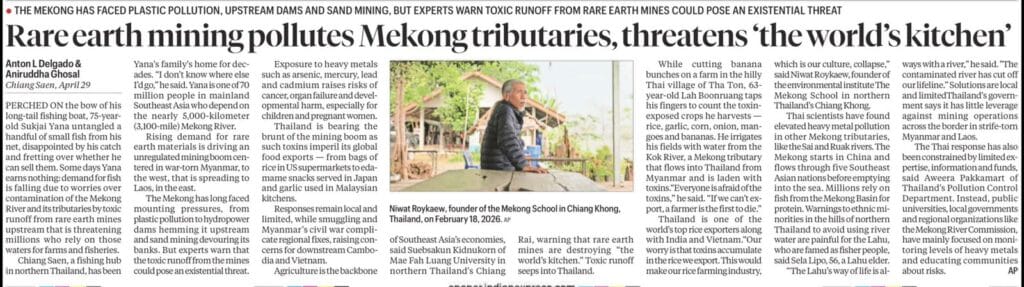
Context: Mekong River pollution

Unregulated rare earth mining in Southeast Asia is contaminating Mekong tributaries, threatening ecosystems, agriculture, and livelihoods across multiple countries.
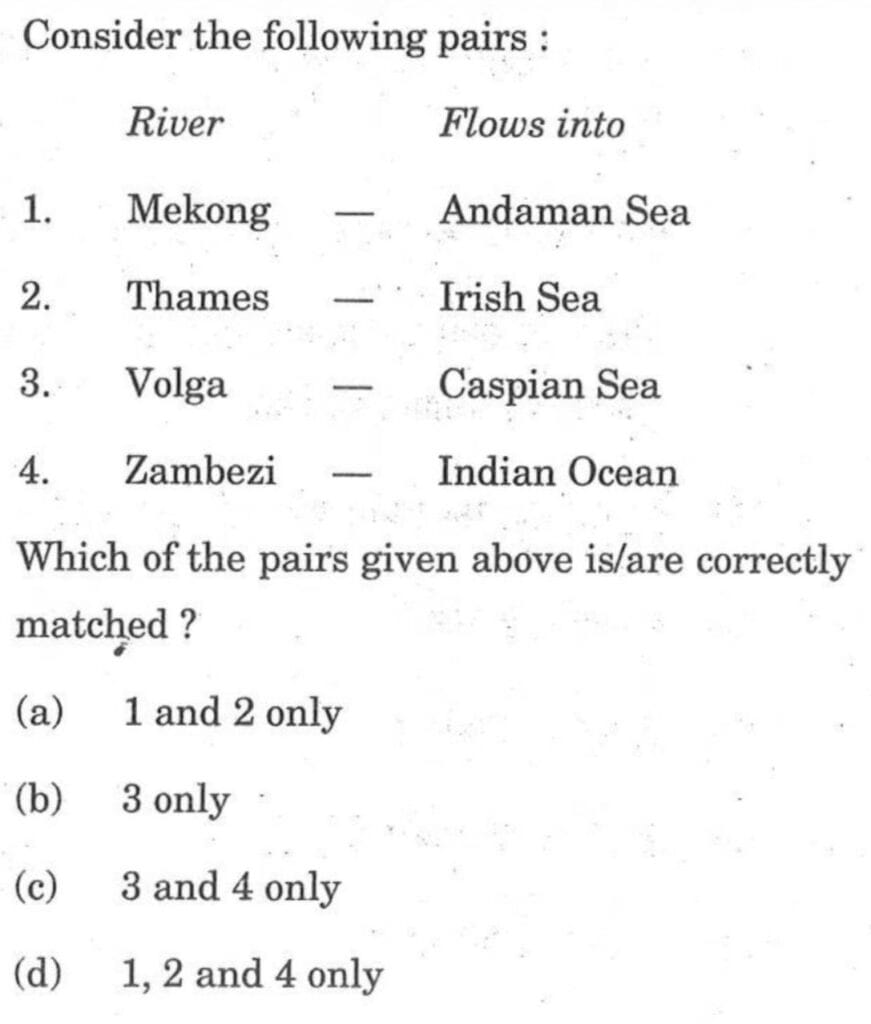
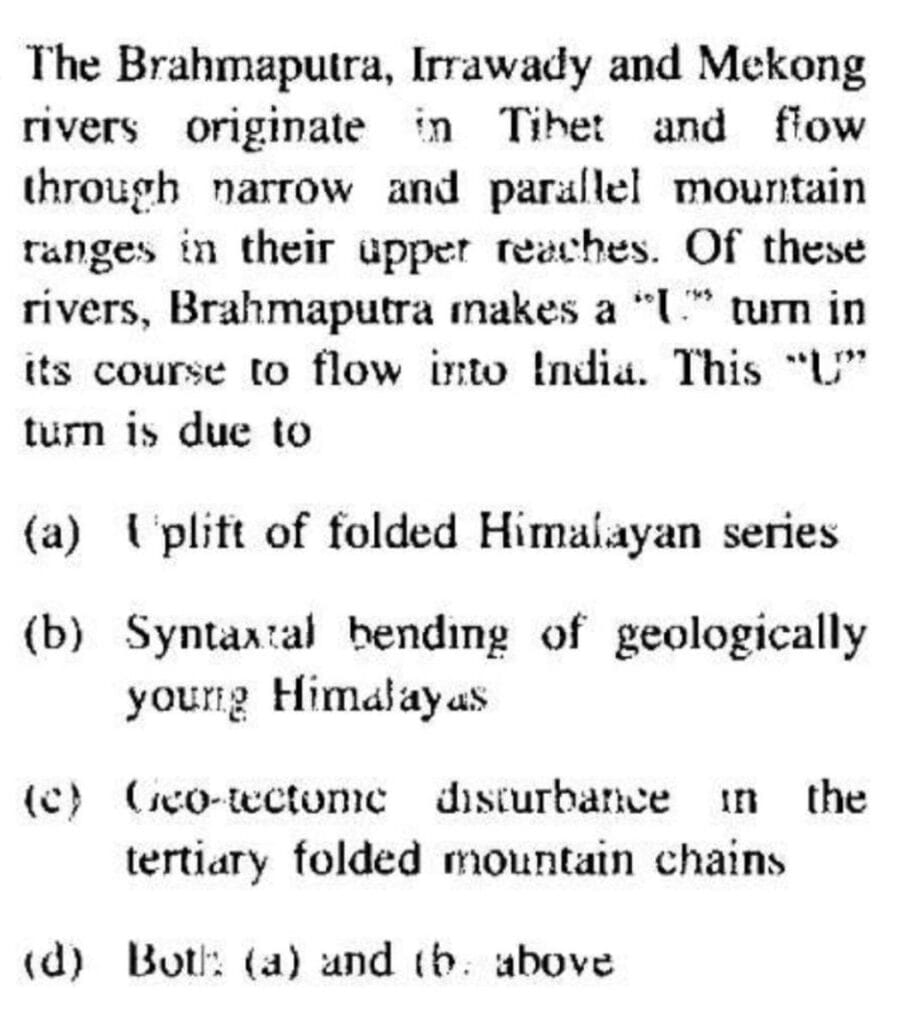
PYQ – 2020, Ans – C
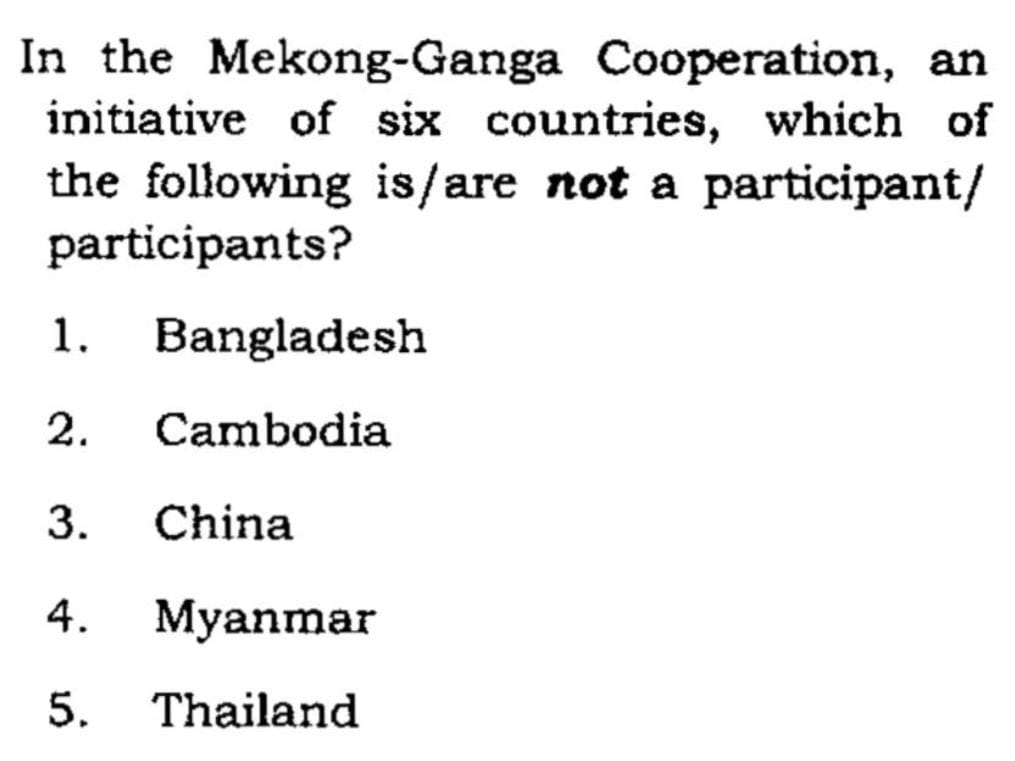
PYQ – 2011, Ans – B
PYQ – 2015, Ans – BONGLADESH & CHINA

Mekong River — Geography & Importance

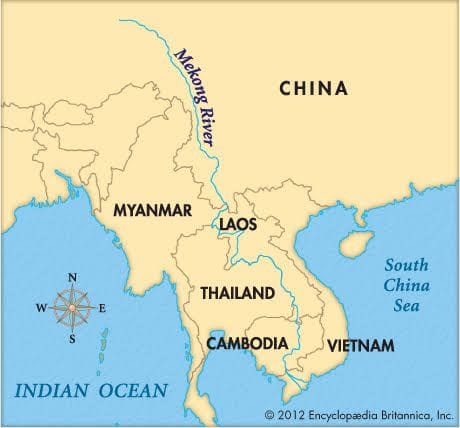
  • Origin: Tibetan Plateau (China)
  • Course: China → Myanmar → Laos → Thailand → Cambodia → Vietnam
  • Mouth: Empties into the South China Sea (Mekong Delta, Vietnam)

Significance

  • Supports ~70 million people
  • One of the world’s richest inland fisheries
  • Critical for rice production → known as the “world’s kitchen”

Mekong–Ganga Cooperation (MGC)

  • Launched: 2000
  • Members: India, Thailand, Myanmar, Cambodia, Laos, Vietnam
  • Focus Areas: Tourism, culture, education, connectivity
  • Relevance: Platform for regional cooperation, including sustainable river management

Rare Earth Metals

  • Group of 17 critical elements (e.g., neodymium, lanthanum)
  • Used in electronics, electric vehicles, wind turbines, defence systems
  • Crucial for the green energy transition

Rare Earth Mining — Location & Impact

  • Major hotspot: Northern Myanmar (Kachin region); expanding towards Laos
  • Nature of mining: Largely unregulated, often in conflict zones
  • Key pollutants: Arsenic, mercury, cadmium

Impact

  • Toxic runoff contaminates tributaries (Kok, Sai, Ruak rivers)
  • Pollution spreads downstream across borders
  • Affects agriculture, fisheries, and human health
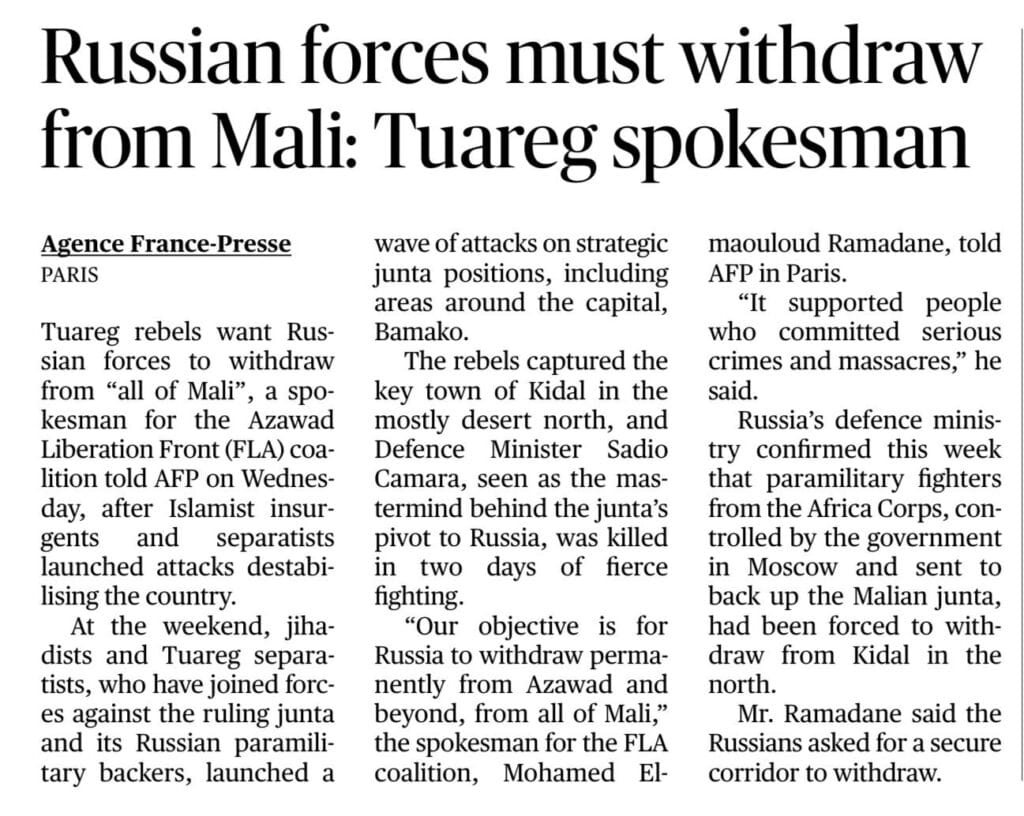
Mali conflict and demand for Russian withdrawal – Key developments for UPSC

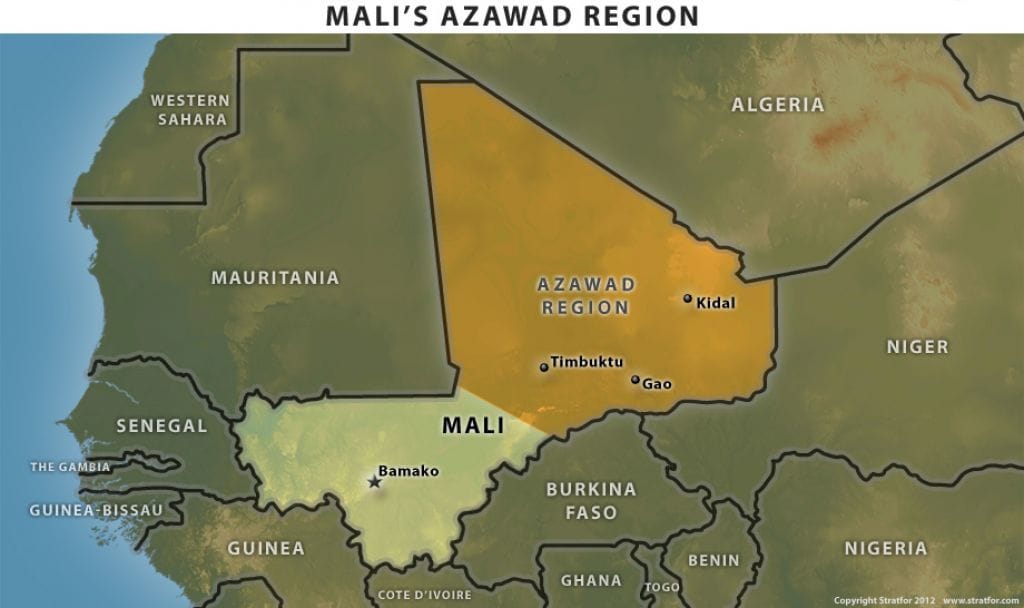
Context: Mali conflict

Tuareg rebels in Mali demand the withdrawal of Russian-backed forces amid escalating conflict in the country.

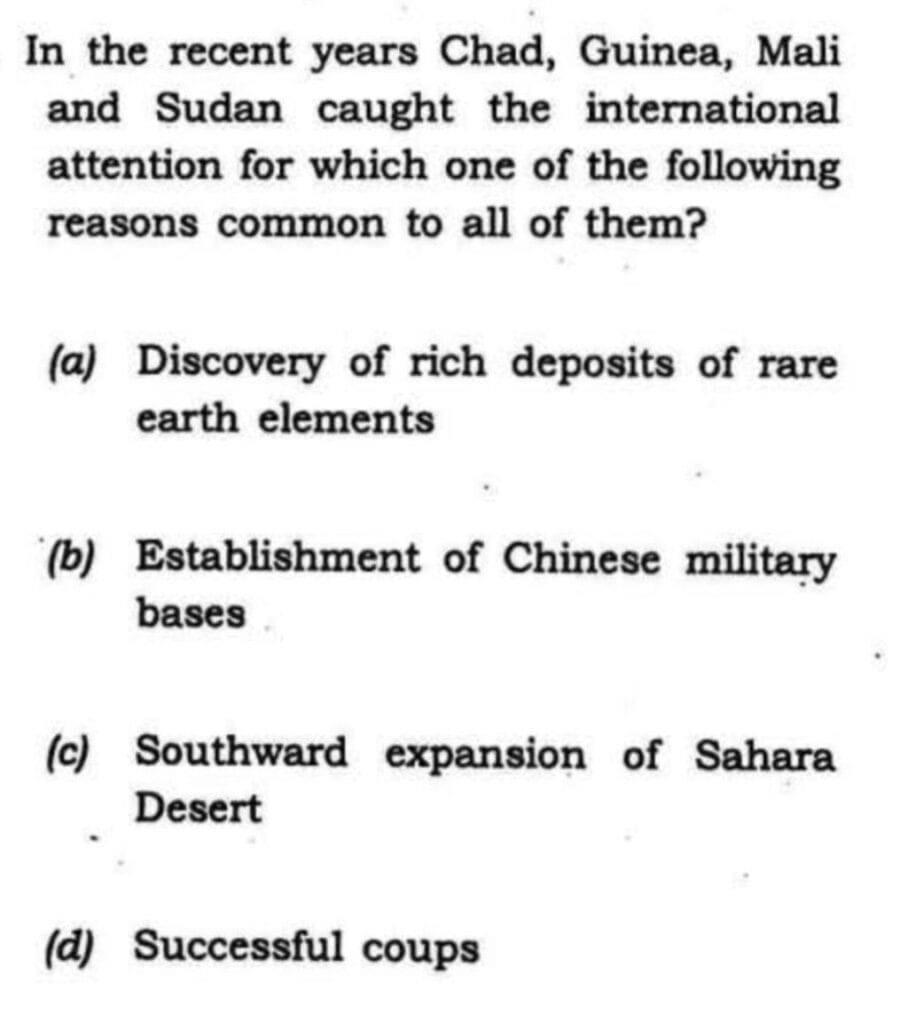
PYQ – 2023, Ans – D

Key Points

  • Mali is unstable after military coups → currently ruled by a military junta
  • Three main actors:
    • Junta (government)
    • Tuareg rebels (seeking autonomy in north – Azawad)
    • Jihadist groups (ISIS/Al-Qaeda linked)
  • France earlier:
    • Led counter-terror operations (Operation Barkhane)
    • Withdrew in 2022 due to tensions with Mali
  • Russia now:
    • Filled the vacuum with paramilitary forces (Africa Corps/Wagner-type)
    • Supports the junta militarily
  • Current issue:
    • Rebels captured key areas (e.g., Kidal)
    • Demand Russia’s withdrawal, accusing it of backing repression

India Sri Lanka naval exercise IN–SLN DIVEX 2026 – Maritime security cooperation for UPSC

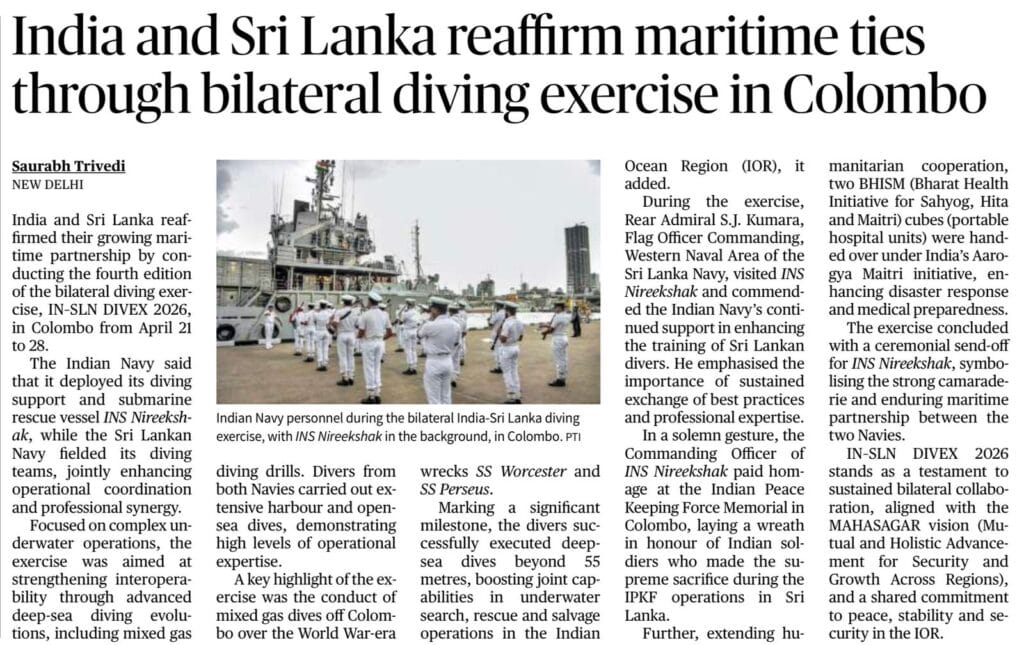
Context: India Sri Lanka naval exercise

India and Sri Lanka deepened naval cooperation through a specialised diving exercise focused on underwater operations and maritime security.

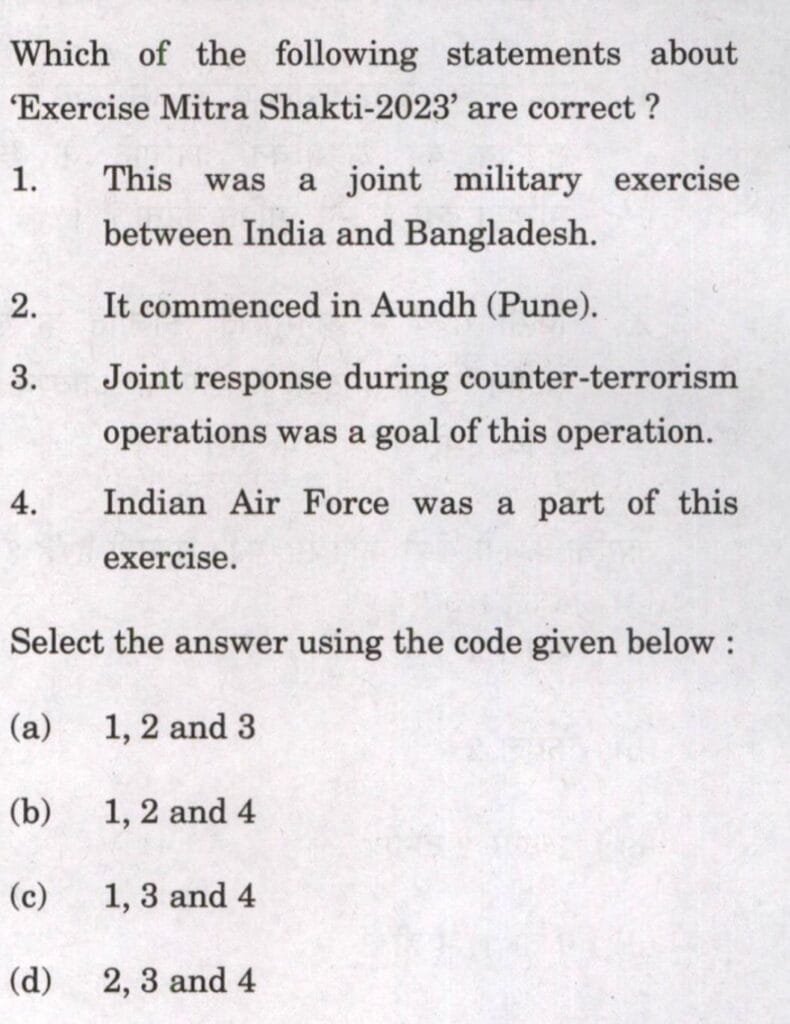
PYQ – 2025, Ans – D

Exercise Details

Key Points

Operational focus:

  • Advanced underwater operations — search, rescue, salvage
  • Deep-sea diving (>55 m) and mixed gas diving techniques

Platforms involved:

  • India deployed INS Nireekshak (specialised diving & submarine rescue vessel)
  • Sri Lanka contributed trained diving units

Capability building:

  • Enhances interoperability + joint operational readiness
  • India supporting skill development of Sri Lankan divers

Strategic significance:

  • Strengthens maritime security cooperation in Indian Ocean Region (IOR)
  • Reinforces India’s regional approach (MAHASAGAR vision)
  • Builds trust amid increasing strategic competition in IOR

Additional dimension:

  • India provided portable medical units (BHISHM cubes) → disaster & humanitarian readiness

Health insurance in India – NSS 2025 findings on coverage and financial burden for UPSC

Context: Health insurance in India

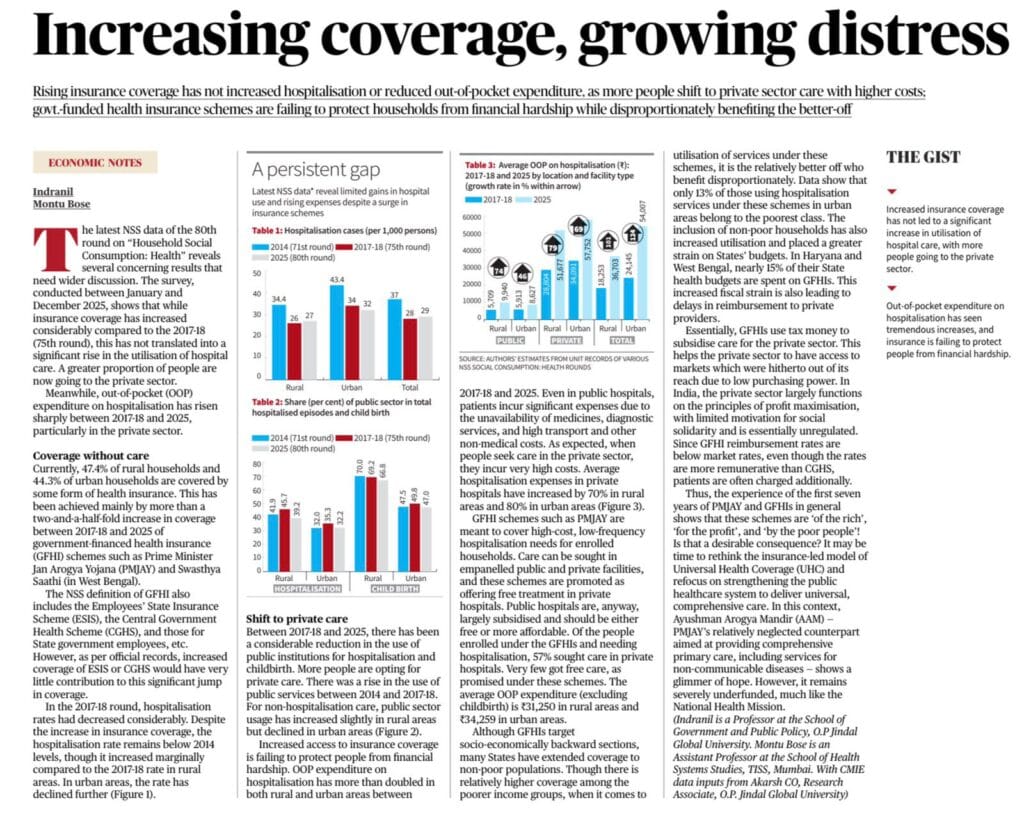
Findings from the 80th Round of the National Sample Survey (NSS) – “Household Social Consumption: Health” (2025) show that higher health insurance coverage has not improved access to care or reduced financial burden.

About National Sample Survey (NSS)

Data-backed Summary

1. Coverage increased, utilisation stagnant

  • Coverage: 47.4% rural (2025), 44.3% urban (2025)
  • Hospitalisation (per 1,000 persons):
    • 37 (2014) → 28 (2017–18) → 29 (2025)

2. Shift towards private healthcare

  • Public sector share in hospitalisation:
    • Rural: 41.9% (2014) → 44.7% (2017–18) → 39.2% (2025)
    • Urban: 32% (2014) → 35.8% (2017–18) → 32.2% (2025)

3. Rising Out-of-Pocket (OOP) expenditure

Public hospitals:

  • Rural: ₹5,709 (2017–18) → ₹9,940 (2025)
  • Urban: ₹6,582 (2017–18) → ₹8,627 (2025)

Private hospitals:

  • Rural: ₹28,655 (2017–18) → ₹51,677 (2025)
  • Urban: ₹34,031 (2017–18) → ₹57,752 (2025)

Total OOP:

  • Rural: ₹18,253 (2017–18) → ₹30,639 (2025)
  • Urban: ₹24,145 (2017–18) → ₹54,007 (2025)

4. Inequitable access

  • Only 13% poorest households (2025, urban) benefit from Government-Funded Health Insurance (GFHI)

5. Fiscal stress and structural issues

  • States like Haryana and West Bengal (~2025) spend ~15% of health budgets on insurance schemes
  • Public healthcare remains underfunded, private sector dominant

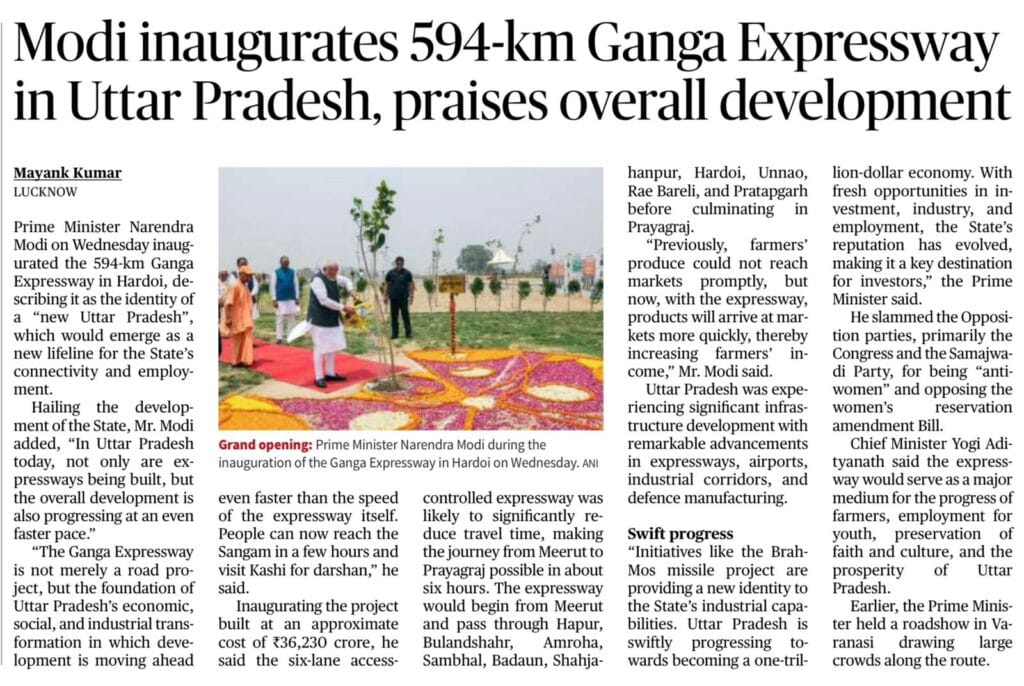
Ganga Expressway 594 km project – Infrastructure and economic impact for UPSC

Context: Ganga Expressway

India’s push for large-scale infrastructure continues with the inauguration of the Ganga Expressway to boost connectivity, logistics, and economic development in Uttar Pradesh.

Ganga Expressway

  • Length: 594 km (one of India’s longest expressways)
  • Route: Meerut → Prayagraj
  • Type: Access-controlled, six-lane (expandable to eight lanes)
  • Estimated Cost: ~₹36,000+ crore
  • Districts Covered: Meerut, Hapur, Bulandshahr, Amroha, Sambhal, Badaun, Shahjahanpur, Hardoi, Unnao, Rae Bareli, Pratapgarh, Prayagraj

Travel Impact

  • Reduces travel time (Meerut–Prayagraj ~6 hours)
  • Improves east–west connectivity in Uttar Pradesh

Significance of Ganga Expressway

  • Boosts logistics efficiency and supply chains
  • Enhances farm-to-market connectivity → better income for farmers
  • Promotes industrial corridors and investment
  • Strengthens regional balance (western–eastern UP integration)
  • Supports defence and emergency mobility (long, straight corridor)

Copyright © 2026 USARAMBHA EDUCATION (UnderStand UPSC). All Rights Reserved.

Inquiry form for
Takshila Residential Program