8 July 2026 | Daily Current Affairs

India Indonesia Strategic Partnership: Modi’s 2026 Visit

Context: India Indonesia Strategic Partnership
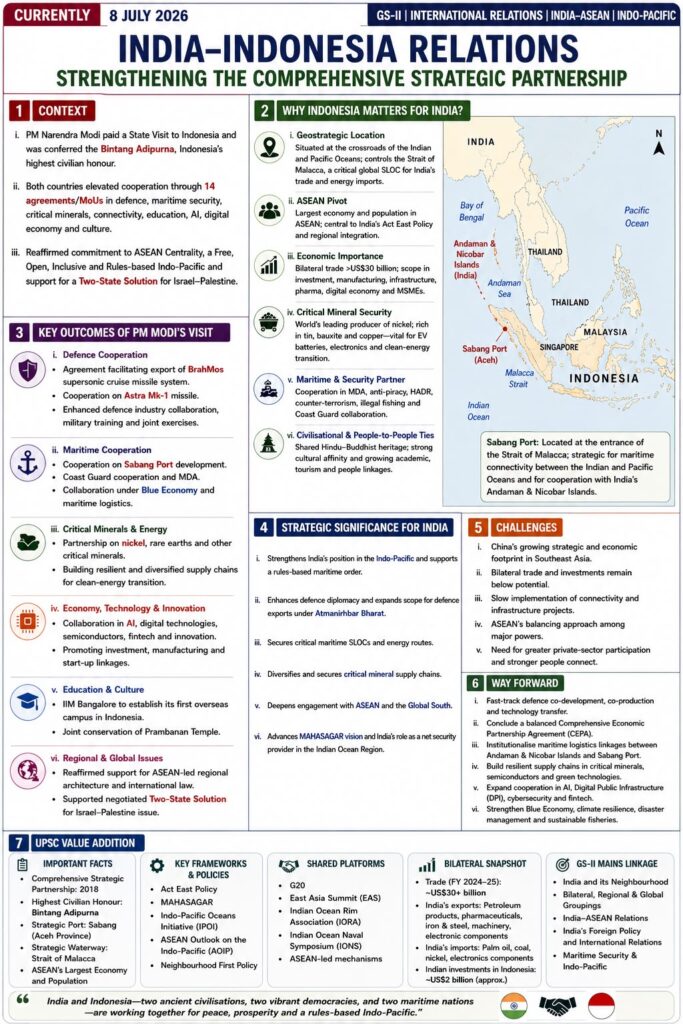
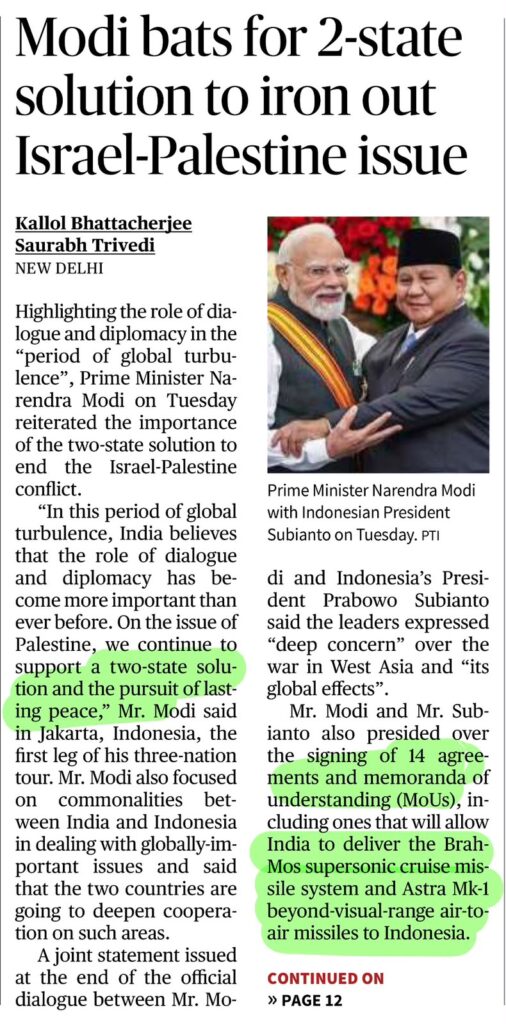
Prime Minister Narendra Modi paid a State Visit to Indonesia and held talks with Indonesian President Prabowo Subianto, focusing on defence, maritime security, education, strategic cooperation and regional issues.

Both countries signed several agreements and reaffirmed the India–Indonesia Comprehensive Strategic Partnership.

Key Outcomes of the Visit

1. Defence Cooperation

India and Indonesia agreed to deepen cooperation in:

  • Defence manufacturing
  • Defence technology
  • Joint training
  • Maritime security
  • Military exchanges

2. BrahMos Export

India agreed to deliver the BrahMos supersonic cruise missile system and Astra beyond-visual-range air-to-air missiles to Indonesia.

3. Maritime Cooperation

Both countries agreed to strengthen cooperation in:

  • Maritime domain awareness
  • Port development
  • Coast Guard cooperation
  • Search and rescue
  • Maritime security

4. Education Cooperation

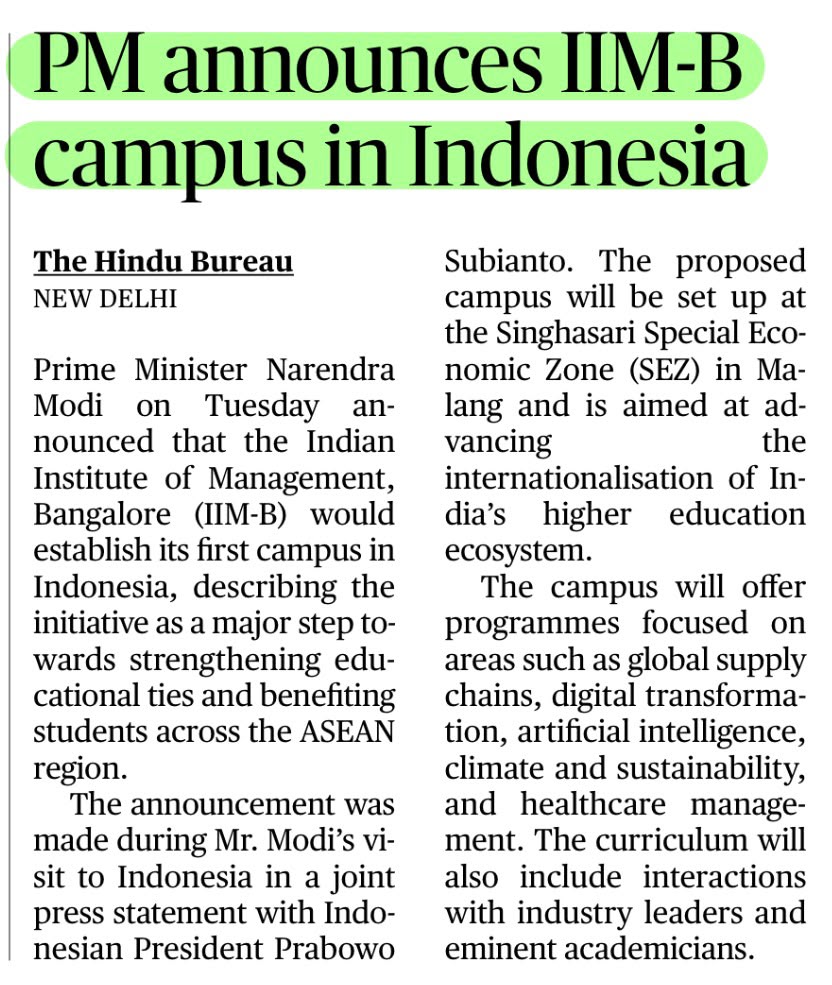
Prime Minister announced that IIM Bangalore will establish its first overseas campus in Indonesia.

The campus will focus on:

5. Regional and Global Issues

India and Indonesia discussed:

  • West Asia crisis
  • Israel–Palestine issue
  • Two-state solution
  • Indo-Pacific cooperation
  • ASEAN centrality

Why Indonesia Matters for India

1. Geostrategic Location

Indonesia is located at the crossroads of the Indian Ocean and Pacific Ocean.

It controls key maritime chokepoints such as:

  • Malacca Strait
  • Sunda Strait
  • Lombok Strait

2. ASEAN Link

Indonesia is ASEAN’s largest country by population and economy.

It is important for India’s:

3. Economic Importance

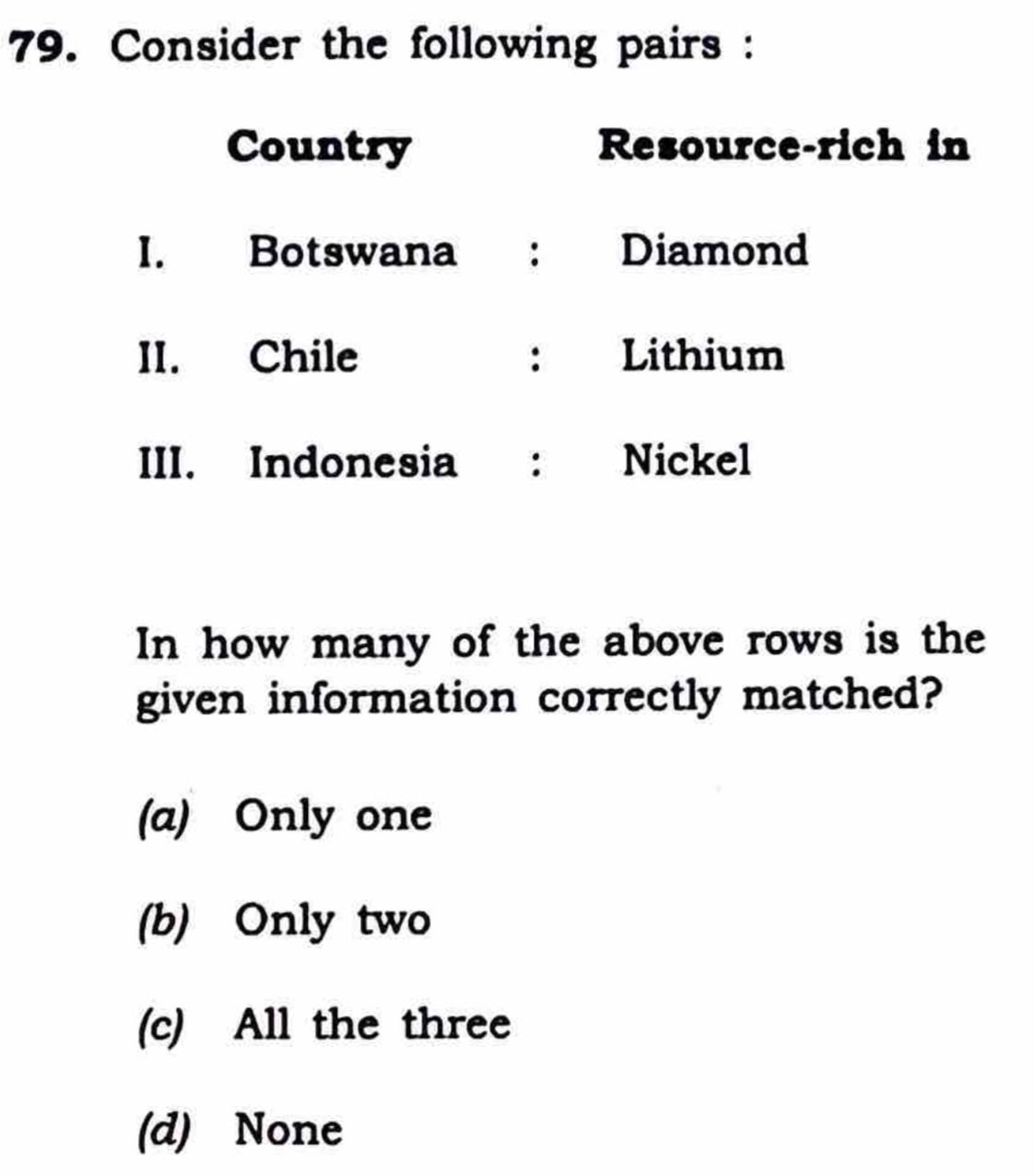
Indonesia is rich in critical minerals, especially nickel, which is important for:

4. Maritime Security

India and Indonesia are important maritime partners for maintaining a free, open and rules-based Indo-Pacific.

5. Civilisational Link

India and Indonesia share deep historical, cultural and civilisational connections.

UPSC Value Addition

Indonesia

  • Capital: Jakarta
  • New capital under development: Nusantara
  • Largest economy in ASEAN
  • World’s largest archipelagic country
  • Important nickel producer

PYQ Link

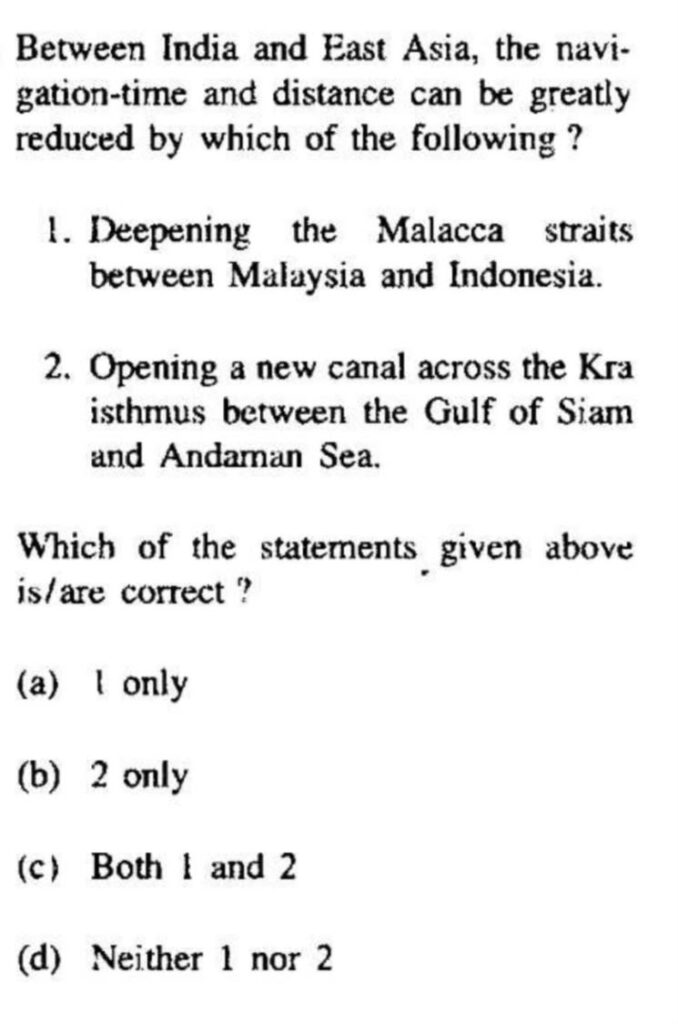
Deepening the Malacca Strait between Malaysia and Indonesia and opening a canal across the Kra Isthmus can reduce navigation time between India and East Asia.
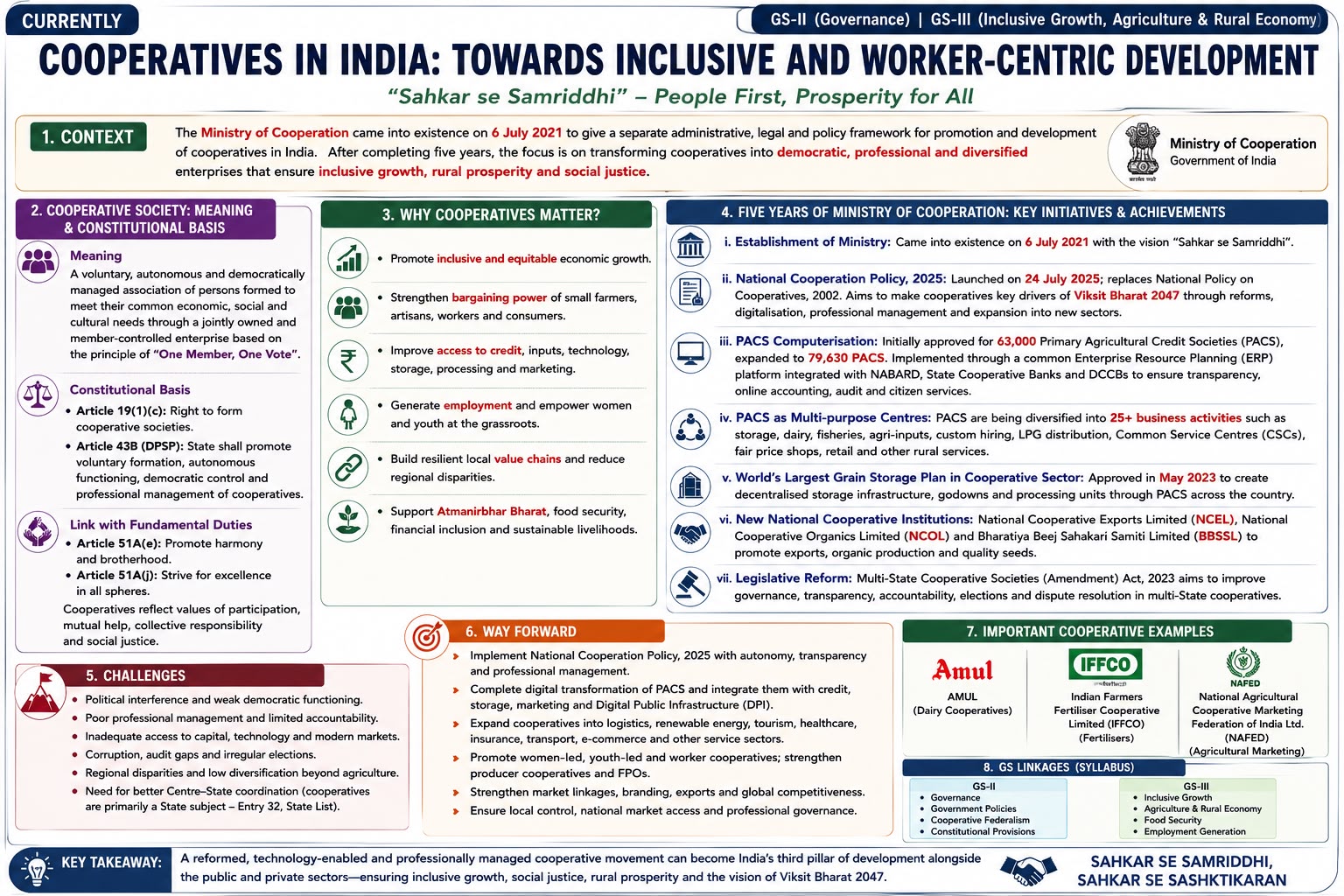
Cooperatives in India Development: Inclusive Growth Model

Context: Cooperatives in India Development
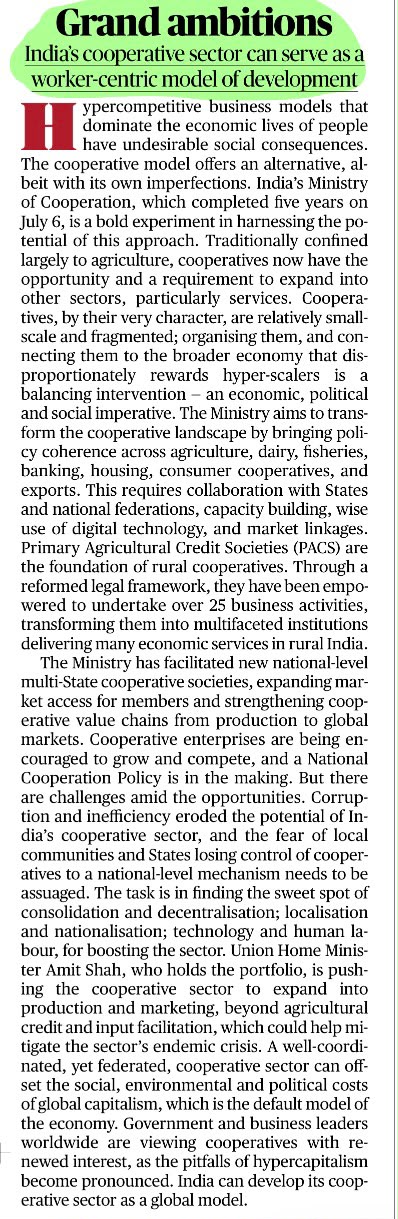
The article argues that India’s cooperative sector can become a worker-centric model of development by promoting inclusive growth, rural prosperity, democratic ownership and social justice.

Cooperative Society

A cooperative society is a voluntary association of people who come together to meet common economic, social and cultural needs through collective ownership and democratic management.

Constitutional Basis

Article 19(1)(c)

Right to form associations includes the right to form cooperative societies.

Article 43B

Directive Principle of State Policy encouraging the promotion of voluntary formation, autonomous functioning, democratic control and professional management of cooperatives.

97th Constitutional Amendment Act, 2011

Gave constitutional recognition to cooperative societies.

Why Cooperatives Matter

Cooperatives can help in:

  • Inclusive economic growth
  • Bargaining power for small farmers and workers
  • Rural credit access
  • Employment generation
  • Women empowerment
  • Value-chain development
  • Food security
  • Financial inclusion
  • Social justice

3Ws of Cooperatives

1. Workers

Cooperatives empower workers by giving them ownership and participation in decision-making.

2. Wealth

Cooperatives distribute economic gains more equitably.

3. Welfare

Cooperatives promote community welfare and social security.

Key Sectors

Cooperatives play an important role in:

  • Agriculture
  • Dairy
  • Fisheries
  • Credit
  • Housing
  • Consumer goods
  • Banking
  • Processing
  • Marketing

Ministry of Cooperation

Established in 2021 to strengthen India’s cooperative movement.

Major Initiatives

1. National Cooperation Policy

Aims to modernise and strengthen cooperative institutions.

2. PACS Computerisation

Primary Agricultural Credit Societies are being computerised to improve transparency and efficiency.

3. Multi-Purpose PACS

PACS are being developed into multi-service centres offering:

  • Storage
  • Credit
  • Inputs
  • Marketing
  • Common service centre functions

4. New National Cooperative Institutions

New institutions have been created for:

  • Exports
  • Seeds
  • Organic products

5. Model Cooperative Law Reforms

Reforms aim to improve autonomy, transparency, accountability and professional management.

Important Cooperative Examples

AMUL

Dairy cooperative model.

IFFCO

Fertiliser cooperative.

NAFED

Agricultural marketing cooperative.

Challenges

  • Political interference
  • Weak democratic functioning
  • Poor professional management
  • Limited accountability
  • Inadequate access to technology
  • Low market access
  • Governance issues
  • Need for worker-centric restructuring

Way Forward

  • Strengthen autonomy and accountability.
  • Improve professional management.
  • Digitise cooperative systems.
  • Expand market access.
  • Promote worker-owned enterprises.
  • Strengthen women-led cooperatives.
  • Improve financial transparency.
  • Link cooperatives with value chains and exports.

Key Takeaway

A reformed, technology-enabled and professionally managed cooperative sector can become a worker-centric development model that promotes inclusive growth, rural prosperity and social justice.

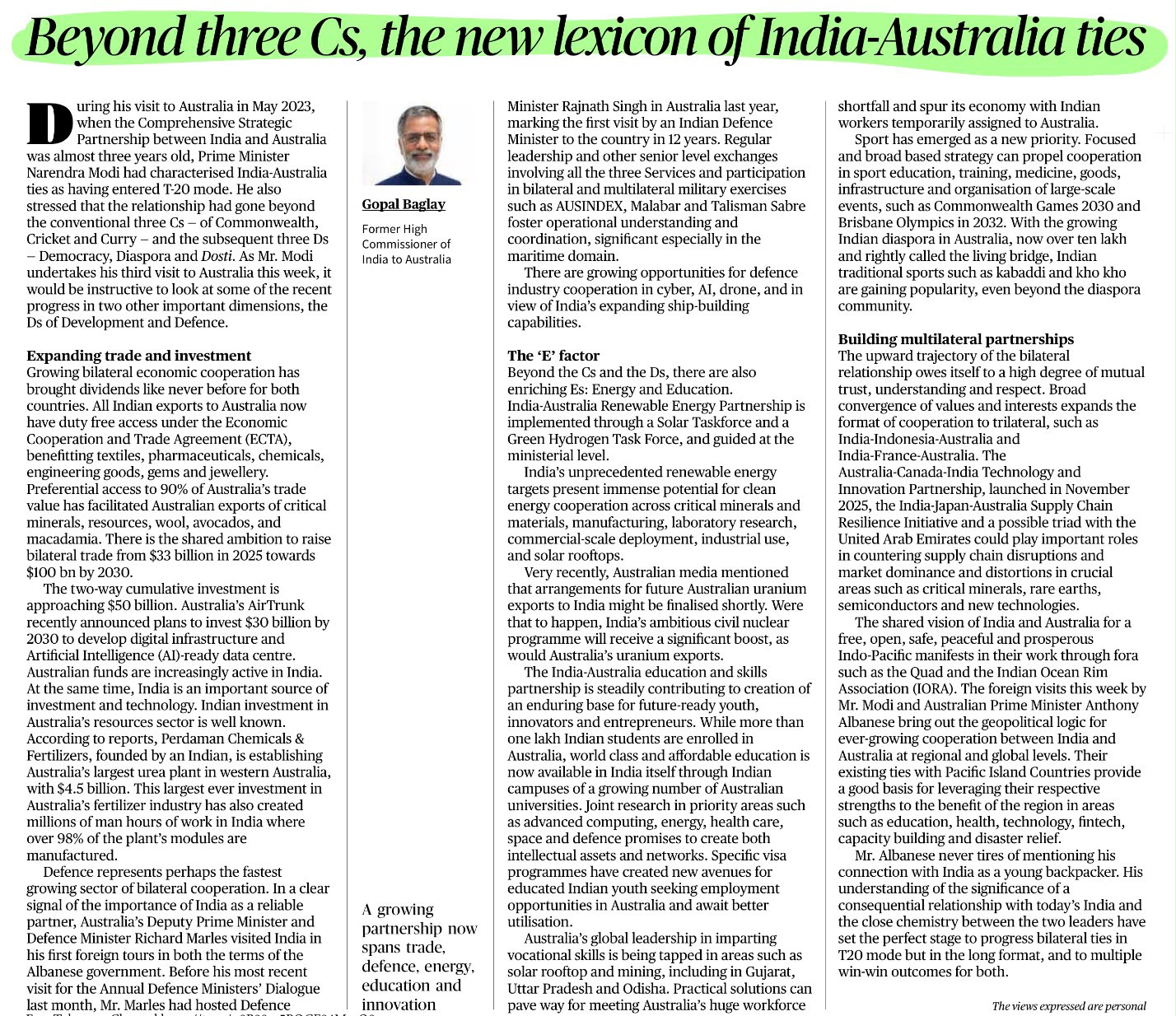
India Australia Strategic Partnership: Beyond the 3Cs

Context: India Australia Strategic Partnership
The article argues that India–Australia relations have moved beyond the traditional 3Cs — Cricket, Curry and Commonwealth — towards a deeper strategic partnership based on security, trade, education, critical minerals and Indo-Pacific cooperation.

Evolution of India–Australia Relations

Earlier ties were shaped mainly by:

  • Cricket
  • Curry
  • Commonwealth
  • Diaspora links

Now, relations are increasingly driven by:

  • Strategic convergence
  • Indo-Pacific security
  • Trade and investment
  • Critical minerals
  • Education
  • Technology
  • Defence cooperation

Strategic Importance

India and Australia share a common interest in maintaining a:

  • Free Indo-Pacific
  • Open Indo-Pacific
  • Inclusive Indo-Pacific
  • Rules-based maritime order

Key Areas of Cooperation

1. Defence and Security

Cooperation includes:

  • Naval exercises
  • Maritime domain awareness
  • Defence dialogues
  • Logistics support
  • Indo-Pacific coordination

2. Quad Cooperation

Both countries are members of the Quad along with:

  • United States
  • Japan

The Quad supports:

  • Maritime security
  • Supply chains
  • Critical technologies
  • Disaster relief
  • Health security
  • Climate cooperation

3. Trade and Economy

India and Australia have strengthened trade through:

  • Economic Cooperation and Trade Agreement
  • Investment partnerships
  • Supply-chain cooperation

4. Critical Minerals

Australia is rich in critical minerals such as:

  • Lithium
  • Cobalt
  • Rare earths

These are important for:

5. Education and Mobility

Australia is a major destination for Indian students.

Education cooperation includes:

  • Student mobility
  • University partnerships
  • Skill development
  • Research collaboration

6. Diaspora

The Indian diaspora in Australia strengthens:

  • People-to-people ties
  • Cultural relations
  • Business links
  • Political engagement

Challenges

  • Trade imbalance
  • Visa and migration concerns
  • China factor
  • Differences in strategic priorities
  • Need for deeper industrial collaboration
  • Limited defence manufacturing integration

Way Forward

  • Deepen defence cooperation.
  • Build critical mineral supply chains.
  • Strengthen education and research partnerships.
  • Expand trade beyond commodities.
  • Promote clean energy cooperation.
  • Improve skilled mobility.
  • Strengthen Quad deliverables.
  • Enhance technology and cyber cooperation.

Key Takeaway

India–Australia relations have evolved from cultural familiarity to strategic convergence. The future lies in defence, critical minerals, education, clean energy and Indo-Pacific cooperation.

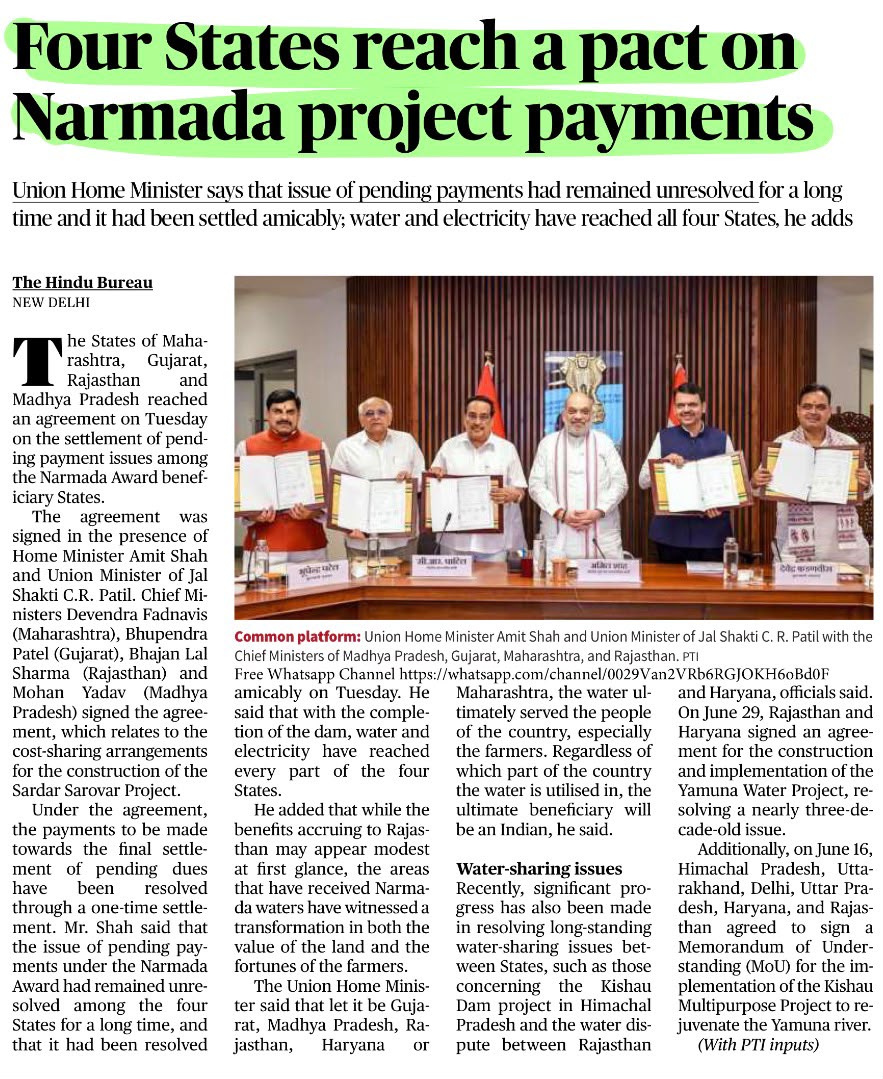
Sardar Sarovar Dam Dispute: Four States Reach Settlement

Context: Sardar Sarovar Dam Dispute
Madhya Pradesh, Gujarat, Maharashtra and Rajasthan signed a one-time settlement agreement to resolve long-pending cost-sharing liabilities related to the Sardar Sarovar Dam Project on the Narmada River.

What Was the Dispute?

The dispute was related to pending:

  • Construction dues
  • Operation and maintenance dues
  • Cost-sharing liabilities

under the Narmada Water Disputes Tribunal Award, 1979.

Narmada Water Disputes Tribunal

Constituted

  • 1969

Award

  • 1979

Role

The Tribunal:

  • Allocated Narmada waters.
  • Fixed cost-sharing arrangements.
  • Laid down implementation mechanisms for beneficiary States.

Narmada Control Authority

Established

  • 1980

Function

It supervises implementation of the Narmada Water Disputes Tribunal Award.

Narmada River

Origin

  • Amarkantak Plateau, Madhya Pradesh

Length

  • 1,312 km

Mouth

Important Feature

Narmada is the largest west-flowing peninsular river.

It flows through a rift valley between the:

  • Vindhya Range
  • Satpura Range

Sardar Sarovar Dam Project

Location

  • Kevadia, Gujarat

River

  • Narmada

Beneficiary States

  • Gujarat
  • Madhya Pradesh
  • Maharashtra
  • Rajasthan

Purpose

  • Irrigation
  • Drinking water
  • Hydropower
  • Flood control

Significance

  • Example of cooperative federalism.
  • Resolves long-pending inter-State financial issues.
  • Supports water and power sharing.
  • Strengthens inter-State river governance.
  • Improves implementation of large infrastructure projects.

Key Takeaway

The settlement shows that inter-State river disputes require institutional mechanisms, dialogue and cooperative federalism for long-term resolution.

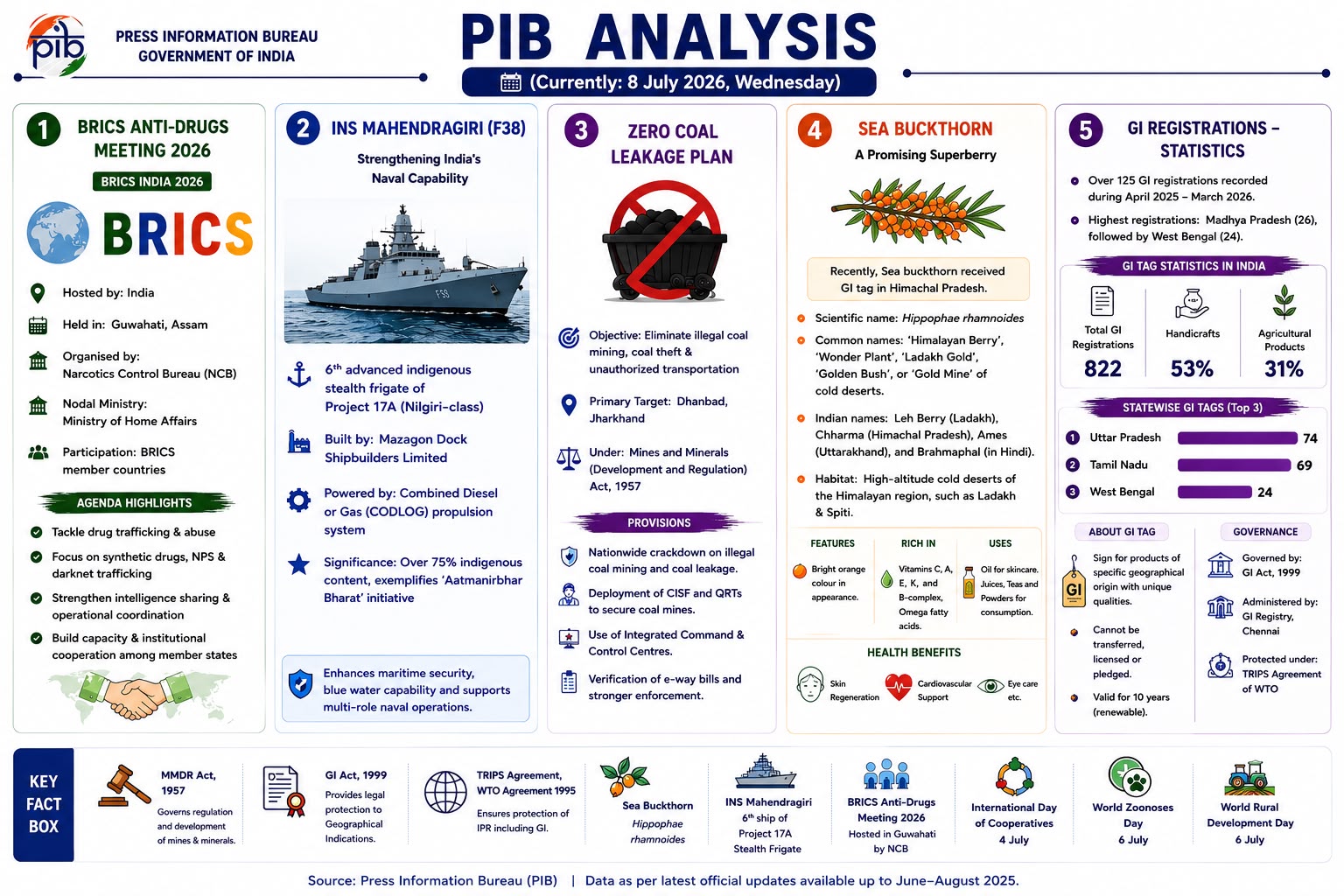
BRICS Anti Drugs Meeting: India Hosts 2026 Summit

Context: BRICS Anti Drugs Meeting
The BRICS Anti-Drugs Meeting 2026 was hosted by India in Guwahati, Assam, and organised by the Narcotics Control Bureau.

Host

  • India

Held In

  • Guwahati, Assam

Organised By

  • Narcotics Control Bureau

Nodal Ministry

Participants

  • BRICS member countries

Key Focus Areas

  • Tackling drug trafficking
  • Combating drug abuse
  • Addressing narco-terrorism
  • Countering dark-net drug trade
  • Improving intelligence sharing
  • Strengthening capacity building
  • Promoting institutional cooperation

Why It Matters

Drug trafficking is linked with:

  • Organised crime
  • Terror financing
  • Border insecurity
  • Youth addiction
  • Money laundering
  • Cyber-enabled crime

India’s Concerns

India faces drug trafficking pressure from:

  • Golden Crescent: Afghanistan–Iran–Pakistan
  • Golden Triangle: Myanmar–Laos–Thailand

Significance

  • Strengthens BRICS cooperation on internal security.
  • Supports intelligence sharing.
  • Builds institutional partnerships.
  • Helps combat transnational narcotics networks.
  • Highlights India’s role in global anti-drug coordination.

INS Mahendragiri Stealth Frigate: Project 17A Explained

Context: INS Mahendragiri Stealth Frigate
INS Mahendragiri is a Project 17A stealth frigate built by Mazagon Dock Shipbuilders Limited, strengthening India’s indigenous naval capability.

INS Mahendragiri

Type

  • Advanced stealth frigate

Project

  • Project 17A / Nilgiri-class

Built By

  • Mazagon Dock Shipbuilders Limited

Propulsion

  • Combined Diesel or Gas propulsion system

Features

  • Advanced stealth design
  • Modern sensors
  • Advanced weapons systems
  • Improved survivability
  • Better automation
  • Multi-role combat capability

Role

INS Mahendragiri can support:

  • Surface warfare
  • Anti-submarine warfare
  • Air defence
  • Maritime security operations
  • Fleet escort missions

Significance

  • Strengthens Indian Navy’s blue-water capability.
  • Supports Aatmanirbhar Bharat in defence.
  • Boosts indigenous shipbuilding.
  • Enhances maritime security.
  • Supports India’s role in the Indian Ocean Region.

Zero Coal Leakage Plan: Technology for Coal Governance

Context: Zero Coal Leakage Plan
The Zero Coal Leakage Plan aims to ensure transparent and accountable coal transport and prevent coal theft, pilferage and unauthorised diversion.

Objective

To prevent:

  • Coal pilferage
  • Transit loss
  • Illegal diversion
  • Leakages in coal transportation

Nodal Agencies

  • Ministry of Coal
  • Coal companies
  • Railways and transport agencies
  • State authorities where relevant

Key Measures

  • GPS-enabled tracking
  • Digital monitoring
  • Real-time movement verification
  • Integrated Command and Control Centres
  • Coal-quality and quantity verification
  • Transparency in dispatch and receipt

Significance

  • Improves resource governance.
  • Reduces corruption and leakage.
  • Strengthens coal supply-chain efficiency.
  • Ensures better accountability.
  • Supports energy security.
  • Improves revenue realisation.

Governance Value

This is an example of using technology for:

  • Transparency
  • Accountability
  • Resource governance
  • Anti-corruption
  • Public-sector efficiency

Sea Buckthorn GI Tag: Ladakh’s New GI Recognition

Context: Sea Buckthorn GI Tag
Sea Buckthorn from Ladakh has received a Geographical Indication tag, recognising its unique origin, ecological value and livelihood importance.

Sea Buckthorn

Sea Buckthorn is a hardy shrub found in cold desert regions.

Common Names

  • Himalayan Berry
  • Wonder Plant
  • Ladakh Gold
  • Golden Bush
  • Gold Mine of Cold Deserts

Region

It is found in:

  • Ladakh
  • Himachal Pradesh
  • Arunachal Pradesh
  • Some parts of Jammu and Kashmir

Uses

Sea Buckthorn is used in:

  • Food products
  • Juices
  • Herbal products
  • Medicines
  • Cosmetics
  • Nutraceutical products

Health Benefits

It is known for:

  • Vitamin C richness
  • Antioxidant properties
  • Anti-inflammatory benefits
  • Immune support
  • Skin health uses

Ecological Importance

Sea Buckthorn helps in:

  • Soil conservation
  • Preventing erosion
  • Cold desert greening
  • Livelihood support
  • Biodiversity conservation

GI Tag Significance

A GI tag helps:

  • Protect regional identity
  • Prevent misuse of name
  • Improve market value
  • Support local farmers
  • Promote exports
  • Encourage value addition

Geographical Indication Registration Statistics in India

Context: Geographical Indication Registration Statistics
Recent data on Geographical Indication registrations shows India’s growing focus on protecting regional products, traditional knowledge and local economies.

Geographical Indication

A Geographical Indication is a tag given to products that have a specific geographical origin and possess qualities, reputation or characteristics linked to that place.

Legal Framework

GI Act

International Framework

TRIPS Agreement

  • WTO agreement that recognises protection of geographical indications.

First GI Tag in India

  • Darjeeling Tea

Categories of GI Products

GI tags may be given to:

  • Agricultural products
  • Handicrafts
  • Food products
  • Natural products
  • Manufactured products

Recent GI Statistics

As per PIB data:

  • More than 518 GI registrations have been recorded.
  • Around 53% are handicrafts.
  • Around 31% are agricultural products.
  • Uttar Pradesh has 74 GI tags.
  • Tamil Nadu has 69 GI tags.
  • West Bengal has 24 GI tags.

Why GI Tags Matter

  • Protect traditional products.
  • Support artisans and farmers.
  • Prevent imitation.
  • Improve rural income.
  • Promote exports.
  • Encourage tourism.
  • Preserve cultural heritage.
  • Strengthen local economies.

Key Takeaway

GI tags are not just intellectual property tools. They support rural livelihoods, cultural identity, market access and local economic development.

About the UPSC Civil Services Examination (UPSC CSE)

The UPSC Civil Services Examination (CSE) is one of the most competitive and esteemed examinations in India, conducted by the Union Public Service Commission to recruit officers for services such as the Indian Administrative Service (IAS), Indian Police Service (IPS), Indian Foreign Service (IFS), and others. The exam comprises three stages — Prelims, Mains, and the Personality Test (Interview) — designed to test a candidate’s knowledge, aptitude, decision-making, and leadership skills.


How to Prepare Effectively for UPSC CSE

Cracking the UPSC CSE requires a deep understanding of the syllabus, consistent revision, structured answer writing, and smart test-taking strategies. The Prelims test analytical and conceptual clarity, the Mains focuses on critical thinking, articulation, and subject mastery, while the Interview assesses presence of mind, ethical judgment, and personality traits relevant to public service.

At UnderStand UPSC, we empower aspirants with a personalized and focused approach to each stage of the exam.


Why Choose UnderStand UPSC?

UnderStand UPSC is a mentorship-driven platform offering a clear, clutter-free strategy to tackle the Civil Services Examination. Our programs like Transform (for beginners and intermediate learners) and Conquer (for advanced mains preparation) provide structured study plans, syllabus-wise video content, interactive live sessions, and answer writing support.

We emphasize:

  • Concept clarity through topic-wise lectures

  • Test series designed around real UPSC standards

  • Personalized mentorship in small groups

  • Regular performance tracking and peer benchmarking

  • Doubt-clearing sessions, current affairs analysis, and monthly magazines


Join the UnderStand UPSC Learning Community

Our mission is to make UPSC preparation less overwhelming and more strategic. We combine mentorship, discipline, and academic rigor to help you clear CSE with confidence. Whether you’re preparing from Delhi, Mumbai, Bangalore, or a remote village — our online-first model ensures quality guidance reaches every corner of India.

Join the thousands of aspirants who trust UnderStand UPSC to guide their journey toward becoming civil servants.

Stay connected with us through our Telegram, YouTube, and Instagram channels for daily tips, strategies, and updates.

Copyright © 2026 USARAMBHA EDUCATION (UnderStand UPSC). All Rights Reserved.

UpSurge Mains Test Series 2027

Fill out the form

Fill out the form for

Downloading the free Agriculture Short Notes