Context: Sardar Sarovar Dam Dispute
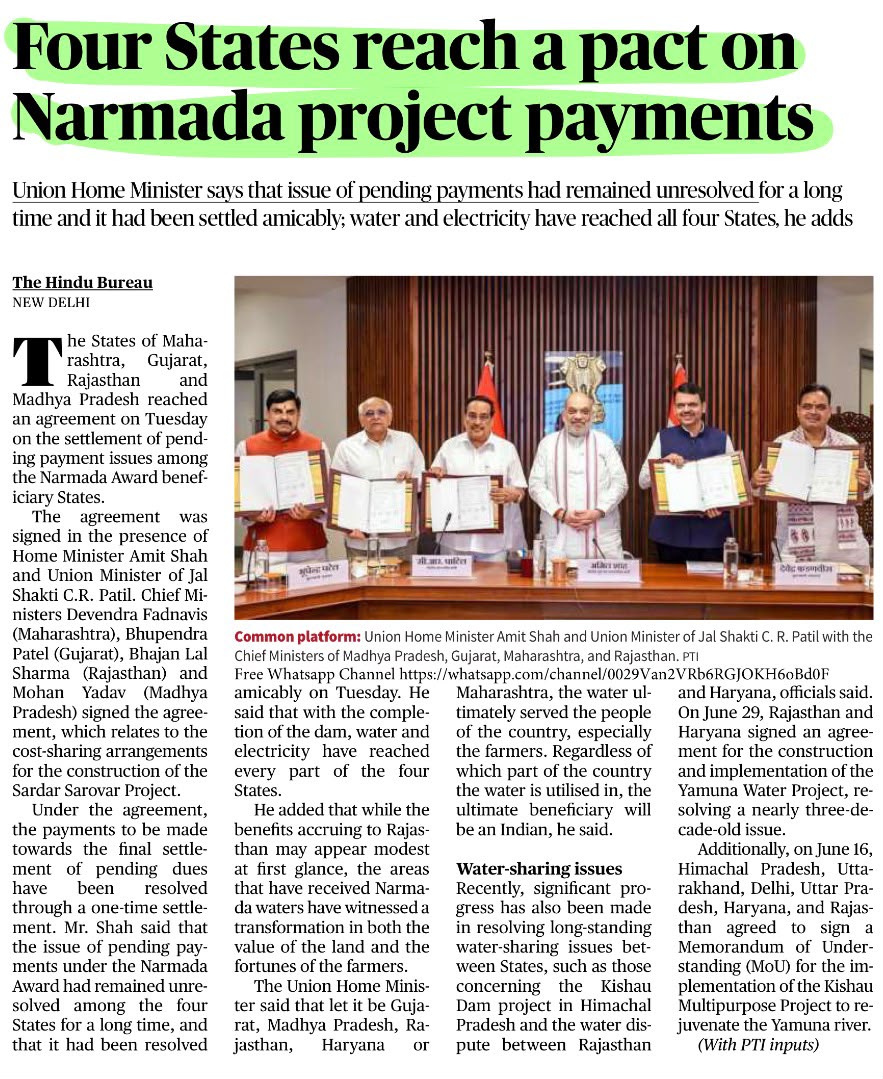
Madhya Pradesh, Gujarat, Maharashtra and Rajasthan signed a one-time settlement agreement to resolve long-pending cost-sharing liabilities related to the Sardar Sarovar Dam Project on the Narmada River.
What Was the Dispute?
The dispute was related to pending:
- Construction dues
- Operation and maintenance dues
- Cost-sharing liabilities
under the Narmada Water Disputes Tribunal Award, 1979.
Narmada Water Disputes Tribunal
Constituted
- 1969
Award
- 1979
Role
The Tribunal:
- Allocated Narmada waters.
- Fixed cost-sharing arrangements.
- Laid down implementation mechanisms for beneficiary States.
Narmada Control Authority
Established
- 1980
Function
It supervises implementation of the Narmada Water Disputes Tribunal Award.
Narmada River
Origin
- Amarkantak Plateau, Madhya Pradesh
Length
- 1,312 km
Mouth
- Gulf of Khambhat, Arabian Sea
Important Feature
Narmada is the largest west-flowing peninsular river.
It flows through a rift valley between the:
- Vindhya Range
- Satpura Range
Sardar Sarovar Dam Project
Location
- Kevadia, Gujarat
River
- Narmada
Beneficiary States
- Gujarat
- Madhya Pradesh
- Maharashtra
- Rajasthan
Purpose
- Irrigation
- Drinking water
- Hydropower
- Flood control
Significance
- Example of cooperative federalism.
- Resolves long-pending inter-State financial issues.
- Supports water and power sharing.
- Strengthens inter-State river governance.
- Improves implementation of large infrastructure projects.
Key Takeaway
The settlement shows that inter-State river disputes require institutional mechanisms, dialogue and cooperative federalism for long-term resolution.