Context Myanmar’s military-backed Union Solidarity and Development Party (USDP) has claimed victory in elections organised by the ruling junta, which critics view as a controlled exercise to legitimise continued military rule after the 2021 coup.
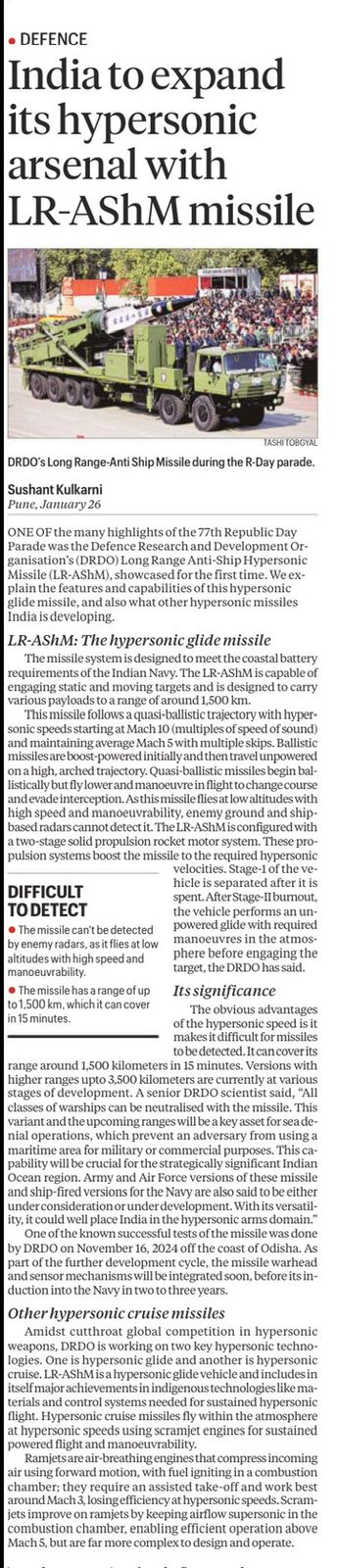
Context India showcased the Long-Range Anti-Ship Missile (LR-AShM) at the Republic Day parade, signalling a major push to strengthen indigenous hypersonic strike and maritime deterrence capabilities.
Key Points • Speed: > Mach 5 • Path: Non-ballistic, manoeuvrable • Detection: Hard to track and intercept • Role: Precision strike on high-value naval targets • Range (LR-AShM): ~1,500 km
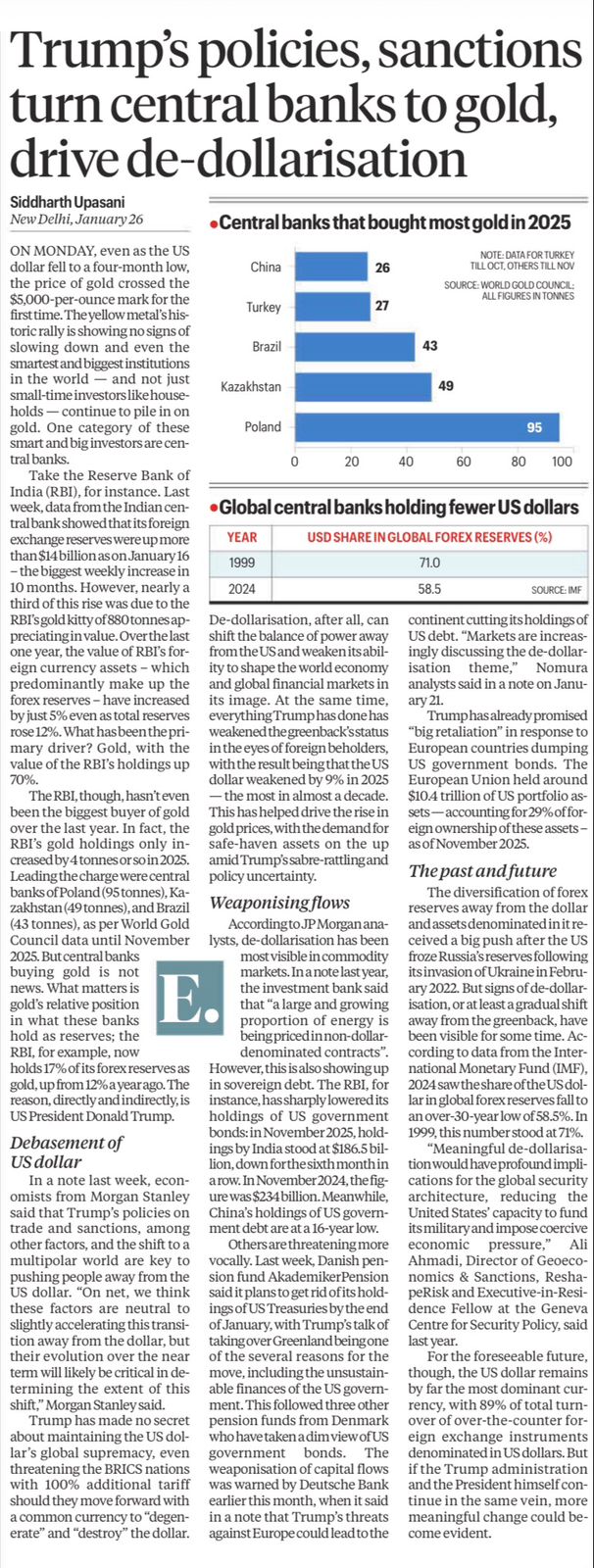
Context Amid rising U.S. sanctions, geopolitical uncertainty and a weaker dollar, global central banks are increasingly shifting reserves from U.S. dollars to gold, accelerating the trend of de-dollarisation.
Summary • Gold surge: Global central banks bought record amounts of gold in 2025; gold crossed $5,000/ounce • Key buyers: Poland, Kazakhstan, Brazil, Turkey, China • Dollar decline: US dollar share in global forex reserves fell from 71% (1999) to ~58.5% (2024) (IMF data) • India angle: RBI added ~880 tonnes of gold over time; gold now ~17% of India’s forex reserves
Drivers of de-dollarisation • US sanctions and weaponisation of finance • Freezing of Russia’s reserves (Ukraine war) • Desire for reserve diversification • Trump factor: Trade wars, sanctions, tariff threats • Limits: Despite decline, USD remains dominant (~89% of global forex transactions)
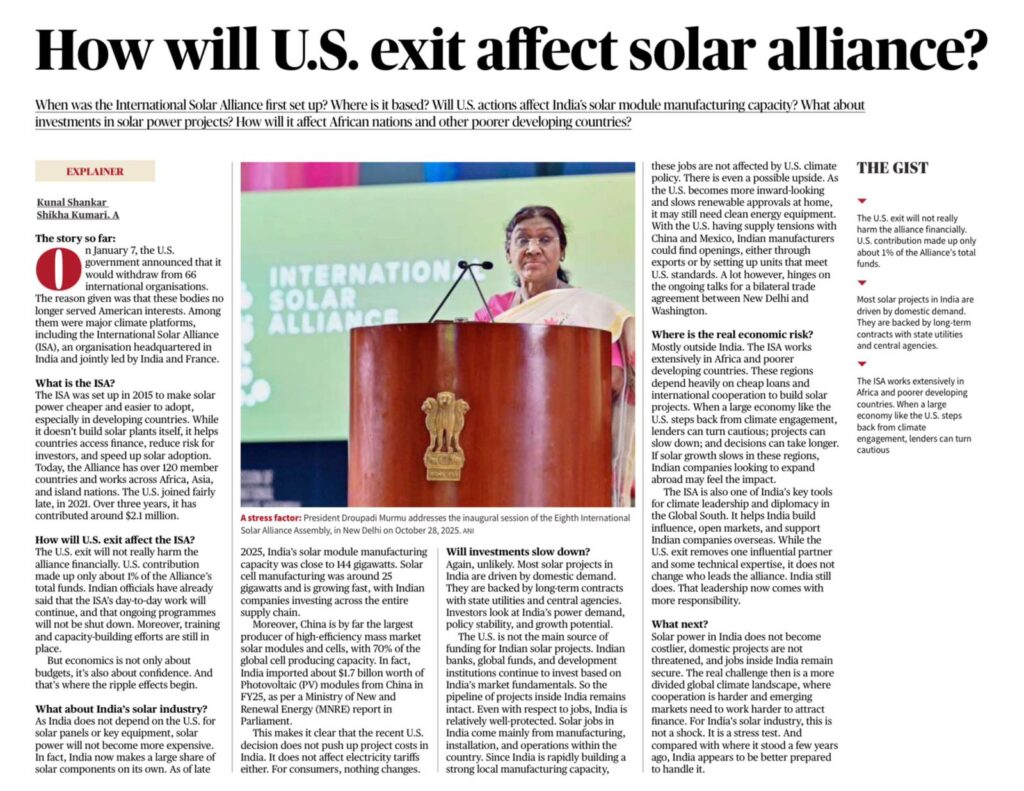
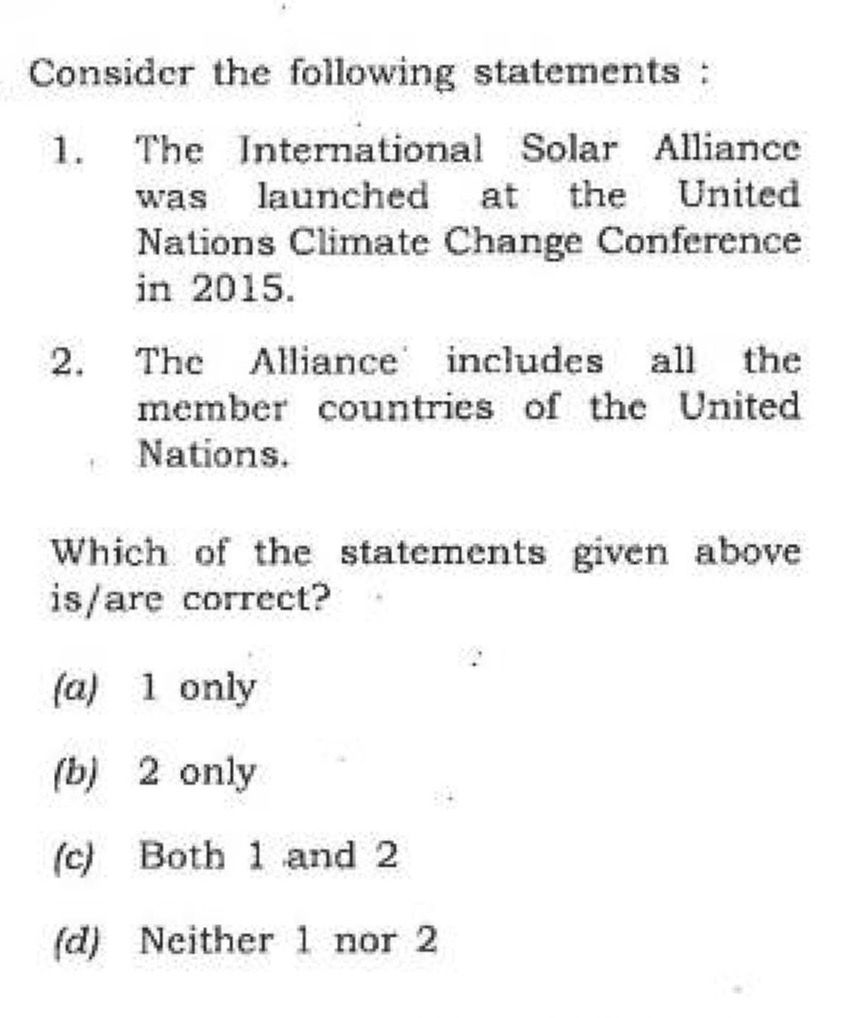
International Solar Alliance (ISA) • Founded: 2015 (India–France initiative) • Headquarters: Gurugram, India • Members: 120+ countries • Objective: Promote solar energy deployment by mobilising finance, technology and capacity-building
Impact of U.S. Exit • Limited financial impact – U.S. contributed only ~10% of ISA funds • Confidence effect – Global lenders may become more cautious • Developing countries hit – Africa and poorer nations face slower project approvals • India largely insulated – Domestic demand and long-term contracts drive solar growth • Leadership shift – India’s role in climate diplomacy and ISA leadership increases
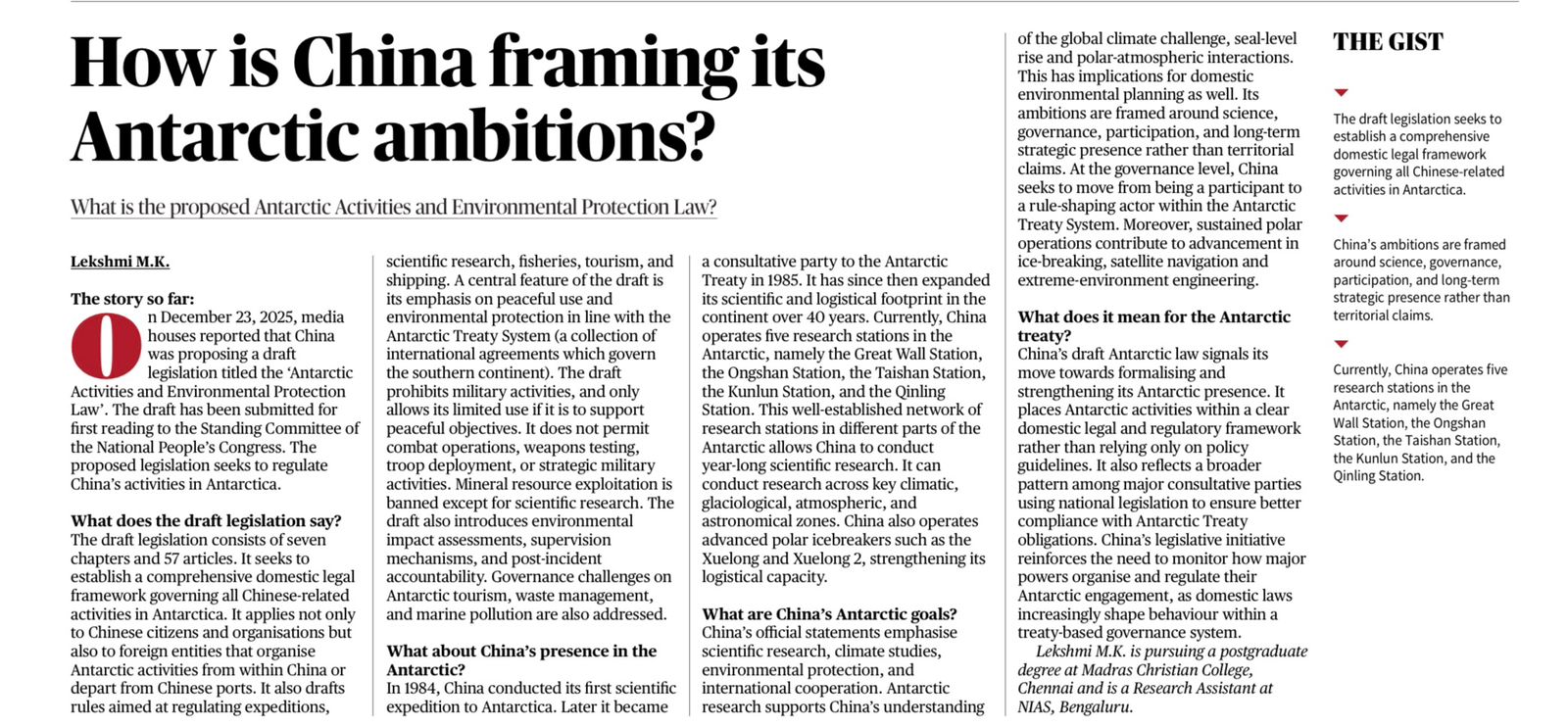
Context China has proposed a domestic law to regulate its activities in Antarctica, signalling a shift from policy-based participation to formal legal control over Antarctic operations.
Antarctic Treaty System (ATS) • Antarctic Treaty (1959): Governs Antarctica south of 60°S • In force: 1961 • Participants: 56 countries • Consultative Members: 29 (decision-making; includes India, China)
Core principles • Peaceful use only • Freedom of scientific research • Ban on military activity and nuclear tests • Territorial claims frozen (not abolished)
India in Antarctica • Signatory since: 1983 • Research Stations: • Dakshin Gangotri (1983) – Decommissioned • Maitri (1989) – Active • Bharati (2012) – Active
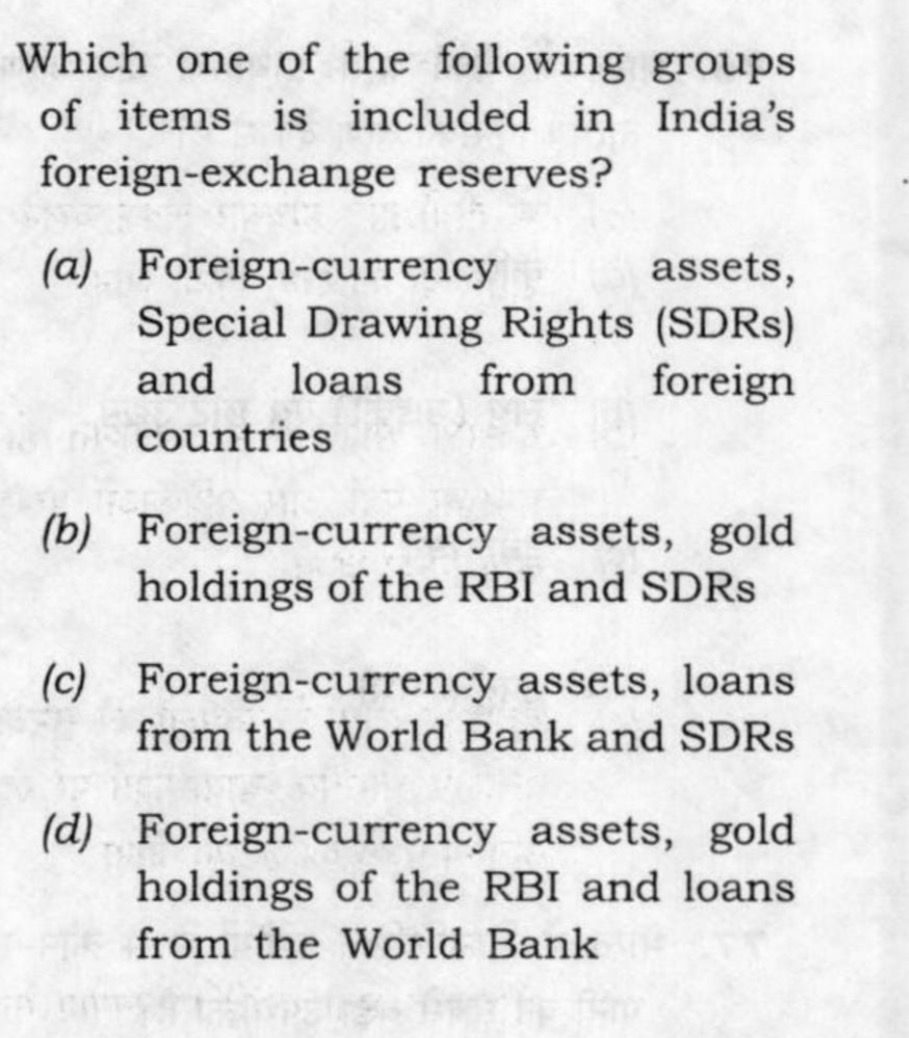
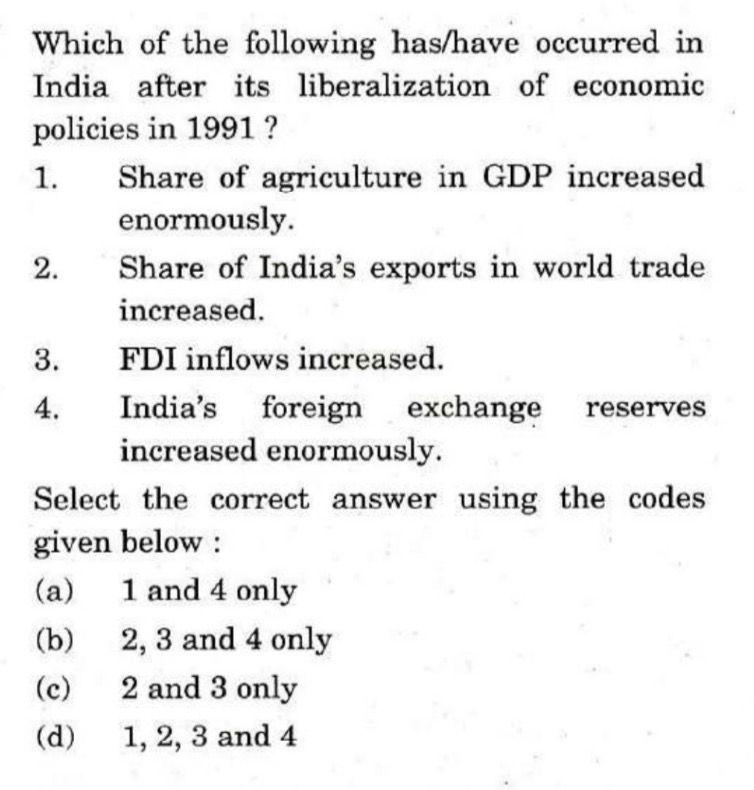
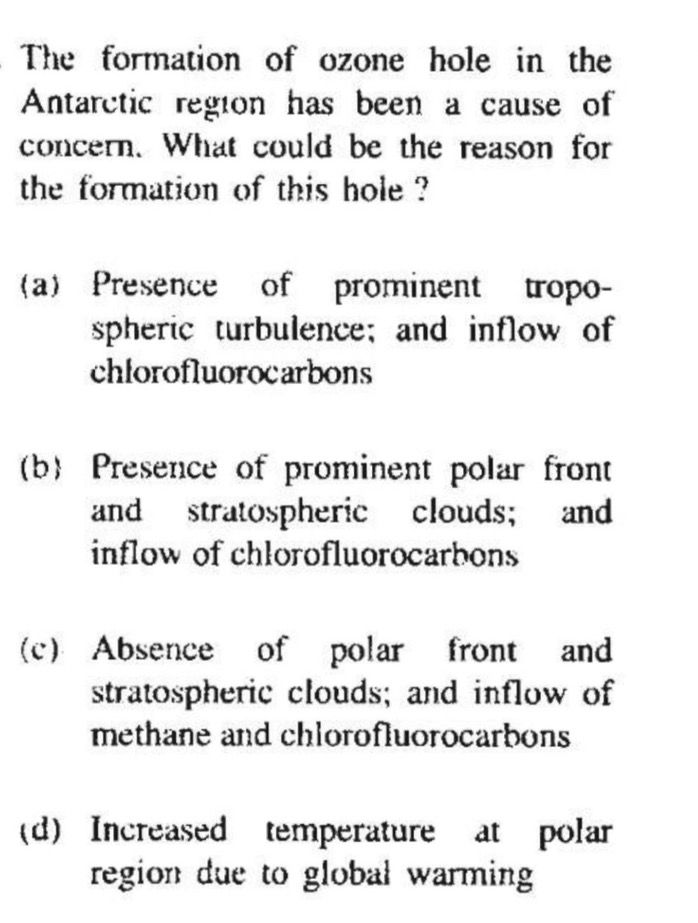
PYQ – 2011 ( Ans – B )
A Platform OF The Students For The Students By The Students