14 March 2026 | Daily Current Affairs

Transgender Persons Act Amendment: Proposed Changes in Definition and Rights Explained for UPSC

Context (Transgender Persons Act Amendment)

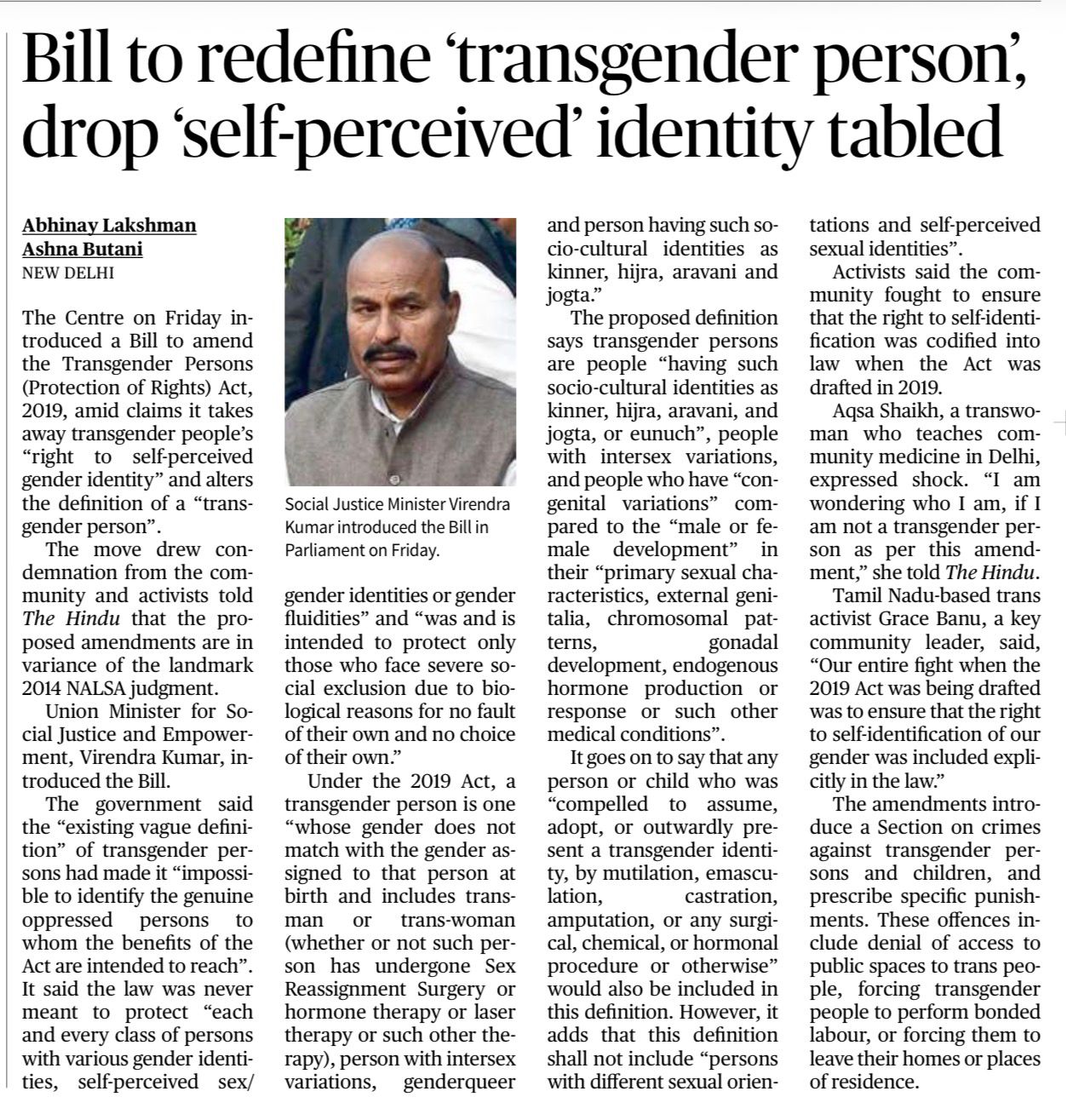
The Centre introduced an amendment Bill to the Transgender Persons (Protection of Rights) Act, 2019, seeking to revise the definition of “transgender person” and alter the framework of legal recognition, drawing criticism from the community.

The 2019 Act — Core Features

Definition

Person whose gender does not match sex assigned at birth.
Includes:

  • Trans-man
  • Trans-woman
  • Intersex persons
  • Genderqueer
  • Socio-cultural identities
    (hijra, kinner, aravani, jogta)

Rights

Bars discrimination in:

  • Education
  • Jobs
  • Healthcare
  • Housing
  • Public services

Recognition & Certification

  • Certificate of identity issued by the District Magistrate (DM).
  • Reflects self-perceived gender identity after due procedure.

Institutional Support

  • Welfare measures
  • National Council for Transgender Persons

Penalties

Punishment for:

  • Abuse
  • Denial of services
  • Violence against transgender persons.

Proposed Changes

  • Redefinition:
    Greater emphasis on socio-cultural identities and congenital/biological variations; reduces weight of self-identification.
  • Certification issue:
    DM-based certification continues, but activists argue the change weakens the self-identification principle recognised in NALSA (2014).
  • Scope clarified:
    Sexual orientation excluded from the definition.
  • Criminal provisions strengthened:
    Specific punishments for:
    • Denial of access
    • Forced labour
    • Eviction
    • Other abuses.
Transgender Persons Act Amendment

Supplementary Grant: Article 115 and Economic Stabilisation Fund Explained for UPSC

Context

Amid rising crude prices and West Asia-linked disruptions, the Centre created an Economic Stabilisation Fund (₹57,381 crore) through the Second Supplementary Demand for Grants to maintain fiscal flexibility against external shocks.

Constitutional Angle

Article 115 — Types of Grants (with examples)

Supplementary Grant

  • Extra funds for an existing service when allocation falls short.

Example:
Fertiliser subsidy rises from ₹10,000 crore to ₹13,000 crore due to price surge.

Additional Grant

  • Funds for a completely new service not included in the Budget.

Example:
New emergency evacuation mission abroad not earlier planned.

Excess Grant

  • Post-facto approval when spending exceeds sanctioned amount.

Example:
Defence overspends ₹5,000 crore beyond approved outlay.

Why this case

Treated as a Supplementary Grant since spending expands existing fiscal heads
(energy, stabilisation, macro-management), not a wholly new service.

Key Points

  • Gross additional spending sought: ~₹2.81 lakh crore
  • Savings/receipts: ~₹80,000 crore
  • Net outgo: ~₹2.01 lakh crore

Purpose of the fund:

  • Cushion energy volatility
  • Manage supply-chain stress
  • Address sectoral shocks

Government maintains alignment with FY 2025–26 fiscal deficit target.

Supplementary Grant
Supplementary Grant

Rupee Depreciation: Why Rupee Hit Record Low Against US Dollar and Its Impact for UPSC

Context

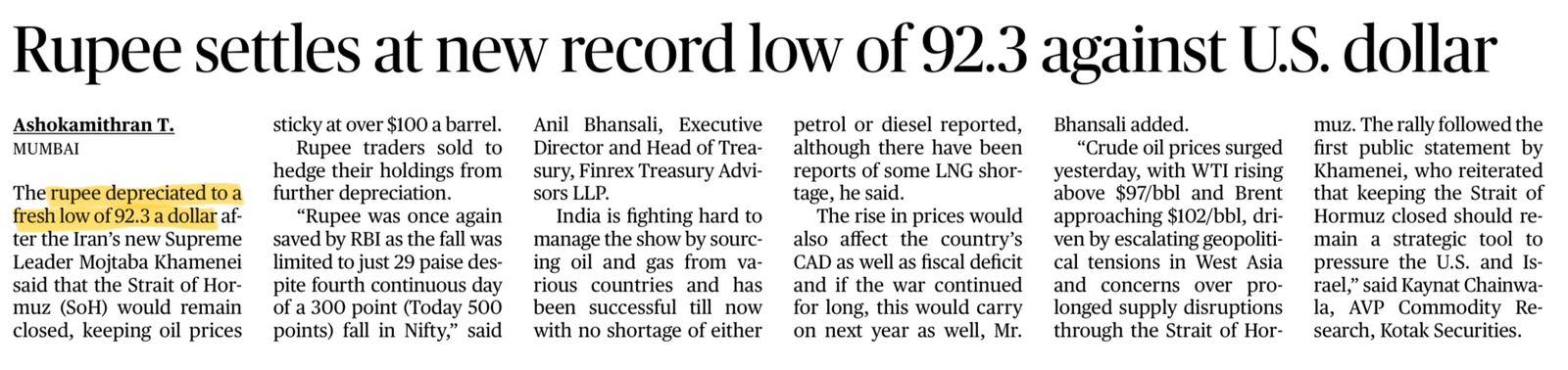
The rupee hit a fresh record low of ₹92.3 per U.S. dollar, amid West Asia tensions and rising crude prices linked to concerns over the Strait of Hormuz.

Reasons for Rupee Depreciation

  • Rising crude oil prices
    • Brent near $102/bbl
    • WTI above $97/bbl
    • Increased India’s import bill and dollar demand.
  • Geopolitical tensions
    • West Asia conflict
    • Hormuz-related uncertainty affecting global markets.
  • Higher domestic dollar demand
    • Oil companies and importers seeking dollars for payments.
  • Capital market pressures
    • Weak equity sentiment (Nifty fall)
    • Capital outflows.
  • Global risk aversion
    • Safe-haven shift toward the U.S. dollar strengthened it globally.
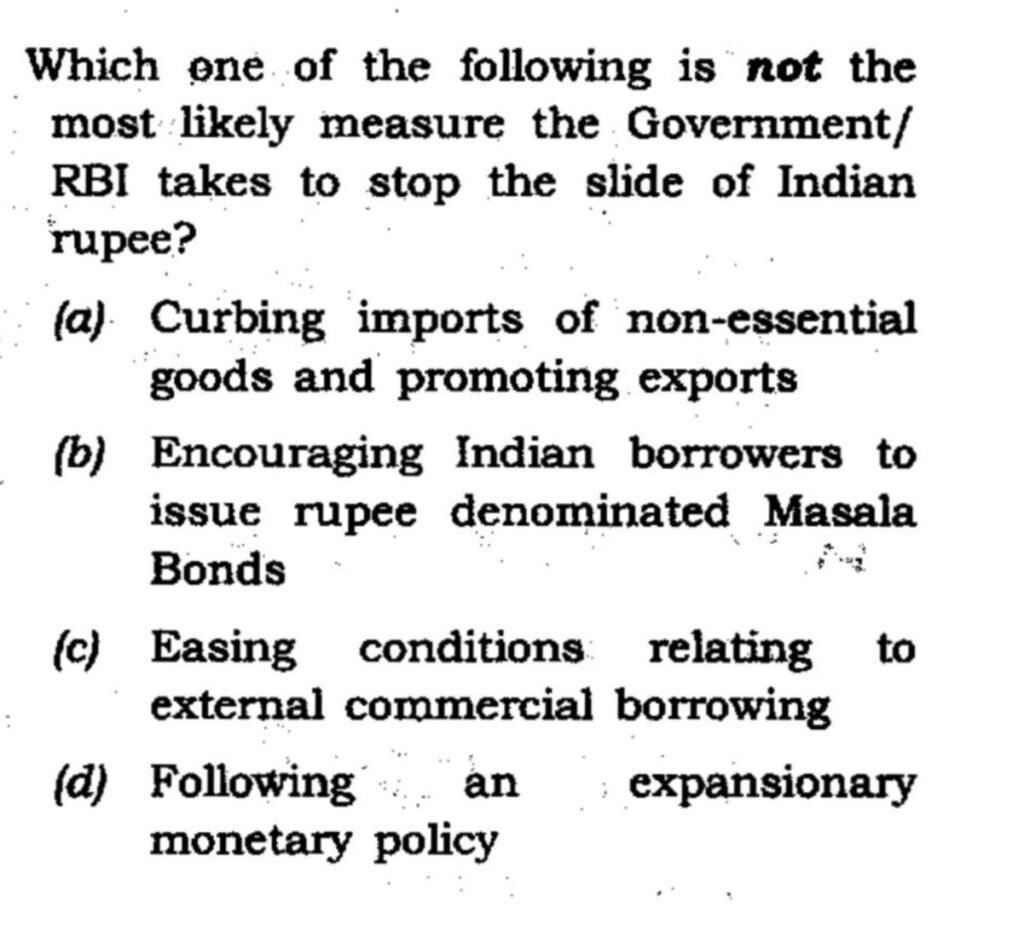
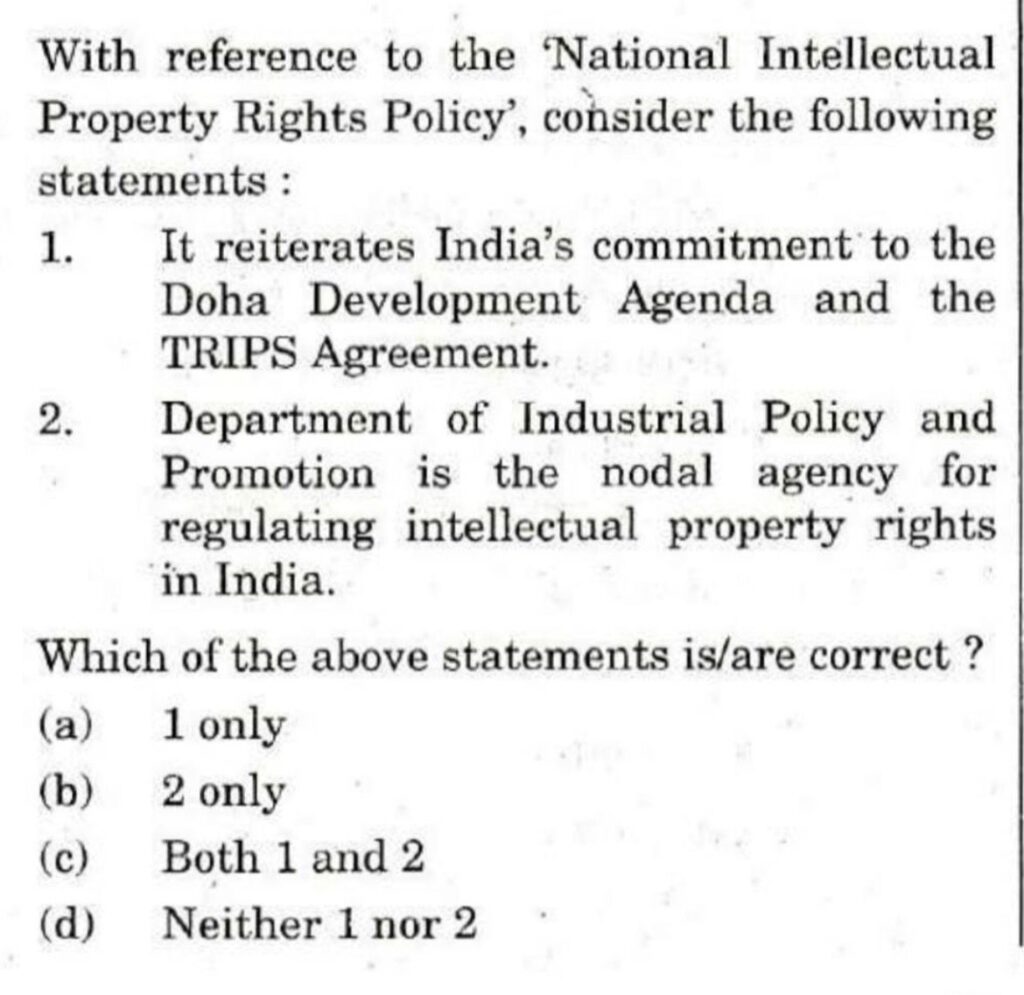
PYQ – 2019, Ans – D

Washington Consensus: Meaning, Origin, Criticism and Relevance in Global Economy for UPSC

Context (Core Argument)

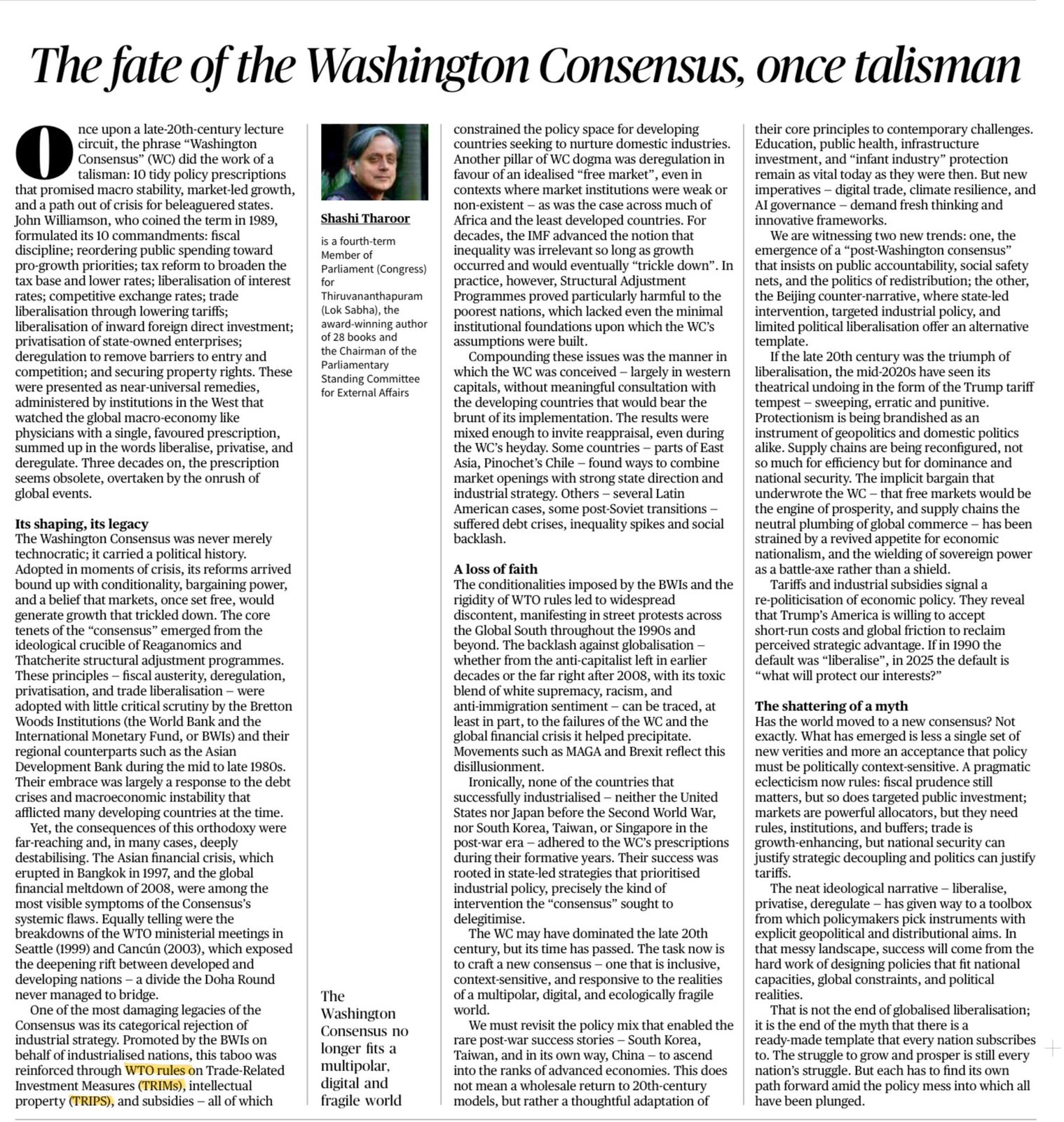
Washington Consensus prescriptions have lost centrality.
Today’s world demands context-based policy mixing markets, state intervention, and strategic protection.

Key Points

1. Origin (1989)
John Williamson’s 10 reforms:

  • Fiscal discipline
  • Liberalisation
  • Privatisation
  • Deregulation

Backed by IMF–World Bank during debt crises.

2. Expansion (1980s–90s)
Structural Adjustment Programmes and WTO-era rules (TRIPS/TRIMS) narrowed industrial policy space in developing states.

3. Backlash (late 1990s–2000s)

  • Uneven outcomes.
  • East Asia blended state-market models.
  • Others faced crises and inequality.
  • WTO setbacks:
    • Seattle (1999)
    • Cancún (2003)
  • 2008 financial crisis eroded faith.

4. Shift (2010s–2020s)
Rise of:

  • Protectionism
  • Nationalism
  • Tariffs
  • Subsidies
  • Supply-chain security

Trade became politically strategic.

5. Present Situation

No single model dominates.

Focus areas now include:

  • Welfare
  • Industrial policy
  • Climate resilience
  • Digital governance
  • Strategic autonomy

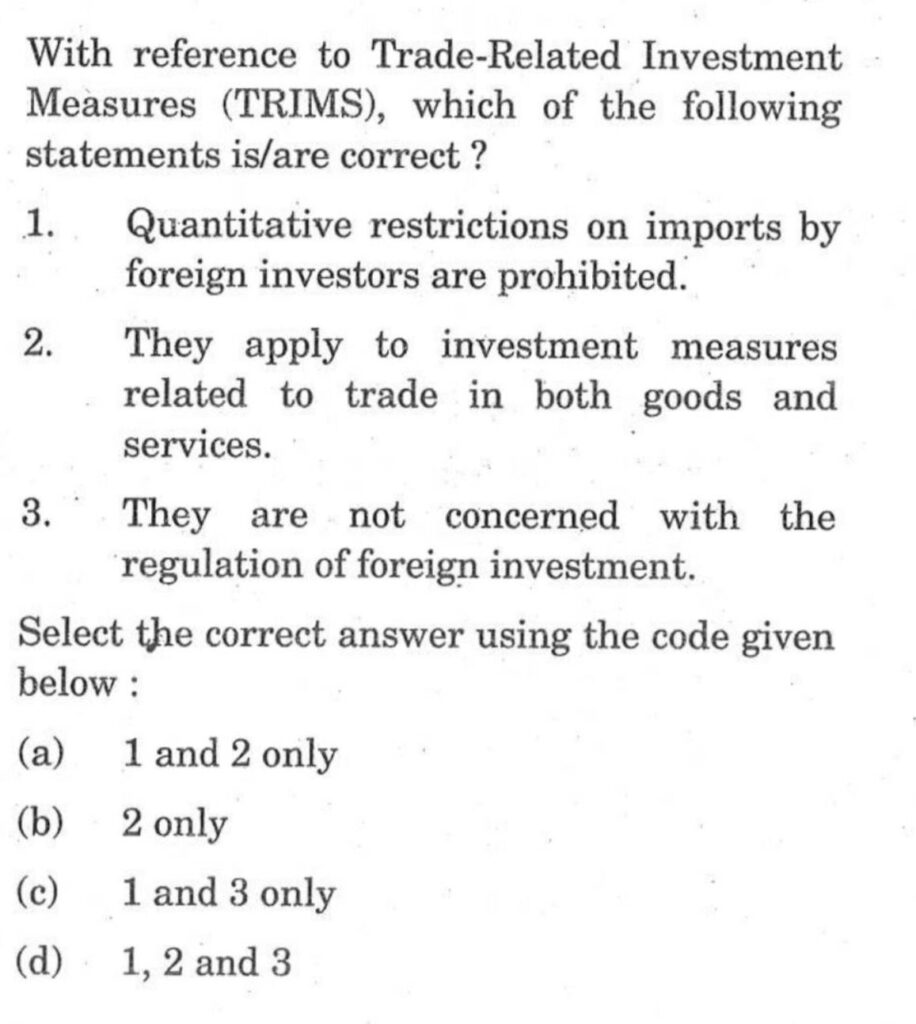
TRIPS & TRIMS

TRIPS

  • WTO pact setting minimum global IP standards.
  • Includes flexibilities such as compulsory licensing.

TRIMSWTO pact banning trade-distorting investment measures
(e.g., local content requirements, trade-balancing requirements).

Washington Consensus
PYQ – 2019, Ans – C
PYQ – 2020, Ans – C

Removal of Chief Election Commissioner: Constitutional Process and Article 324 Explained for UPSC

Context

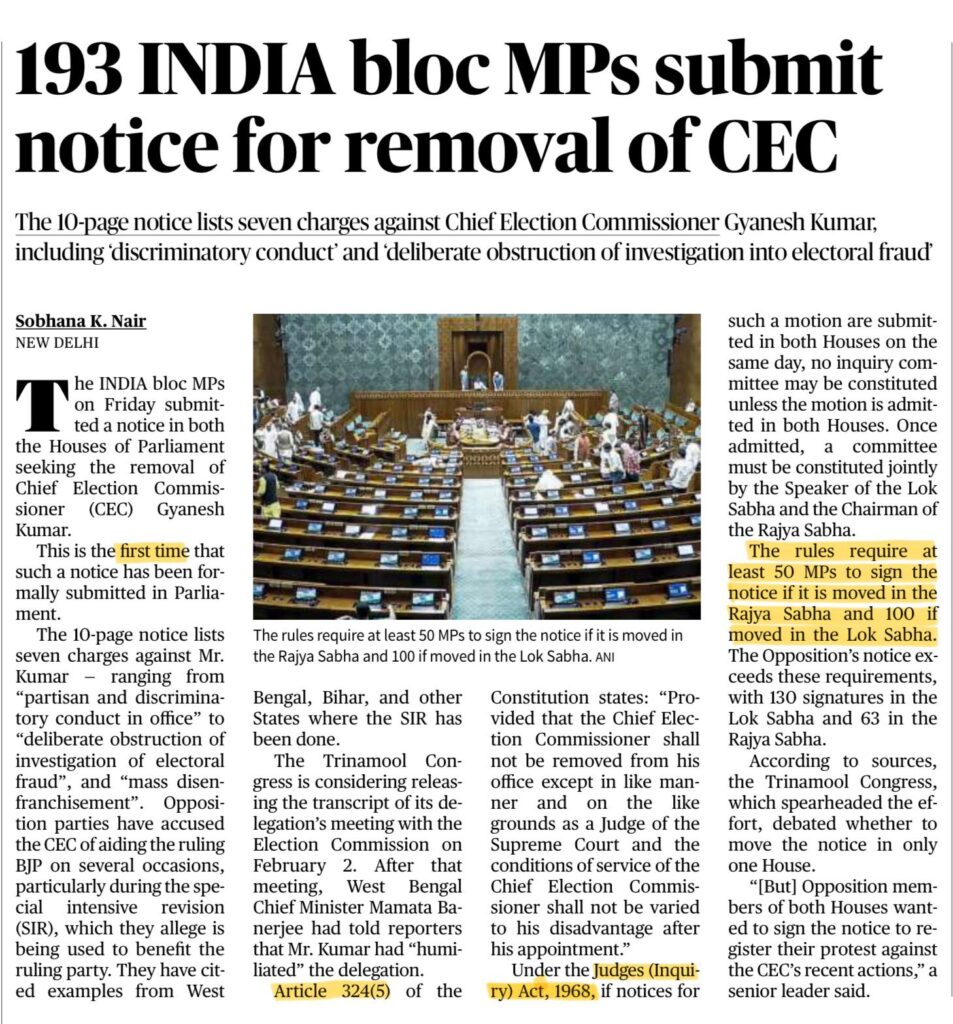
Opposition MPs submitted a notice in both Houses seeking removal of Chief Election Commissioner (CEC) Gyanesh Kumar over alleged misconduct in electoral processes.

Constitutional & Legal Basis

Article 324:
Superintendence, direction and control of elections vested in the Election Commission of India.

Article 324(5):

  • CEC removable only in the same manner and on the same grounds as a Supreme Court judge.
  • Service conditions cannot be varied to his disadvantage after appointment.

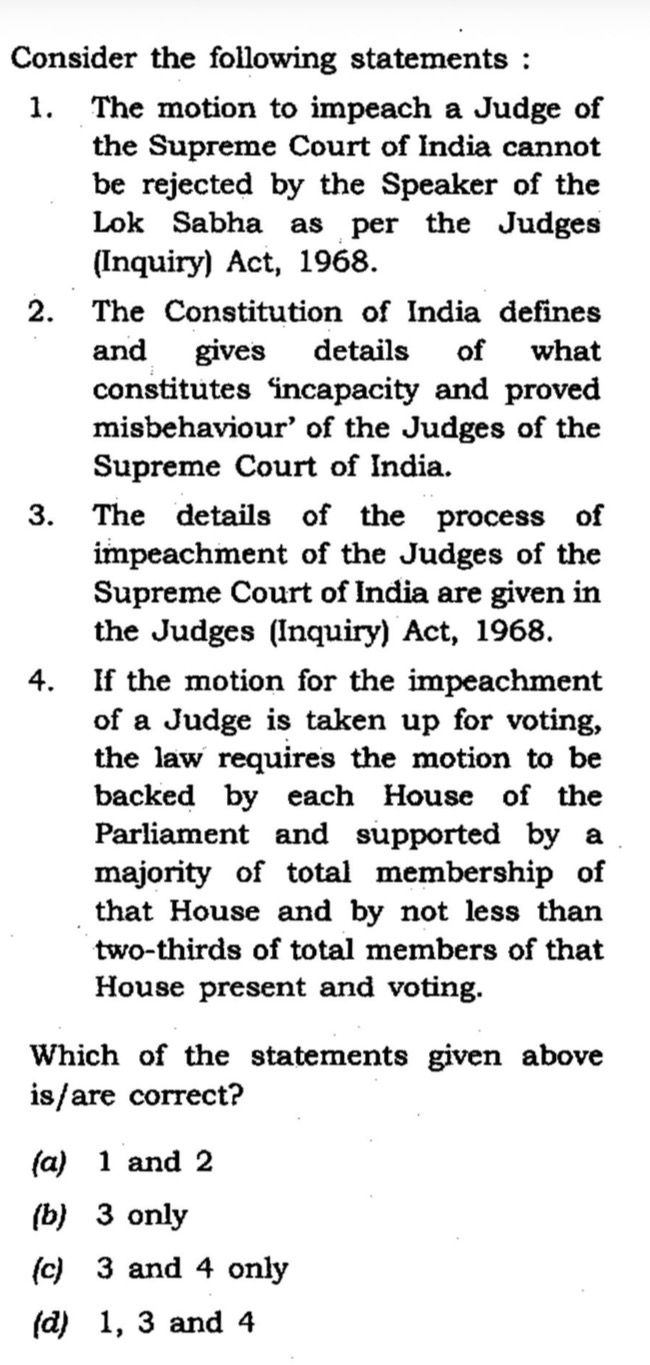
Judges (Inquiry) Act, 1968:

  • Provides statutory procedure for inquiry into proved misbehaviour/incapacity.

Removal of CEC (Process)

  • Notice moved in either House; requires 100 MPs (Lok Sabha) or 50 MPs (Rajya Sabha).
  • If admitted, a 3-member inquiry committee is formed:
  • Committee investigates and submits report.
  • If charges are proved, motion must pass in both Houses by special majority
    (majority of total membership + two-thirds present and voting).
  • After passage, the President issues the removal order.

Key Points

  • First formal removal notice against a sitting CEC in Parliament.
  • Allegations include:
    • Partisan conduct
    • Obstruction of electoral fraud inquiries
    • Disenfranchisement concerns during SIR exercises.
  • Notice exceeds required signatures:
    • 130 LS
    • 63 RS

Removal of Other Election Commissioners

Governed by Article 324(5)

  • Removed by the President only on recommendation of the CEC.

Does not follow full parliamentary impeachment procedure.

Removal of Chief Election Commissioner
PYQ – 2019, Ans – C
About the UPSC Civil Services Examination (UPSC CSE)

The UPSC Civil Services Examination (CSE) is one of the most competitive and esteemed examinations in India, conducted by the Union Public Service Commission to recruit officers for services such as the Indian Administrative Service (IAS), Indian Police Service (IPS), Indian Foreign Service (IFS), and others. The exam comprises three stages — Prelims, Mains, and the Personality Test (Interview) — designed to test a candidate’s knowledge, aptitude, decision-making, and leadership skills.


How to Prepare Effectively for UPSC CSE

Cracking the UPSC CSE requires a deep understanding of the syllabus, consistent revision, structured answer writing, and smart test-taking strategies. The Prelims test analytical and conceptual clarity, the Mains focuses on critical thinking, articulation, and subject mastery, while the Interview assesses presence of mind, ethical judgment, and personality traits relevant to public service.

At UnderStand UPSC, we empower aspirants with a personalized and focused approach to each stage of the exam.


Why Choose UnderStand UPSC?

UnderStand UPSC is a mentorship-driven platform offering a clear, clutter-free strategy to tackle the Civil Services Examination. Our programs like Transform (for beginners and intermediate learners) and Conquer (for advanced mains preparation) provide structured study plans, syllabus-wise video content, interactive live sessions, and answer writing support.

We emphasize:

  • Concept clarity through topic-wise lectures

  • Test series designed around real UPSC standards

  • Personalized mentorship in small groups

  • Regular performance tracking and peer benchmarking

  • Doubt-clearing sessions, current affairs analysis, and monthly magazines


Join the UnderStand UPSC Learning Community

Our mission is to make UPSC preparation less overwhelming and more strategic. We combine mentorship, discipline, and academic rigor to help you clear CSE with confidence. Whether you’re preparing from Delhi, Mumbai, Bangalore, or a remote village — our online-first model ensures quality guidance reaches every corner of India.

Join the thousands of aspirants who trust UnderStand UPSC to guide their journey toward becoming civil servants.

Stay connected with us through our Telegram, YouTube, and Instagram channels for daily tips, strategies, and updates.

Copyright © 2026 USARAMBHA EDUCATION (UnderStand UPSC). All Rights Reserved.

Join the Success Journey!