4 April 2026 | Daily Current Affairs

Uranium Enrichment Iran: Nuclear Capability and Weaponisation Explained

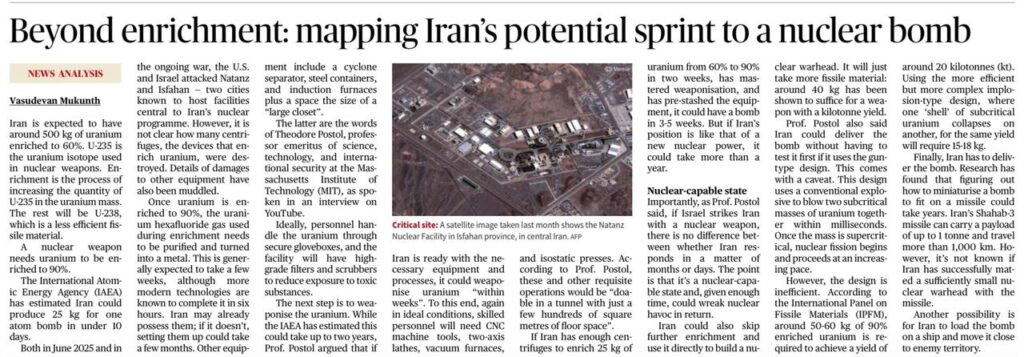
Context: Uranium Enrichment Iran

After strikes on Natanz and Isfahan, the concern is whether Iran can move from enrichment to a usable and deliverable nuclear weapon
Uranium Enrichment Iran
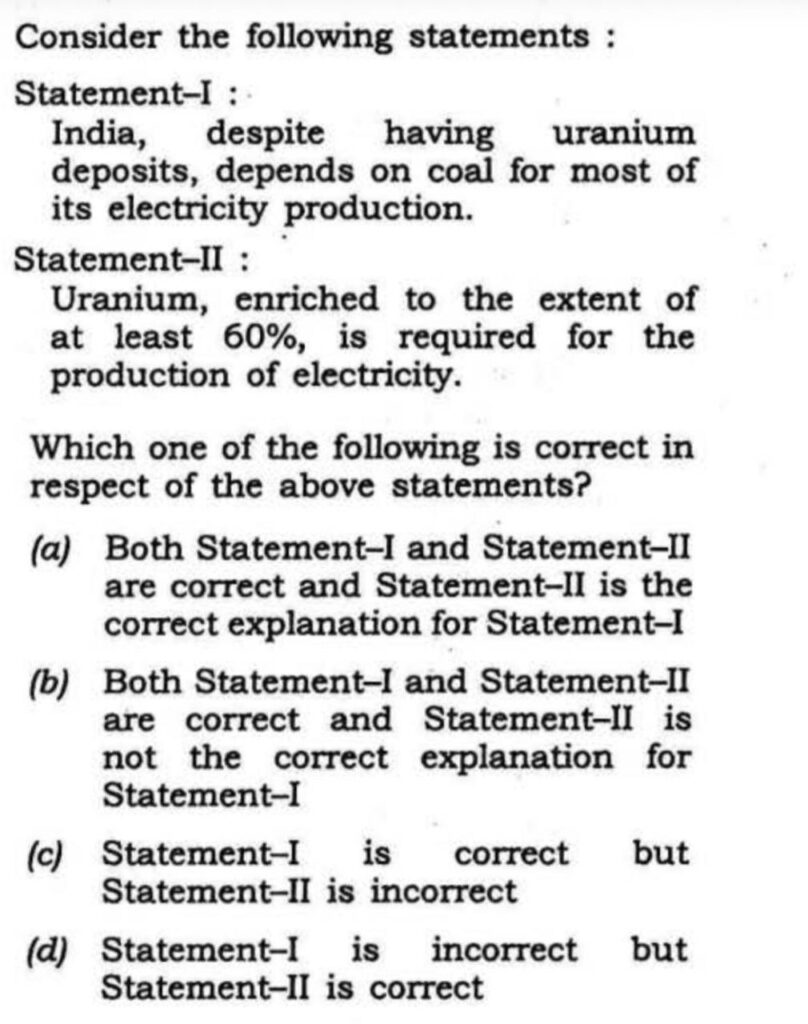
PYQ – 2023, Ans – C

Key Points

  1. Enrichment Levels → Natural uranium has U-235 (~0.7%) usable isotope (rest mostly U-238) → enrichment increases U-235 → 3–5% (power) → 20% → 60% → 90% (bomb) → 0–60% hard, 60–90% fast
  2. Iran’s Material Position → ~500 kg at 60% → can reach 90% in ~2 weeks → ~25 kg enough for 1 bomb → material stage nearly achieved
  3. Weaponisation Gap → gas to metal conversion → core shaping → detonation system → needs precision; takes weeks to months
  4. Delivery Systems → Shahab-3 (~1000–1300 km, ~700–1000 kg payload), Sejjil (~2000 km, solid fuel) → range and payload adequate; integration uncertain
  5. Core Issue → miniaturisation of warhead + survival during re-entry + integration with missile → most complex and decisive barrier
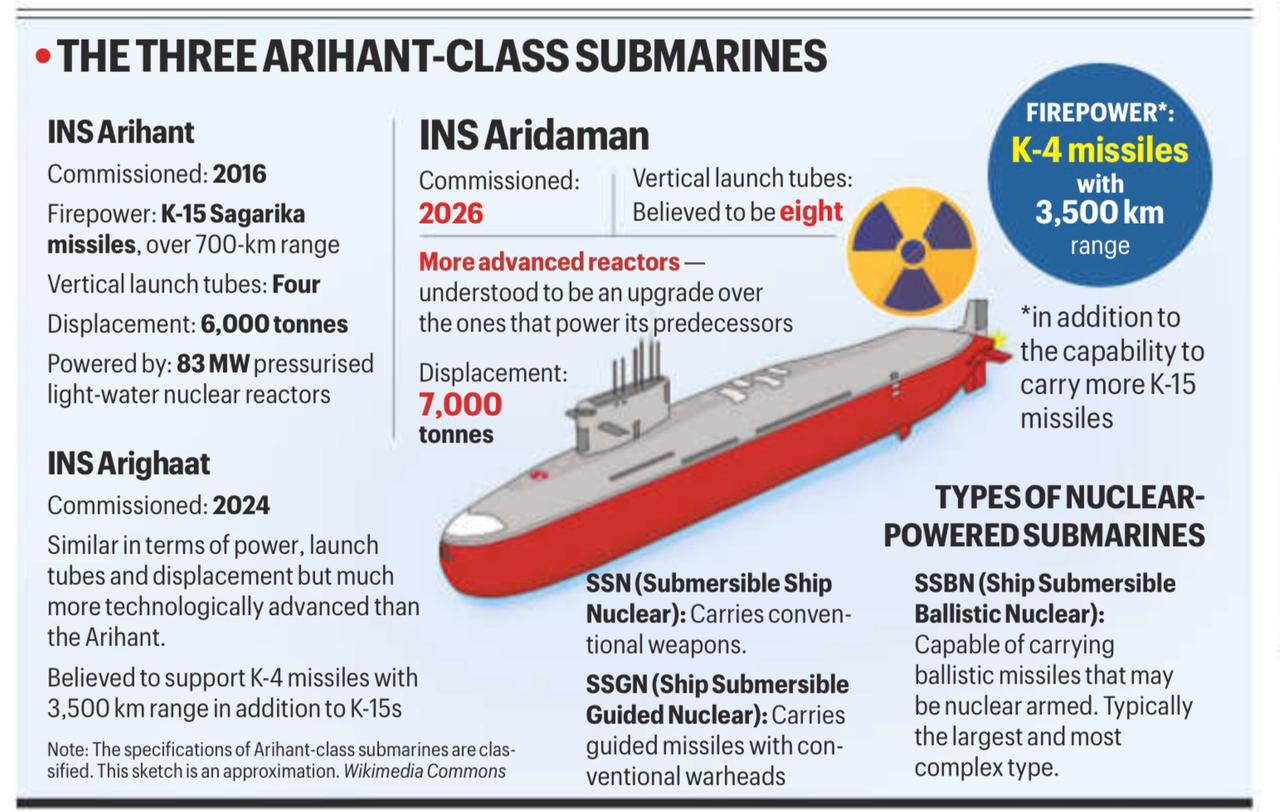
INS Aridaman Nuclear Submarine: India’s Second Strike Capability Explained

Context: INS Aridaman Nuclear Submarine

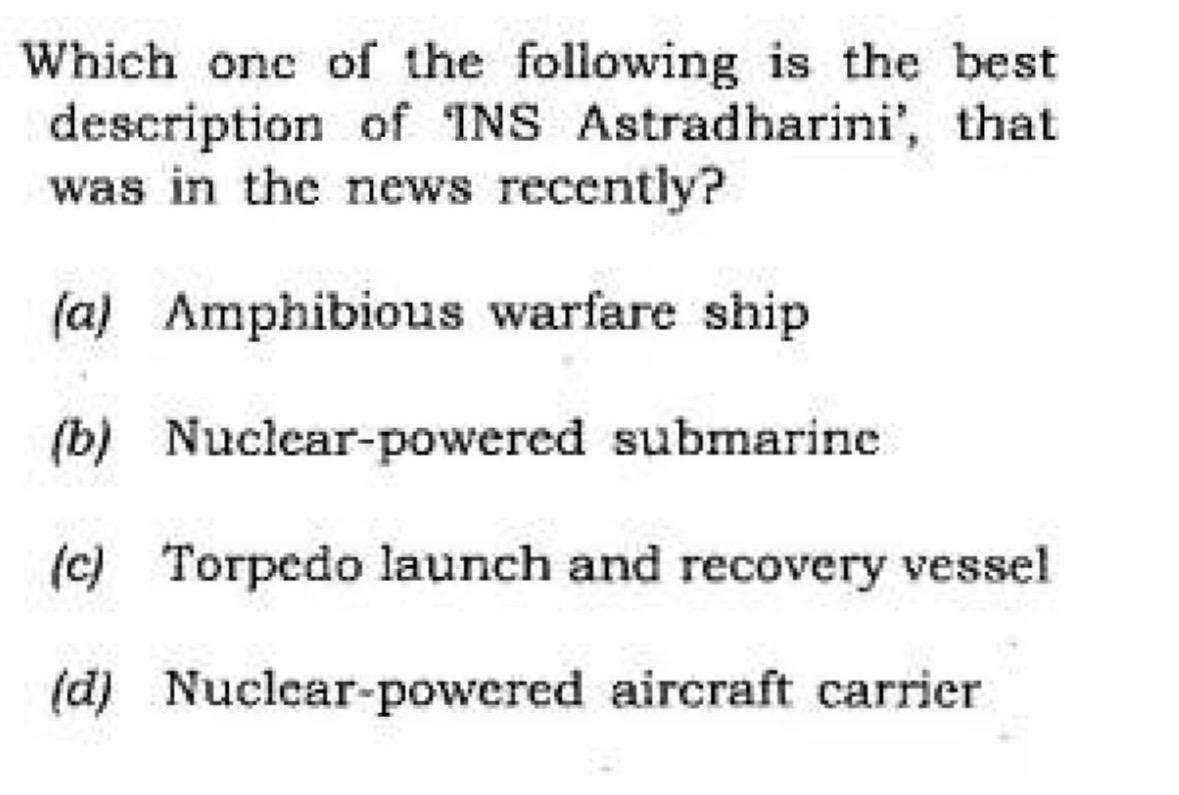
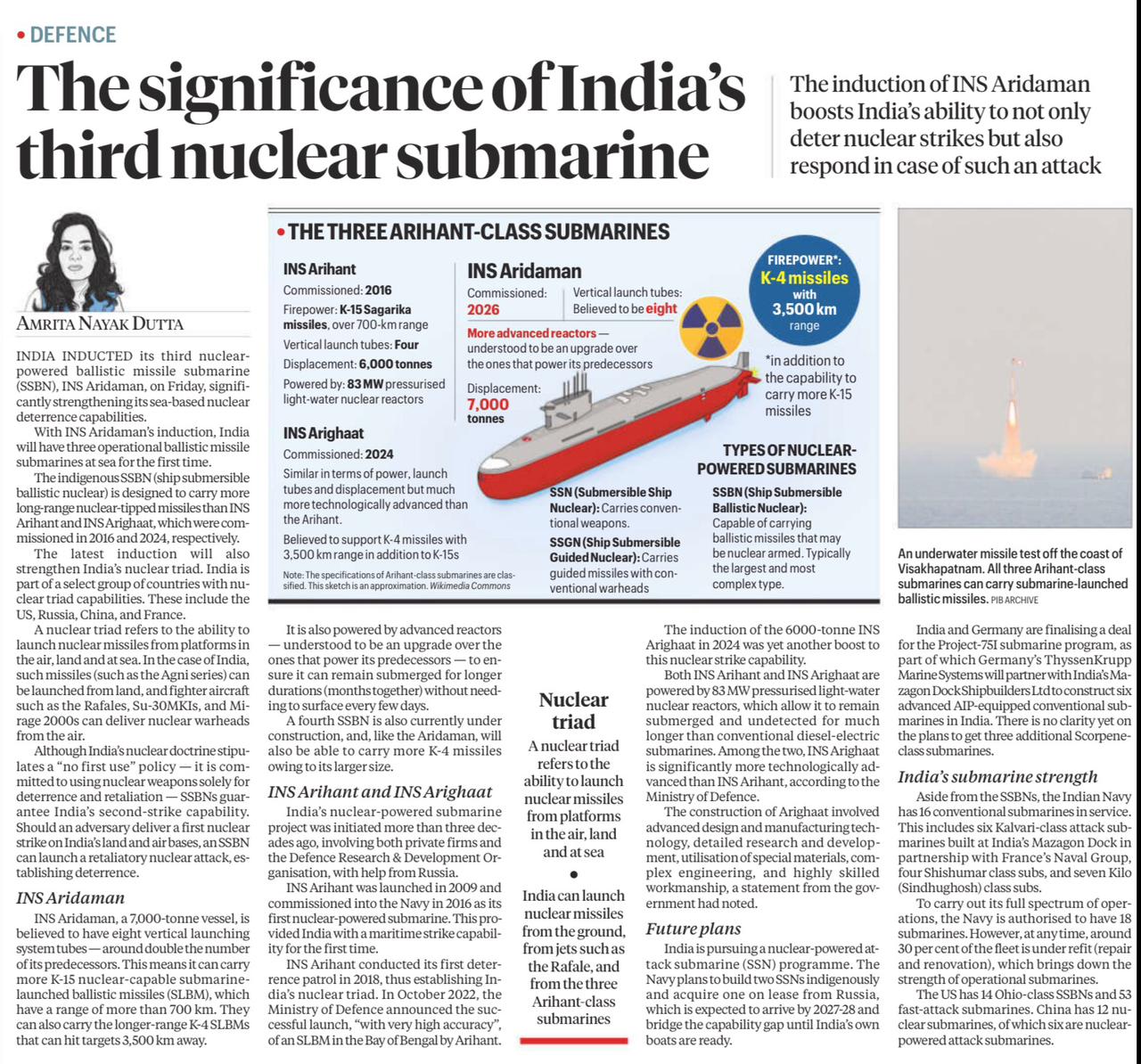
India inducted INS Aridaman (~7000 tonnes), strengthening the sea-based leg of nuclear deterrence and assured second-strike capability.

INS Aridaman Nuclear Submarine
PYQ – 2016, Ans – C

Key Points

  1. Platform Role
    • Nuclear-powered submarine carrying ballistic missiles with nuclear warheads
    • Can remain underwater for months → difficult to detect
    • Ensures retaliation even after first strike
  2. Capability Expansion (India)
    • INS Arihant (2016) → 4 launch tubes
    • INS Arighaat (2024) → improved systems
    • INS Aridaman (2026) → ~7000 tonnes, 8 launch tubes
    • Result → higher missile load + longer endurance + better survivability
  3. Missile Capability
    • K-15 Sagarika → ~700–750 km
    • K-4 → ~3500 km
    • Both are submarine-launched ballistic missiles carrying nuclear warheads
  4. Range Advantage
    • K-15 required submarines to move closer to enemy coast
    • K-4 enables strikes from deep sea zones
    • Result → lower detection risk + safer deployment

Strategic Impact
• Sea-based platform = most survivable leg of nuclear triad
• More missiles per patrol + longer underwater stay
• Ensures credible second-strike capability

UN Peacekeeping South Sudan: India’s Role in UNMISS Explained

Context: UN Peacekeeping South Sudan

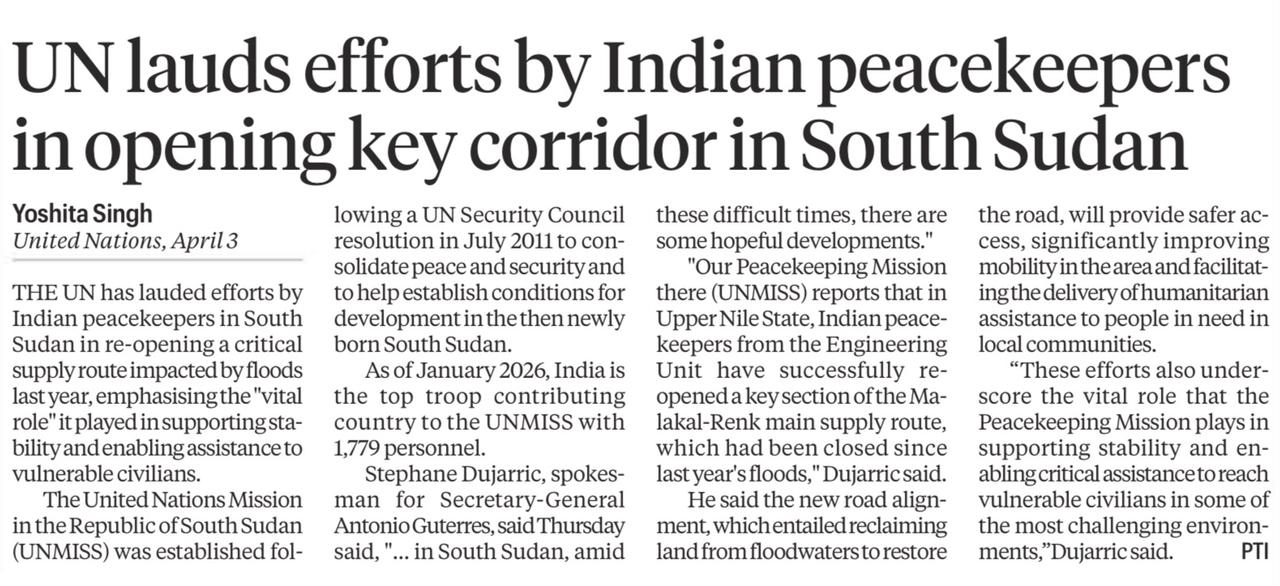
UN appreciated Indian peacekeepers in South Sudan for reopening the Malakal–Renk corridor, restoring humanitarian access in flood- and conflict-affected areas under the United Nations Mission in South Sudan.

UN Peacekeeping South Sudan

Key Points

  1. Legal Basis and Nature
    Based on Article 24 of the Charter of the United Nations → UN Security Council maintains international peace and security → missions created through UNSC mandates → operate on consent, impartiality and limited use of force
  2. What UN Peacekeeping Does
    Maintains peace, protects civilians, supports political processes, enables humanitarian aid, rebuilds basic infrastructure → now multidimensional (security + governance + relief)
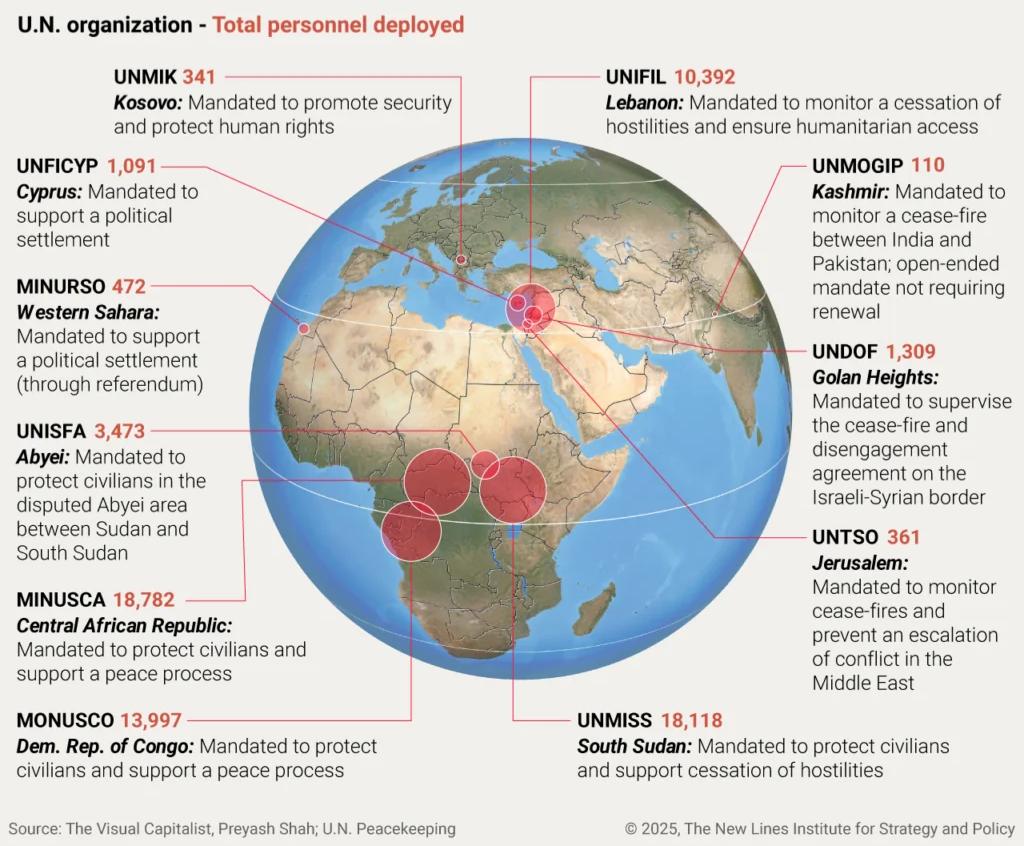
  3. Major Missions
    Africa: UNMISS | MONUSCO | MINUSMA | UNISFA | MINURSO
    Middle East: UNIFIL | UNDOF | UNTSO
    Europe: UNFICYP | UNMIK
    Asia: UNMOGIP

India’s Role in South Sudan (UNMISS)
• India among largest troop contributors (~1700+ personnel)
• Indian engineers reopened Malakal-Renk supply route
• Enabled humanitarian aid delivery and connectivity restoration
• Contribution includes infrastructure repair, medical support and civilian protection
• Reflects India’s role as a key stabilising and humanitarian actor

US Tariff Patented Pharma: Impact on India’s Pharmaceutical Exports

Context: US Tariff Patented Pharma

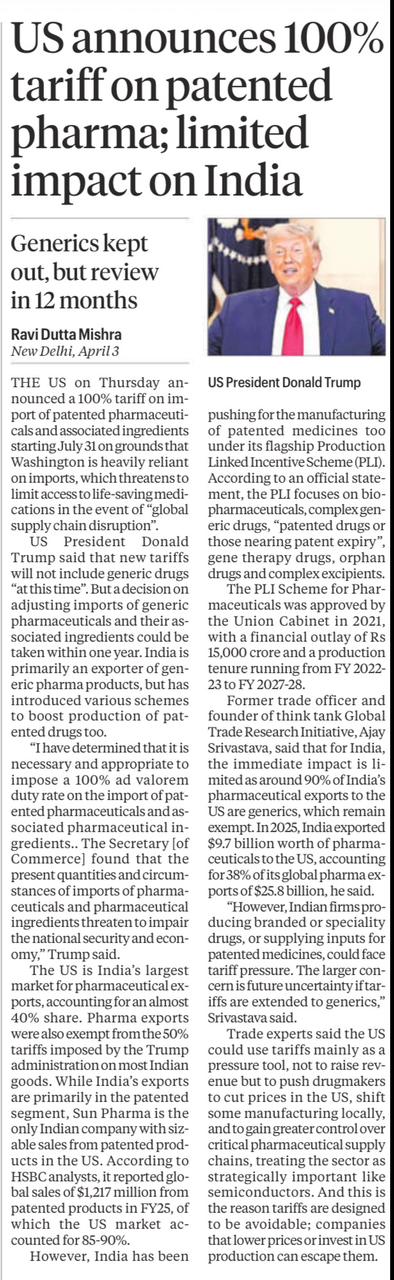
The US has imposed a 100% tariff on patented pharmaceutical imports (from July 31) to promote domestic manufacturing and reduce supply dependence; generic drugs are exempt for now, with a review after 12 months.

US Tariff Patented Pharma

Key Points

  1. What is being taxed (Basics included)
    • Patented drugs → new, innovation-based medicines under patent protection (~20 years), high-cost, no competition
    • Generics → copies made after patent expiry, low-cost, mass supply
    • Tariff applies to patented drugs and related inputs, generics excluded currently
  2. Why US is doing this
    • Reduce import dependence in a critical sector
    • Boost domestic pharma manufacturing
    • Secure supply chains
    • Strategic push similar to semiconductors/critical tech
  3. India–US Pharma Link (Data)
    • US = largest market (~40% of India’s pharma exports)
    • India exports ~$9.7 billion (2025)
    • ~90% exports are generics → shielded for now
  4. Impact on India
    • Short term → limited impact (generics exempt)
    • Direct impact → firms in patented/specialty segment face pressure
    • Risk → if tariffs extend to generics → major export shock

Structural Implications
• Push for US-based manufacturing
• Possible decline in reliance on Indian APIs/intermediates
• Opportunity for India to move into high-value pharma (PLI ~₹15,000 crore)

IBC Amendment 2026: Key Changes to Speed Up Insolvency Resolution

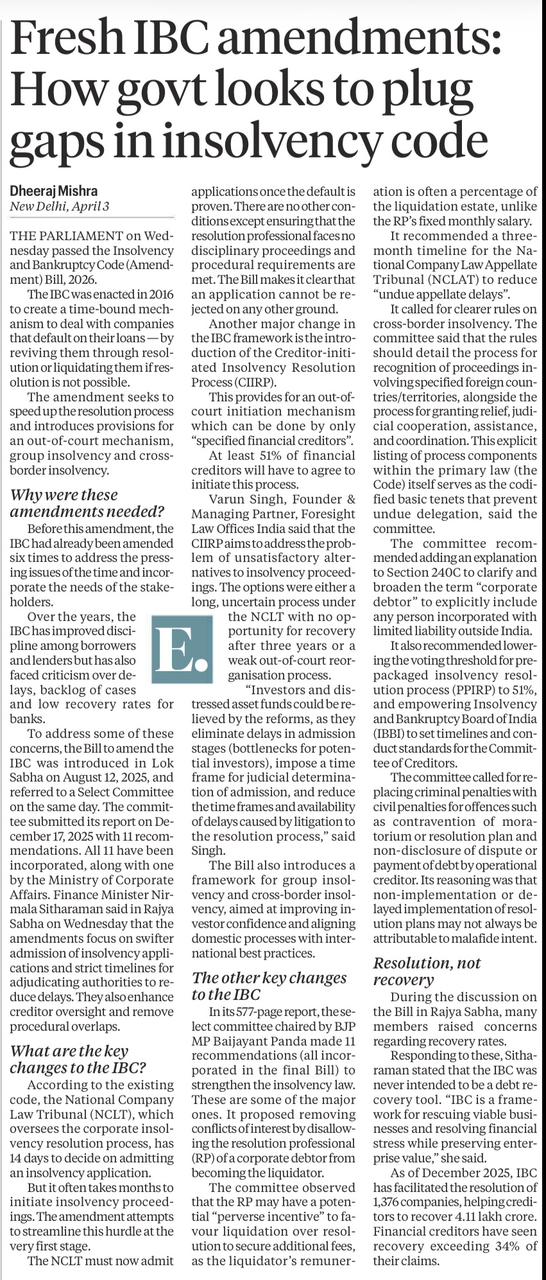
Context: IBC Amendment 2026

Parliament passed the IBC (Amendment) Bill, 2026 to address delays, low recovery and litigation-heavy processes, aiming to make insolvency resolution time-bound and more efficient.

IBC Amendment 2026
IBC Amendment 2026

Key Changes

  1. What the system is + where the problem was
    • IBC (2016) → framework for resolving stressed companies through NCLT (adjudication) and NCLAT (appeals)
    • Intended to be time-bound, but faced delays in admission, long appeals, backlog and low recovery
  2. How the amendments speed up resolution
    • NCLT must admit cases once default is established → removes entry-stage delays
    • NCLAT given 3-month limit → reduces prolonged appeals
    • Introduction of creditor-led, out-of-court initiation with 51% approval → reduces court burden
  3. Making the system more practical and flexible
    • Group insolvency → handles interconnected companies together
    • Cross-border insolvency rules → deals with foreign assets and creditors
    • IBBI empowered to fix timelines and standards → better regulation

Fixing distortions and improving outcomes
• Resolution Professional cannot act as liquidator → avoids bias toward liquidation
• Shift from criminal to civil penalties → ensures proportional enforcement
• Broader definition of corporate debtor → wider applicability

About the UPSC Civil Services Examination (UPSC CSE)

The UPSC Civil Services Examination (CSE) is one of the most competitive and esteemed examinations in India, conducted by the Union Public Service Commission to recruit officers for services such as the Indian Administrative Service (IAS), Indian Police Service (IPS), Indian Foreign Service (IFS), and others. The exam comprises three stages — Prelims, Mains, and the Personality Test (Interview) — designed to test a candidate’s knowledge, aptitude, decision-making, and leadership skills.


How to Prepare Effectively for UPSC CSE

Cracking the UPSC CSE requires a deep understanding of the syllabus, consistent revision, structured answer writing, and smart test-taking strategies. The Prelims test analytical and conceptual clarity, the Mains focuses on critical thinking, articulation, and subject mastery, while the Interview assesses presence of mind, ethical judgment, and personality traits relevant to public service.

At UnderStand UPSC, we empower aspirants with a personalized and focused approach to each stage of the exam.


Why Choose UnderStand UPSC?

UnderStand UPSC is a mentorship-driven platform offering a clear, clutter-free strategy to tackle the Civil Services Examination. Our programs like Transform (for beginners and intermediate learners) and Conquer (for advanced mains preparation) provide structured study plans, syllabus-wise video content, interactive live sessions, and answer writing support.

We emphasize:

  • Concept clarity through topic-wise lectures

  • Test series designed around real UPSC standards

  • Personalized mentorship in small groups

  • Regular performance tracking and peer benchmarking

  • Doubt-clearing sessions, current affairs analysis, and monthly magazines


Join the UnderStand UPSC Learning Community

Our mission is to make UPSC preparation less overwhelming and more strategic. We combine mentorship, discipline, and academic rigor to help you clear CSE with confidence. Whether you’re preparing from Delhi, Mumbai, Bangalore, or a remote village — our online-first model ensures quality guidance reaches every corner of India.

Join the thousands of aspirants who trust UnderStand UPSC to guide their journey toward becoming civil servants.

Stay connected with us through our Telegram, YouTube, and Instagram channels for daily tips, strategies, and updates.

Copyright © 2026 USARAMBHA EDUCATION (UnderStand UPSC). All Rights Reserved.

Join the Success Journey!