10 April 2026 | Daily Current Affairs

Rising election costs in India making democracy money-driven

Context: Rising election costs in India

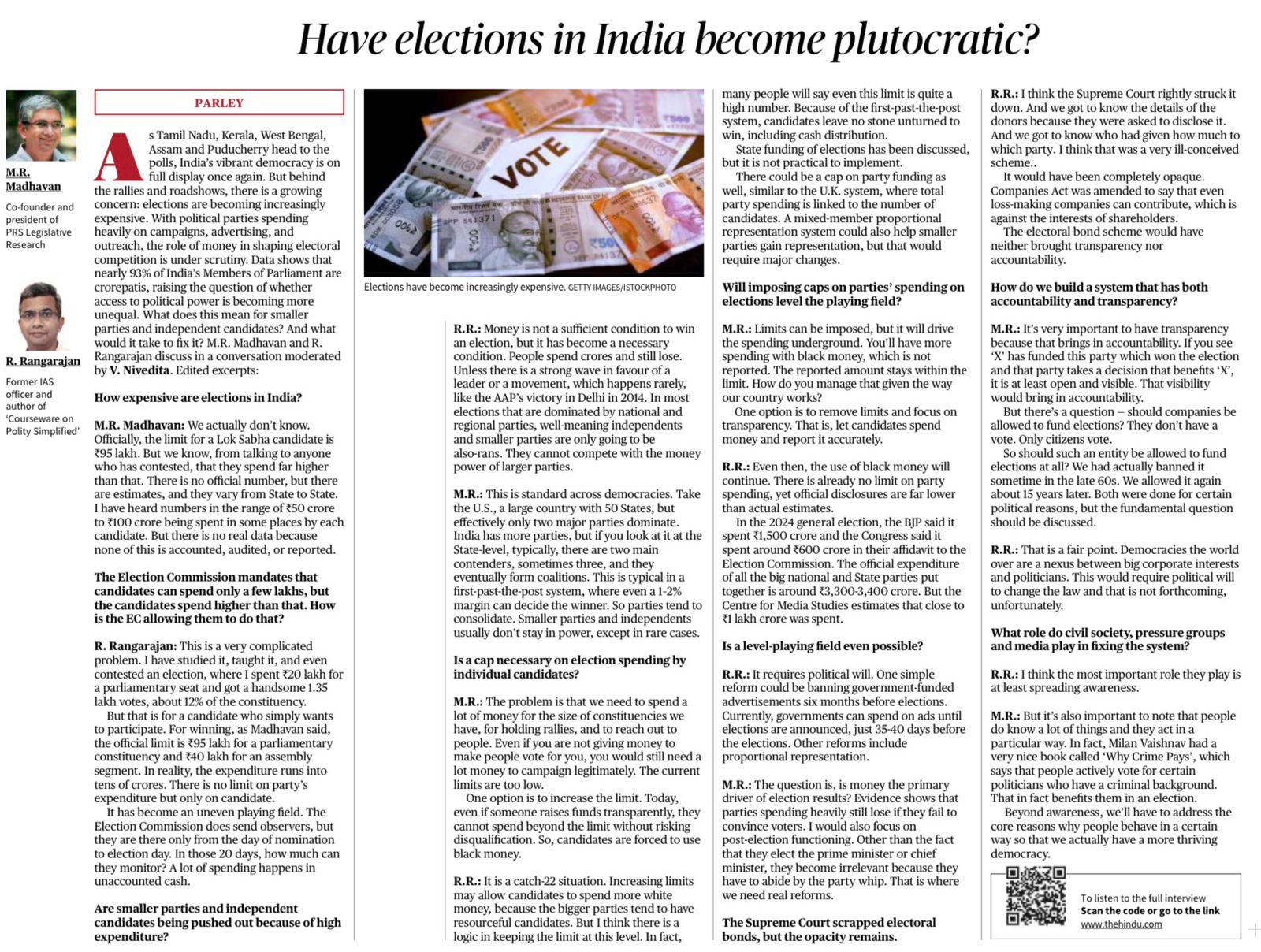
Rising election expenditure is making India’s electoral process increasingly money-driven, affecting fairness and equal competition.

Spending Reality

• Legal limit: ~₹95 lakh per parliamentary candidate
• Actual: ₹50–100 crore (estimates) → large unaccounted spending

Legal Framework

Representation of the People Act, 1951
• Section 77 → maintenance of election expenses
• Section 10A → disqualification for wrong accounts

Conduct of Elections Rules, 1961
• Rule 90 → fixes expenditure limits
• Election Commission of India → revises limits
• Gap: No cap on political party expenditure

Core Issues

• Low limits → black money usage
• Weak monitoring → spending before campaign unchecked
• Money becoming entry barrier (majority legislators wealthy)

Solutions

• Cap political party expenditure
• Ensure full transparency in funding sources
• Strengthen real-time monitoring by Election Commission
• Consider partial state funding of elections
Rising election costs in India
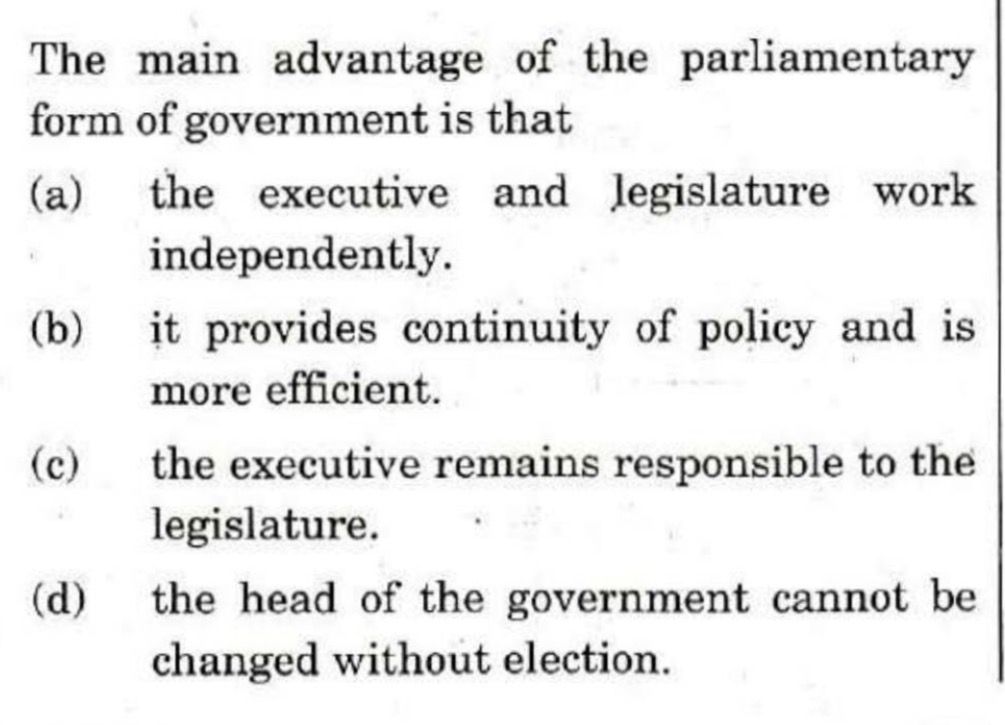
PYQ – 2017, Ans – C

India GDP growth forecast cut to 6.6% by World Bank

Context: India GDP growth forecast

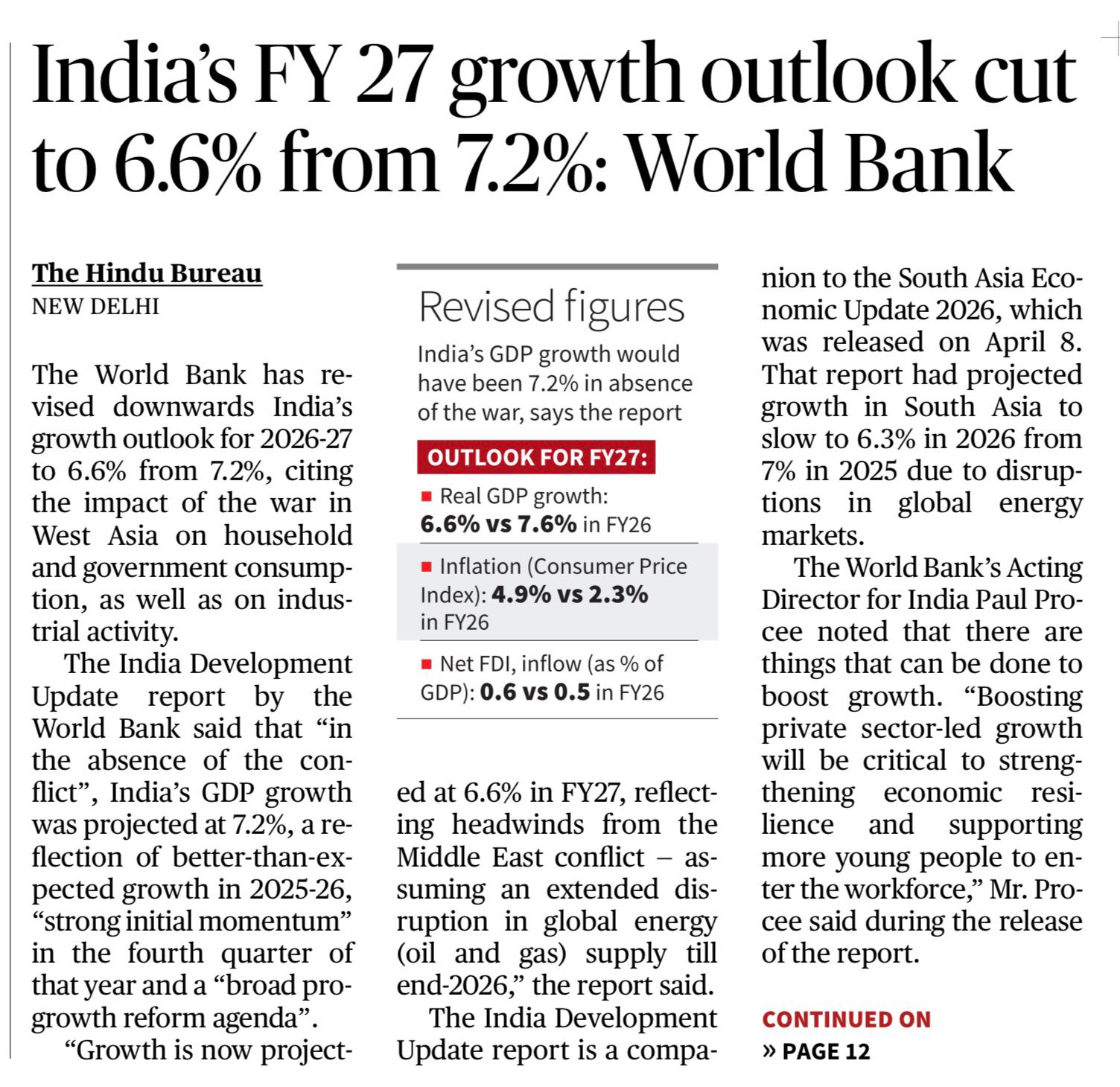
The World Bank in its India Development Update April 2026 has reduced India’s Gross Domestic Product growth estimate for Financial Year 2026–27 to 6.6 percent from 7.2 percent due to the West Asia conflict affecting energy supply and demand.

Growth Trend

• Financial Year 2026–27: 6.6 percent
• Earlier estimate: 7.2 percent
• Financial Year 2025–26: 7.6 percent
• Indicates slowdown after strong previous year

Reason for Slowdown

• West Asia conflict → disruption in oil and gas supply
• Higher energy prices → increased production cost
• Lower household consumption due to inflation
• Reduced government spending capacity
• Weak industrial activity

Nature of Slowdown

• Without conflict growth would be 7.2 percent
• Shows slowdown is external, not structural

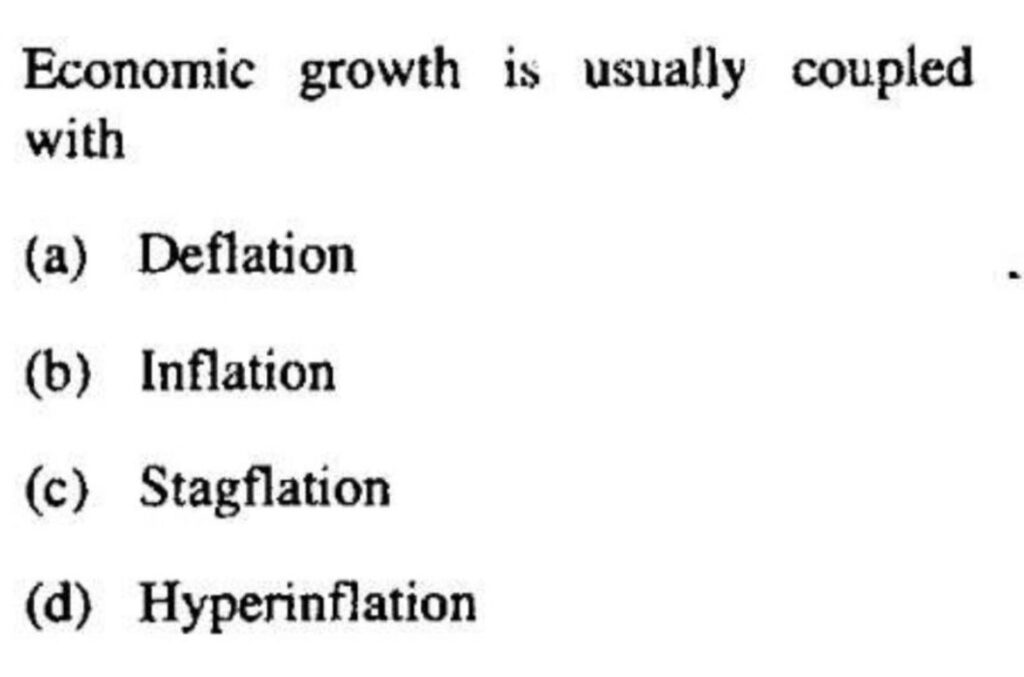
Inflation Situation

Consumer Price Index inflation: 4.9 percent
• Previous year: 2.3 percent
• Higher inflation reduces purchasing power

Investment Indicator

Foreign Direct Investment inflow: 0.6 percent of Gross Domestic Product
• Previous year: 0.5 percent
• Slight rise but still limited

India GDP growth forecast
PYQ – 2011, Ans – B

Quantum reference facility in India to be set up in Amaravati

Context: Quantum reference facility in India

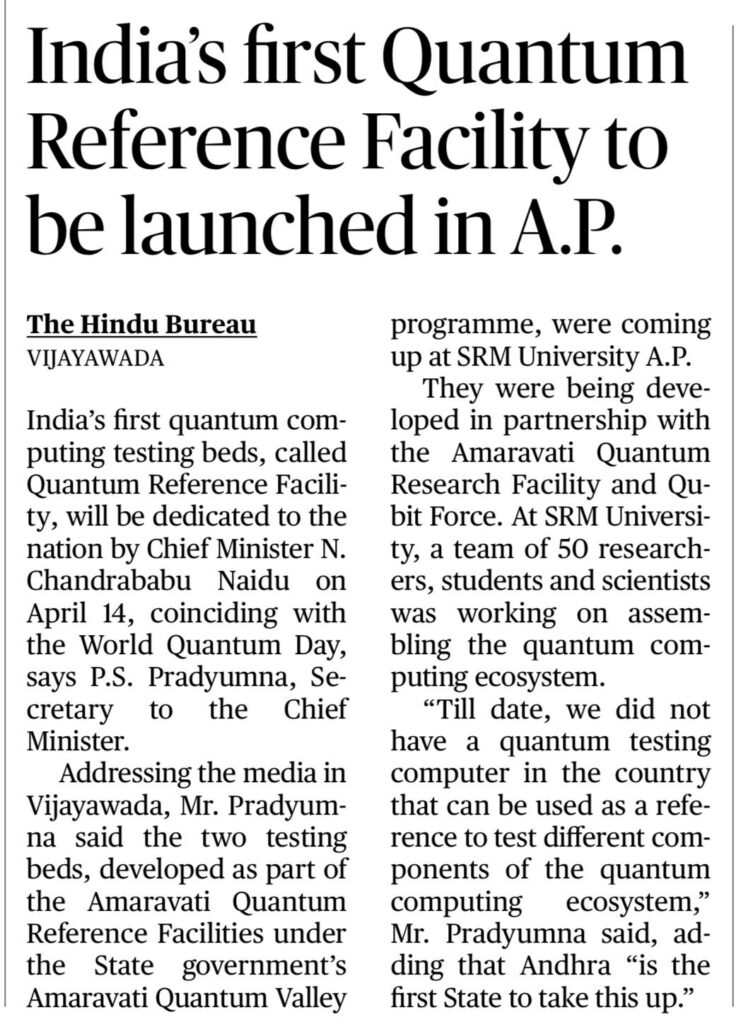
India is set to establish its first Quantum Reference Facility in Andhra Pradesh, which will act as a testing and validation platform for quantum computing technologies, strengthening the domestic quantum ecosystem.

What has happened

• First quantum computing testing beds in India
• Location: Amaravati, Andhra Pradesh
• Under Amaravati Quantum Valley programme
• Launch on April 14 (World Quantum Day)
• Around 50 researchers and scientists involved
• Collaboration with universities and quantum organisations

Why it is important

• India lacked a reference quantum system for testing

Enables:
• Testing of quantum hardware and components
• Development of indigenous quantum ecosystem
• Boost to research and innovation

Basics of Quantum Mechanics and Quantum Computing

• Quantum Mechanics: Study of matter and energy at atomic and subatomic level
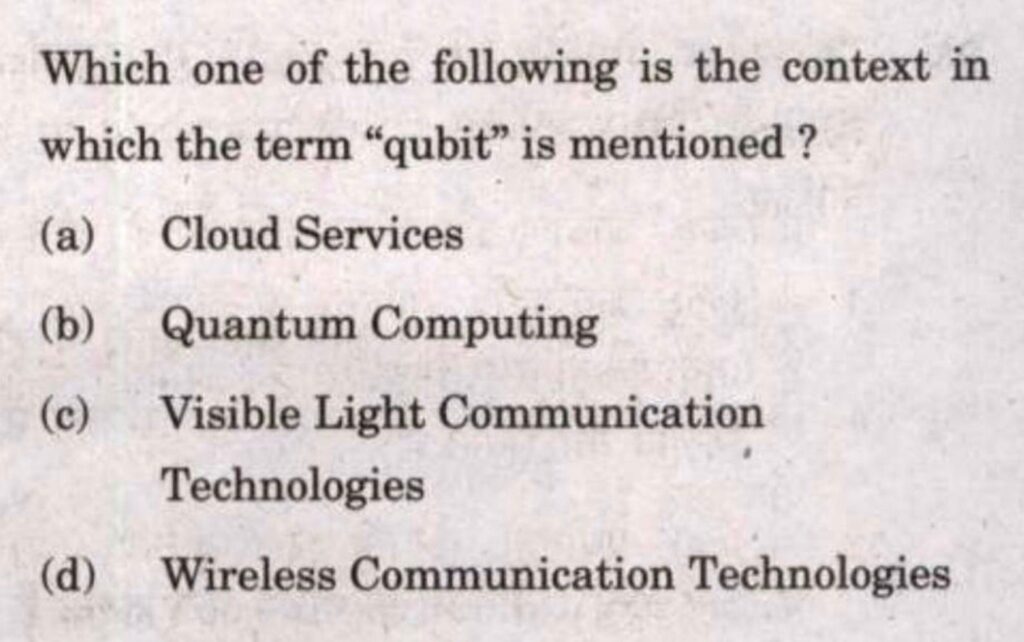
• Quantum Computing: Uses quantum principles for computation
• Unit: Quantum bit (qubit)
• Qubit can be 0 and 1 simultaneously
• Enables parallel processing and high-speed computation

Applications:
• Cryptography
• Drug discovery
• Climate modelling
• Artificial Intelligence

Quantum reference facility in India
PYQ – 2022, Ans –

CAPF administration law 2026 notified by Centre amid concerns

Context: CAPF administration law 2026

The government has notified the Central Armed Police Forces General Administration Act, 2026, after Presidential assent, amid protests by families and retired personnel who claim it affects service conditions and rights.

Key Changes in the Act

• Senior-level postings formalised
• Director General and Special Director General posts to be filled by Indian Police Service officers on deputation

Quota for deputation posts

• 50% posts at Inspector General level
• At least 67% posts at Additional Director General level
• Earlier: Such appointments were done through executive orders
• Now: Given statutory backing through law

Concerns Raised

• Reduces promotion avenues for cadre officers of Central Armed Police Forces

Affects:
• Career progression
• Service conditions
• Seen as undermining internal autonomy of forces

Conflict with Judicial Direction

Supreme Court of India (May 2025)
• Directed gradual reduction of Indian Police Service deputation in Central Armed Police Forces
• New law seen as reversing this direction

Government’s Justification

• Need for uniform administrative structure across forces
• Ensuring experienced leadership through Indian Police Service officers
• Bringing clarity and consistency by replacing executive orders with law

CAPF administration law 2026

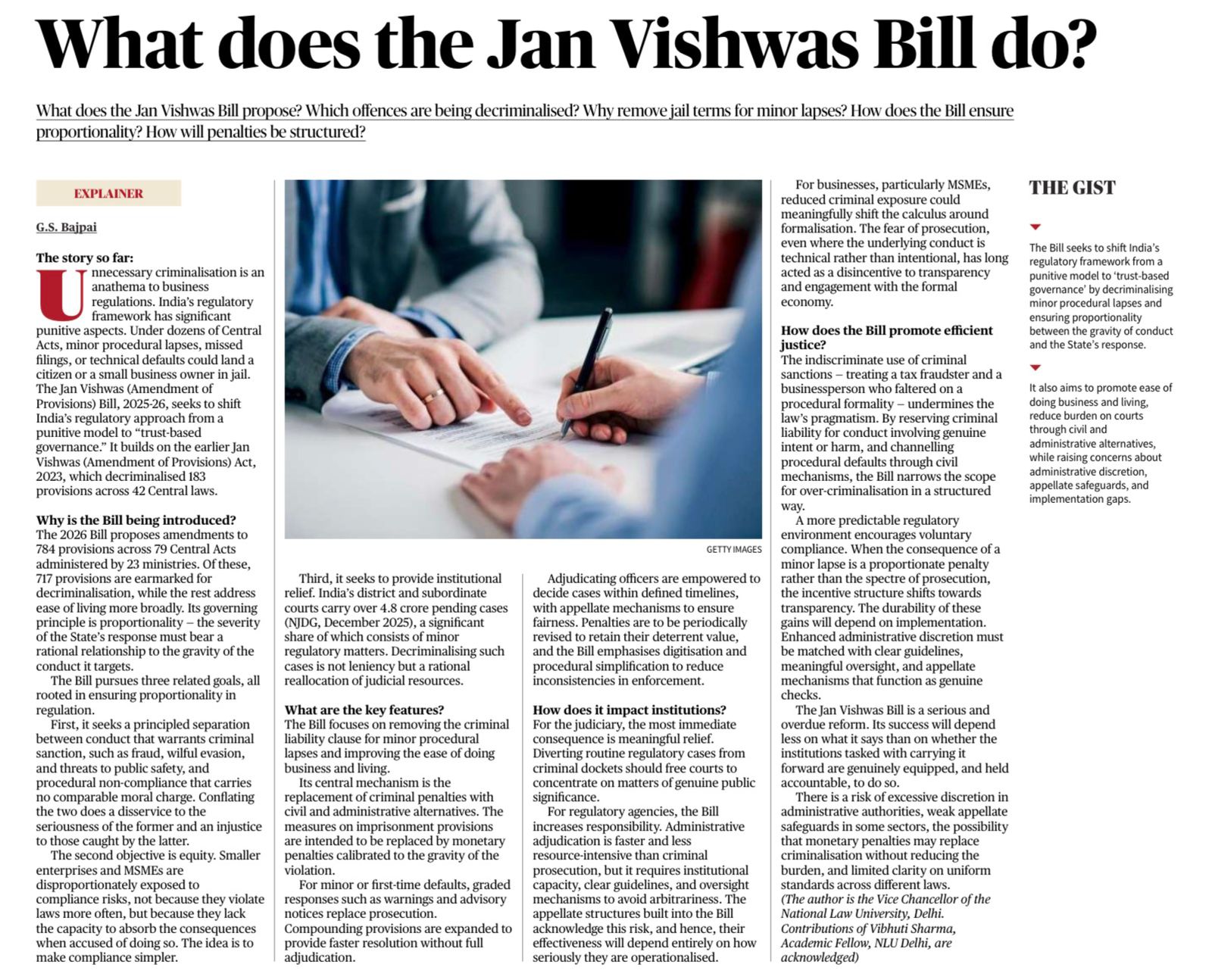
Jan Vishwas Bill 2025 promotes decriminalisation of minor offences

Context: Jan Vishwas Bill 2025

The Jan Vishwas Bill, 2025–26 aims to decriminalise minor offences and promote a trust-based, proportionate regulatory system.

Scale and Nature of Reform

• ~717 provisions across 79 Central Acts
• Minor procedural lapses → monetary / civil penalties instead of jail
• Graded penalties introduced

Key Examples

Corporate compliance
• Companies Act, 2013
• Filing delays → penalty

Environmental compliance
• Environment Protection Act, 1986
• Procedural violations → financial penalty

Consumer / trade rules
• Legal Metrology Act, 2009
• Labelling defects → civil offence

Concerns / Issues

• Increased administrative discretion
• Weak appellate safeguards in some cases
• Risk of penalties without reducing compliance burden

Jan Vishwas Bill 2025
About the UPSC Civil Services Examination (UPSC CSE)

The UPSC Civil Services Examination (CSE) is one of the most competitive and esteemed examinations in India, conducted by the Union Public Service Commission to recruit officers for services such as the Indian Administrative Service (IAS), Indian Police Service (IPS), Indian Foreign Service (IFS), and others. The exam comprises three stages — Prelims, Mains, and the Personality Test (Interview) — designed to test a candidate’s knowledge, aptitude, decision-making, and leadership skills.


How to Prepare Effectively for UPSC CSE

Cracking the UPSC CSE requires a deep understanding of the syllabus, consistent revision, structured answer writing, and smart test-taking strategies. The Prelims test analytical and conceptual clarity, the Mains focuses on critical thinking, articulation, and subject mastery, while the Interview assesses presence of mind, ethical judgment, and personality traits relevant to public service.

At UnderStand UPSC, we empower aspirants with a personalized and focused approach to each stage of the exam.


Why Choose UnderStand UPSC?

UnderStand UPSC is a mentorship-driven platform offering a clear, clutter-free strategy to tackle the Civil Services Examination. Our programs like Transform (for beginners and intermediate learners) and Conquer (for advanced mains preparation) provide structured study plans, syllabus-wise video content, interactive live sessions, and answer writing support.

We emphasize:

  • Concept clarity through topic-wise lectures

  • Test series designed around real UPSC standards

  • Personalized mentorship in small groups

  • Regular performance tracking and peer benchmarking

  • Doubt-clearing sessions, current affairs analysis, and monthly magazines


Join the UnderStand UPSC Learning Community

Our mission is to make UPSC preparation less overwhelming and more strategic. We combine mentorship, discipline, and academic rigor to help you clear CSE with confidence. Whether you’re preparing from Delhi, Mumbai, Bangalore, or a remote village — our online-first model ensures quality guidance reaches every corner of India.

Join the thousands of aspirants who trust UnderStand UPSC to guide their journey toward becoming civil servants.

Stay connected with us through our Telegram, YouTube, and Instagram channels for daily tips, strategies, and updates.

Copyright © 2026 USARAMBHA EDUCATION (UnderStand UPSC). All Rights Reserved.

Join the Success Journey!