Tobacco and Poverty in India: 10% Households Can Rise Economically, Study Finds
Context: Tobacco and Poverty in India
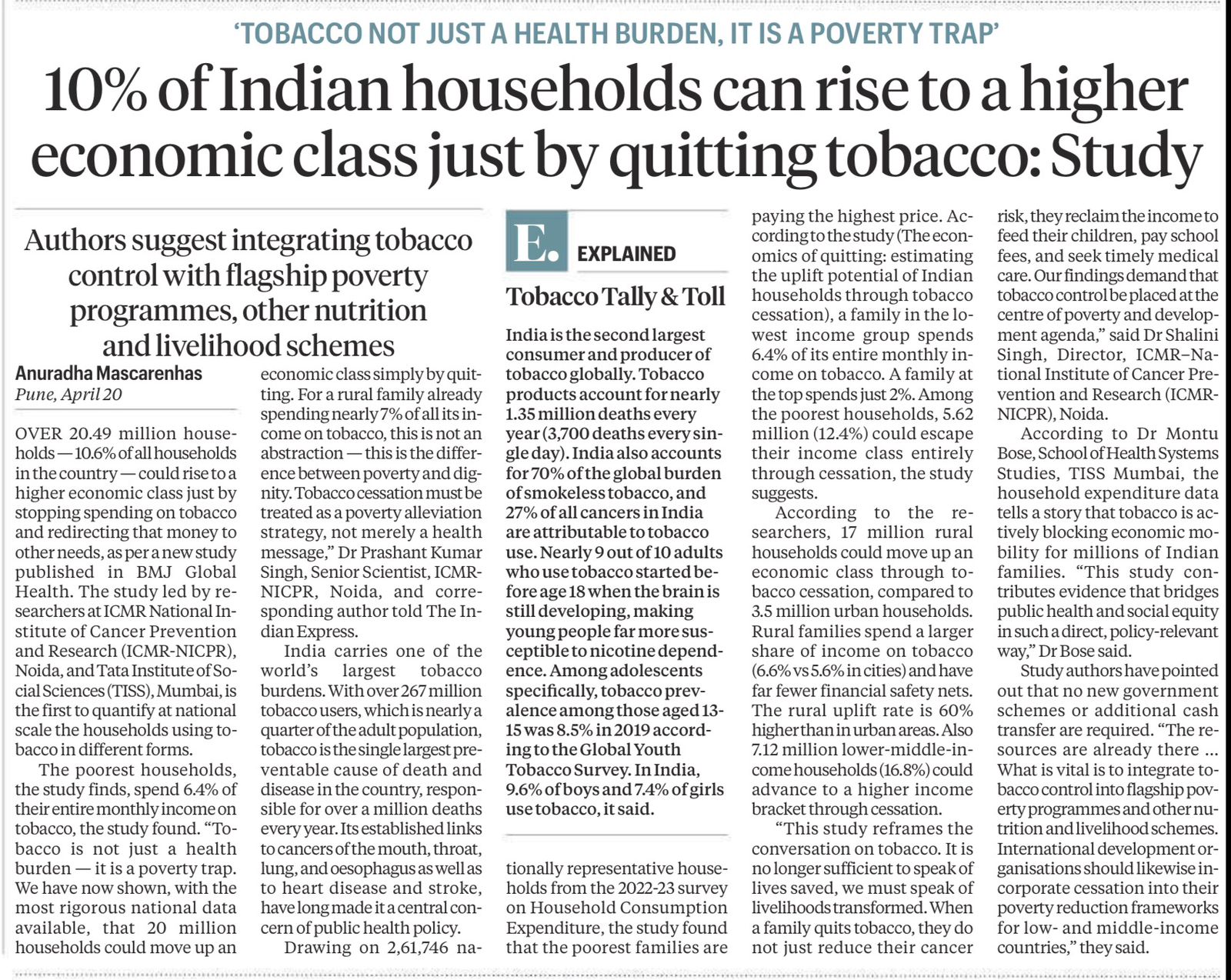
A study published in BMJ Global Health by researchers from ICMR-NICPR and TISS finds that around 10% of Indian households can move to a higher economic class by quitting tobacco, highlighting tobacco as a major economic burden.
Core Idea
Tobacco is not just a health issue but a poverty trap — money spent on tobacco reduces spending on essentials like food, education, and healthcare, especially among poorer households.
Key Data
- ~20.49 million households (10.6%) can move up economically by quitting tobacco
- Poorest households spend ~6.4% of monthly income on tobacco
- 5.62 million poorest households (12.4%) could escape poverty entirely
- 17 million rural households vs 3.5 million urban households can move up
- Rural uplift potential is ~60% higher than urban
- India has ~267 million tobacco users
- Tobacco causes ~1.35 million deaths annually
Key Insights
- Tobacco expenditure directly reduces disposable income of the poor
- Quitting leads to better nutrition, education, and healthcare spending
- Rural households are more vulnerable due to higher spending share
- Tobacco also blocks intergenerational mobility
- It links public health with economic development
Policy Suggestion
- Integrate tobacco control with poverty alleviation schemes
- Link with nutrition and livelihood programmes
- No major new spending needed — just policy convergence