Learn the best UPSC 2027 Preparation Strategy for Beginners After 12th & Graduation with the right study plan, books, current affairs, answer writing, mentorship, and PYQ approach.
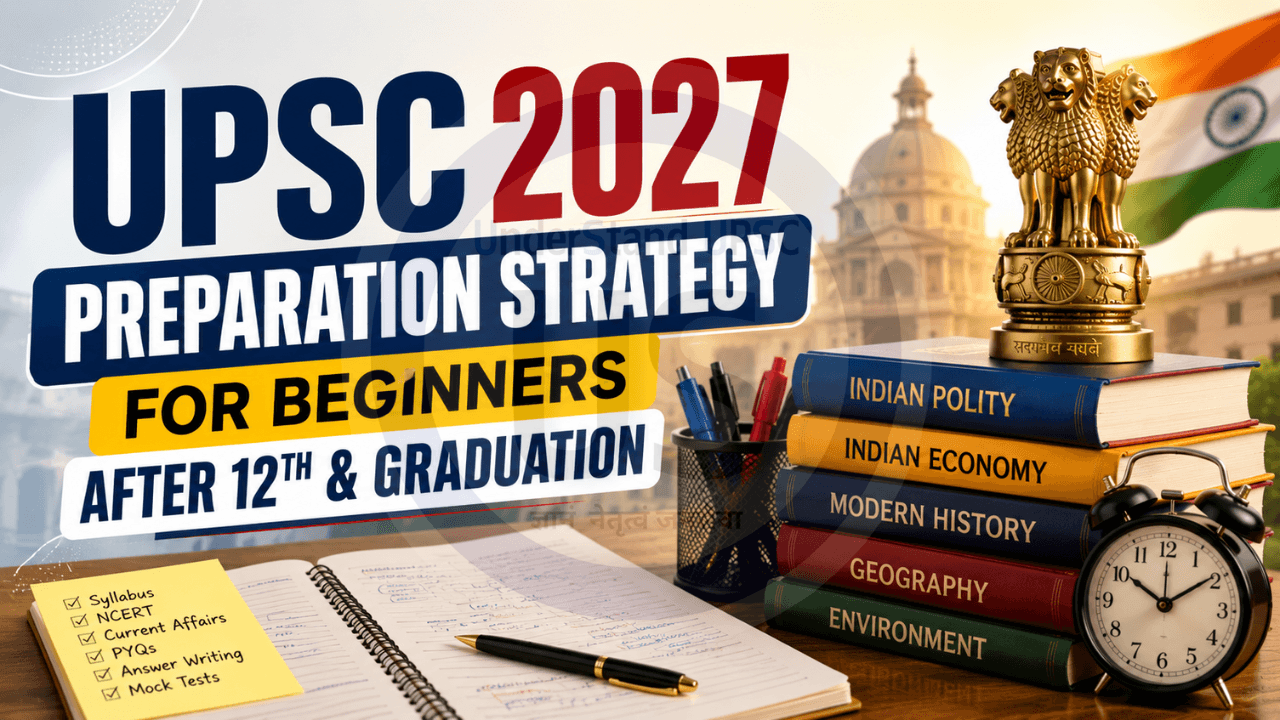
Starting UPSC preparation can feel confusing in the beginning. Many aspirants do not know which books to read, how to make notes, how many hours to study, or how to prepare for both Prelims and Mains together. This confusion is normal, especially for beginners who are starting from zero level after 12th or graduation.
The good thing is that UPSC preparation does not require extraordinary intelligence. It requires consistency, the right guidance, a proper study plan, and patience over a long period of time.
If you are planning to prepare for UPSC CSE 2027, this guide will help you understand how to begin your preparation in a practical and structured way.
Understand the UPSC Exam First
Before starting preparation, understand the structure of the UPSC Civil Services Examination.
The exam has three stages:
1. UPSC Prelims
- Objective type exam
- GS Paper 1 + CSAT
- Qualifying nature for Mains
2. UPSC Mains
- Descriptive written examination
- Essay, Ethics, GS Papers, Optional Subject
3. Personality Test
- UPSC Interview round
Many beginners directly start reading random materials without understanding the exam demand. This creates confusion later. Spend a few days understanding the syllabus and previous year questions first.
Start with NCERT Books
For beginners after 12th and graduation, NCERT books are the best starting point.
Focus on:
- History
- Geography
- Polity
- Economy
- Environment
- Science
NCERTs help build conceptual clarity. They also make advanced books easier to understand later.
Do not rush to complete too many books in the beginning. One reading with proper understanding is far better than collecting resources.
Read Current Affairs Daily
Current affairs play a major role in both Prelims and Mains.
Many students make the mistake of reading too many sources every day. Instead, follow limited and reliable resources consistently.
Focus on:
- National issues
- Government schemes
- International relations
- Economy
- Environment
- Social issues
- Science and technology
The best approach is to connect current affairs with static subjects. This improves answer writing and conceptual understanding.
Follow a Structured Study Plan
One of the biggest reasons aspirants lose consistency is the absence of a proper timetable.
A balanced study routine should include:
- Static subjects
- Current affairs
- Revision
- Answer writing
- PYQ analysis
- Mock tests
A structured foundation program helps students avoid unnecessary confusion and maintain preparation discipline from the beginning.
The SUCCESS “TRUE” Foundation Program is designed for beginners preparing for UPSC 2027 and 2028. The program covers both Prelims and Mains preparation with integrated current affairs, mentorship, answer writing, and PYQ-oriented learning. It is available in both Online and Offline modes.
Importance of PYQs in UPSC Preparation
Previous Year Questions help students understand:
- UPSC question trends
- Important themes
- Subject priority
- Answer presentation
Many toppers repeatedly mention that PYQ analysis is one of the most important parts of UPSC preparation.
Instead of blindly reading content, students should study according to UPSC demand.
Start Answer Writing Early
Many aspirants delay answer writing practice for too long. This becomes a major problem during Mains preparation.
Answer writing helps improve:
- Structure
- Time management
- Presentation
- Analytical thinking
- Content application
Even beginners should gradually start writing small answers after completing basic subjects.
The SUCCESS Foundation Program includes answer-writing practice, expert evaluation, and discussions after tests to help students improve gradually.
Guidance and Mentorship Matter
UPSC preparation is a long journey. During preparation, students often face:
- Self-doubt
- Lack of consistency
- Burnout
- Confusion regarding strategy
Good mentorship helps aspirants stay focused and disciplined.
The program includes weekly mentorship, interaction with rankers, and mindset sessions conducted by experienced mentors and psychologists.
Learn from Experienced Faculty
Guidance from experienced educators can save a lot of preparation time.
The faculty team includes:
- Satyam Sir
- Atish Mathur Sir
- Mudit Jain Sir
- C.P. Kaushik Sir
- Kirthika Ma’am
- Dr. Kapil Sir
- Dhruv Jain Sir
- Neha Ma’am
- Disha Ma’am
- Ankit Sir
The focus remains on conceptual clarity, exam-oriented preparation, and consistent improvement.
Avoid Common Beginner Mistakes
Reading Too Many Sources
Limited resources with multiple revisions work better.
Ignoring Revision
Revision is essential for retention.
Studying Without PYQs
Preparation without PYQ analysis becomes directionless.
Delaying Mock Tests
Tests improve speed, accuracy, and confidence.
Comparing with Others
Every aspirant has a different preparation journey.
Final Thoughts
Starting UPSC preparation after 12th or graduation may feel difficult initially, but with proper planning and consistency, the journey becomes manageable.
Do not focus only on studying for long hours. Focus on understanding concepts, regular revision, answer writing, and maintaining consistency every day.
UPSC is not a sprint. It is a long process that rewards discipline, patience, and smart preparation.
If you start early for UPSC 2027 and follow a structured strategy from the beginning, you can build a strong foundation for both Prelims and Mains examination.
Learn the best UPSC 2027 Preparation Strategy for Beginners After 12th & Graduation with the right study plan, books, current affairs, answer writing, mentorship, and PYQ approach. Register Now