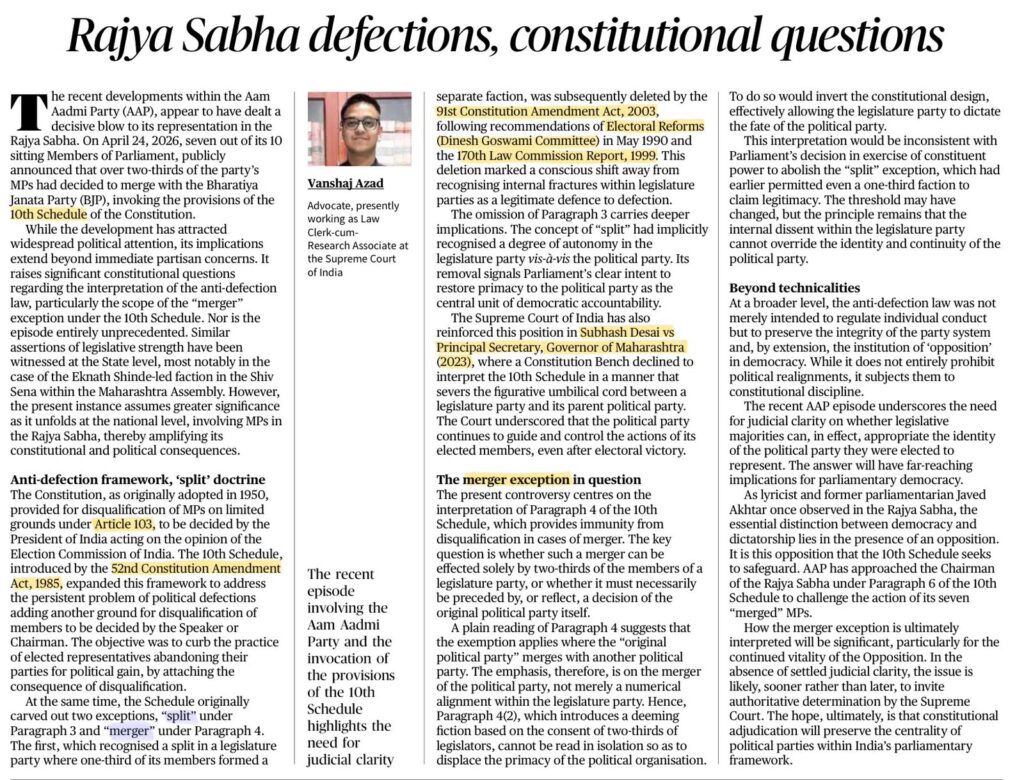
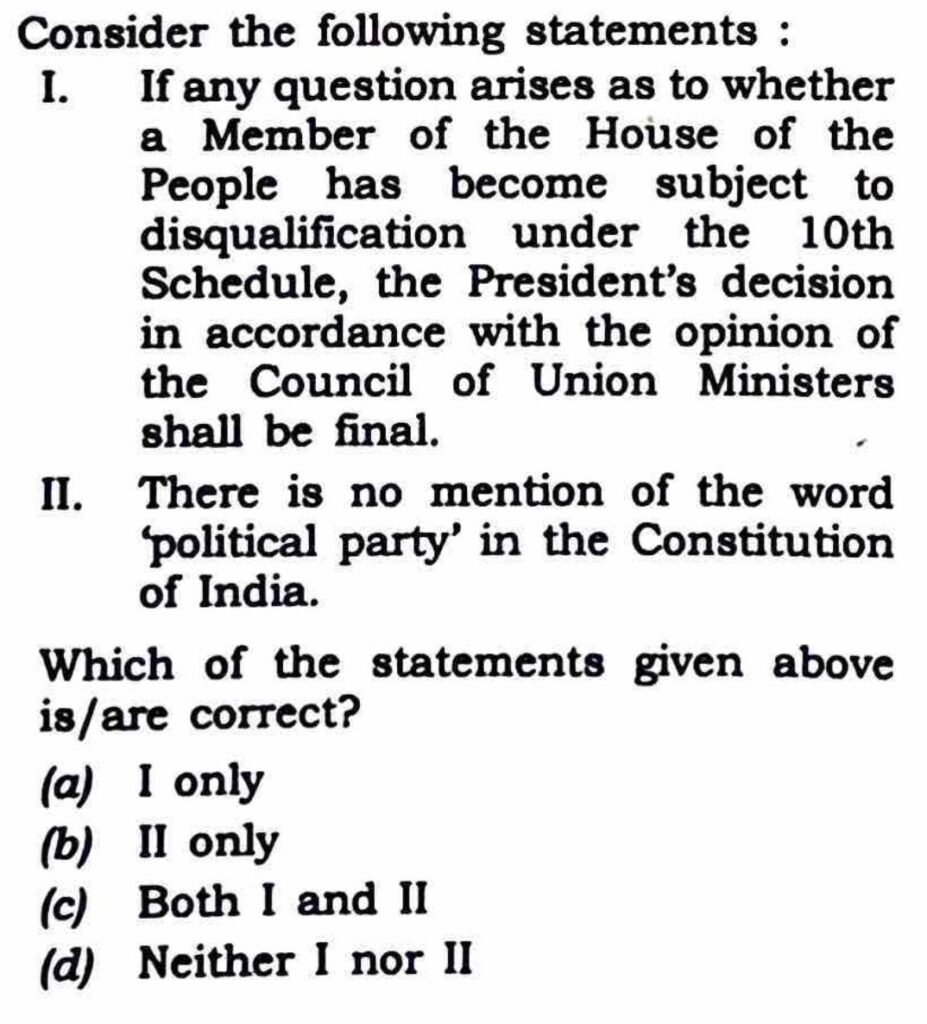
Context:Anti Defection Law
The article discusses constitutional issues after some AAP Rajya Sabha MPs invoked the “merger” provision of the Tenth Schedule while joining another party.
Anti-Defection Law
- Added by 52nd Constitutional Amendment Act, 1985.
- Inserted the Tenth Schedule.
- Aim: prevent political defections and maintain party discipline.
- Disqualification decided by Speaker / Chairman.
Grounds of Disqualification
- Leaving party voluntarily.
- Voting against whip.
- Independent member joining party after election.
- Nominated member joining party after 6 months.
Split vs Merger
Originally:
- Split under Para 3: One-third members splitting got protection.
- Merger under Para 4: Protection if two-thirds members support merger.
91st Constitutional Amendment Act, 2003
- Deleted split provision.
- Retained only merger exception to curb misuse.
Committees Mentioned
- Dinesh Goswami Committee, 1990
- 170th Law Commission Report, 1999
Both recommended removing the split exception.
Core Constitutional Issue
- Can two-thirds MPs alone claim merger?
- Or must original political party also formally merge?
Article stresses:
- Legislature party ≠ original political party.
- Mere numerical strength may not qualify as valid merger.
Supreme Court Judgment
Subhash Desai vs Principal Secretary, Governor of Maharashtra, 2023
- Supreme Court upheld primacy of original political party under Tenth Schedule.
Importance
- Impacts anti-defection law, party discipline, opposition politics and parliamentary stability.