White-rumped Vulture conservation programme explained
Context: White-rumped Vulture conservation programme
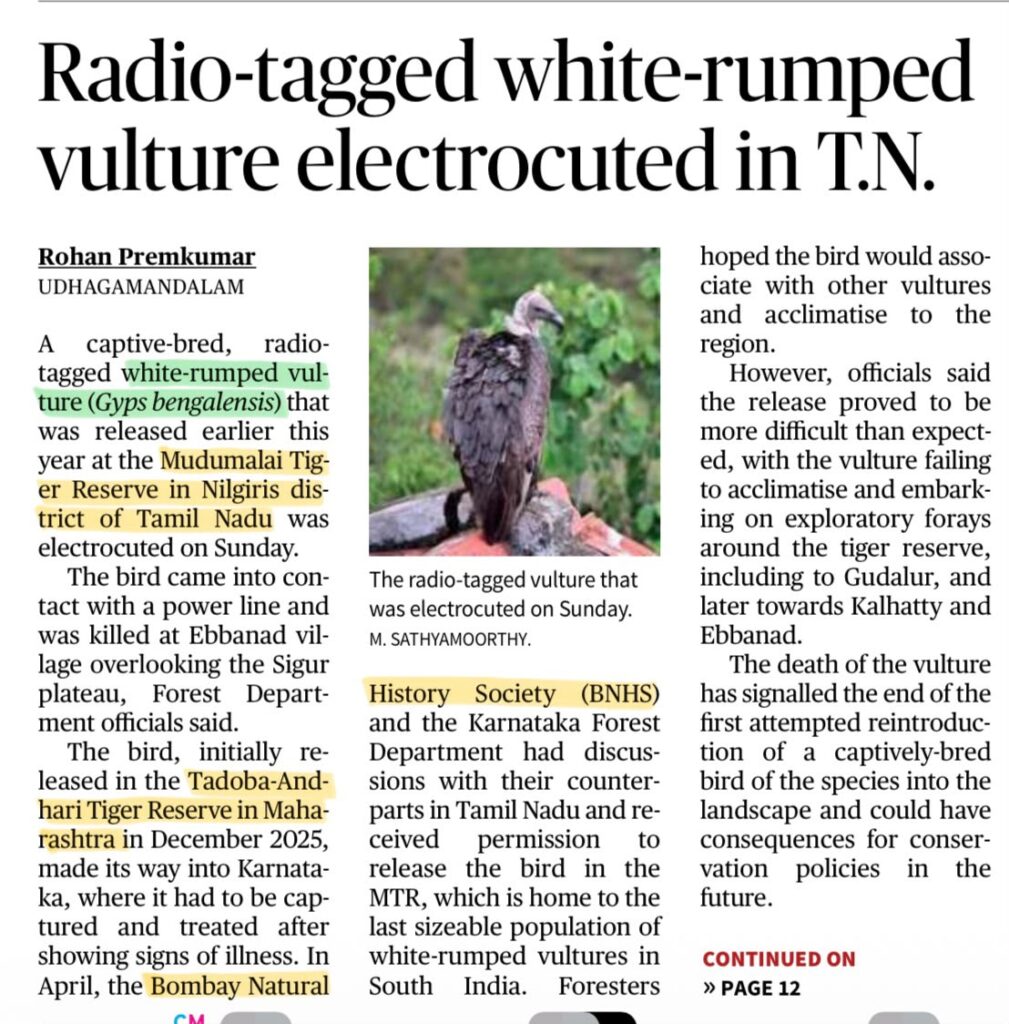
A radio-tagged, captive-bred White-rumped Vulture released under India’s Vulture Conservation Breeding Programme at Mudumalai Tiger Reserve, Tamil Nadu, died after colliding with a power line.
This highlights the need for safer infrastructure to support vulture reintroduction and recovery.
White-rumped Vulture
Scientific Name
- Gyps bengalensis
Classification
Family
- Accipitridae
IUCN Status
- Critically Endangered
Wildlife Protection Act, 1972
- Schedule I
- Appendix II
Ecological Role
Vultures act as nature’s scavengers.
They help by:
- Removing animal carcasses
- Preventing spread of zoonotic diseases
- Maintaining ecological sanitation
- Reducing risks from feral dog populations around carcasses
Major Threats
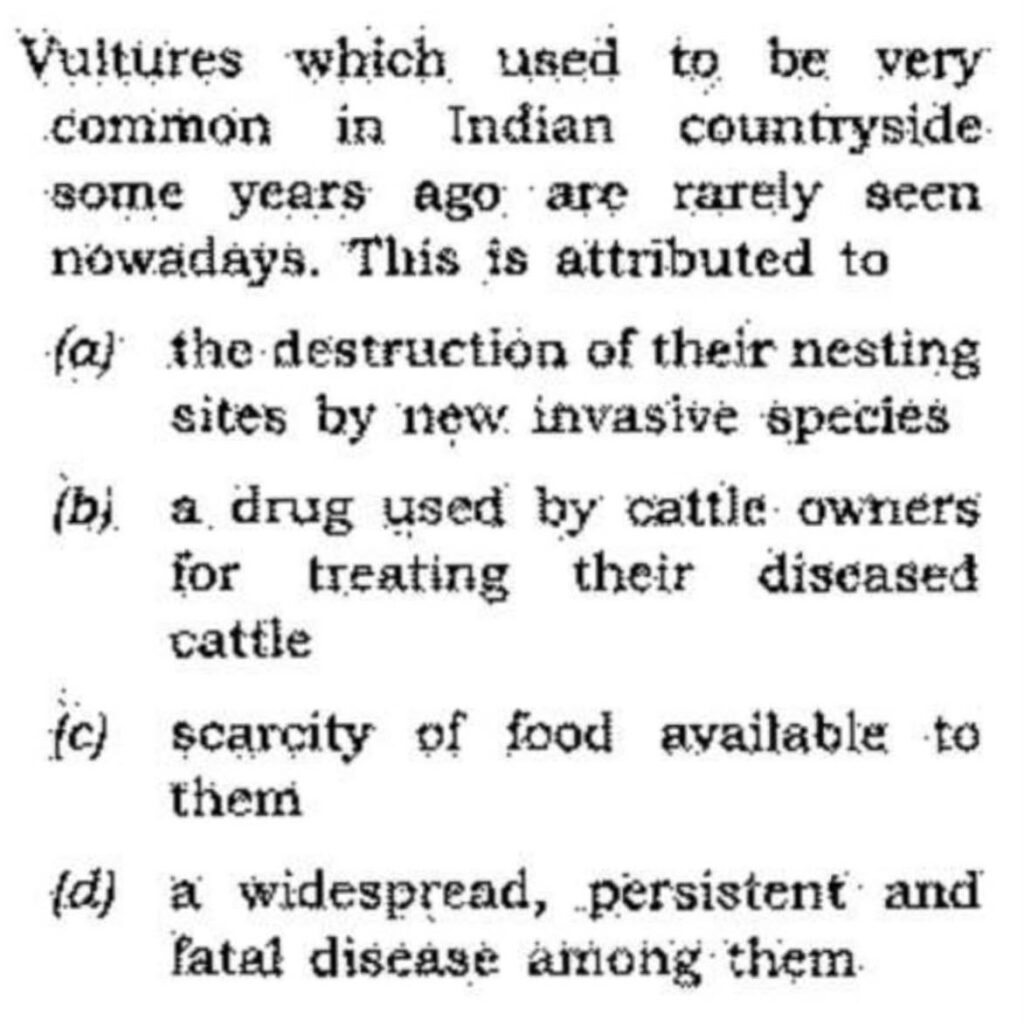
- Veterinary Diclofenac
- Electrocution
- Poisoning
- Habitat degradation
- Food scarcity
Vultures in India
India has 9 vulture species.
Critically Endangered
- White-rumped Vulture
- Indian Vulture
- Slender-billed Vulture
- Red-headed Vulture
Endangered
- Egyptian Vulture
Near Threatened
- Himalayan Griffon
- Cinereous / Black Vulture
- Bearded Vulture / Lammergeier
Least Concern
- Griffon Vulture
Vulture Conservation Programme in India
Launched
- 2004
Programme
- Vulture Conservation Breeding Programme
Implemented By
- Ministry of Environment, Forest and Climate Change
- Central Zoo Authority
- Bombay Natural History Society
- State Forest Departments
Focus Areas
- Captive breeding
- Reintroduction
- Vulture Safe Zones
- Radio / satellite tagging
- Diclofenac-free landscapes
- Promotion of Meloxicam
Policy Framework
- Action Plan for Vulture Conservation in India, 2020–2025
Protected Areas in News
Mudumalai Tiger Reserve
- Located in Tamil Nadu.
- Part of the Nilgiri Biosphere Reserve.
- Important breeding landscape for White-rumped Vultures.
- Site of recent vulture reintroduction.
Tadoba-Andhari Tiger Reserve
- Located in Maharashtra.
- Important source population for captive breeding and reintroduction of White-rumped Vultures.
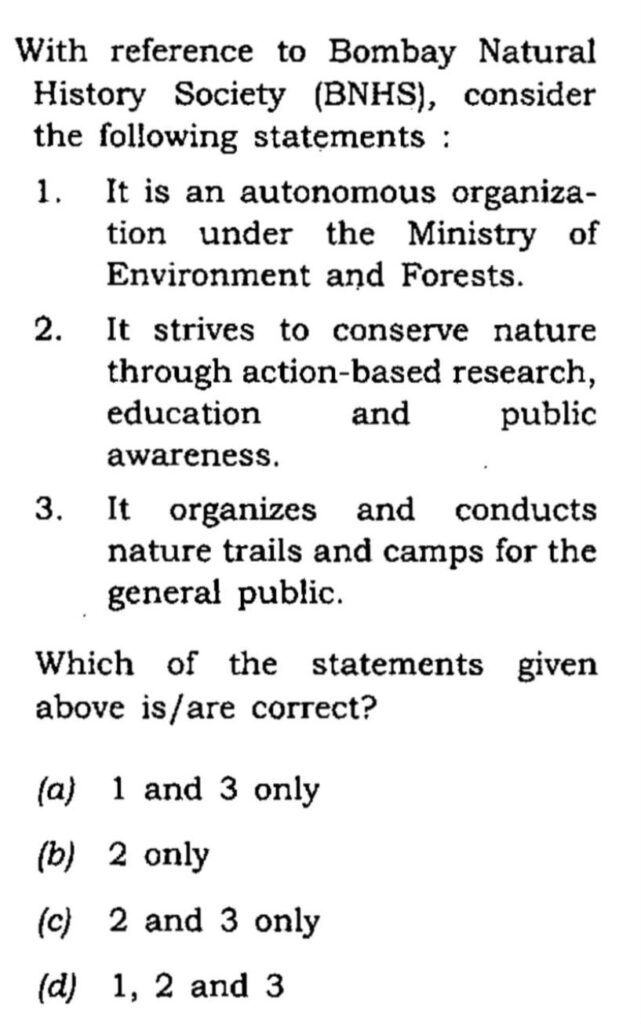
Bombay Natural History Society
Established
- 1883
Headquarters
- Mumbai
Nature
- India’s oldest non-governmental scientific conservation organisation.
Functions
- Biodiversity research
- Species conservation
- Environmental education
- Technical partner in vulture conservation and national wildlife recovery programmes
PYQ Link
The sharp decline of vultures in India is primarily attributed to Diclofenac, a drug used by cattle owners for treating diseased cattle.