Context
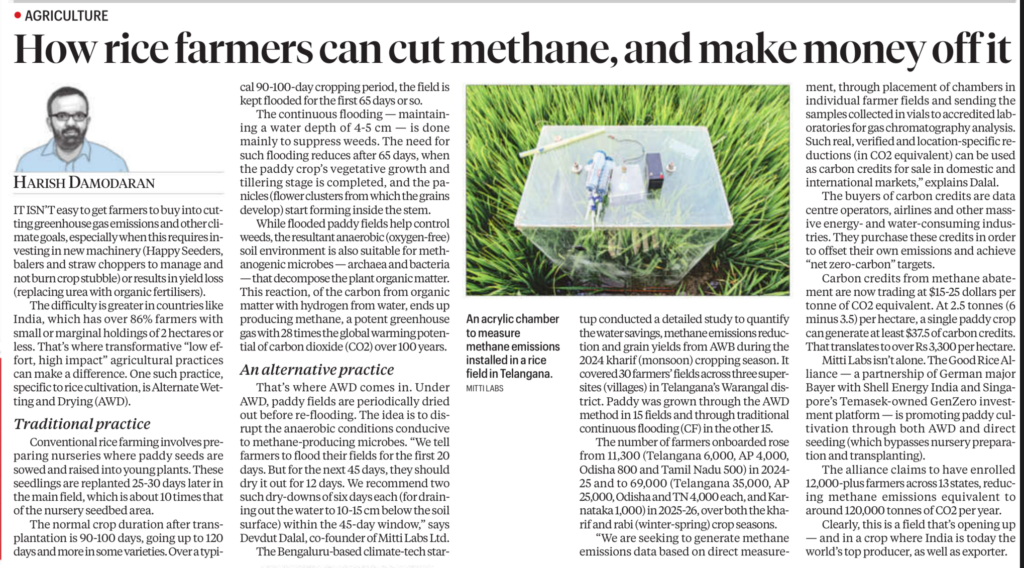
India’s rice cultivation is a major source of methane emissions due to traditional continuous flooding of paddy fields. As methane is a high-impact greenhouse gas, reducing emissions from agriculture has become essential for India’s climate commitments, water conservation, and sustainable farming, without hurting farmer incomes.
What is AWD?
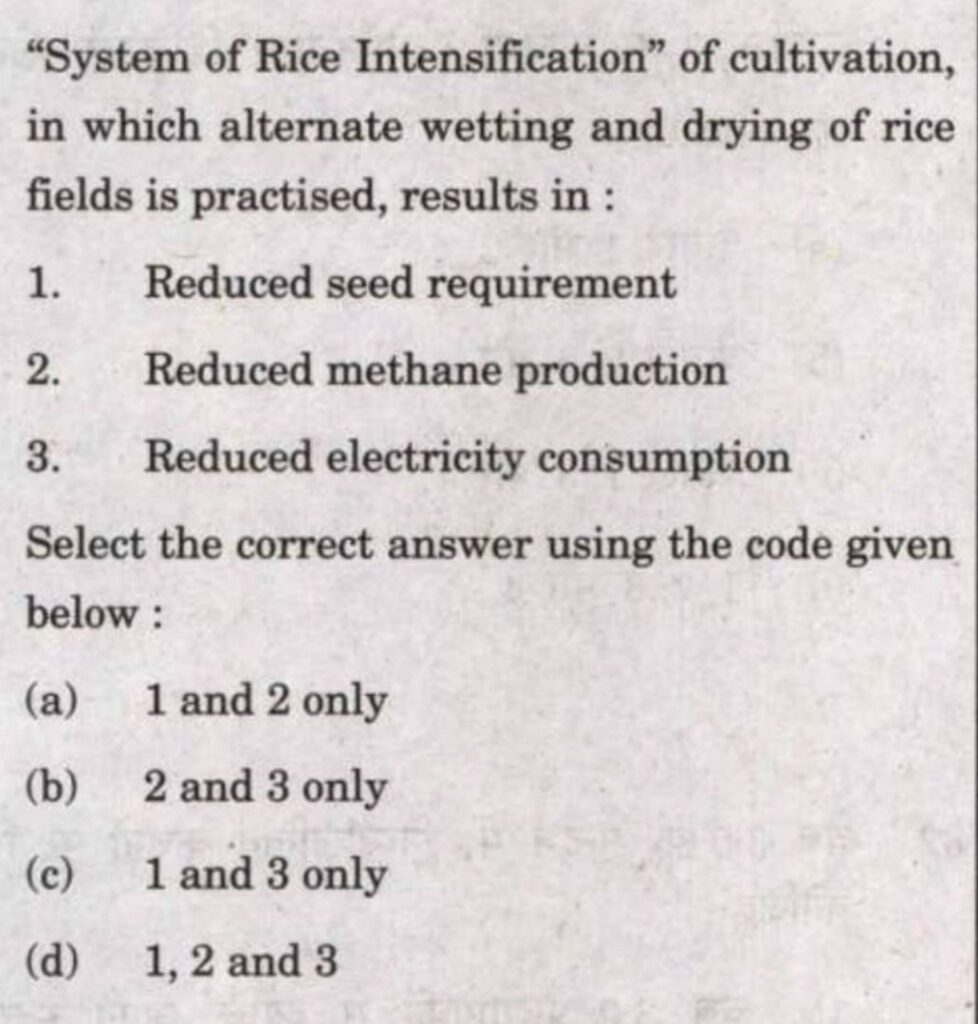
Alternate Wetting and Drying (AWD) is a water-management practice in rice farming where fields are not kept continuously flooded, but are allowed to dry intermittently before re-irrigation.
Why AWD is proposed
- Continuous flooding → oxygen-free (anaerobic) soil
- Anaerobic microbes → methane production
- AWD introduces oxygen into soil, disrupting methane-producing microbes
How AWD works
- Normal flooding in early growth stage
- Later, water level allowed to fall 10–15 cm below soil surface
- Field re-flooded after drying
- Cycle repeated till flowering stage
Outcomes
- Reduces methane emissions
- Saves water
- No yield loss when properly implemented
- Emission reductions can generate carbon credits, giving farmers additional income