Carbon Capture, Hard-to-Abate Sectors & EU Bioeconomy Strategy
1) Context
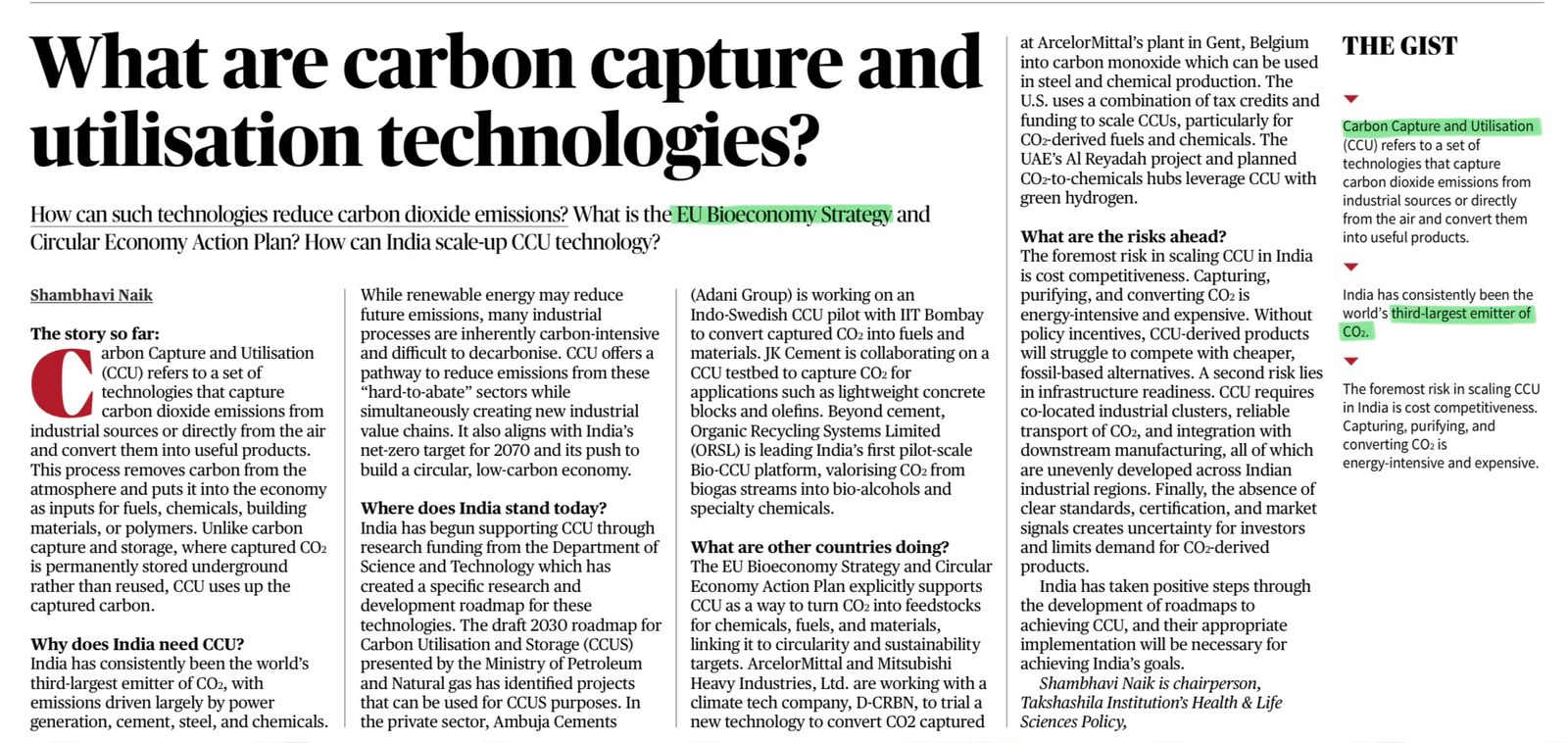
India, the world’s third-largest CO₂ emitter, faces rising industrial emissions from cement, steel, power and chemicals. Since these sectors cannot be rapidly decarbonised through renewables alone, Carbon Capture and Utilisation (CCU) is being examined as a transition tool alongside India’s 2070 net-zero target.
2) Carbon Capture & Utilisation (CCU)
CCU captures CO₂ from industrial sources (or directly from air) and converts it into fuels, chemicals, construction materials or other products.
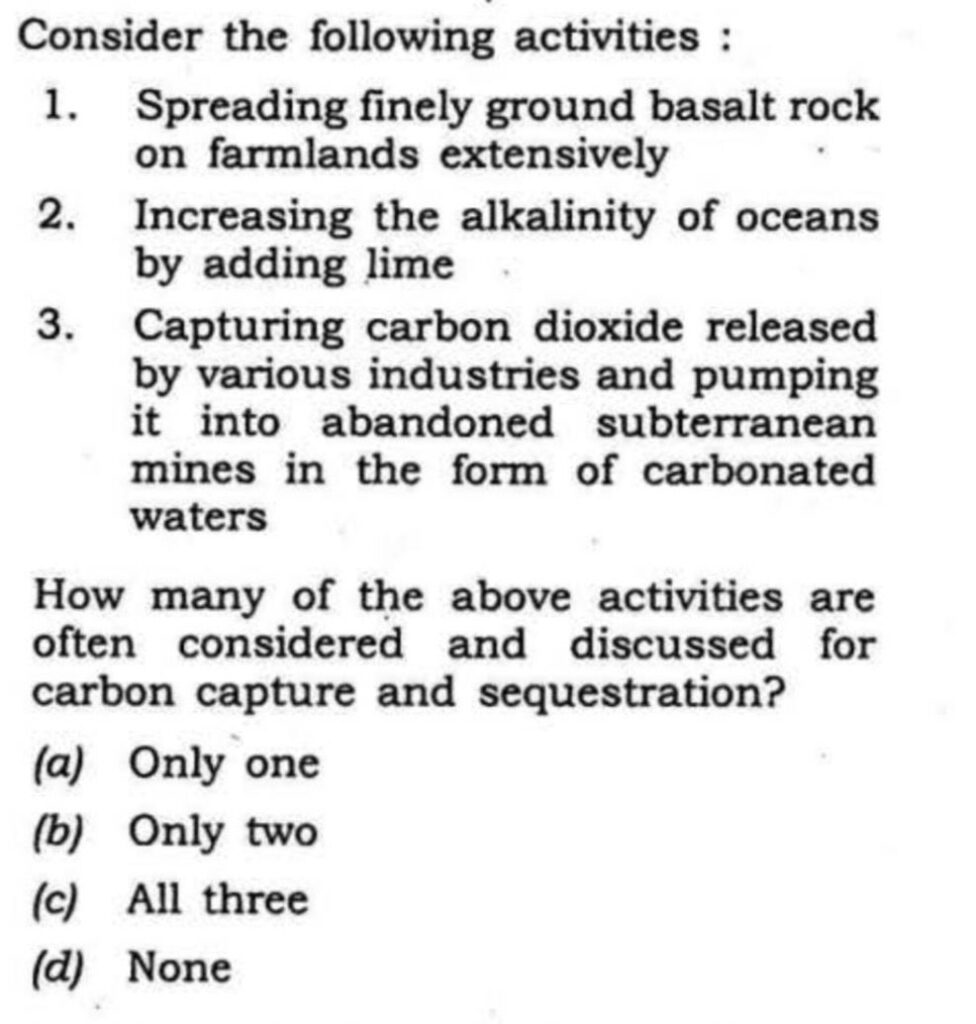
• CCS: storage underground.
• CCU: reuse in economic value chains.
3) What are Hard-to-Abate Sectors?
Industries where emissions arise from chemical processes or high-temperature operations, not just fuel use:
• Cement (limestone calcination),
• Steel (coke in blast furnaces),
• Chemicals & fertilisers (fossil feedstock),
• Refineries.
These emissions are structurally difficult to eliminate without capture technologies.
4) India’s Position
• R&D support and draft CCUS roadmap (2030).
• Pilot projects in cement and bio-CCU.
• Key constraints: high cost, energy intensity, infrastructure and policy support gaps.
The EU Bioeconomy Strategy promotes replacing fossil-based systems with bio-based and circular production. It supports using captured CO₂ as feedstock for fuels, chemicals and materials, linking climate action with industrial transformation under the EU Circular Economy framework.