Context
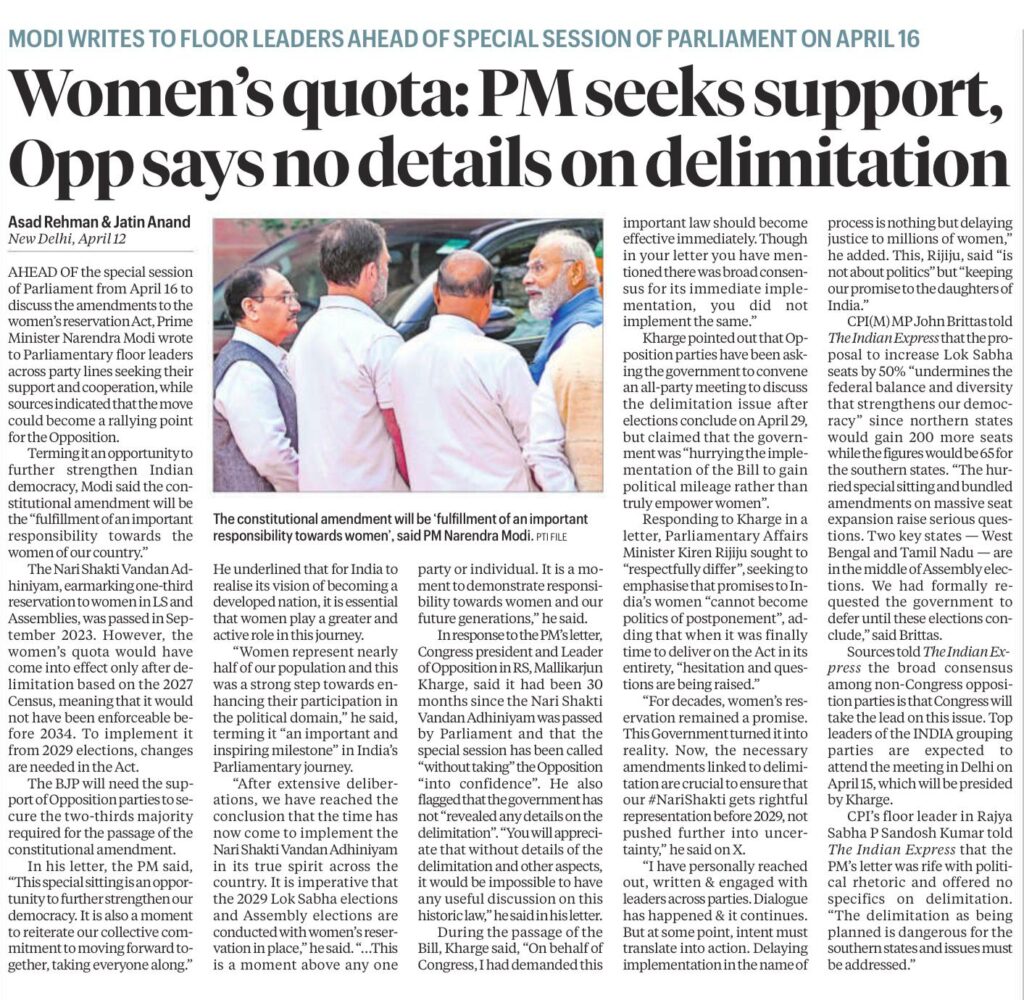
Special sitting proposed to discuss implementation of Nari Shakti Vandan Adhiniyam, highlighting use of a session outside the regular calendar.
Constitutional framework
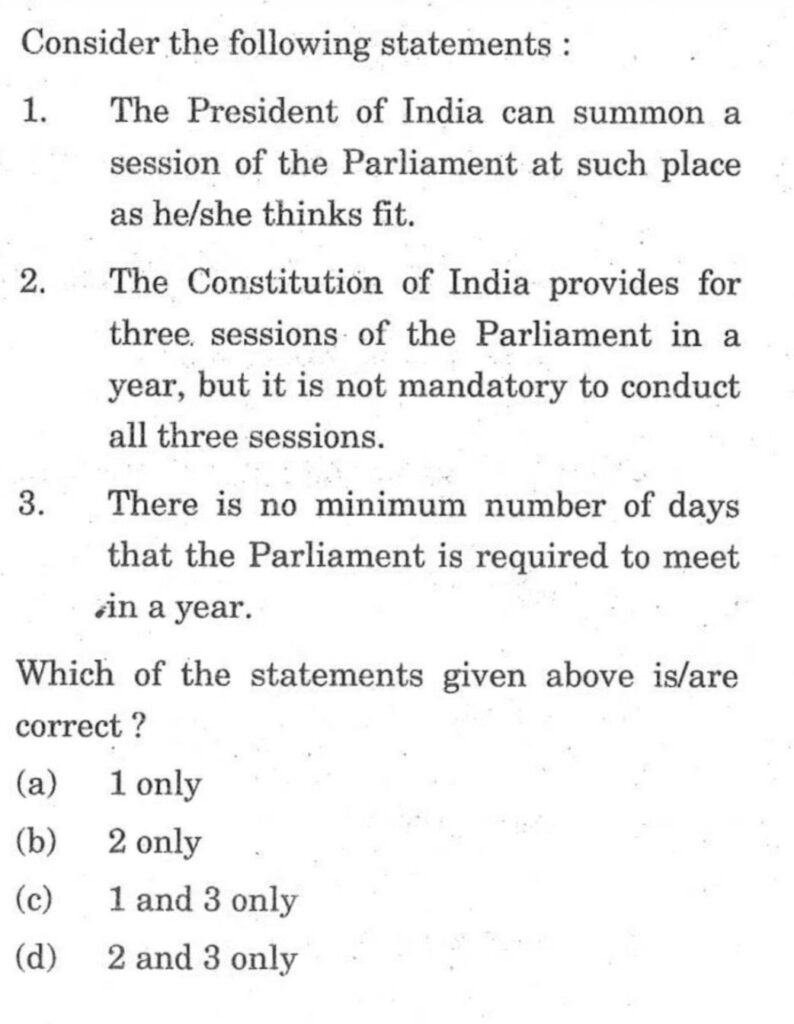
• Article 85 of Indian Constitution
What Article 85 provides
- Summoning: President summons each House → only on aid & advice of Council of Ministers
- 6-month rule: Gap between last sitting of one session and first sitting of next session ≤ 6 months
- Prorogation: President can end a session (does not dissolve House)
- Dissolution: President can dissolve Lok Sabha (Rajya Sabha is permanent)
Types of sessions
- Budget – longest, financial business
- Monsoon – legislative work + oversight
- Winter – shorter, pending matters
Not mentioned in Constitution → evolved by practice
Special session: Session called outside these three, generally for a specific national or legislative purpose
How it is called
- Cabinet identifies need
- Advises President
- President summons under Article 85